Trump-Xi summit leaves Taiwan independence camp on edge

Taiwan’s ruling Democratic Progressive Party (DPP) is reeling after US President Donald Trump, following his summit with Chinese leader Xi Jinping, bluntly warned against any push for independence. Lianhe Zaobao journalist Chuang Hui Liang notes that this signals a potential shift in US policy, forcing Taipei to urgently redefine its cross-strait strategy.
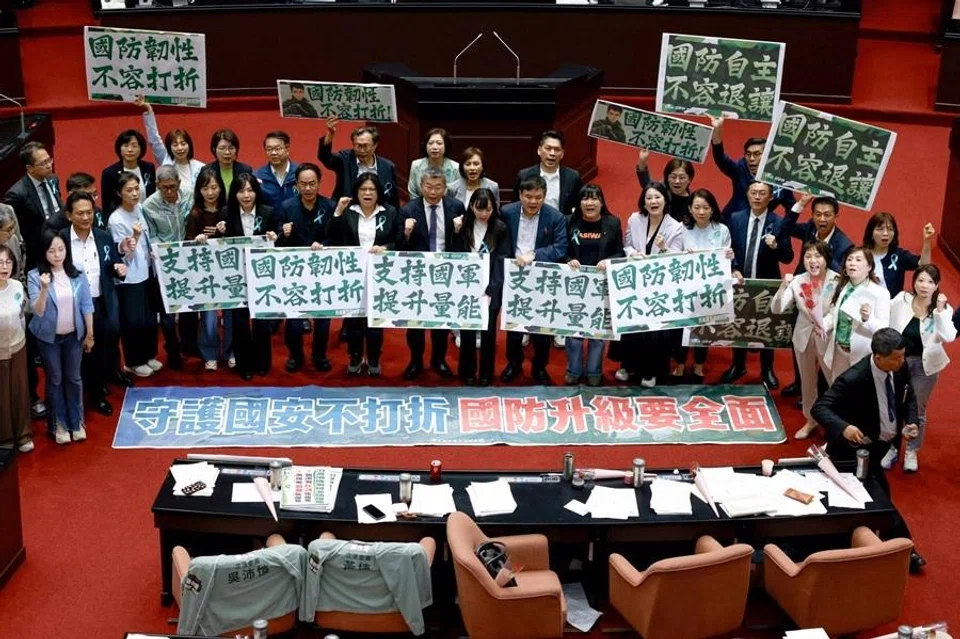
As US President Donald Trump ended his visit to Beijing last week, he said, “I’m not looking to have somebody go independent”, and added, “We’re supposed to travel 9,500 miles to fight a war. I’m not looking for that.” These remarks have triggered anxiety among Taiwan’s ruling Democratic Progressive Party (DPP) and other pro-independence camp figures, who view them as signalling a potentially less supportive US stance on Taiwan’s security.
Trump silent on Taiwan in front of Xi
Trump travelled to mainland China for the second time, nine years after his previous visit, and many observers were surprised that the headstrong and unpredictable Trump adopted an unusually conciliatory posture during his time in Beijing. His remarks were notably modest and courteous, bordering on effusive praise of Chinese leader Xi Jinping, while emphasising the strong friendship between the two.
More perceptive observers also noticed that Trump — who is normally unable to restrain himself from speaking freely — remained silent on the Taiwan issue while in Beijing. That in itself was an unusual signal.
But the moment he left Beijing, Trump reverted to his usual style, speaking at length to the media, stating bluntly that he did not want any moves towards Taiwan independence, and warning Taipei not to expect the US to provide unconditional support should its own actions trigger a war.
Before meeting Xi in South Korea in late October last year, Trump said he would raise Taiwan in their discussions and expressed that he had “a lot of respect for Taiwan”. During his latest trip to Beijing, after what he described as having “talked the whole night” with Xi, he claimed to know more about Taiwan than almost any other country, even as he reduced it to nothing more than a “place”.
This suggests that after nine years of strategic competition, China’s comprehensive national strength is no longer what it once was, and that the US has come to recognise China’s objective capabilities.
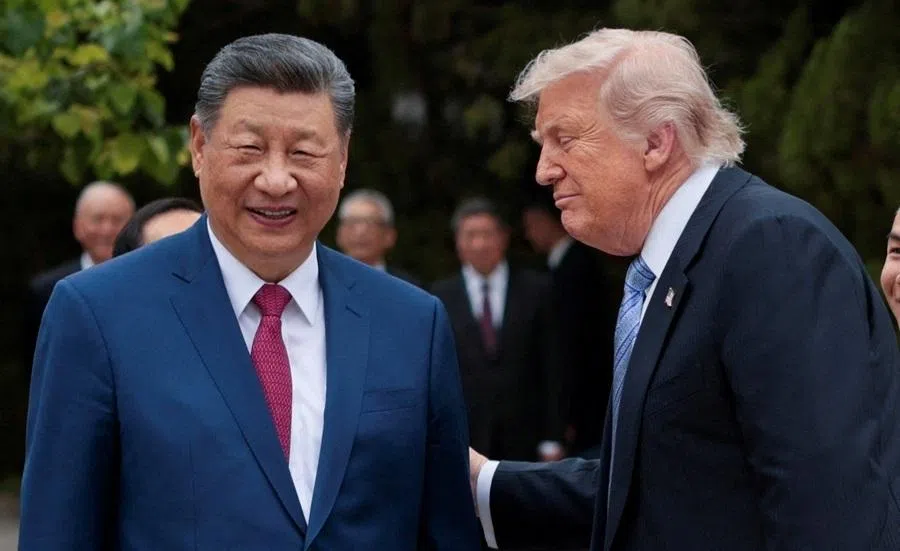
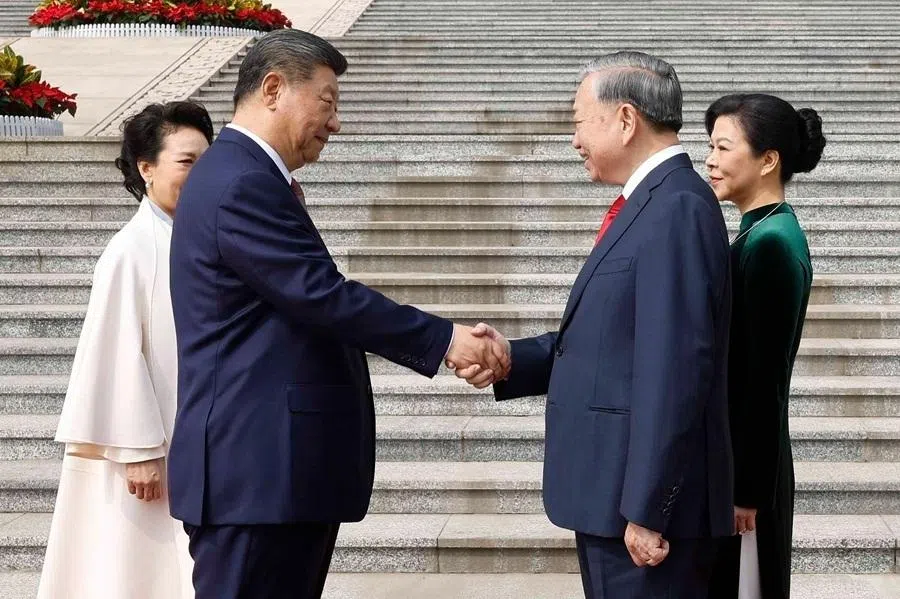
During the first round of talks on 14 May, Xi told Trump and other American officials that the Taiwan issue is the most important in China-US relations, warning, “If mishandled, the two countries will clash or even come into conflict.” He added that Taiwan independence and peace across the Taiwan Strait are fundamentally incompatible, and that maintaining peace and stability across the Taiwan Strait is the greatest common denominator between China and the US.
This was widely seen as Xi’s toughest remarks to Trump thus far, while the US was understood to recognise and attach importance to China’s concerns. Following the summit, Beijing announced the establishment of a “constructive China-US relationship of strategic stability”; the White House formally confirmed this three days later.
This suggests that after nine years of strategic competition, China’s comprehensive national strength is no longer what it once was, and that the US has come to recognise China’s objective capabilities. Moreover, a certain degree of cooperation on issues such as Iran and trade also serves American interests.
DPP uneasy with Trump’s remark
In an interview with Fox News, Trump said of China and the US: “It’s the two great countries, I call it the G2.”
On his social media platform, Truth Social, he also revealed that Xi had “very elegantly referred to the United States as perhaps being a declining nation”. Trump interpreted Xi’s remarks as referring to the “tremendous damage” America suffered during the previous Biden administration, adding that Xi was “100% correct”, and claiming that under his own leadership, the US had once again become the “hottest Nation (sic) anywhere in the world”.
Now that Trump has made his position clear, figures within the DPP such as Wang Yi-chuan — who once described himself as a legislator of the “State of Taiwan” — have fallen conspicuously silent in recent days.
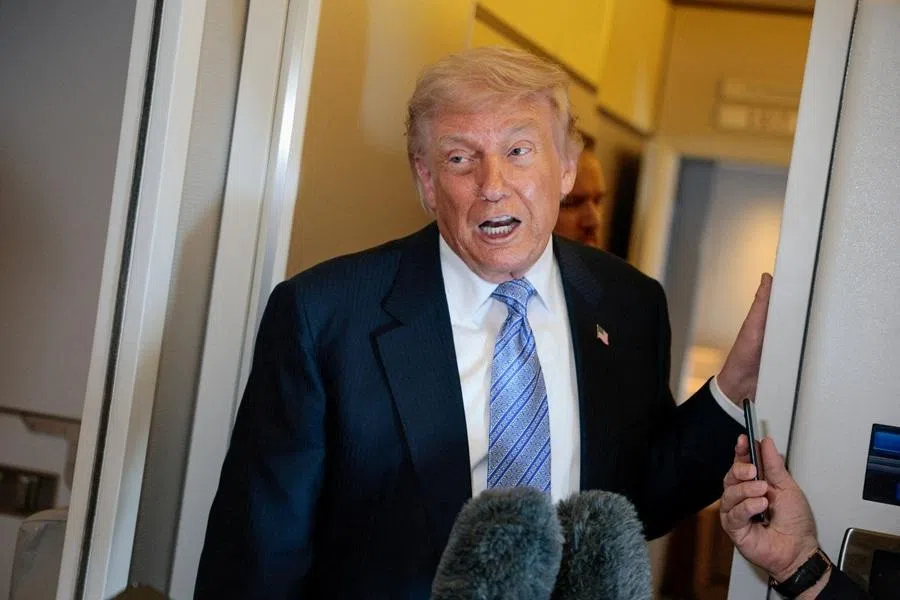
While Trump said he had “made no commitment” to Xi regarding Taiwan, the content of his interviews suggests that Trump clearly understands the vast disparity in strength across the Taiwan Strait, and that the US has no intention of going to war for Taiwan, 9,500 miles away. As for the second batch of arms sales worth US$14 billion, Trump said that they will be put on hold, describing them as “a very good negotiating chip”.
Trump’s blunt remarks have left Taiwan deeply uneasy, especially given that the ruling DPP had long believed that mainland China would not, could not and dare not attack Taiwan because of US backing. Now that Trump has made his position clear, figures within the DPP such as Wang Yi-chuan — who once described himself as a legislator of the “State of Taiwan” — have fallen conspicuously silent in recent days.
Through anonymous security officials, the DPP government highlighted that recent remarks by the US side can be distilled into three key messages: that US policy towards Taiwan remains unchanged, that maintaining the status quo remains a core US interest, and that arms sales to Taiwan will be discussed solely with Taipei. This shows that Washington has neither accepted Beijing’s attempts to impose limits on Taiwan-related issues nor altered its longstanding policy stance towards Taiwan.
The pan-Green broadcaster SET News even reported that Trump said he would discuss arms sales with he who is “running Taiwan”, and did not rule out the possibility of a phone call with Taiwan President Lai Ching-te, suggesting a possible further deepening of US-Taiwan relations.
That same evening, Lai posted again on Facebook, stressing that he would defend the “Republic of China” and that there was no issue of “Taiwan independence”.
DPP scrambling: ROC or Taiwan
Following the Xi-Trump summit, Trump clearly drew Washington’s red lines on Taiwan. In response, Lai moved quickly on 17 May to clarify that his definition of “Taiwan independence” is that “Taiwan does not belong to the People’s Republic of China” and that the “Republic of China and the People’s Republic of China are not subordinate to each other”. That same evening, Lai posted again on Facebook, stressing that he would defend the “Republic of China” and that there was no issue of “Taiwan independence”.
However, this position is based on the DPP’s “Resolution on Taiwan’s Future”, rather than the constitution. The “Resolution on Taiwan’s Future” states that Taiwan is already a sovereign and independent country, with the official name of “Republic of China”, and that any change to the status quo must be decided by all the people of Taiwan through a referendum. This may also form the tone of Lai’s speech marking the second anniversary of his inauguration on 20 May. However, whether such a position would pass muster with the US remains a question.
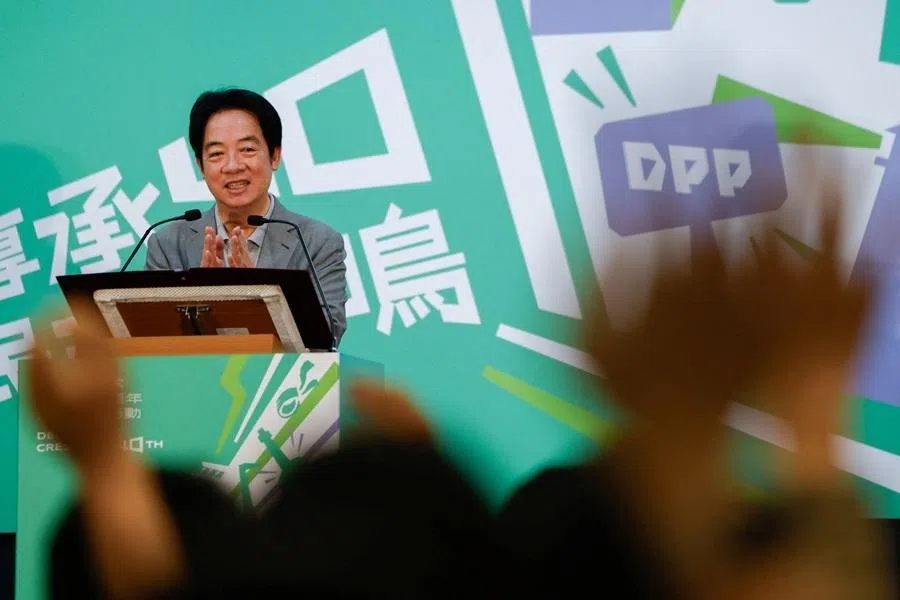
This has sparked considerable controversy in Taiwan in recent days, with DPP legislator Puma Shen, who is running as the party’s candidate for Taipei mayor, drawn into a debate that critics say he handled awkwardly, exposing a core inconsistency in the party’s position. Shen argued that Trump has not stepped outside the framework of “opposing any unilateral change to the status quo” and further claimed that it is, in fact, those who deny that Taiwan is a sovereign state who are effectively the ones altering the status quo.
Taipei Mayor Chiang Wan-an pushed back sharply, saying the “Republic of China” has always been a sovereign and independent state, and asking whether the DPP would be willing to remove its “Taiwan independence” party platform.
Shen countered that the party no longer has a “Taiwan independence” platform, pointing instead to the “Resolution on Taiwan’s Future”. However, DPP’s original “Taiwan independence” party platform has never actually been formally repealed.
Trump is unlikely to “sell out Taiwan” in a single decisive move, but warn instead of a gradual erosion of its position.
Test for Taiwan
Meanwhile, academics have cautioned that Trump is unlikely to “sell out Taiwan” in a single decisive move, but warn instead of a gradual erosion of its position. This could include, for instance, the removal of key items from the US$14 billion arms sales package to Taiwan, delays or even cancellation of the package, as well as a possible downgrading of the treatment afforded to Lai during transit stops in the US.
Trump’s remarks have laid bare Taiwan’s current strategic predicament, which is ultimately shaped by the broader dynamics of US-China relations rather than Taipei’s political rhetoric. When this geopolitical framework undergoes structural change, whether Taiwan can respond with pragmatism will be a critical test for its future.
This article was first published in Lianhe Zaobao as ““习特会”后的台独困境”.
![[Video] Lim Siong Guan: Can Singapore survive?](https://cassette.sphdigital.com.sg/image/thinkchina/e168c5c1a28b42fe72448478a1c7c9f4e4d41500b920c3141fa5f40677706b27)