No children, no regrets? Inside China’s first generation of childless ageing
As China’s first DINKs (“Dual Income, No Kids”) grow old, their lives are thrust into the spotlight. From a retired state-owned enterprise worker who says money and health are enough, to others who refuse to speak, their stories reveal pride, pain and unease beneath the debate, reports Lianhe Zaobao correspondent Liu Liu.
16 Jan 2026
Society
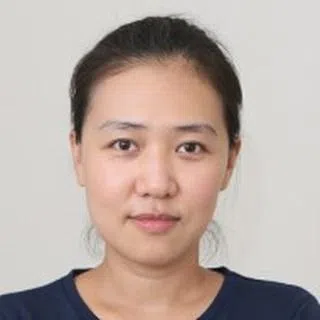

“As long as you have money and health, life will be smooth,” says Zhang Xiaomei of her choice to be a “DINK”. The nearly 60-year-old said everyone has their own way of living, and old-age care can be taken care of with money.
Zhang is a retired employee of a state-owned enterprise in Xuzhou, Jiangsu province, China. She told Lianhe Zaobao that because her husband did not like children and she herself was “playful” and fond of outdoor activities when she was young, she chose to have an abortion after becoming pregnant, thus becoming a bona fide member of the “DINK” group.
How DINK began
The term “DINK” (an acronym for “Dual Income, No Kids”) originated in the US in the early 1980s. It refers to households with two incomes and no children — typically with stable careers, relatively high incomes and refined lifestyles — who make a deliberate choice not to have children. At the time, China was in the early years of reform and opening up, and “DINK”, as a loanword from abroad, quickly entered the country and was adopted by some intellectuals. One of the earliest couples to publicly advocate and practice a DINK lifestyle was the late, well-known Chinese writer Wang Xiaobo and sociologist Li Yinhe.
Now in her 70s, Li Yinhe said on a programme in 2024 that she has never regretted being a DINK, adding that she plans to age together with close friends in a mutually supportive arrangement.
Zhang Xiaomei likewise said she has “no regrets” about her choice to be childfree.
With a generous pension, she reels off her busy daily routine: dance classes in the morning, learning African drums and singing, a midday nap, and in the evening organising guandan (a card game similar to poker) or mahjong sessions. Sometimes, she also goes travelling with friends.

According to data from China’s seventh national population census in 2020, there were about 188 million dual-income, no-children households in China, accounting for 37.95% of all households. This category includes not only DINK couples, but also families who do not yet have children, as well as those who are unable to have children and have become childless involuntarily.
Younger people also going childfree
As younger generations enter marriageable age, the proportion of “dual-income, no-children households” may continue to rise.
A survey released in June 2025 by the Institute of Psychology of the Chinese Academy of Sciences and Social Sciences Academic Press showed that among surveyed university students, 59.4% said having children was not important, and 70% accepted marriage without having children. Among female university students, the proportion choosing this option was as high as 85.3%.
In traditional Chinese thinking, old age and elder care are closely tied to children. Phrases such as “family happiness”, “raising children to provide for old age”, and “having someone to rely on in later years” all reflect the belief that children should provide both financial support and emotional companionship in old age.

As the first generation of DINKs enters old age, this entirely new model of “childless ageing” has not only overturned traditional notions, but has also sparked debate and friction over DINK and childlessness issues across different generations.
Efforts and pressure
In recent years, Chinese media have repeatedly focused on the issue of ageing among DINKs, with headlines such as “The first DINKs are now in their 70s, paying the price for youthful freedom,” “When you’re old and lying in a hospital bed, you realise no amount of money is better than having someone with you,” and “How hard is life in old age without children?” appearing frequently.
In October 2025, the topic “China’s first generation of DINKs entering old age” trended on Weibo. Accompanying the trend was an episode of the documentary Stories from the Emergency Room (《急诊室的故事》), which depicted a first-generation DINK couple in Shanghai, Sun Genbao and his wife Peng Meimei, showing Peng’s confusion and helplessness as Sun was hospitalised due to illness.

However, the late-life difficulties of these two DINK seniors did not prompt young people to reconsider having children. Many netizens commented that the authorities were “rehashing old material”, “using a different form to pressure people into marriage and childbirth”, and accused the programme of deliberately exaggerating the pain and regret of elderly DINKs.
However, of the five members of the first-generation DINKs I attempted to contact, only Zhang Xiaomei declared that she was satisfied with her current situation.

Get the ThinkChina Weekly Newsletter
Insights on China, right in your mailbox. Sign up now.
By subscribing, I agree to SPH Media's Terms and Conditions and Privacy Policy.
Zhang admitted that as an early DINK she had faced external pressure and scepticism, and was even labelled “unfilial” and “selfish”. But she believes this was in fact a form of clarity: “Choosing the bonds that come with having children, or choosing to live each day on your own — both are ways of living.”
The other four DINK seniors declined to be interviewed. One elderly person in Beijing conveyed through friends that they were “unwilling to make this public.” A friend of a retired doctor in Chongqing who declined an interview revealed: “Being DINK is her pain — she used to get very emotional whenever the topic came up.”
Chinese financial commentator Ye Tan, known as the “financial heroine”, also questioned her DINK choice after discovering she had cancer.
Now 53, Ye said in a 2023 interview with Chinese media: “Had I known this would happen, I would have built a firewall — having one or two children would have been safer and more reliable.”
Lu Jiehua, vice-president of the China Population Association and professor at the School of Population and Health at Renmin University, told Lianhe Zaobao that the so-called first generation of DINKs are still relatively young elderly, generally in good healt and currently face more issues related to emotional support. However, as they move into their 70s and 80s, they may face more serious caregiving challenges.

He Yafu, a Chinese academic who studies population issues, said in an interview that for DINKs, having no children means lacking natural emotional bonds. Especially after the death of a spouse, many elderly DINKs may fall into deep loneliness.
He also said he understood the backlash from young netizens. Young people, he noted, tend to display values that reject tradition and emphasise present experiences. “Whether to have children is a matter of personal freedom, and there’s nothing to criticise,” he said, but society should still promote positive views on marriage and childbearing, and the government should introduce policies to encourage them.
Root of China’s population problem in family planning policy
Academics interviewed believe that in the context of population ageing, the impact brought by DINKs and one-child families is similar, and that the root cause of China’s population problem lies in the family planning policy.
Zhou Xiaopu, a professor at the School of Journalism at Renmin University, said that when it comes to elder care, DINKs are “not special at all… under family planning, one-child families and DINKs basically face the same situation.”
She noted that as children leave their hometowns to work elsewhere or settle abroad, the number of “empty-nest elderly” is increasing, and they too may face a form of “childless ageing”.

Zhou believes the demographic impact of DINKs is relatively marginal, and that the more important factor is the impact of family planning: “The extended-family culture that once carried social values has lost its foundation, and people’s views on childbearing have changed.”
Yi Fuxian, author of Big Nation, Empty Nest (《大国空巢》) and a critic of China’s family planning policy, also said in a 2016 media interview that the policy altered Chinese society’s views on fertility, leading people to see population not as a source of wealth, but as a burden.
Lu Jiehua agreed, adding that in the past, when families had more children, parents only needed to place their hopes on one of them. Now that there are fewer children, all expectations fall on the single child. “Everyone hopes their child will succeed… which has led to education becoming increasingly ‘involuted’ and burdens growing heavier.”
Lu also said that in the process of social modernisation, as social security systems continue to improve, not only DINKs but also non-marriage and same-sex marriage may increase in proportion, especially among young and middle-aged groups. This, he said, is also related to the rise of individualism and “an inevitable trend of social development.”
This article was first published in Lianhe Zaobao as “中国首批“丁克”进入老年 年轻一代生育观念难改”.
Related: [Big read] Love is hard to find for millions of rural Chinese men | Can pensions save China’s economy? The rural elderly at the heart of a trade war strategy
Popular This Month
Get the ThinkChina Weekly Newsletter
Insights on China, right in your mailbox. Sign up now.
By subscribing, I agree to SPH Media's Terms and Conditions and Privacy Policy.