
[Video] George Yeo: America’s deep pain — and why China won’t colonise
George Yeo, in an interview with ThinkChina editor Chow Yian Ping, explores America’s deep social pain, China’s struggle with corruption rooted in Confucian ties, and why change is hard. He also weighs the risk of war in the Taiwan Strait and Singapore’s future in a fast-shifting world order. This is the first episode of ThinkChina Conversations, a series of in-depth interviews with experts on China.
27 Feb 2026
Politics
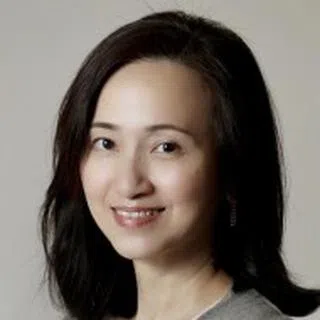

Host: Chow Yian Ping Interviewee: George Yeo
Chow Yian Ping (Chow): Hello and welcome to the first episode of ThinkChina Conversations, a series of in-depth interviews with experts on China. I’m Yian Ping, your host. And with me in the studio is Mr George Yeo, the former foreign minister of Singapore, who continues to be a key global voice on foreign relations, geopolitics, China-related issues and discussions about the future world order. Mr Yeo, thank you for joining us today.
I think many would agree that we are living in a time of growing uncertainty and turbulence. And this has raised many questions for people around the world, including myself. We’ll begin our discussion with US President Donald Trump, someone who has come to symbolise many of these shifts. When he spoke about the Gulf of Mexico, Greenland and Canada as the 51st state, few people imagined that he would take it this far. The US has also published its security and defence strategies — the realistic approach it is taking to ensure its dominance in the western hemisphere and to continue to be in a position of strength against China. How do you see these strategies of the Trump administration? Do you think they strengthen the US cause or, in fact, undermine its position?
Trump as catalyst in a changing world
George Yeo (Yeo): Whether consciously or not, the US is sensing its own limitation, that it has been overextended. It’s expressed in a growing national debt. It’s reached a point now where the annual debt servicing exceeds the defence budget, let alone paying back the capital amount. This is not sustainable. Therefore, there has to be a change of national policy. And a certain retreat of the US from its global entanglements is a necessity because it cannot be afforded.
So, Trump wants to consolidate around his own hemisphere. Of course, he’s a negotiator, so what he asks is always much greater than his bottom line. He wants everything from Greenland all the way down to South America. He will get less than he has asked for, but because he’s a very aggressive negotiator, what he gets may in fact be more than what he’s prepared to accept. He asked Canada to be the 51st state. Naturally, the Canadians baulk. But if he suddenly says, look, let’s renegotiate trade agreements. Let’s do things in a way which favours America more. The Canadians may well be relieved to offer him those concessions because the original proposition was for Canada to be incorporated into the US. Look what he’s done to Venezuela. He’s kidnapped Maduro. Spirited him away, killed many of his bodyguards and intimidated the entire Venezuelan population. Does he want to take over Venezuela? Can he? Well, whatever it is, he’s intimidated not only Venezuelans but people in his hemisphere. And the next time he says something, they will take him seriously.
Of course, in this game, no one has a final move. He may want China out of South America, but do the South Americans want China out? Because it’s in their own interests. So there has to be bargaining. All this only shows that the US can no longer do what it used to do in the past because the relative weights have changed. It has got national debt. The US dollar is being threatened. Every central bank, every major corporation in the world, every wealthy family worries about exposure to the US dollar. And one day, if the US dollar loses its reserve position in the world, then the flywheel turns the other way. Instead of financing all these hundreds of bases around the world on the strength of the US dollar, so that American taxpayers don’t have to pay for them directly, but all of us do, because we are users of the US dollar. Once that magic spell is broken, and people start treating the US dollar in a different way, then bases will have to be shut down. And the US will have to limit many of its involvement in the politics of other countries and regions.
So this is the period of transition that we are now going through. Trump is not the cause of it. Trump has no sense of history. He’s a deal maker. He is a very aggressive deal maker. I don’t think he has a sense of… larger tides flowing in the world. But in a sense, he is a catalyst. He’s making things happen faster than they otherwise would happen. And what we are going to see eventually will be a multipolar world.
The US still is a very big pole — influential, prestigious. But China now is another very big pole, maybe even bigger than the US in terms of its economy. Russia will remain a pole. The Europeans will have to rediscover their own footing on their own — still close to the US, but having to stand on their own two feet. They will be a pole if they can somehow keep the European Union together. India will be its own pole. Brazil will be its own pole with influence in South America. So this is a world we’re entering: The period of adjustment from the end of the Cold War to an American-dominated post-Cold War world to the multipolar world that is coming. This is the transition which is creating a lot of uncertainty, a lot of anxiety in the world today.

Chow: What you’re saying seems to imply that the US is really on a road of decline. But some people also mentioned that when the US says it’s concentrating on the western hemisphere, it is actually trying to choke China from the sides — all the important countries that are offering China resources and all that. How do you see that?
A dangerous uncertainty
Yeo: Well, the US, if it could, would try to hold China back because it sees China as its most formidable rival. But in the end, it all depends on the internal strength of the US: its own internal unity, the vitality of its economy, the diligence and intelligence of its population. That is a key. It is not how we can pull down somebody else, but how good you are yourself. There is growing self-doubt in America about their own weaknesses. You take the drug problem. It is very serious! You can blame fentanyl on China. You can blame cocaine on Colombia. You can blame heroin on Mexico. You can blame opioids on drug companies. But the deeper question is: why is the population so in need of numbing pain?
In the last century… Of course, in China’s history, we blame the West for the Opium War. But why was there such a demand for opium in China? And not only in China, but in overseas Chinese communities in Malaya, Singapore and elsewhere? When the body politic is sick, people feel a need to salve their anxieties. And there is a demand. And the demand will bring on its own supply. There’s something sick in the US today. They know it.
You take the slogan “Make America Great Again”. Let’s analyse the four words: make America great again means that it was great once. It is no longer great now. It’s in decline, but we want it to recover. So the fact that America is in decline is no longer contested, even by the Americans themselves. The key question is: can it recover? And it is this desire to restore an old position which created the MAGA movement, buoying, propelling Trump into power, first in the first administration, and then now. The hope is to return to the past. But the arrow of history doesn’t go backwards. It goes forward. His opponents also want to go back to the past, maybe to the Obama period. If you say no immigrants, and your own population is not capable of the same ability to work hard, to save, to have strong families. If you don’t bring in people, your economy will decline further. If you bring in people, you change the demographics. And this is a tension deep in America today. They have to find their own way forward. No one can tell them what to do. They must, in their own internal debate — and they have many intelligent people — think through what the constraints are, what the situation is today, and how to move forward to the future.
Right now, when we watch American politics, there are just two sides railing against each other, each wanting to go back to the past. We have yet to see a clear vision of the way to the future. And this is the biggest drama in the world today. Because if the US recovers, then there will be a certain stability in the world. But even that recovery will easily take ten, 20 years. If the US is not able to recover and continues on this trajectory of decline, the consequences for the world are enormous. I mean, look at the fall of Western Rome. It led to the Dark Ages. Look at the fall of the Ottoman empire. The effects are still being seen today all over the Middle East and North Africa. Look at the decline of Qing dynasty China. It led to the deaths of tens of millions of people. And out of all this mayhem, the emergence of Hong Kong and Singapore. And if the US continues its decline, the historical implications are far reaching.
We don’t know. No one has a crystal ball into the future. We just have to say, look, in this scenario, it recovers, but it will take time. In this other scenario, the decline continues. Remembering that a wounded lion is a very dangerous animal.

Chow: When I spoke to some American scholars, they are telling me that this is just the US being chaotic, being competitive, being very vibrant. They do not see it as being on a path of decline. How would you look at that? “This is just us. This is the USA.”
Yeo: Well, some Americans will say that. And you often hear the phrase that no one has won betting against America. They look back at their own history, at the Civil War, which was a terrible war dividing families. They recovered to become the greatest country on earth. After the two world wars, they became the number one superpower. They went through a horrendous period during the Vietnam War, when their campuses were in chaos because a whole generation turned against the establishment. It recovered. You had the Reagan Renaissance. So, yes, it has a great capacity to heal. And we hope it can. Because if it cannot, if the condition is terminal, then it will be a very different set of scenarios that we’ve got to work on. It may come to be.
When I went for my class reunion at the Harvard Business School just last June, two section mates… The section is very small. It’s only 90 of us who stayed together in the first year, so the bonds of friendship are for a lifetime. Two of them came up to me, separately, and asked, “Do you think we’re on the decline?” I was surprised that they asked me that. They would never have asked me that question in earlier reunions. There is considerable self-doubt. It may be that when they meet foreigners, they puff themselves up and say, “Look, don’t bet against us.” But they themselves are not sure. And that’s the reason for the ferocity of the domestic debate within the US itself.
Chow: So you see the situation now in the US as very different from situations in the past, when it was also seen as chaotic… And you see it as…
Yeo: Every situation is different. It’s just that… can they recover from this? Well, maybe it can, maybe it cannot. And can you be sure of your belief? Or your hope? The contradictions are severe. The problems are not easy to resolve. They brought in Elon Musk to cut the budget deficit. And though it was established amidst great fanfare, and Elon Musk was jumping up and down in enthusiasm, in the end, he left, tail between hind legs, an abject failure. Nothing could be cut, except maybe USAID.
Is there still an Asian century?
Chow: I want to talk about the Asian century that we were talking about just not too long ago. From the “four little dragons” to China and India rising to Southeast Asia as the next engine of growth. And China’s President Xi Jinping also spoke about changes unseen in a century, seemingly led by China. But now I think we see some discussions about whether this Asian century is actually going to happen. Because we see China’s growth slowing. We also… I mean, while you’ve talked about the US debt, we also see the US economy continues to expand. And China also faces its demographic challenges and the pressing need to transform its economic model. And after Trump came into power, all eyes have turned to the US. I mean, whether it’s good or bad, but you know, everyone is looking at the USA. So I want to ask you this question: Is there still an Asian century?
Yeo: Oh, I think that’s a given because the old civilisations are re-emerging. We are talking about China, India, and in between an additional 600, 700 million people in Southeast Asia. That’s more than half the world. They’ve always contributed enormously to global development. They are recovering an earlier position. When we look back later, the period when the Europeans, as a result of a series of events in technology and in politics in Europe, suddenly broke out of Europe: First the Portuguese and the Spanish, and followed by the Dutch and the British, and then later the others, and finally the Americans. That period, which, if you date it from… Columbus reaching America in 1492 to the leadership of Deng Xiaoping in 1978, that period represented a period of almost total Western dominance in the world. The fact that we are speaking in English. The fact that many of the words we use, many of the intellectual categories that are in our minds when we think and speak. They are Western. The sciences. The way we dress. The way cities are organised. The imprint of the West is profound, so profound that it’s almost unconscious and subconscious.
Now we are finding societies once great, but fallen and put down, then turning inwards to rediscover themselves, and then re-emerging again to take up their prior places. That is one full cycle in history. So when we talk about the Asian century, it’s not because of one policy. It’s not because of a particular event. We’re just looking at a big cycle. The period of Western ascendancy has crested and is gradually giving way to the recovery of an older position. Of course, we’re not going back to the past. The China of the future is not the China of the past. And the India of the future is not the India of the past. But the same civilisations modernise, dynamic in new ways.
So is there an Asian century? It will be an Asian dominant century. Will Asia dominate the world the way the West dominated the world? I don’t think so. Because the ancient peoples, the Indians and the Chinese, they have no wish to make others like themselves. They have no desire to colonise. Would China want to colonise and absorb 100 billion non-Chinese into China, making it less homogeneous? Does Beijing want to be like New York? Or Shanghai like London or Paris? No, they’d rather be themselves. And it’s an ancient wisdom that there is no profit to moving your armies to capture territory and people and making them your subjects or slaves, and then having to deal with a lot of unhappiness. You may profit once in terms of how much wealth you can acquire. But in the end, the problems, the seeds that you sow, will create enormous problems for you.
Look at the West today. How much of their problems today arise from that earlier period, when they were conquering other countries and subjecting other people to their will? And because of what they did, so now they moved to the metropolitan countries. Look at Britain today! Look at France! Look at America! When they look back, was it all worthwhile? Would they not have preferred to be homogeneous? But you can’t go back to the past.
Chow: Do you see the Asian century as something that is going to be led by China and India?
Yeo: It’s not that it’ll be led by anybody. China is always a universe unto itself, and you almost get the feeling sometimes that China can carry on even if the rest of the world were to disappear. It’s big enough, diverse enough. It’s got its own internal market, and it is largely self-sufficient. It can continue to grow organically. Of course, if they don’t… take cognisance of what goes on in the world, if it’s too self-satisfied, like the Qing dynasty under the later Qianlong period, when it felt that, “we are so superior, no one else can teach us anything.” If China becomes like that again, then you can be sure that the decline will begin. And one day, someone will come knocking at your door, and it may not be someone friendly. So it’s very important for China to be alert to what’s happening in the world. But at the same time, the fact that it is big enough to be self-sustaining in its own internal circulation; that is the result of thousands of years of history.

Yeo: India has a different history. It was never one polity. It is heterogeneous. It’s not homogeneous like China, but it’s one civilisation. So whether you are an Indian from the northeast, the south or the northwest, there is something which binds them all together. I remember once having a conversation with my old friend P. Chidambaram. He was a minister in the Indian cabinet, commerce, finance, home minister. We are very old friends, over 30 years. He told me this story about Hinduism once. He said, all over India, there are different stories of Shiva, of Lord Shiva. But these stories, while there are regional variations, there are no contradictions among them. No contradictions. What does it mean? It means that while a region may elaborate stories about Shiva, they were cognisant of the stories of Shiva elsewhere and made sure these stories were not in conflict. India has a basis in one civilisation in its Hindu past, which is one reason why the BJP government under Modi keeps wanting to go back to the pre-British, pre-Mughal, pre-Islamic past, to India as a rule from the Vedic period. The India of the Ramayana and the Mahabharata, or the Mauryas and the Guptas.
When they overdo Hindutva, it creates new problems. You may end up estranging non-Hindus in your society. But I can understand why Hindutva has such an appeal. They know deep inside themselves they are an ancient people. And they want to look back into their own history as a self strengthening exercise, the way Chinese people at the turn of the century had different self strengthening movements. And in doing that, you got to go back to the past. But the objective of going back to the past is to move into the future. So Hindutva as a phase in Indian politics, I can understand. But for India to continue its march into the future, it has to transcend Hindutva.
Modi wants India to be renamed Bharat. Bharat, as in Mahabharata, the great land (大地). I can understand the emotions that that name evokes in India, but in the end, India must find references. They should also get the Muslims, the Christians and others to buy in. But it cannot be on the basis of a British past. It has to be on the basis of a long history. And it’s a different story from China. And in between we have Southeast Asia, ten, now 11 countries, with different mixture of influence from China, India, and the West. We are each too small to really determine the course of world history, or even of regional history. But each of us, whether you’re Thai or Laotian or East Timorese, you know you are different, and you must have your own identity rooted in your own past. Because without that rootedness, you have no strength to confront challenges and grow into the future. But there are examples of this in Europe. You have the Portuguese, the Lithuanians, the Hungarians. They are small communities, but they’re very conscious of who they are and determined to be what they are. So we too in Southeast Asia. But the big reality for us is: on the one hand, China, and on the other, India.
Chow: How would you rank China’s problems? Which one is the most destabilising with the highest chance of derailing its development? Is it going to be a domestic problem? Or is it going to be an external issue?
Yeo: Oh, it’s always domestic. China is so big. It’s difficult for external powers when it’s strong to confront it because it’s got all the resources and the population, the intelligence, the knowledge. But, you know, when the Chinese fight, they fight like hell against one another. And in between dynasties, whether it is, say, before unification 战国 (the Warring States period), after the end of Han, where you had the Three Kingdoms, and the East and Western Jin, and 南北朝 (the Northern and Southern Dynasties).
In periods between the great dynasties, you had long periods of internal struggle. Right now in China, there is a series on the period between the end of Tang, and the beginning of Song. They call it 太平年 (Swords into Plowshares). It is still going on. I’ve been watching it with great interest. It’s a horrible period! There was famine; there was cannibalism, intrigue within the states, within the dynasty, and each having to fend off the other before final reunification again under Song. So in China, the problems are always internal. If the body politic is strong, they can handle external challenges. But if the body politic is sick, then external challenges become critical.

Succession is not the problem
Chow: Then how do you see the domestic political situation in China now? I mean, especially the fact that you cannot see a successor in line.
Yeo: No, I don’t see that as a problem.
Chow: You don’t see it as a [problem]?
Yeo: I mean, it is a problem. It’s always a problem in China. Throughout its history, China had a key man risk. I just watched an episode yesterday in the 吴越国 (Wuyue Kingdom), in this period of the 五代十国 (Five Dynasties and Ten Kingdoms period). The king died while he had to decide which of the sons to take over. He wanted an adopted son to take over. But the adviser said, no, choose your own son by blood. He was not quite prepared for it. And there was one line he said, “The choice of succession is a very serious matter.”
In Chinese history, there has always been a key man risk. There’s never a period when there’s no key man risk in Chinese history. Will it lead to disaster? Sometimes, sometimes. But there is also wisdom in their own historical experiences. They know that the way to choose leaders is not by voting. And if it’s by voting, it’s by elected representatives, not by universal franchise. But that’s China. And it may work in China, but it cannot work in India. It cannot work in the West. So when you ask me what are China’s major challenges, it is not succession. Because succession is something they’ve always had to… confront. And they have a lot of wisdom in this matter. The main problem in China is corruption.
I once read the financial history of Chinese dynasties. It says, When a dynasty is new, the taxes are light, but the treasury is full. At the end of a dynasty, the taxes are crushing, but the coffers are empty. The people who are rich don’t have to pay taxes. In fact, they benefit from taxes collected from other people. Corruption is always a single biggest problem in Chinese society. And you cannot get rid of it because it’s tied to Confucius.
Confucian ties and the fight against corruption
Confucius requires us to make distinctions in relationships. So between husband and wife, between ruler and ministers, between emperor and people, between brothers, friends, relatives, friends, strangers… we have to make distinctions.
So Chinese New Year is coming, and the womenfolk are under great stress. They got to go to the bank, get new bank notes. They collect all these red envelopes. They got to wrap them, make little markings to know how much is in each packet. Decide what to give to whom. The children come home, “What did she give?” You need to know. Because in the amounts of money transferred in this way, you determine relationships. And this is Confucius, and that’s what holds Chinese society together.
Between making distinctions and corruption is a slippery slope. Suddenly, instead of a hongbao, which is $50, $100, it becomes $1,000. Instead of a hamper with a bottle of wine and some biscuits, it becomes a dozen cans of top quality abalone or something. Is it just because of friendship? Or is there a deeper intention?
And for some years in China, the corruption had become very bad. Blatant! Shameless! When Xi Jinping reversed it after taking over in 2013, no one believed at first that he could succeed. And if he had served only two terms, he would have failed. I’m not saying that he’s fully justified in extending his tenure, but I can understand the necessity. And maybe a couple of million people have been charged and thrown into prison. And the fight goes on. Another set of generals have been removed from the Central Military Commission. In the military, they were buying promotions. So the corruption was many layers down. You remove one layer, another layer is still corrupt, another layer is still corrupt. But eventually you will clean up. But can you remove it completely from Chinese society? It’s very difficult. because without Confucius, you can’t hold Chinese society together. And that is an inevitable side effect of relationships.
Chow: But I find it very intriguing that you are tracing it to Confucianism rather than… Some people would say it’s because of authoritarianism. It’s because of the political system. Because when you trace it to Confucianism, it becomes a part of culture.
Yeo: I think it’s a by-product of culture, and therefore it’s something deep and not easily overcome. Therefore, it requires a continuous struggle. It’s like what goes on within the human body: The good bacteria, the bad bacteria, the positive forces, the negative forces. They are in constant struggle, and you have to constantly 调整 and, you know, make the adjustment.

Get the ThinkChina Weekly Newsletter
Insights on China, right in your mailbox. Sign up now.
By subscribing, I agree to SPH Media's Terms and Conditions and Privacy Policy.
You do not want to remove relationships from society, because then it breaks down. But you have to keep it within bounds. And when there are problems, attack those problems. But do not attack it in a way which disrupts an entire society. That was the lesson they learned in the transition from Qin to Han. Qin Shihuang was about 法治 (legalism). He was so strict people couldn’t bear it. So his son could not hold the empire together. Then the Han dynasty brought in 礼 (propriety) into the way it operates. They still had 法 (legalism), but relationships became important.
And over the centuries, Chinese society has elaborated… It’s not static. It keeps changing. But they’ve elaborated ways to organise people, so that a society is stable not because of law only, but because people are brought up to behave in a certain way to one another. And in the modern world, with people concentrated in cities, with the internet, with AI, what is the relevance of Confucius in this new world? What kind of neo-Neo-Confucianism do you need in this new world to hold Chinese society together? That’s an open question. This is the challenge before us today.

Chow: How do you see the Taiwan Strait issues? One of those issues among China’s external or internal problems?
The Taiwan issue cools down
Yeo: Taiwan would have been reabsorbed into China after 1949 but for the outbreak of the Korean War, which led the US to sail the Seventh Fleet in the Straits of Taiwan, preventing reunification. So the reason why Taiwan is a separate entity today is because of America. The moment America is not in the equation, reunification will happen naturally. The Taiwanese people will know that there is no fighting it. So when we talk about the Taiwan issue, we must really analyse US-China relations. Right now, US-China relations are stabilising. Trump is looking forward to visiting China in April, and this year they may meet three, four times G20, APAC, bilateral visits. And Trump needs the economy to be stabilised for the midterms election and for the well-being of the American economy. They thought they could put pressure on China and get a better deal for the US. So in the end, China had to play the rare earths card. And it’s a chokehold. The US has no response to it. When China played it, the US, who should have been aware that that card was there, was surprised. It was initially angry, but in the end, they recognised the reality. And so a deal has more or less been struck. And China is buying the soybeans, and they will continue to improve.
So against this backdrop, the Taiwan issue will no longer be as hot. And this will affect the domestic politics in Taiwan, in the balance between blue and white and green. After Trump carried out his operation in Venezuela and kidnapped Maduro, he had an interview in the New York Times, and he was asked, “What if Xi Jinping was to do to Taiwan what you did to Venezuela?” Trump said, “Well, it’s for Xi Jinping to decide. He knows I’ll be very angry.” Fullstop. If you were a Taiwanese, you said, “Oh, so my backstop is US being very angry. Not US military support.” You know what Beijing will say? “Hmm. Maybe I should plan a Venezuelan operation in Taiwan. And maybe leak it out so that the Taiwanese know it.”
I think the new… realignment of forces will cause a change in Taiwanese domestic politics. It’s interesting that the KMT now is reaching out to China. The new chairman, Zheng, I think, is likely to meet Xi Jinping in the near future. The preparations have already been made when the deputy chairman of the KMT called on Wang Huning in Beijing. I think they were sorting out the logistics. And it’s interesting. Wang Huning reiterated 九二共识 (the 1992 Consensus), but there is no market with the non-blue. Wang Huning also said “两岸一家亲” (Both sides of the Strait are one family), which was Ko Wen-je’s formulation and a formulation which Xi Jinping had used a number of times. Wang Huning repeated it. What China is in effect saying is, okay, we understand the 1992 Consensus, there is a division of views in Taiwan. What about “both sides of the Taiwan Strait are one family”? Now that will bring blue and white together, then green will have to respond. So Taiwanese politics is shifting.
Chow: So what’s happening in Taiwan itself is actually the thing to watch, rather than what is going to happen to the Taiwan Strait, or whether war is going to happen in the Taiwan Strait, which we have been talking about, I mean, previously.
Yeo: War is highly unlikely. I mean, the US military knows that even if there’s war, they’re not likely to win. The aircraft carriers will all be attacked by Chinese hypersonics. And without aircraft carriers, how do you bring military force to bear? And even if you can, TSMC will be destroyed. And after that, where do you get your Nvidia chips? China has alternatives, but the rest of the world has no alternatives. So I don’t think they’ll be at war with Taiwan. But China will still be making all kinds of plans.
From denial to acceptance: the West faces China
Chow: So I want to look at the US again. In the West, especially in the US, there’s a lot of talk about anti-Westernism. Even discussions like the East rising, the Asian century, or China’s “century of humiliation” are often framed that way. In his Davos speech, Trump called on the West, the US and Europe, to stand together and keep shaping human history together. Some see this as the US leading the West in tearing down the old order, which means the US is still leading and having the energy to renew itself and the world. How do you see this East-West divide?
Yeo: There’s always been a hope that Western solidarity can help to contain China’s rise. When the Berlin Wall fell, and Russia rejoined the world, they talked about a Western assembly stretching from Vancouver to Vladivostok. But with the Ukraine war, we know that Russia will be Russia, and Russia will calculate in its own self-interest. And in some ways, the West is pushing Russia into a closer friendship with China. And with Trump now, it’s quite clear that America is calculating for itself. It wants Greenland for itself, even though Greenland is already part of NATO. So the idea of a Western alliance can no longer hold. It was never realistic in the first place because there is no history of such an alliance being a political alliance. It is a civilisational thing. But it’s never been a political construction.
You talked about a Westernism, a Westernism which is anti-China. I think we can understand the angst among Westerners. Losing a position of dominance over such a long period of time that it became almost axiomatic that they are superior, that they are more civilised, that they are more beautiful, that their aesthetics are universal aesthetics, that their values are universal values. And now you have Asia re-emerging, asserting different systems and values, and eventually of aesthetics. It’s hard for them to accept.
Initially, like the stages of grief, the first stage is denial. It’s not real. The data is false. It’s make-believe. They’re just copycats. Then it becomes anger. They stole from us. They did not invent these things themselves. They cheated! They… They breached intellectual property agreements! From denial to anger. Now the anger is giving way to bargaining. Because they may think what they want, but the reality of China’s advance in AI, in motor cars, in battery technology? There’s no escaping it. So now they’re talking about: What about you investing in our countries now? And we setting some minimum prices for your cars. And you transfer some technology over.
The last two stages of depression and acceptance. They have to go through all those stages before they become objective and say, Look, hey, this is a fact. We’ve got to live with it. We’ve got to analyse it clinically, unemotionally and respond to it. And it begins with ourselves. What’s wrong with ourselves? Which means stop blaming others. This is a process the West has got to go through. And it… based upon what you said earlier about a Westernism, which appears to be very anti-Chinese at this particular period.

Chow: And you would also think that Chinese or Asian confidence would have increased, would have strengthened over the years. Because there was one time when Asians were publishing books like Can Asians Think? or the Chinese were publishing books like China Can Say No (《中国可以说不》). So this is a totally different period. We have moved on from that. Is that so?
Yeo: Oh, you find growing self-confidence all over Asia now. In China, in India, Korea. Japan is in a difficult position because it was under the American thumb for so long. They want so hard to be a normal country. It's so difficult because there are still 50,000 American troops in Japan, and a constitution was imposed upon them. They are still unable to fully recognise what happened during the Pacific War, when they did terrible things. So Japan will go through a longer transition. But you find that growing self-confidence emerging all over Asia. And what you hope is… A self-confidence that enables you to do great things is good, but a self-confidence which leads to arrogance and hubris? That will be a disaster. In other words, China must not go back to the Qianlong era. It must not think that it is so great, so powerful that everyone has to listen to China and to come to China to pay homage. Humility is very important. And the moment you become proud, you stop learning, the decline begins.
AI competition and the risk of a tech bubble
Chow: But we see that a lot of breakthrough technologies are actually still coming from the West, and they are reshaping the world. Elon Musk has always said that he envisions a future where machines handle most work, and people pursue personal interests. He said AI and robotics could make traditional jobs largely optional within ten to 20 years, and productivity will enable a universal high income. How do you see a world shared by humans and machines? What kind of social compact might exist between the government and its people?
Yeo: When new technologies appear in world history, societies respond in different ways. Some take on to the new technologies like fish to water. They immediately adopt it, both for defence and for production, and they go ahead. Others find these new technologies disruptive and say no, no, no… We should control it, maybe hold it back, so that we maintain social stability. These societies will slide behind. So every time there’s a new technological challenge impinging on humanity, there is almost a realignment of the league table of countries. Some will go ahead; others will slide behind. And that was what happened 500 years ago when science and scientific inventions enabled Western society to make remarkable advances in weaponry, in techniques of warfare, in social and financial management. So Western societies were able to move very rapidly and move far… far ahead of older societies like China and kingdoms in India. So how we respond to technology is very important.
And in AI, the contest seems to be between the US and China. The US for a long time, had the best universities and research institutions in the world, so they have an advantage. But when it comes to the application of these new technologies. I think China is much more formidable. The founder of Huawei, Ren Zhengfei, said there’s a divergence. In the US now, when they look at AI, they are talking about who will win the AI race, as if there is a… a gold medal which you can win and become number one. But what does it mean? You can solve complex equations. What does it mean? For people? For society? For the economy? China is going in the other direction. Whatever advances we make in AI, and it will continue to advance, quickly apply it to all aspects of society. Help old people. Help clean up the air, water, the land. Improve maintenance, production, agriculture, safety. Aeroplanes, drones, ships, railroads. China is moving in a way which will advance their economy. Whereas for the US, among the Magnificent Seven, the attitude is almost a winner-takes-all. Who can be number one? So I pay more for your software engineers and pull them to my team. And the valuation is out of the world. It’s one-third of the US stock market. Once China makes large language models open source, I don’t see how the Magnificent Seven can generate the revenue streams justifying their high valuations. And if that turns out to be a bubble, there are enormous consequences for the global economy.
So yes, technology is upon us and will transform society in dramatic ways. And how each society responds to technology, ameliorating its side effects and extracting the maximum advantages for a broad spectrum of society, those become very important. And in every society, there will be new divisions. And if these new divisions are not addressed, they will be held back by social conflict. It could be wealth inequality, it could be people losing jobs, people feeling dispossessed because now the machine or the robot has replaced me, and they feel resentful.

Chow: With your experience as Singapore’s foreign minister from 2004 to 2011 and your ongoing work advising leaders around the world, what guidance would you offer Singapore on navigating diplomacy in today’s rapidly changing world? How can small and middle powers cope with the current chaos and flux while the new world order is nowhere to be seen?
Yeo: But our weakness and our strength are in our small size. Because we are small, we are compact, we are well organised, we should be able to respond more quickly than others. It requires us to be utterly cold-blooded in our analysis of technological change and political change in the world. We cannot make the world in our own image. We have to accept the world for what it is. If India and China quarrel with each other, well, we can’t change that. If they make up, we can’t change that. But we must know what’s happening and position ourselves accordingly. Within the neighbourhood in ASEAN, we have some influence. And it’s very important to maintain the integrity of the neighbourhood as our own buffer for defence and for economic development, so that whatever happens, the region itself is politically stable. Others can’t bully us, and we are not fighting among ourselves.
So this is Singapore. We accept the world for what it is. We are price takers. But being small also makes us very vulnerable. I was from the military before, and sometimes I mull over: in the age of drone warfare, of information warfare, Singapore is even more vulnerable. I mean, all you need to do is to pick out all the power stations. What are we left with? Our infrastructure? They are not easily defended. And in the old days, you can shoot down aeroplanes or have counter-battery fire against artillery. But today you could be facing… tens of thousands of drones. Then you got to think of drone warfare. And drone warfare… at the heart of it is information, data. So your data centres, the integrity of your IT. Both physical and cyber warfare. Singapore’s size being small is an advantage, but it’s also a very serious vulnerability.
But that’s what keeps us on our toes, you know? If we are not always feeling anxious, I think we may become more relaxed. We may end up making small things big. But if there’s a sense of danger, a sense that things may turn against us, then big things are big, small things are small, and that keeps us closer together. In a family, if there’s a lot to eat, a lot to wear, little things become big points of friction. But if there’s a sense of danger, then small things are small. Just ignore them.
It’s like Taichi
Chow: So when Singapore says it does not want to take sides, do you think this is something that is shifting? or this is a path…
Yeo: It’s not picking sides. It’s a dynamic thing. Because between China and the US, it’s a dynamic game. We cannot say I just stay put. You know, in Taichi, if you’re not moving, you’re unstable. If you think that you can be stable by not moving, you are very unstable. You are stable only by moving all the time. And that is politics, foreign politics and domestic politics. We must move all the time to maintain stability because the world is changing.
Chow: Are you still a very firm believer in the multipolar world? Like what you mentioned just now? That the world is moving into multipolarity, and it is a path, a trend that will not reverse itself?
Yeo: Yes, I think that’s clear. But what is a pole may not be just countries. It could be networks. Within a country, citizenship is no longer what it was in the past. Patriotism is no longer as strong a force as it was in the past. People today shift citizenship. They shift their places of domicile. I mean, so many Singaporean families would have members of the family who are not Singaporean but still maintain links of family, of ethnicity, of religious ties. So when we talk about multipolarity, there are many dimensions to it, not just Westphalian.
Chow: But what if some commentators argue the term is used by coercive powers to justify spheres of influence while presenting them as multipolarity? I mean, you see some Americans writing such essays that are criticising the idea of multipolarity itself.
Yeo: You know the Canadian prime minister, Carney. In Davos, he said they were pretending that there were rules when in fact there were no rules. He said we should stop living the lie. The reality is: in all matters, force is a factor. And when Mao Zedong said political power grows out of the barrel of a gun (枪杆子里面出政权). Ultimately, force decides. But if you only use force, you can only succeed for a short period. In the end, you need moral force, not physical force. And moral force requires you to do the right things and have a sense of values. Israel today may have great physical force projection in the Middle East, but it’s lost its moral standing, and that is a great weakness. And a society to be strong must be both physically strong and morally upright. You can’t have one without the other.
Chow: So do you see the US as losing its moral standing now? In all aspects?
Yeo: Over the last few years, the US has lost a lot of its moral authority. It’s become openly selfish, almost revelling in its selfishness. And… it’s very sad because many of us grew up with a very deep admiration of American society, American institutions and American values. But now, when you look back, maybe all that was just the outer layers. But we have to be realistic. When it comes to all countries, all societies, interests are important. So the Chinese are very realistic. They say, don’t talk about good relations if they’re not founded on common interests. If there are common interests, yes, we can have good relations. If there are no common interests, then good relations are superficial and fragile.
Chow: I want to come to the last question for this interview. Living in Singapore, we are very lucky to enjoy some stability amid a really rapidly changing world. Globally, though, challenges are mounting, including what we discussed: tech and wealth gaps are widening, regional conflicts, over 120 million forcibly displaced people, stalling economies, slow population growth, increasing military spending. Now, with all this in mind, are you optimistic or pessimistic about the future?
Yeo: I just came from a Chinese New Year lunch hosted by the prime minister. It’s an annual event. It was nice to meet old colleagues. Some are on walking sticks, some are in wheelchairs. But wonderful memories of working together, struggling together. But there was no complacency. When we sit down and talk to one another, it’s always about our worries for Singapore. The day we stop worrying, there will be no Singapore. So the fact that we’re always worrying about technology, about social divisions, about the neighbourhood, about big power confrontations, that is a sign of our health.
Chow: So you still have a lot of faith in the Singapore administration and the Singapore government and the path that we are taking.
Yeo: I have some faith, but tinged with a lot of worry.
Chow: Are these worries mostly because of external factors or...?
Yeo: Because the world is changing so quickly. It’s almost as if the world is changing overnight. Every morning we wake up, we check the mobile phone. Oh, this has happened. Trump has said that bombs have been dropped. Missiles have flown. Let us look at the markets. Oh! Gold price is shooting up. Silver has dipped. Why? This is the world that we are now in. History is accelerating. And if we are complacent, if we think that everything is okay, then we are in serious trouble. So, anyone who gives a pleasant reply to that question, that itself is a big problem.
Chow: Thank you very much. Thank you, Mr Yeo, for sharing your insights with us. I think we have a lot to think about. At the end of this interview, we would like to present you with a small gift. It is a portrait of you.
Yeo: Ah yes! Thank you! Who drew this?
Chow: It’s a colleague, and she’s an artist, Yifan.
Yeo: Thank you. I like it very much. Please thank the artist for me.
Chow: Yes. Right. Thank you.

END OF INTERVIEW
Related: [Video] Professor Wang Gungwu: China, the US and the search for a new world order | [Video] Professor Yasheng Huang: Xi Jinping and the challenge of reform
Popular This Month
Get the ThinkChina Weekly Newsletter
Insights on China, right in your mailbox. Sign up now.
By subscribing, I agree to SPH Media's Terms and Conditions and Privacy Policy.