[Big read] Safe, but fragile: The rise of women-only spaces in China
Women-only homestays, gyms and bookstores are booming in China, offering safety and solidarity. Yet closures and debates highlight the limits of segregated spaces and the challenges of sustaining a women-only economy. Lianhe Zaobao Associate China News Editor Chen Jing finds out more.
28 Jan 2026
Society
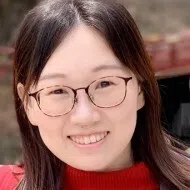

Last May, 32-year-old Dai Wen renovated a three-storey house in the rural outskirts of her hometown, Jinhua, in Zhejiang province, converting it into a homestay with five guest rooms. Instead of listing the property on mainstream homestay platforms, she posted on RedNote (or Xiaohongshu), where around 70% of users are women, to recruit female co-living residents.
Dai Wen, who goes by the online handle Fengxia (风下, lit. “under the wind”), told Lianhe Zaobao that she first encountered feminism during the renovation process, through which she connected with many like-minded women online.
“But online interactions don’t really let you see what other people’s lives are like, and that always felt like something was missing,” she said. “After discussing with friends, we decided to turn this place into a women-only space, so that everyone can also build deeper connections in person.”
This women-only co-living space, called Ta Shan Gong Qi (她山共栖, lit. “Her Mountain Co-living”), was set up about six months ago and has hosted dozens of women. During the day, residents travel together; in the evenings, they cook, watch films, and chat late into the night.

In recent years, women-only co-living spaces have been springing up across China. Young women are beginning to try out a new way of life: creating female-only homes away from men.
‘Spinsters’ houses’ make a comeback
The concept of women-only co-living is not new in China. In the early 20th century, there were “comb sisters” or zishunu (自梳女, lit. “self-comb women”) from Shunde, Guangdong, who took ritual vows to remain celibate for life, as signalled by their distinctive hairstyle combed into a bun. These “spinsters” or gupo 姑婆 pooled their resources to build communal “spinster houses” (gupo wu, 姑婆屋), where they lived together and supported one another in old age. Bing Yu Tang (冰玉堂, lit. Hall of Ice and Jade) in Shunde was one such residence shared by comb sisters who went back to China from Singapore in the 1950s and 1960s after retirement.

As global ageing accelerates and marriage and fertility rates decline, more single women are exploring housing and eldercare models beyond the traditional family. New Ground, established in London in 2016, is a retirement community formed by 26 older women. In South Korea, Flight of the Singles — an organisation in Jeonju for unmarried women — also set up a cooperative in 2022 to promote women-only housing for older women.
Last year, 18 Chinese women each contributed 3,000 RMB (about US$430) to set up the Guangshajian Co-Creation Community (广厦间共创社区) in Yunnan. In posts on RedNote, the group said the women’s collective takes reference from the comb sisters, aiming to “explore and implement the possibilities of women-only co-living, shared and redistributed resources, and even women-only eldercare”.
That said, the more common form of women-only co-living in China today remains short-term stays in homestays. At Ta Shan Gong Qi, for example, stays range from just one or two days to, at most, less than a month. Even so, many guests say the experience has inspired them to join the ranks of women-only co-living.
In July last year, 31-year-old Yuan Yuan — a beipiao (北漂, those struggling to get a career started in Beijing) who lives and works in Beijing — made the trip to Ta Shan Gong Qi after hearing about it and stayed for four days. When interviewed, she said the experience was completely different from previous homestays: “There’s no need to worry about the male gaze or harassment. We can wear whatever we want and do whatever we want.”
After returning to Beijing, Yuan decided to offer a two-bedroom apartment in the city centre at an ultra-low rate of 50 RMB per night to women who needed a temporary place to stay, creating what she calls “the smallest unit of women-only co-living in the city”.
After renting the apartment on a long-term lease, Yuan moved her workplace to the suburbs and now only returns on weekends. This idle space, named Wutong Lodge (梧桐小屋, Sycamore Lodge), has hosted more than 20 women over the past four months, including out-of-town visitors, jobseekers and those simply curious about the space. “No matter where the sisters come from, they treat this place as a safe space and take the initiative to keep it in order.”

Like Dai Wen, Yuan also sees her small apartment as a space for practising feminism. She said that her father’s chauvinistic attitudes and domestic violence made her feel deep sympathy for her mother, while also fuelling her growing resentment towards patriarchy. As an adult, she began reading feminist works, paying increasing attention to gender issues, and taking part offline in women-only book clubs and feminist public-interest handicraft workshops.
Openly identifying as someone who does not intend to marry, Yuan said candidly that women-only co-living is the lifestyle she aspires to. “Being with other women makes me feel comfortable and safe. Through this small-scale experiment, I hope to encourage more women to embrace this idea.”
All-female guesthouse in Yunnan does not serve elderly men
For Song Mingjing, the owner of the women-only homestay Chu She (初舍) in Dali, Yunnan, embracing women-only co-living was a passive yet inevitable choice.
Now in her 50s, Song spent many years working in book publishing before switching to the homestay business in 2022. At first, her guesthouse accepted both male and female guests, but she soon found that many male customers seemed to feel like a patriarch or a lord, which she could not stand.
She told me: “A lot of men would talk pompously. They even called me ‘waiter’, and expected us to serve them like a lord. That made me very uncomfortable, and I didn’t want to earn money that way. After six months, I tried accepting only female guests and found the concept was very popular with women, so I made the bold decision to turn it into a women-only homestay.”
In Song’s view, it is only in spaces without men that women can truly be themselves, as they do away with makeup, put aside familial roles such as wife or mother, and express their innermost thoughts.

Similarly, Dai Wen believes that women-only co-living is far more than simply living together. Because most residents share feminist values, they have opportunities for deep conversations, and the chances of forming genuine friendships through co-living are high. “We often chat late into the night, cry in front of people who were strangers just days before, and part with lingering hugs when it’s time to leave… the beautiful and pure friendships between women have given me tremendous strength.”
Last August, Dai and several partners rented a house in Chiang Mai, Thailand, as the second women-only co-living space under the Ta Shan Gong Qi name. She hopes to expand the initiative to more countries, so that women can live with peace of mind wherever they are in the world.
Ideals and reality inevitably diverge
Dai Wen acknowledged that while the women-only homestay in Chiang Mai enjoys a relatively stable occupancy rate thanks to its convenient location, the Jinhua location is in a remote rural area with poor transport links. In addition, as she has spent the past two months travelling and has been unable to manage the homestay, visitor numbers have fallen sharply, so ensuring the stable operation of the homestay will be a key focus of her efforts this year.

With the advent of winter in Beijing, Yuan raised the daily rate at Wutong Lodge from 50 RMB to 70 RMB, and added a heating fee of 10 RMB per day. She said with a wry smile that even after the price increase, she was still operating at a loss. “I didn’t do this to make a profit, but the initial pricing was too hasty — I didn’t calculate daily operating costs or the maintenance expenses when the place is vacant. Right now, the biggest challenge is balancing ideals with reality.”
Chang Wu Zhuang (长物庄), dubbed “Shanghai’s first women-only co-living apartment”, began operations in 2020 but announced its closure after just one year. In interviews with the media, the project leader said the primary reason it could not continue was “an imbalance between income and expenditure”. In addition, one of the managers moved out after getting married, which also affected the project’s operation.
Another women-only co-living project, Sai Xi Ya (赛西亚) in Nanjing, Jiangsu, which was widely covered by the media in 2023, also closed in 2024. Earlier reports had already highlighted its difficulties: the shared villa had only two rooms available for rent, and even at full occupancy the operating team could not turn a profit; moreover, its remote location made it hard to attract working professionals as long-term tenants.
Beyond women-only co-living projects, other women-only spaces across China — such as women-only bookstores, gyms and bars — have also experienced a wave of closures after a brief period of popularity in recent years, raising questions about the sustainability of the women-only economy.
Women-only spaces under scrutiny: Progress or retreat?
At the same time, women-only spaces face scepticism not only from mainstream public opinion but also from within women’s communities themselves. Are they a means of advancing women’s rights, or a retreat from shared social space? Do they foster mutual support among women, or do they intensify gender antagonism?
For Ji, a 23-year-old woman from Chongqing, her most vivid memory from a trip to South Korea two years ago was staying in a women-only homestay. She recalled being overcharged by a taxi driver and returning to the homestay in tears. Although the host and the Korean women staying there did not share a common language, they comforted her using a translation app and even bought her coffee and pizza, allowing her to experience the warmth of solidarity among women.
However, Ji does not aspire to long-term women-only co-living. She said that women-only spaces are necessary for women with particular needs for mutual support, but “what I don’t agree with is turning the women-only model into a form of retreat, where women give up the hard-won space they have secured in society”.

Associate Professor Wei-ting Wu with the Graduate Institute for Gender Studies at Shih Hsin University in Taiwan, who has long studied gender issues in mainland China, said when interviewed that women-only spaces first emerged in the 19th century as a response to women being excluded from public spaces. The women-only spaces appearing in mainland China in recent years are more like a form of political and cultural expression, reflecting women’s resistance to policies that pressure them to marry and have children, as well as to a broader misogynistic social climate.
Wu believes the current wave of women-only co-living seems more like young women exploring new ways of living, and it remains to be seen whether it can evolve into a broader social movement, and how long it will last. “That will depend on how the younger generation thinks and how they respond to social pressures.”
For her part, Yuan Yuan believes that to address the staring and harassment women face in public spaces, “we can work to improve existing spaces, or we can try to create new ones — both are reasonable.”
Song Mingjing, who is married with a daughter, put it bluntly: “I’m not trying to go up against men, and I don’t care about any ‘isms’. I’m simply serving the people I’m willing to serve.”
Dai Wen, who is currently in a long-distance relationship with her German boyfriend, also said she does not believe men and women must be in opposition. But the reality, she noted, is that even as women enter a male-dominated world, they are still treated as accessories and objects of the gaze. “There are far too many spaces in the world that belong exclusively to men. Women-only spaces are a powerful form of resistance and a declaration in response.”
In June last year, Dai Wen wrote a post on RedNote responding to her mother’s concerns about women-only co-living: “My mum always feels that life needs to be stabilised by forming a ‘family’. How can a group of women living together last in the long run?
“But life only ever exists in the present. No one knows how long this women-only home will last, but the happiness we gain right now is what life looks like at its best.”
From ‘man-hating’ to ‘radical feminism’
Beyond women-only co-living, some Chinese women are also trying other ways to distance themselves from men.
Tian, who lives in Wuhan, Hubei, began following a personal rule several years ago: to avoid getting to know new men whenever possible.
Describing herself as having “man-hating” tendencies, Tian told Lianhe Zaobao that she had witnessed her father repeatedly abusing her mother while growing up, and had herself been threatened with violence by him. As an adult, she discovered that male friends around her had gone to prostitutes together, while male colleagues in the workplace refused to change their ways and behaved arrogantly, all of which triggered a severe crisis of trust in men.

Now 27, Tian had dated two boyfriends during secondary school and is currently a fan of a male idol group. But she admitted that she has no interest whatsoever in real-life men and has no intention of dating or marrying.
She said: “A man who looks perfect is often carefully packaged. It always feels like, behind the scenes, they all go to prostitutes and make sexist jokes about women. And in marriage, women have to shoulder far too much responsibility. I’m unwilling to give a stranger the chance to hurt me physically or emotionally.”
Gender-related incidents that have frequently trended online in recent years — such as the assault on women at a barbecue restaurant in Tangshan, Hebei; the expulsion of a female student at Dalian Polytechnic University for having sex with a foreign e-sports player; the exposure of the MaskPark online voyeurism forum; and the forced-sex case involving an engaged couple in Datong, Shanxi — have further reinforced Tian’s sense of male oppression over women.
She used to closely follow such controversies and take part in discussions, but as work grew busier, she gradually reduced her attention and participation. By contrast, Ji, a younger woman from Chongqing, remains highly active in debates across various platforms. She has been temporarily banned by platforms several times as a result, and has been insulted as a “radical feminist”.
At 23, Ji said frankly that she is proud to be labelled a “radical feminist”. “Every ideology needs radicals to push it forward. Of course we’ll be criticised, but doesn’t that give moderates more room to negotiate?”
Ji also grew up in a violent family and has reduced contact with her father since becoming an adult. She opposes women entering marriage, and refers to married women who speak on behalf of men as “enemy mounts”. She explained that her criticism is not directed at all married women, “but at young women who have clearly been exposed to feminist ideas and yet still choose to throw themselves into building patriarchy”.

Despite her aggressive rhetoric on social media, in real life Ji donates monthly to causes such as reforestation and animal protection, and provides targeted sponsorship to students from impoverished backgrounds. The day before the interview, she had just bought winter clothing for a financially struggling male student. “What I hate isn’t men, but people who are uncivilised and unreasonable… it’s just that these traits appear more often among men.”
As controversies over gender issues continue to intensify in China’s public discourse, the authorities have on the one hand accelerated revisions to the Law on the Protection of Women’s Rights and Interests, while on the other hand steadily tightening controls over feminist organisations and bloggers. Since 2020, Chinese authorities have launched multiple rounds of “clean-up” campaigns targeting online content deemed to “promote extreme feminism and incite gender confrontation”, leading to the shutdown or dissolution of numerous feminist accounts and organisations. Last June, Weibo added a new category of “inciting gender antagonism” as a complaint, further strengthening enforcement.
‘Hating men’ is a trauma response
Li Sipan (real name Li Jun), currently a visiting scholar at Stanford University and a veteran Chinese media professional focusing on gender and communication issues, said when interviewed that as feminist movements have long been suppressed by the authorities, female bloggers discussing gender issues are more likely to encounter hostility or even online abuse. “In this context, women’s so-called ‘man-hating’ is a form of trauma response.”
Prof Wu of Shih Hsin University also believes that “man-hating” is a product nurtured by a misogynistic environment. With social media amplifying emotions, tensions on both sides are more easily escalated. “As the tug of war intensifies, it becomes easier to develop the belief that ‘only women understand women’, and to become unwilling to communicate with men.”
Li also observed that young women who have grown up in a social-media environment tend to have stronger feminist awareness, but this may be the result of online clustering and exclusion. “Right now, social media lacks an environment for rational discussion. When people encounter differing views, they don’t think about adjusting their positions — they want to stand with their own echo chamber, and they bring this mindset into offline interpersonal relationships as well.”
She believes that while such attitudes are understandable, they are not a solution to gender issues. “Purely female or purely male spaces within society are extremely limited. And beyond gender, there are many other differences between people — women can have conflicts with other women too. Different kinds of people will always need to live and work together, to mediate, to negotiate, and to listen to perspectives that differ from their own.”
This article was first published in Lianhe Zaobao as “全女共居远离男性 姐妹乌托邦探寻自我”.
Related: [Big read] China women’s long march towards equality | [Big read] Why China’s funniest women are also its most controversial

Get the ThinkChina Weekly Newsletter
Insights on China, right in your mailbox. Sign up now.
By subscribing, I agree to SPH Media's Terms and Conditions and Privacy Policy.