[Photos] Turning pages with Moon Jae-in: A Taiwanese publisher’s unexpected encounter
The launch of a Taiwan-produced photo book themed around Korea in Seoul drew much local media attention and even caught the eye of former South Korean President Moon Jae-in. Historical photo collector Hsu Chung-mao shares the story behind publishing this World War II-era Korean photo collection, and how it sparked a memorable encounter.
8 Aug 2025
History
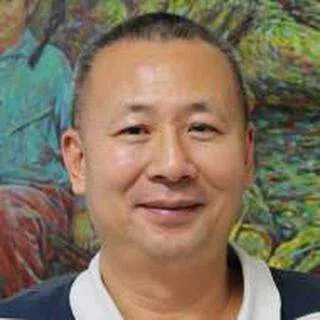

(All photos courtesy of Hsu Chung-mao.)
On 18 June 2025, we launched our latest historical photo book, Korea’s National Memory, 1860s–1960s: The 80th Anniversary of the Liberation, at the Seoul International Book Fair. The following day, I unexpectedly found myself engaged in a memorable dialogue with former South Korean President Moon Jae-in.
Our conversation ranged from the historical photos of the Korean Provisional Government in Chongqing during World War II and its president, Kim Gu, to the regional situation today. This dialogue was a unique experience for me as a publisher.
A reverence no less than a Korean citizen
I have been collecting historical photographs related to Korea for about three decades. Around 1995, I began collecting and researching historical photographs from mainland China and Taiwan, with a particular focus on images related to resistance against Japanese imperial aggression and colonial rule. In the process, I came across a collection of original and high-quality images of the Korean Provisional Government in Chongqing.
This discovery led me deeper into this field and allowed me to uncover many important stories. I became fascinated by the stories of Korea’s anti-Japanese patriots and was profoundly moved by the heroic deeds of national heroes such as Empress Myeongseong (Queen Min), Ahn Jung-geun, Yu Gwan-sun, Yun Bong-gil and Kim Gu. I have since followed every film and television series related to them. Even stories of King Sejong and Admiral Yi Sun-sin were intriguing, drawing me into the world of their struggles and triumphs.
I feel that when I stand today in front of Admiral Yi’s statue at Gwanghwamun in Seoul, the reverence I feel will be no different from that of the everyday Korean citizen.


Hence, whenever I come across rare and valuable historical photos of Korea, I do my best to acquire them, regardless of the price.
Despite the countless valuable historical photographs of Korea at hand, I had no real outlet for them, since I had no professional ties to Korea. It was not until 2023, when I decided to take a chance to publish my first historical photo album on Korea and participate in the Seoul International Book Fair, that my professional relationship with Korea truly began.
Interest from Korean media
In fact, before bringing the Taiwan-produced, Korea-themed photo books to South Korea, we were uncertain how Korean readers would respond. After all, South Korea is a powerhouse of soft power today. Its films, television dramas and pop culture have taken the world by storm, and its publishing industry is also highly developed. Introducing a Korean history picture book made in Taiwan to Korean readers meant entering a field in which they were already deeply familiar and highly skilled. It was almost like showing off in front of the masters, and if we misjudged the situation, we would be making fools of ourselves.
Fortunately, the response from Korean readers was overwhelmingly positive, so much so that I was genuinely surprised and honoured. During the editorial process, I poured my heart and soul into the photo book. I felt a profound connection to the land, the people and the passage of time in Korea — as though I was walking down a corridor of time, retracing a century of history, experiencing the suffering and hope, and then presenting this arduous journey through photos. These images resonated deeply, evoking powerful emotions and memories not only for Koreans today but also for many Chinese readers.


In 2024, I collaborated with Korean publisher Bookseas to publish a three-volume series titled Korean Gifts, consisting of Hanyang, Tradition and People, and Destruction and Restoration. The series created a significant stir in Korea’s cultural circles. Major media outlets gave it early coverage, including Yonhap News Agency, SBS (one of South Korea’s three major TV networks) and JoongAng Ilbo. After the book fair opened, South Korea’s largest public broadcaster KBS and other prominent outlets such as The Hankyoreh also featured in-depth reports on the series.
Thanks to this wide media coverage, our booth at the Taiwan Pavilion drew large crowds of readers every day. Many visitors, mostly young people, lined up to browse the books. Their interest in Korean history was deeply moving.

This year’s book is our comprehensive visual summary of Korea’s modern history, spanning 450 pages and featuring 560 digitally colourised photographs.
At this year’s book fair, publishers were placed in less favourable positions towards the back of the venue. Apart from those there for copyright and rights trading, few general visitors made it that far, and far fewer people saw our photo book compared with the past two years. Even so, we were interviewed by several media outlets, who asked us to provide a selection of newsworthy photos.
For Korean media, the most newsworthy images were those depicting the humiliation suffered by Koreans under Japanese colonial rule, such as Korean women’s performance troupes sent to entertain wounded imperial Japanese soldiers, or Korean independence activists chained up like animals and paraded by Japanese troops. These photos were naturally the focal point in media coverage, as they evoked a strong sense of historical shame and outrage, resonating with the Korean people’s national pride.


A visit from Moon Jae-in
As for the unexpected dialogue with Moon, it came about after I heard that he had opened a bookstore near Busan. Given that we had published a photo book on Korean history, I had wanted to visit Moon in the hopes of having a meaningful exchange.
Before we could even find a way to approach him, we happened to learn that one of our Korean partners knew his daughter, Moon Da-hye, who was also present at the book fair. My colleague invited her to visit our booth, and I presented her with a copy of our book. As her father would be coming the next day, she readily agreed to bring him over.
Everything unfolded effortlessly — it was a truly pleasant surprise for us. Of course, having Moon visit may have involved a stroke of luck, but the fact that he stayed with us for over 20 minutes, engaging in a thoughtful and enthusiastic discussion, went far beyond mere courtesy. It was a meaningful historical conversation. His genuine interest and warm participation were a testament to the strength and substance of our work.


Moon made a last-minute decision to visit our stall. I brought up the 2019 meeting at Panmunjom between him, US President Donald Trump and North Korean leader Kim Jong-un. I said, “The meeting between the three of you at Panmunjom brought hope for peace to East Asia and the world. I deeply admire your policy of reconciliation between North and South Korea.”
I then opened our photo book Korea Under Japanese Occupation, 1910-1945 and turned specifically to the pages depicting the Korean Provisional Government in Chongqing. Moon’s eyes immediately lit up. I knew clearly that this was a chapter of history that deeply resonated with Korean political leaders. Today, the Constitution of the Republic of Korea explicitly states that its legal and historical foundation stems from the March First Movement, the Provisional Government in exile in China, and eventually the establishment of the Republic of Korea after liberation.

As expected, Moon, alongside Seoul Metropolitan Office of Education Superintendent Jeong Geun-sik, took a photo with those pages. He posed with an expression of reverence and pride. Unsurprisingly, that photo of Moon and Jeong with our book was picked up and widely circulated by Korean media as a key news image.
Moon then told me that both Taiwan and Korea endured the painful experience of Japanese colonial rule, and that there is much we can share with each other. I mentioned that I had also compiled many historical images of the Taiwanese people’s resistance against Japanese colonisation and their pursuit of liberation, and that we could exchange insights on these shared struggles.
I also explained how, during the 1943 Cairo Conference, it was decided that after Japan’s defeat, Taiwan would return to China and Korea would gain independence. As a participant in the anti-fascist Allied effort, Korea could also be regarded as one of the victorious nations of World War II. I even showed him a historical photograph of the Cairo Conference.
Moon studied the image carefully and was able to identify the figures in it, including Generalissimo Chiang Kai-shek. This part of history is taught in both Japanese and Korean textbooks, and to this day, many Koreans still hold a sense of appreciation towards President Chiang. That moment symbolised a meaningful convergence of our historical memories and sentiments.

I told him that as Korea commemorates the 80th anniversary of its liberation this year, if high-quality historical photographs are needed for any of the official events, we would be happy to contribute, as we hope our materials can make the commemorations more powerful and moving. Moon agreed that there is room for collaboration in this area, and even introduced us to Jeong, saying that if support is needed, they can turn to us.
A sincere handwritten letter
Since Moon now runs a bookstore in his hometown after retirement, I proposed that we donate a set of our publications to his store, which he could then give to other government officials or friends in the private sector. A week later, our Korean partner, Ms Amo, drove from Seoul to Moon’s bookstore near Busan, carrying the donated books along with a letter I had written to him.
We have long done our writing on computers and mobile phones, so it has been ages since I last wrote anything by hand. Despite the struggle, I still took the time and effort to handwrite a letter to Moon to convey my sincerity.
In it, I once again expressed my highest respect for his efforts to promote peace and reconciliation between North and South Korea during his presidency. I noted that his experience could serve as a valuable reference for peace in the Taiwan Strait. According to our partner, Moon read my letter, which included a Korean translation, very carefully.


I have been collecting historical photographs for nearly 30 years — a journey that has brought me many unique and meaningful experiences. But my historical dialogue with Moon this year was truly one of the most special and pleasant moments in all my years working with old photographs. It is a memory worth preserving in both images and words.


Related: [Photos] Fact versus fiction: The portrayal of WWII anti-Japanese martyrs in Taiwan | [Photo story] The long road to justice against Japanese war criminals and collaborators

Get the ThinkChina Weekly Newsletter
Insights on China, right in your mailbox. Sign up now.
By subscribing, I agree to SPH Media's Terms and Conditions and Privacy Policy.