Can East Asia unite? Obstacles remain despite US tariffs
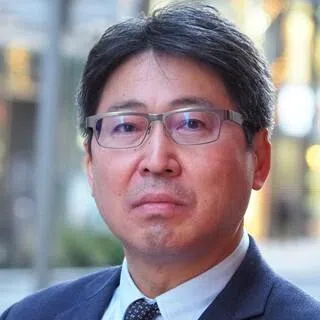
The recent dialogues between Japan, China and South Korea point to possible cooperation in the face of US tariffs, but some issues still need to be worked out, including the Taiwan question and other historical factors. Japanese academic Shin Kawashima tells us more.
7 Apr 2025
Politics

The Japan-China-ROK Trilateral Foreign Ministers’ Meeting and the Japan-China High-Level Economic Dialogue were held in Tokyo last month. The three countries agreed to hold a trilateral summit “at the earliest convenient time” to address common issues. Given the unclear policies of the second Trump administration, the uncertain global situation, and the domestic uncertainty in South Korea, simply holding the meetings can be considered a success in itself.
In terms of cooperation with ASEAN, it was significant that Japan, China, and South Korea expressed clear support for the ASEAN Outlook on the Indo-Pacific (AOIP), ASEAN’s version of the Free and Open Indo-Pacific (FOIP), even though the concept is often viewed as a “China containment network”.
Navigating dangerous waters
It was also extremely important for Japan, China, and South Korea to mutually stabilise their relations in the face of US “uncertainty”, and these meetings were significant in this sense. However, although they share a common concern about the tariff policy issued by the US, they have not yet agreed to move in step with the US tariff policy or to adopt a unified policy.
Indeed, it has become clear that cooperation between Japan, China and South Korea will not be easy in some respects.
At the Japan-China-ROK Trilateral Summit in 2024, six areas were raised as common issues and areas of cooperation: (1) People to People Exchanges; (2) Sustainable Development including through Climate Change Response; (3) Economic Cooperation and Trade; (4) Public Health and Aging Society; (5) Science and Technology Cooperation, Digital Transformation; and (6) Disaster Relief and Safety.
However, no specific results were reported this time. As for the Japan-China-ROK Free Trade Agreement, although there was a decision to pursue it, there was no particular mention of any outcomes.

It should also be noted that the trilateral summit, originally scheduled for within the year, has been downgraded to “at the earliest convenient time”. This is probably due to the domestic situation in Korea, as well as the uncertainty of how long the Shigeru Ishiba administration in Japan will be able to remain in power, and the fact that “within a year” would limit the diplomacy of the next administration, so “at the earliest convenient time” was chosen.
Different perspectives

Get the ThinkChina Weekly Newsletter
Insights on China, right in your mailbox. Sign up now.
By subscribing, I agree to SPH Media's Terms and Conditions and Privacy Policy.
It is also important to note that Chinese Foreign Minister Wang Yi raised the historical and Taiwan issues at the press conferences to pressure Japan, and also raised the importance of a multilateral trade framework to warn against the unilateral tendencies of the US. While Japan acknowledges the importance of a multilateral trade framework, it is thought that Japan refrained from clearly supporting it at the foreign ministers’ meeting. This caution likely stems from concerns that aligning with China’s position could lead to Japan being caught up in China’s criticisms of the US.
Additionally, a contentious issue at the foreign ministers’ meeting arose when Japan protested the wording in the summary report released by the Chinese foreign ministry. Japan objected to the report’s claim on the Chinese website that Japanese Prime Minister Ishiba had described China’s remarks on historical issues and the Taiwan question as “respectful”. Typically, each country publishes different versions of summit and ministerial meeting summaries, but Japan’s protest was unusual and indicated strong displeasure.

Japan’s frustration
Discomfort on the Japanese side may have been felt especially strongly at the Japan-China High-Level Economic Dialogue, a conference held for the first time in six years.
At the previous conference, held in Beijing in 2019, Japan sent the foreign minister, five other ministers and a vice-minister. For the conference in Tokyo this year, the Chinese side was represented by Foreign Minister Wang Yi, Vice-Foreign Minister Sun Weidong, vice-chairman of the National Development and Reform Commission Zhao Chenxin, Vice-Finance Minister Liao Min, Vice-Ecology and Environment Minister Yu Huiwen, Vice-Commerce Minister Yan Dong, director-general of the General Administration of Customs Zhao Zenglian and chief engineer of the Ministry of Industry and Information Technology Xie Shaofeng. No ministers other than Wang Yi were included.
This probably indicates China’s dissatisfaction with Japan over historical issues and the Taiwan issue, but even so, it was a very different response from that shown by Japan in 2019. Under these circumstances, Japan cannot help but feel frustrated, even if there is talk of strengthening economic ties and welcoming investment.
The Japan-China-ROK Trilateral Foreign Ministers’ Meeting and the Japan-China High-Level Economic Dialogue will not change the overall framework of international relations in East Asia. Nevertheless, the fact that meetings were held and direct dialogue was able to take place is meaningful in itself, and it is only in such ways that the worst-case scenario can be avoided.
Related: South Korea-Japan-China trilateral summit: Self-interest biggest hurdle to cooperation | Can China be the world’s lighthouse in a trade storm?
Popular This Month
Get the ThinkChina Weekly Newsletter
Insights on China, right in your mailbox. Sign up now.
By subscribing, I agree to SPH Media's Terms and Conditions and Privacy Policy.