Singapore’s veteran diplomat Kishore Mahbubani, a China optimist
In an interview by Lianhe Zaobao China news associate editor Chua Eng Wee, Singapore’s former diplomat Kishore Mahbubani shares his ideas about diplomacy and recounts his experience.
21 Aug 2024
Politics
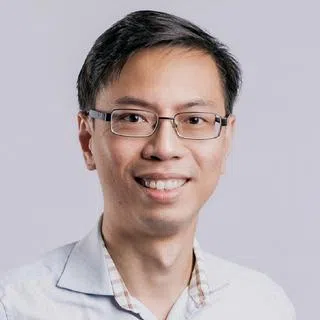

“If there is any one country I am pro, it is Singapore.”
Kishore Mahbubani, a former Singaporean diplomat, has unique perspectives on international affairs and often expresses friendly views of China, thus he is widely regarded as pro-China. In an exclusive interview by Lianhe Zaobao, in conjunction with the publication of his memoir, Mahbubani shared his views on being labelled as “pro-China”.
The interview took place at the veteran diplomat’s home in Siglap, in the eastern part of Singapore. Instead of his usual suit and tie, he wore a blue short-sleeved collared shirt. There was no prevarication in the one-hour interview, demonstrating Mahbubani’s straightforward attitude in life.
He calmly said, “I can also understand why this perception [of being pro-China] arises in Singapore, because I’m seen battling all the Western figures. Many of these Western figures are writing and presenting very distorted pictures of China.”
However, he believes that it is natural for one side to try to demonise the other in a major geopolitical contest. He said, “The US successfully demonised the Soviet Union in the Cold War. Ronald Reagan called it the evil empire. The same way, there is also a process to demonise China.”
Mahbubani believes that the China-US geopolitical contest is the biggest ever in human history. He said, “We must remember that in this contest, both sides will put their interests first, and both sides will sacrifice the interest of smaller countries, like Singapore. So we must make sure that we do not get involved, we do not take sides… But at the same time, if we can do something to minimise the contest, and try to explain to both sides, you are better off avoiding this contest, that is what I am trying to do with my writing.”
Commended by former Harvard president
Mahbubani is currently a distinguished fellow at the Asia Research Institute of the National University of Singapore (NUS). He said that he is serving Singapore’s interests on the one hand, and trying to help the US on the other, which the more thoughtful Americans will understand very well.
“My book Has China Won was described by Larry Summers, former US treasury secretary and former Harvard University president, as one of the three best books he read in 2020. Now, obviously, if that book was pro-China, there is no way he would have said that,” he said.
Mahbubani added that he is frequently invited to speak at US universities, including University of Pennsylvania earlier this year, and Harvard University to launch his memoir. He said, “So the fact that the doors are still open for me in the major American universities, shows that the thoughtful Americans understand what I am trying to do.”

Despite being friendly with China, Mahbubani admitted that the country is experiencing major changes and will certainly encounter problems in social transformation, like any other country.
He assessed, “Right now, if you talk to businessmen in China, they are clearly not feeling very confident and optimistic about the future. The fact that business sentiment has dampened is not a good sign. The fact that they [Chinese officials] have allowed a property bubble to emerge and develop in China is not a good sign… In my opinion, their main challenge is a geopolitical one, i.e. dealing with the US. But the question is whether or not they have the capacity to deal with these challenges.”
In this regard, Mahbubani thinks that the US has completely underestimated the ability of the Chinese people and the Chinese government to find pragmatic solutions to their problems.
Not underestimating the US
He said, “At the end of the day, it is now conventional wisdom in the West to be pessimistic about China and its prospects. I always say that I belong to an endangered species of China optimists. I remain optimistic for China in the long run. So in that sense, that makes my views different from the mainstream views on China.”
Mahbubani’s optimism primarily stems from his understanding of China’s history. Having previously visited China two to three times a year, he explained that the Chinese civilisation is cyclical. In the downward cycle, the Chinese civilisation can be extremely weak. In fact, China’s century of humiliation from 1842 to 1949 was one of its worst in recent history.
However, having hit rock bottom, the Chinese civilisation would rebound as it has in the past. Mahbubani estimated that the Chinese civilisation would reasonably enjoy at least another 100 years of prosperity, as it has only been about 45 years since the start of Deng Xiaoping’s modernisation strategy.
Mahbubani also believes that the Chinese Communist Party (CCP) is one of the organisations in the world that most values meritocracy. He said, “I have actually given lectures in the Chinese Communist Party school to a room full of vice-governors and vice-ministers. What is stunning when you interact with the leaders in China is the quality of their mind… In many cases, it is better than the quality of mind of the American or even European policymakers, partly because in China they still find the best people to serve in government.”

Mahbubani assessed that there is no doubt China has become stronger under the leadership of CCP General Secretary and Chinese President Xi Jinping. Since he took office, US pressures on China have grown by leaps and bounds. “If he [Xi] had been a weak leader, he could have buckled, China could have buckled, but he has not,” he said.
He added, “What is striking is that the Anglo-Saxon media is very negative on President Xi; they almost do not have a good word to say about him. But you notice that when the third world leaders, the leaders of the global south see him, they treat him with enormous respect. Even today, the Europeans still travel to China. Interestingly enough, even though Prime Minister Giorgia Meloni pulled Italy out of the Belt and Road Initiative, she is still going to China. So that is a sign that countries around the world recognise and respect the leadership of President Xi.”
However, Mahbubani specially emphasised to never underestimate the US. He said, “It is a great society. You must never write off the US, which is why the US-China contest is so amazing because you have two very, very strong societies but with different strengths, competing with one another. The US and China have got their own dramatic strengths, especially in the private sector and in governance respectively.”
On the future direction of China-US relations, Mahbubani categorically said that he has “no doubt that they will get worse”.
He believes that the China-US contest will intensify in the next ten to 20 years and that there is a strong political consensus in Washington that the US has about ten years to stop China from becoming the number one superpower, which the Americans also believe is in their national interest. This explains why former US President Donald Trump imposed trade tariffs against China, and incumbent President Joe Biden, who succeeded Trump, did not remove these tariffs but increased sanctions against China. Now, it is very likely that Trump will return to the White House.
Mahbubani assessed, “Regardless of who wins the US presidential election, the pressures on China will increase, so we should psychologically be ready for a rough road in US-China relations”.
ASEAN the best buffer
How should we prepare? Mahbubani’s answer is not to choose sides, saying, “In fact, the first leader in the world to make the case very clearly that countries should not take sides is former Singapore Prime Minister Lee Hsien Loong.”
Mahbubani further emphasised the crucial role of ASEAN, describing the regional organisation as “the best buffer against pressures from these two great powers, the US and China”.

He said, “We must do our best to strengthen ASEAN as much as possible. That is what we should be doing. Fortunately, for us, ASEAN still remains a strong regional organisation. Why is it that when you have an ASEAN Foreign Ministers meeting, as we have just had in Laos, the US Secretary of State Anthony Blinken and the foreign ministers of China, Russia, India and Japan come. Why? Because ASEAN matters. ASEAN is significant. There is no other part of the world that has a meeting like the ASEAN meeting. People really underestimate ASEAN.”
Li Ka-shing’s S$100 million donation
After leaving his diplomatic career and joining academia in 2004 to become the first dean of NUS’s Lee Kuan Yew School of Public Policy (LKYSPP), one of the biggest challenges Mahbubani faced was to raise funds.
When discussing fundraising, Lee Kuan Yew suggested for Mahbubani to approach Lee’s good friend Li Ka-shing, the richest man in Hong Kong. Mahbubani said, “I must say meeting Mr Li Ka-shing was one of the most unforgettable experiences in my life.”
He recalled that it was in 2007 when he presented a simple letter of only three paragraphs from Lee Kuan Yew to Li Ka-shing in Hong Kong. The first paragraph was to introduce Mahbubani, the second mentioned the school’s intention to name a building after Li, and the third simply read, “We hope you make an appropriate contribution.”
No one specifically told Mahbubani how much is appropriate. The university advised him to ask for a modest amount, perhaps S$20 million (US$15.3 million) to S$30 million.

Get the ThinkChina Weekly Newsletter
Insights on China, right in your mailbox. Sign up now.
By subscribing, I agree to SPH Media's Terms and Conditions and Privacy Policy.
After some research, Mahbubani found out that Li had donated HK$1 billion (US$128 million) to the University of Hong Kong, which was equivalent to about S$200 million at that time. So he took it upon himself to ask Li for half the amount.
As Mahbubani handed Lee Kuan Yew’s letter to Li Ka-shing, he had already prepared a half-an-hour speech to introduce the qualities of the LKYSPP. He did not expect Li, after reading the letter, to immediately ask, “How much?”
Mahbubani replied, “One hundred million dollars.”
Li asked, “Singapore or Hong Kong dollars?”
Mahbubani responded, “Singapore dollars.”
This request obviously exceeded Li’s expectations. He frowned and turned to discuss with his assistant in Cantonese.

Mahbubani thought, “I do not know what they are saying. Am I done for?”
Three minutes later, Li shook Mahbubani’s hand and said, “Okay.”
Mahbubani recalled that he “could have fainted” because it would usually take several weeks or even months of negotiations for established universities like Yale or Harvard to raise that much funds.
While Li readily agreed to donate to the LKYSPP, Mahbubani faced a different problem. He said, “When I left his office, Li gifted me a Montblanc pen. I realised, oh my God, I have to declare this pen, and I probably have to pay. In fact, I ended up paying S$500 for it because the pen cost more than S$1,000.”
But Mahbubani did not begrudge this. He happily recalled that when Li came to Singapore to launch the building and visited Mahbubani’s office, “I proudly showed him the pen that he gave me. I did not tell him that I had to pay S$500 to NUS to retain his gift”.
Helming the LKYSPP
When Mahbubani stepped down as dean in 2017, the LKYSPP was already one of the best-endowed schools of public policy in the world. It ranks third, behind Harvard Kennedy School and Princeton School of Public and International Affairs.
Mahbubani believes that the LKYSPP’s development into a respected global governance educational institution within such a short time is a remarkable achievement.
He said that Lee Kuan Yew resolutely refused to allow any organisation to use his name prior to turning 80. He only later agreed for his name to be used to promote Singapore-style governance.
Mahbubani explained, “Mr Lee Kuan Yew told me that he would really like the Lee Kuan Yew School to be a Lee Kuan Yew School of Public Policy, and not the Lee Kuan Yew School of Thought. He wanted a school that is respected by its academic peers around the world. He wanted to share the ideas of Singapore’s development and, frankly, the ideas of good governance, with the rest of the world. You cannot do that in academia if you are seen as a propagandistic institution. You must enjoy the respect of your academic peers before you can become effective. And this is what we have accomplished.”
Looking back on Mahbubani’s tenure as dean, one will inevitably recall Professor Huang Jing of the LYSPP, who was identified as an “agent of influence of a foreign country” in 2017. Born in China, Huang was naturalised in the US. He is said to have attempted to influence public opinion in Singapore and was expelled by the Singapore government. Mahbubani declined to comment on this during the interview.
Biggest regret in life
Mahbubani, who will turn 76 years old in October this year, describes in his memoir that he is entering the last lap of his life. During the interview, he said that if he could turn back the clock, he would want to return to when his children were born. He lamented, “My biggest regret in my life is that I failed to spend time with my children when they were young.”

Mahbubani has three children, aged between 34 and 38, who live in Europe and the US.
He shared, “Unfortunately, my career started going up during the period after they were born. I was so absorbed in these tremendously wonderful jobs I was given, either as permanent secretary in the Ministry of Foreign Affairs or ambassador to the UN. So when you are so involved in your career, you end up spending less time with your children than you should. If I could turn the clock backwards, I would do it completely different now.”
He frankly said that he has never been wealthy and that he needed to work to support his family, but he should have strived for a better work-life balance. Not having a good work-life balance is his “biggest failure”.
Mahbubani also touched on his troubled relationship with his father. His father drank and gambled, and often had to hide under the bed to avoid creditors. He was sentenced to prison for criminal breach of trust when Mahbubani was 14 years old. Fortunately, his mother’s resilience gave him hope in life. His diligence and government funding helped him out of poverty.
After completing pre-university, Mahbubani earned a monthly income of S$150 working as a textile salesman. Without money to further his studies, he neither thought about it nor applied for university admission. One day, he was unexpectedly informed that he was awarded the President’s Scholarship, which came with a monthly allowance of S$250. The scholarship “remains a mystery” to him even today.
His mother simply thought that since S$250 is more than S$150, Mahbubani should accept the opportunity to attend university. This was a life-changing decision. He later graduated with first class honours from the Department of Philosophy at the University of Singapore in 1971 and embarked on his diplomatic career.

He shared, “My life went from poverty to plenty. When I was a child, six of us lived in a one-bedroom terrace house. Now, as an adult, I live in a six-bedroom house with [my wife] Anne. Never in my wildest dreams as a child did I believe that I would one day own a bungalow in land-scarce Singapore.”
Launch of memoir
Mahbubani’s memoir Living the Asian Century, his tenth book, formally launched on 15 August.
It tells of his difficult childhood and the trials and tribulations of his diplomatic career. It also shares his experiences in Cambodia, Malaysia, the US and the UN, and expounds on his views on international relations.
In the book, he also discloses some little-known anecdotes. For example, he visited China with Singapore’s leaders on many occasions but was too busy preparing meeting minutes to set foot in Zhongnanhai. This is “one of the deepest regrets in his life”.
The book also describes his personal stories, including how he was caught off guard when he learnt that his first wife had an affair, and his worries that the divorce would affect his promotion and career prospects.
He also recalls his interactions with Singapore’s founding fathers Lee Kuan Yew, Goh Keng Swee and S. Rajaratnam. For example, he was invited to join the People’s Action Party but failed in the final “hostile” interview with Lee Kuan Yew.
This article was first published in Lianhe Zaobao as “前资深外交官马凯硕 友华但不亲中 我只亲新加坡”.
Related: Chan Heng Chee: Amid chaos, our national interest is the only constant | DPM Lawrence Wong: Singapore-China cooperation in a turbulent world
Popular This Month
Get the ThinkChina Weekly Newsletter
Insights on China, right in your mailbox. Sign up now.
By subscribing, I agree to SPH Media's Terms and Conditions and Privacy Policy.