Why Trump’s grand strategy is morally right
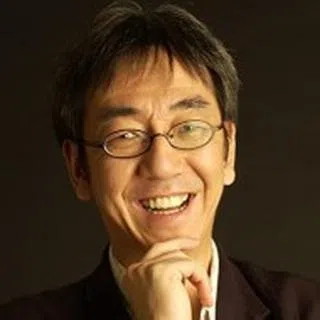
US President Donald Trump’s ambition to bring semiconductor and smartphone manufacturing back to the US is not just about liberating America and grounding Americans in real work — it is also an attempt to liberate the bottom-rung sweatshop labourers in China, says Hong Kong commentator Chip Tsao in his usual satirical style.
16 Apr 2025
Politics

The Trump administration has finally made some compromise by exempting smartphones (temporarily, as announced on 13 April), computers and other electronic products from reciprocal tariffs. This move is expected to ease the price shock for consumers and benefit major electronics manufacturers such as Apple and Samsung.
Advantages of cheap labour force
Expecting Apple to move its production line back to the US is as unrealistic as expecting pigs to fly. Over the past two decades, Apple has built a highly mature production chain: a high-end headquarters led by CEO Tim Cook in the US, a middle layer managed by Taiwanese businessman Terry Gou’s Foxconn as both intermediary and contract manufacturer, and a low-end factory base in Zhengzhou, China.
China’s greatest advantage lies in its cheap, low-end labour force — this “edge” has not changed over two millennia, like how Emperor Qin Shi Huang drove a million slave labourers to build the Great Wall.
The primary structural difference is that Foxconn, utilising the experience of Taiwanese businesses in China, exercises a high degree of organisational control and oversight over its operations at the lower levels. The Chinese Communist Party (CCP) provides a suitable “pro-business environment” and household registration system (hukou). Under this system, even if China’s sweatshop workers migrate from rural areas to slave away in cities, they are never granted urban residency. Once used, they are sent back to their villages, just like Filipino and Indonesian domestic helpers in Hong Kong, who can never obtain permanent residency, regardless of the number of years they’ve clocked in.
No other country in the world is like this; perhaps if Egypt’s pharaonic dynasty still exists today, the Egypt that built the pyramids might compare. China, together with the US Democratic Party, Wall Street investment banks, Apple and other American high-tech monopolies, Taiwan’s Foxconn and American stockholders, form a global profit-sharing community.

As I have said before, time and the Americans’ laziness run counter to US President Donald Trump’s grand reforms. A single Foxconn facility set up in China’s Zhengzhou can be a highly concentrated production hub with cheap labour and industrial components. From microchips to screws, even the instant noodles that the workers eat — production, accommodation and consumption — exist within a five-kilometre radius.
But this is not possible in the US. In 2017, Terry Gou told Trump that he could consider investing US$10 billion in a liquid crystal display (LCD) panel factory for televisions in Wisconsin. However, the glass used for making screens, produced by another company called Corning, is located in Kentucky. Transportation time and labour costs would be significantly higher, and Corning would not break up its operations or relocate near Gou’s factory just to accommodate Foxconn.
China, too, has been watching the trend closely. If you move one factory to the US, China will subsidise a domestic competitor to continue exporting, dragging down prices and causing the other party to lose out in the market.
The Chinese are like worker ants. The mid-to-lower-tier component suppliers that exploit them — large and small alike — hold enormous powers of mobilisation under the centralised command of Foxconn’s Zhengzhou hub. The CCP was once able to send waves of Chinese soldiers to face the firepower of the Nationalist Army and US troops through sheer force of numbers. In this country, the value placed on human life can often seem diminished.

Moreover, former Chinese Vice-President Wang Qishan once proudly declared: this country’s people can survive on eating grass for a year.
The US does not have the “advantage” of exploiting labour in a manner akin to modern-day slavery, and some might even cynically suggest that this is a legacy of Abraham Lincoln’s presidency.
Imperialists and their accomplices
Today, many Chinese are clapping and cheering, believing that Trump has failed and the Chinese people have triumphed. This is laughable.
Because looking back at their revolutionary mentor Chairman Mao Zedong’s work Analysis of the Classes in Chinese Society (published exactly a century ago in 1925), he already showed great foresight. Mao identified that the tragic fate of the Chinese people was due to the imperialists and comprador lackeys at the top of the five-class social pyramid — vampires enslaving the Chinese populace — while the rest of the middle class and administrative personnel were merely accomplices.
Mao believed that imperialists and compradors were the most stubborn counterrevolutionaries and should be eliminated. This impassioned call once moved Chinese intellectuals and the American left-wingers to tears, believing the CCP to be the saviour of the Chinese people’s future.
He wrote, “In economically backward and semi-colonial China, the landlord class and the comprador class are wholly appendages of the international bourgeoisie, depending upon imperialism for their survival and growth. These classes represent the most backward and most reactionary relations of production in China and hinder the development of its productive forces. Their existence is utterly incompatible with the aims of the Chinese revolution. The big landlord and big comprador classes in particular always side with imperialism and constitute an extreme counterrevolutionary group. Their political representatives are the Étatistes and the right-wing of the Kuomintang.”

But after a century of self-inflicted turmoil, many Chinese people are beginning to recognise the roles played by figures like Tim Cook, Wall Street brokers trading Apple stock, Taiwanese intermediaries, and the CCP in shaping the current economic landscape. As a result, hundreds of millions of Chinese remain at the lower end of the economic hierarchy, often referred to metaphorically as “chives” and “human ores.”
This collusion between ruling classes, which began under former US President Bill Clinton, has created vast profits for the privileged elites of globalisation and widened the wealth gap — nothing wrong with that. And just as the world is about to enter the era of artificial intelligence and robotic labour, where will the surplus population go? Will they end up homeless on the streets of Los Angeles, addicted to fentanyl, or sneak through Central America on their way to the US?
Gaining riches at the expense of others
The value of Marxist and Maoist thought does not even match the price of an iPhone. And that’s fine, because that is human nature.
This is why I despise the left, including the so-called liberals.

Get the ThinkChina Weekly Newsletter
Insights on China, right in your mailbox. Sign up now.
By subscribing, I agree to SPH Media's Terms and Conditions and Privacy Policy.
To the US Democratic Party, Wall Street, and the academic middle class in American universities who teach sociology with a nod to Marxism, Foxconn’s factory workers represent the lowest rung in the globalised Darwinian food chain, and they are not to blame for their cheap labour. Meanwhile, the priority remains ensuring that Americans and Europeans, along with Hong Kong consumers, frequently reminded of their “blood ties” with mainland Chinese, can continue to enjoy low inflation, rising stock prices, and affordable Apple iPhones.
Such indifference is perfectly normal.
As I have said before: Hong Kongers benefited from the grand era of British colonialism. British colonial rule in the Far East produced countless wealthy Chinese families: the Kuok family in Malaya; the Kwok family of Wing On spanning Australia, Hong Kong and Shanghai; the Shaw Brothers straddling Shanghai, Hong Kong and Southeast Asia; and not to mention Li Ka-shing and Sir Pao Yue-kong later on.
Sure, British imperialists might have been involved in a few regrettable incidents, like killing Mau Mau tribesmen in Kenya or participating in the slave trade, but let’s be clear: we Hong Kongers, Shanghainese from the foreign concessions, and the Chinese of the Far East had nothing to do with that. Hong Kongers, Shanghainese and the Chinese in Singapore and Malaysia welcomed the Treaty of Nanking and cheered on the British gunboats as they opened up Eastern markets. Without those imperialists, the Far East wouldn’t have enjoyed such commercial prosperity or the benefits of a common law system.

But the CCP’s revered master, Mao Zedong, was different. Mao once singled out Hong Kong’s Robert Ho-Tung as the representative of the comprador class. If back then Mao’s so-called Jinggangshan revolution had been driven south by Chiang Kai-shek’s army, crossing the Shenzhen River into Hong Kong, and the British army had abandoned the city and fled, the Ho-Tung family would almost certainly have been eradicated by Mao’s Red Army at Victoria Harbour, just as Lenin slaughtered the entire Russian royal family.
Exploitation a part of the laws of nature
Within the broader context of a century of historical evolution, Trump’s revolution today reveals the absurdity in both the Western liberal left and China’s increasingly “wolf warrior”-style ideology.
First, Trump’s ambition to bring semiconductor and smartphone manufacturing back to the US is not just about liberating America and grounding Americans in real work — it is also an attempt to liberate the bottom-rung sweatshop labourers in China.
The Trump administration had hoped that China would enact political reforms, establish a proper market economy, and grant labourers basic human rights. Instead, the CCP continued to support “comprador capitalists” like Taiwan’s Terry Gou, maintaining a system where “imperialist forces” hold significant power and Chinese people at all levels brutally exploit each other (for convenience, I temporarily classify Taiwanese businessmen as “Chinese” here — I do not intend to insult, and ask readers from Taiwan not to take offence).
Today, Trump is the target of hatred from the Western liberal left, who have joined hands with China’s wolf warriors in cheering for Chinese President Xi Jinping’s harsh counterblows against him.
It does not matter whether Trump succeeds or fails. Because in Darwin’s world, the bottom of the jungle food chain will always feed on plenty of “rabbits and grass” — if not the sweatshop workers from Henan and inland China, it will be someone in Africa. As long as the Earth exists, exploitation in line with the laws of nature will persist. The only truly foolish and hypocritical ones are the so-called intellectuals of the Western left, forever preaching morality and Marxist ideals.
A ‘community of shared human destiny’?
Besides, phones are replaced every two to three years. Consumers, driven by the strategies of transnational tech empires, are also at the lower part of the food chain, albeit not at the very bottom.
If Chinese people want to avoid disaster and seek fortune, they should be cautious about embracing the concept of a “community of shared human destiny”. Because even within China, there has never been a “shared destiny for all Chinese people”. One might question whether they are truly ready to share a common future with Foxconn factory workers who face significant challenges, including instances of suicide.

Your own children must never fall to the lowest rung of the Darwinian jungle’s food chain.
And in this global Darwinian structure, where the US sits at the top of the pyramid, how could there possibly be racial or class equality? A shared destiny? Would the fates of Elon Musk, Mark Zuckerberg or residents of Beverly Hills ever be the same as those of people living in Zhengzhou or at Hong Kong’s Wang Tao Hom and Ma Tau Wai public housing estates?
During colonial times, Hong Kong had the rare miracle of upward mobility. Today, the poor grow poorer while the rich grow richer. “Shared destiny”, indeed!
Trump’s grand strategy is morally right. If launching a national crackdown on fentanyl is crazy, then Lin Zexu deserves to be in a mental institution. The execution may be crude but the ambition is huge. It remains to be seen if Trump’s administration is competent.
The US Constitution sets a single presidential term at four years. But even if it cannot be amended, let US Vice-President JD Vance run for the next presidency, and Trump can serve as vice-president — just as Vladimir Putin and Dmitry Medvedev once switched between Russian prime minister and president, or as Deng Xiaoping once ruled in practice as vice-premier. Even if that scenario doesn’t work, one might look to the example of former US President Franklin D. Roosevelt, who served more than two terms during a time of war, suggesting that extraordinary circumstances can sometimes lead to exceptions to term limits.
There is always a way. Xi Jinping enjoys struggle, and it would be an insult if Trump refuses to engage.
Let’s see how this drama plays out.
Related: China’s export machine stalls under Trump’s new trade blitz | The trade war illusion: What Trump doesn’t understand about China
Popular This Month
Get the ThinkChina Weekly Newsletter
Insights on China, right in your mailbox. Sign up now.
By subscribing, I agree to SPH Media's Terms and Conditions and Privacy Policy.