Xi-Cheng meeting and the limits of peace in the Taiwan Strait
For the Taiwanese people, the question has never been whether Beijing would talk about peace, but whether its governance record is strong enough to convince people that such promises would be honoured institutionally. Taiwan-based Malaysian columnist Ngo Jian Nam assesses what would make for a successful cross-strait peace agreement.
16 Apr 2026
Politics
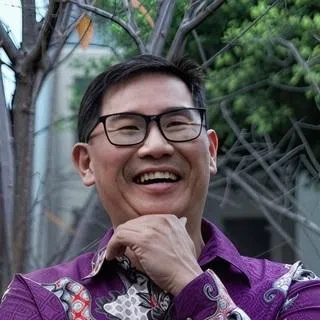

Kuomintang (KMT) chair Cheng Li-wun’s meeting with Chinese Communist Party (CCP) General Secretary Xi Jinping in Beijing marks the first high-level encounter between the two parties in a decade. This can be interpreted as a symbolic exploratory gesture towards peace following years of cross-strait tensions.
Unsurprisingly, Xi reiterated his political resolve to oppose Taiwan independence and advance reunification, while Cheng stressed engagement, de-escalation and the “institutionalisation of peace”. Based on the meeting’s setting and public remarks, it indeed resembled what Cheng had described: planting a seed of peace.
What ‘peace’ means for ordinary Taiwanese people
But does this necessarily mean that the cross-strait military standoff sparked by then US House Speaker Nancy Pelosi’s visit to Taiwan can simply be set aside, paving the way for a more peaceful cross-strait relationship?
As someone in Southeast Asia, geographically close to both sides and long exposed to perspectives from across the Taiwan Strait, I find it difficult to be optimistic — especially since people on both sides often have very different understandings of what “peace” means.
The meeting between Beijing authorities and the senior leadership of KMT, Taiwan’s largest opposition party, chiefly reflects a form of negotiated peace — one that relies on engagement between leaders, the signalling of political goodwill, and the pursuit of possible peace through negotiation. Such exchanges are, of course, valuable and can temporarily reduce the risk of conflict. However, they primarily convey political intent rather than an institutionalised order.
As a Southeast Asian Chinese who has lived in Taiwan for decades, it seems to me that what Taiwanese society truly cares about today is not whether cross-strait talks take place, but rather what guarantees are there for the outcomes of the talks.

For ordinary people, the peace they genuinely need is one in which military power is subject to institutional constraints, not merely sustained by the goodwill of individual leaders, and anchored in checks and accountability mechanisms that endure beyond leadership transitions.
Put simply, peace cannot be secured by political promises on paper alone; it must instead rest on institutional guarantees and the credibility of governance.
More than just the reunification of a ‘nation’
Historically, it can be said that although large-scale military confrontation across the Taiwan Strait since the separation in 1949 has eased markedly after 1979, the two sides have never signed a formal peace treaty or armistice.
The long history of artillery bombardment around Kinmen and Matsu serves as a reminder that the current state of affairs in the Taiwan Strait is not defined by formal peace provisions, but rather sustained by the unresolved legacy of civil war, tacit political understandings, military restraint and external deterrence — particularly from the US.
In other words, cross-strait relations have never been a political relationship that has been definitively resolved.
However, for neighbouring countries, and even for many Chinese communities within the region, it is equally difficult to accept China’s nationalist logic that “since we all belong to the Chinese nation, reunification is therefore inevitable”. It should be remembered that, given Taiwan’s colonial history, the situation can no longer be adequately summed up by the phrase “since ancient times”.

This becomes easier to understand when placed in the historical experience of Southeast Asia. In the wave of decolonisation after the Second World War, the region gradually saw the rise of the modern states we have today.
For most countries, borders, identity and political legitimacy were not simply inherited from pre-modern territorial configurations, but were instead formed gradually through colonial experience, independence movements, and post-war institutional state-building. As a result, the borders of modern states differ significantly from traditional historical boundaries, and are not necessarily tied to the spheres of influence of former colonial powers.
Of course, after 1945, Taiwan was taken over by the Republic of China and was briefly unified with the mainland under the ROC flag for just four years. But if we include the Japanese colonial period and the separation since 1949, Taiwan’s political and social experience has been shaped for more than a century by systems different from that of the present-day mainland. Such a society cannot simply overcome systemic differences and historical memory on the strength of an appeal to national unity.

Get the ThinkChina Weekly Newsletter
Insights on China, right in your mailbox. Sign up now.
By subscribing, I agree to SPH Media's Terms and Conditions and Privacy Policy.
More importantly, the modern “Chinese nation” (中华民族) is not a concept of a political community that has existed since antiquity. Historians have long pointed out that this concept took shape gradually during the late Qing and early Republican nation-building process, and was institutionalised within relatively recent political frameworks such as the “Five Races Under One Union”.
Persuading Taiwanese society
This meant that if Beijing wants to justify the necessity of reunification on the basis of a national community, it is still unable to avoid a fundamental issue: while a modernised national narrative can provide a historical imagination, it would not automatically generate trust in governance. Ultimately, the Taiwanese people are not interested in a compelling narrative of blood ties, but in a reliable system and credible governance of the unifier.
In my view, this is precisely where Beijing finds it hardest to persuade Taiwanese society. The credibility of an agreement has never depended on text alone, but on the track record of past governance.
This is especially true when Hong Kong, just right next to Taiwan, is used as a basis for comparison. Regardless of whether external forces played a role in the 2019 anti-extradition protests, Hong Kong after 2019 has seen its political and even community autonomy shrink dramatically due to the National Security Law, electoral overhaul and the continued browbeating of the opposition and civil society.

In the eyes of Taiwanese society, this clearly erodes the credibility of earlier promises of keeping the status quo for 50 years and a high degree of autonomy for the special administrative region.
Peace that is more than just rhetoric
Hence, for the Taiwanese people, the question has never been whether Beijing would talk about peace, but whether its governance record is strong enough to convince people that such promises would be honoured institutionally.
Thus, while the Xi-Cheng meeting certainly sent a signal of peace, whether this seed can take root still depends on the soil, not on the rhetoric.
The “soil of peace” across the strait must at least contain three elements. First, whether both sides are willing to reduce the current level of military confrontation — especially the side which is stronger militarily being the first to show restraint. Second, whether they can build a genuinely equal basis for dialogue, creating the conditions for any sustainable peace arrangement.
Beyond that, for peace to be implemented in a truly institutional way, Beijing must be able to demonstrate verifiable governance credibility that convinces Taiwanese society its promises are more than political rhetoric.
Of course, most of us, as members of this region, are glad to see the KMT and CCP take this step, and would affirm as well as support dialogue and exchanges. But those in the region who truly yearn for peace have never sought a purely negotiated peace maintained only by leaders’ meetings and agreement texts. What they want is a peace guaranteed by the rule of law, freedom, accountable politics and a long-term record of credible governance.
If this systemic-level issue cannot be addressed, no matter how many historic handshakes, it would be hard to move peace from the realm of symbolism into reality.
This article was first published in Lianhe Zaobao as “国共握手为何不能保证和平种子发芽”.
Related: Xi’s message on Taiwan: Confidence on a different level | Cheng Li-wun’s politics of quoting Xi Jinping
Popular This Month
Get the ThinkChina Weekly Newsletter
Insights on China, right in your mailbox. Sign up now.
By subscribing, I agree to SPH Media's Terms and Conditions and Privacy Policy.