
[Video] Jereme Leung: From Nanyang to Jiangnan — where taste becomes memory
Renowned chef and pioneer of Chinese fine dining Jereme Leung sits with ThinkChina’s Josephine Hong to dive into what truly defines authentic Chinese cuisine, China’s contributions to the global fine dining scene, and how Nanyang influence shaped his culinary journey.
27 Mar 2026
Culture
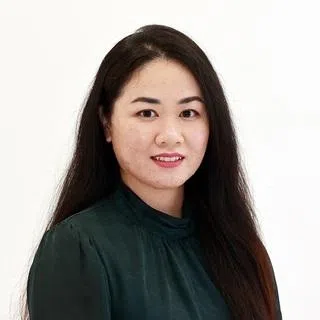

Host: Josephine Hong Interviewee: Jereme Leung
Josephine Hong (Hong): Hello and welcome to ThinkChina Conversations. I am Josephine Hong, and here with me today is a culinary craftsman who has redefined modern Chinese cuisine. Chef Jereme Leung has made a name for himself in China and the region, not just as a celebrated chef for his skills in the kitchen, but as an innovator who has elevated Chinese dishes from the different regions of China.
He is a pioneer that integrated global culinary concepts into traditional Chinese cooking and introduced modern fine dining Chinese cuisine to the world. He has even made appearances in several television shows, including as a judge on MasterChef China.
Welcome, Chef Jereme Leung. Thank you so much for joining me today.
Jereme Leung (Leung): Thank you very much, Josephine, for the invitation. Pleasure to be here.
Hong: You started working in the kitchen since you were 13 years old and in the four decades since, you’ve been creating Chinese dishes, you’ve been elevating traditional Chinese cuisine into artisanal creations. What was your view of Chinese cooking at the beginning, and how has that evolved over the years?
Understanding the wider China
Leung: Well, I think over the four decades, my approach towards Chinese cuisine has certainly changed. I started off as a Cantonese-trained cook because our families owned restaurants in Singapore in those days. In the beginning, all our basics and my knowledge of Chinese food came from this region’s Chinese food. At that point in time, I still did not understand China as the modern China today.
When I was 13 years old, all our Chinese food was very much actually Southeast Asian Chinese-based. And if you look back in history, and when we researched that much later on, we realised that most of the early immigrants that came to Singapore were Chinese immigrants from the southern part of China.
So from Guangdong, from Chaozhou, from Hainan, from Fujian. That forms the basics of the Cantonese food or the ethnic Chinese cuisine in Southeast Asia. That was our roots. That was my training as a young man.
Gradually, it evolved in different stages, where in the second stage, I got to travel and work and stayed in many Southeast Asian countries as a Chinese executive chef. At that time, my knowledge of Chinese food became the Chinese food that is in different parts of Southeast Asia. How have they evolved?
And the third stage began when I moved to China in 2002, where I set up my first restaurant, which is Shanghainese, in China, in Shanghai. At that stage, it was an eye opener because then we were really immersed into the food of Shanghai, the various ingredients that are available in Jiangnan. That was the stage where we learned China was a lot bigger than what we thought we knew.
Subsequently, having the good fortune of running restaurants for many years in different parts of China, from Chengdu to Qingdao. We were in at least eight cities operating restaurants. That opened up my knowledge and I guess my approach towards what is Chinese cuisine and what is China food, and how would I relate to Chinese food in China.
Hong: You mentioned that you moved over to China in 2002. You are a pioneering Singaporean chef that ventured into the Chinese market, serving Chinese food. Did you see any challenges to being an outsider, or if you even saw yourself as an outsider?
Leung: Well, I think that’s a very interesting question because I would describe that in a Mandarin phrase.
If I look back 25 years ago when I first started a restaurant in Shanghai, at that time, we decided to set up a Shanghainese restaurant in China. And that was my first trip really living in China.
Back then, in a Chinese phrase, there’s a saying “wuzhizhe wuju” (无知者无惧). It means people who are ignorant are not afraid because you don’t really understand the whole picture. So at that time, I used to think that Chinese food was very much confined to the southern part of China. Until we were exposed to the four seasons, all the wonderful products that are available in every season in China and in particular, the different taste buds of the different regions.
Take for example, Shanghainese food, it comes as nongyou chijiang (浓油赤酱) as it is a little bit sweet. And then the sauces are always very thick because of the sugar content that we use. And the different products available, this is the autumn season, so there’s wonderful hairy crabs, and the mushrooms in summer. Every season became an experience, a total experience of how I re-understand and relearn about the Chinese food of China.
Redefining and modernising traditional Chinese dining
Hong: Was there anything that you thought that helped you get a foothold into the industry, that helped you set yourself apart, or helped you elevate that Chinese cuisine, especially during a time when the Chinese dining scene wasn’t as developed as it is today?

Leung: I would like to think that we have shared some positive experiences, during my experience working in China over the past two and a half decades. In China, I think at that point of time, when I went to move over in 2002, we brought in something that is new, that is very much welcomed in the market, whereby we were the first batch of people that really looked at Chinese food differently from what it was, to the Chinese food that people understood in the early 80s and 90s across the region.
Initially, it was the Southeast Asian Chinese cuisine here. And then there’s a lot of influx of Hong Kong-style Chinese Cantonese food in the 90s. And when we combine that experience and start to approach Chinese food, to say, can we give it a more modern look and feel, can we make the presentation more attractive? Can we refine the Chinese dining experience in a restaurant context, where generally in those days it was a family-style communal dining event, where it’s only celebrations at that time, then you would go to a restaurant.
So as the society develops, there are much more social engagements, there are much more social settings for dining, people’s tastebuds and expectations have also evolved at that time.
When we went to China at that time, we were at a stage where we brought in something that is new to China. Even for Shanghai, Chinese food dining was still very traditional.
What we did, the kind of changes in presentation in dining experience, towards working to a more refined dining experience overall, food and service and the rest and the interior design, for example, I guess that was something very welcomed and needed in China.
On the other hand, I learned so much over the experience that there were wonderful ingredients in every season. There were so many things that we have never come across. From wildflowers, the wild vegetables in spring, all the fungus and mushrooms in summer, hairy crabs in autumn, for example. That gave us a lot of basis to continue our creation into exploring new Chinese cuisine.
Pioneer of the concept of Jiangnan cuisine
Hong: For now, you have several restaurants in the region. There’s China Blue in Manila. You have yì Restaurant here in Singapore, you have Ufaa in Maldives. So these restaurants serve a more varied selection of Chinese cuisine. You have Cantonese, Beijing, Sichuan and Chaozhou food that are being served in these restaurants. Then you have Jiang Nan in Macau that is serving Jiangnan cuisine as the name suggests. Jiangnan is the southern area of the Yangtze River. How did you decide to have Jiangnan food in Macau, and then for the other restaurants, you have a more varied selection?
Leung: Jiangnan was actually something that is very personally close to my heart. Why we were invited to open a restaurant in Macau at that time was because a lot of VIPs were actually asking for high-end Shanghainese food. And because of the success of this restaurant, which I created 25 years ago in Shanghai that became the utopia of the best Chinese restaurant in China at one point of time. It became so famous that people, when they invited me to open a restaurant in Macau, the suggestion was to do a Shanghainese restaurant.

But I refused to duplicate that success myself because I think, we’ve been there, we’ve done that. It’s no longer that exciting for me and my team if we duplicate what we have done ten years ago and redo a Shanghainese restaurant.
So the concept Jiang Nan was actually something that I dreamt of. I created that to say instead of a Shanghainese cuisine restaurant, would everyone consider looking a little bit bigger than Shanghai? Look at the regions of Changjiang yi nan (长江以南) which is what we call Jiangnan, and let’s combine and look at the specific cuisines and wonderful products from Shanghai, to Jiangsu, to Hangzhou, to Changzhou, and the cooking methods that are available in this region. Can we make them something special?
That’s how we introduced Jiang Nan by Jereme Leung. We were very lucky that five years down the road, people could see the success, they enjoy the creations and the many cuisines that were created out of that concept.
Now we start to see, over the last two or three years, numerous Jiangnan restaurants that have set up in Macau. But we were certainly the first one that brought that word “Jiangnan cai” (江南菜) to that region. Because Jiangnan cai is not even one of the eight major cuisine regions of China.
Local ingredients and diners: what makes a ‘Jereme Leung’ restaurant?
Hong: What is your creative process like? From the ideation, to selecting the cuisine that you want to serve, to the final concept or the product of the restaurant, the cuisine, or the dish. You mentioned earlier that the Jiang Nan restaurant idea came from a dream. Could you elaborate more?
Leung: Well, I guess over the four decades of working in restaurants, of creating restaurants, first as an employee and then creating my own restaurant these days, I look at creating restaurants with a different context in every stage of my career. So when I was younger, it was very much about what I’m good at, in terms of the regions. Take for example, Cantonese cuisine, which was my forte in the beginning. We created restaurants based on what I can cook well, what I’m good at at that stage.
Then later on, after all my many years of travelling and living in China, we started to get a lot more knowledge, in terms of the different ingredients that are available with the cooking methods in the different regions. That becomes our basis when we recreate new concepts. However, as I became more mature in the industry, these days I create restaurants first asking myself, who do we intend to serve? Who are my intended customers? What are their needs?

I always begin creating restaurant concepts in various cities with a few elements which I combine together and say, “This is a Jeremy Leung restaurant.” One of them is definitely who is my intended customer. What do they want? What are their taste buds?
If I refuse to create a restaurant that only tourists will patronise. I want all my restaurants, without fail, that the local population in that particular location would enjoy. So 80% of my customers have to be local. I think that would form the basis that would guide our team and myself to say, whatever we create, it has to suit the local taste buds.
Number two, we always focus on: is there anything special in terms of ingredients and seasonal specialty that I can bring in from China? Because this is a Chinese restaurant. So the most authentic Chinese restaurant, you should have some elements whether in ingredients or cooking methods that come from China, to stay authentic.
And the third element is what kind of local produce can we find in the hosting country? Take for example, if we are in Manila, the mangoes are great. Some of the fruits and vegetables that they have are great. Can we create something based on local ingredients? Do we necessarily need to import everything and say we can’t create a good Chinese meal with local ingredients? We always challenge our team to say no matter where you are, look local. You know, not only imports.
Then we look at the entire or the overall dining experience based on the different ethnic cuisine that we have decided to go upon and say, okay, what can we make special from the dishes that we create, from the dining experience, the service sequence that we are going to introduce? And we have created certain unique selling points where nobody has in terms of Chinese restaurants in the entire region as far as we know. So combining all five elements, this is what I call, “This is a Jereme Leung restaurant.”
Worms and roses: the exploration of ingredients
Hong: You did mention earlier as well, that you try to find the wildflowers or the wild mushrooms to incorporate into your dishes. What’s the rarest ingredient you ever used? And can we find it in any of your current restaurants right now?
Leung: Well, sometimes the finding of very rare ingredient doesn’t mean I want to put them in any of our restaurants. But the exploration itself is exciting. When it comes to ingredients, what a lot of people did not realise when it comes to dealing with modern China is that, China almost has most things under the sun in very good quality these days in terms of food. A lot of people do not know, but from statistics, taking for example, a famous ingredient like goose liver, foie gras that is used so much in international cuisine, right? Nobody knows that foie gras actually 60% of the total production in the world comes from China.

ThinkCulture Newsletter
Your fortnightly dose of Chinese history, culture, and cartoons. Sign up now.
By subscribing, I agree to SPH Media's Terms and Conditions and Privacy Policy.

China is also responsible for matsutake mushrooms. They are exporters of matsutake mushrooms, which cannot be grown. They are not naturally cultivated. You have to find them in Yunnan. That is actually 60-65% of the world’s total export, it comes from Yunnan. From matsutake mushrooms to caviar, to talking about foie gras, all these special ingredients, nobody knows that China is in fact the largest supplier to the world when it comes to even premium ingredients like these.
And to answer your question, there are so many wonderful things when we focus into a particular region like Yunnan with the smaller population with Daizu and Baizu, which is the local minority people in Yunnan. We have explored so many things, like a bamboo worm. It’s just a dish that is so full of protein, raw protein. But it’s actually a worm that comes from a bamboo. So those are little things where you don’t see it everywhere. But looking at it, just the fact that how people locally would use these ingredients if we would have played with it, what will we do with it? That is so fun.
One ingredient that I’ve brought to most of my restaurants from Yunnan is actually edible roses. So again, Yunnan produce the largest amount of edible rose, which is made into a little pastry, which they call xianhua bing (鲜花饼) in Yunnan, which all tourists buy them. But I took actually the xianhua itself where people mix them into jam. We take rose jam, and we created a sauce combining with mianjiang (面酱), combining with the Peking duck sauce, the sweet sauce. So we have a rose-flavoured sauce, which we serve as a Peking duck sauce even in yì Restaurant in Singapore. So that became a specialty. And we create rose ice cream out of that, which is a lot of fun for us.
Layers of red oil and chili, yet considered healthy
Hong: You’ve mentioned how the diners of the city that you’re opening a restaurant at are the ones that’s kind of guiding you on how the concept and theme of the restaurant is going to be. What are the challenges when it comes to serving Chinese dishes to local Chinese in China versus the challenges to serving Chinese dishes to overseas diners? Are they the same challenges that you’re facing?
Leung: Definitely not. For those people that have spent enough time in China or living in different regions, you will realise that taste buds in every different region was developed by the local people in their teenage years. So I always say, no matter where a Chinese comes from, the best food to them in their mind is always something which they eat between 8 to 15 years old. That was the time when your taste buds were developing.
For example, the Cantonese people who were living in Guangdong. Once they get used to that taste bud, that would stay with them for life. Likewise, people living in Sichuan as a teenager, if they like the spicy food, that taste bud particularly, is like a DNA that will stay with them no matter where they go throughout the world.

For mainland Chinese to be really looking into a Chinese dish and say, “Is this authentic?” It is something that would be judged very differently compared to international customers because they have not been exposed to this part of the cuisine cultural heritage. To give it a good example would be something like shui zhu yu (水煮鱼, Sichuan boiled fish) or mapo tofu (麻婆豆腐) in Sichuan cuisine. A mapo tofu, the most authentic version of it involves sprinkling a hongyou (红油, chili oil) which is a fragrant oil made out of tomatoes and chilies. It’s like two inches of oil, it would be heated up and then sprinkled onto huajiao (花椒, Sichuan pepper), sprinkled onto Sichuan peppercorns on your tofu after the dish is being cooked.
When serving to anybody, you’re looking at two inches of red oil above your tofu. To most international customers that would be inedible. It would be incredible, to say the least. They would say, “Oh, how could people eat such oily food and yet still be healthy?” But if you look at the people in Sichuan, you seldom find very obese people. You don’t find them very fat. They’re very healthy. Why?
That leads to also the adaptation and understanding of why do they need spicy food in a place like Chongqing. It’s a shancheng (山城, mountain city). Chongqing is actually a mountain region. So the entire weather is very humid. It’s very damp, it’s very wet, where you don’t see many days of sunshine throughout the year. So you see people from Chongqing generally the ladies are fairer, very nice skin complexion, but at the same time, they need the spices in the chili so that they do not feel chilly. If they don’t eat chili and very oily food for a while, for a week, they start to feel something in their knees and their elbows and joints.
So those are the kind of experience which we learn that, the same dish of mapo tofu as simple as that that is available in every Chinese restaurant throughout the world, it will be looked upon differently, whether you’re serving a Chinese or you’re serving international guests.
Recognition from a local more important than awards
Hong: In 2025, yì Restaurant made it into the list as being a Michelin recommended restaurant. Do you see challenges to authentic Chinese cuisine being recognised internationally for the culinary arts or for fine dining?
Leung: The short answer is no. We do have two restaurants, two Jereme Leung restaurants this year (2025) that achieved Michelin recognition. One of them is in Singapore at yì. And the other one is China Blue by Jereme Leung in Manila. In addition, both yì in Singapore and Jiang Nan in Venetian have also been recognised by Platinum and Diamond awards from Trip.com. So generally our restaurants are very well received in every local market.
However, I think awards aside, it is more important to me when I look at the products and offerings of my particular restaurant, is really about: do we create a product that satisfies my local customers? Based on what they would expect when it comes to that particular region.
In Singapore, for example, our selection of dishes are more China-wide, meaning we do very good Sichuan food with an ethnic Sichuan chef. We do very good cold dishes with an ethnic Hangzhou chef. In our offerings, in yì, for example, in Singapore, we just make sure that what we create, we use the different ingredients that we can find throughout the year. We make sure that the taste would be considered authentic. My Sichuan food if tasted by a Sichuan person that comes from China, you would think that this is authentic.

That’s the way I kind of limit our creation. I say you can play with ingredients, we can play with presentation, we can play with even the way we serve a traditional Chinese dish. However, the basics remain that if a local person from that region eats this, they have to recognise that this is how it tastes at home.
That’s the way I look at my restaurants. Adding to that, if you look at, for example, Jiang Nan in Macau, why are we able to do Jiangnan cuisine in Macau and only in Macau? It’s just simply because we are closer to China. I’m able to export the best fishes without chilling them, without freezing them. I can send in fishes from the Jiangzhe region, in 24 hours, it reaches Macau that is completely unfrozen. So those are the kinds of things where with modern transportation, then we are able to do that in a particular region.
In the different contexts, for example, in a market like Singapore, there will be certain limitations that will not work well.
Nanyang a part of Leung’s food DNA
Hong: As a Singaporean, how much influence has Nanyang cuisine had in your career? Are there any other types of cuisine that has influenced you or inspired you?
Leung: Definitely. I think, Nanyang remains the basics of who I am, even though I’ve been living overseas for most of my life. However, Nanyang cuisine or I would say Southeast Asian Chinese cuisine remains the roots of what I am and of what I do.
So one of the exciting things that we have in the works now is actually planning a Singaporean restaurant, which is highly likely going to open in 2027 in Riyadh in a wonderful location. But part of the creation in this context is that I’m not thinking of Hainanese chicken rice, bak kut teh (pork ribs soup), no. Not in Riyadh. Definitely it will be a pork-free restaurant.
However, I’m actually thinking of how could I use the Nanyang element that I grew up with? Be it mee siam (sweet and sour rice vermicelli dish) or roti prata (soft and crispy flatbread). Be it chicken rice. How do we play with different elements of the Nanyang heritage cuisine? Be it Chinese or be it Indian or Malay influence. How do we combine that into a melting pot, into my version of what I would call the new Singaporean cuisine, which I want to present across the world.

Hong: You mentioned that the teenage years defines your palate. So was Nanyang cuisine that for you from the age of 8 to 15?
Leung: I had a very wonderful childhood there because I started my career very early. By the time I was 18, I was already a pretty good cook, I have worked in a couple of places. Nanyang influence to me at that time is really, the type of Chinese food, in particular, I would say southern China Chinese food, that influence of Chinese food. Although, if you compare them to the cuisines in China in the southern part of China today, it will come differently. It will come differently because the people that have migrated to Southeast Asia have taken on the local taste bud.
Something to remember would be assam fish head (“assam” is the Malay word for tamarind). That is a dish that is neither Indian, is neither from China, but it’s just a melting pot of cultures that shows what is Nanyang. So it is an Indian curry that only the Chinese would eat the fish head. Even the Indian won’t do that. From that perspective, those are the kind of heritage that I think I grew up with. And that has stayed with me. It’s part of the DNA in what I create.
The next exciting development in Chinese cuisine
Hong: Are there any other regional Chinese cuisine that you want to introduce to the people, that you’re looking forward to presenting to them? Or cuisine that you feel is underrated and deserves more attention?
Leung: Definitely. I think in China, the longer I live there, every season, with every visit, we start to learn a little bit more. Especially with modern logistics. There were a lot of ingredients that at one point of time can’t leave that place of origin.
One example is the fungus called qingtou jun (青头菌) in Yunnan. Qingtou jun used to be so precious because it only has the shelf life of a few hours. If you collect it in the morning, at night it already tastes different, it’s discoloured. So for many years that is something that you can only taste in Yunnan. However, with recent progress into logistics, into shipment, into the way that it is being kept, now we’re able to see the same ingredient in, for example, Macau, in Shanghai. You’re able to taste that.
So all that forms the basis every year where as we do our research, I would bring together all my different head chefs throughout the region. Every year we would go to a different place. So taking for example, this year we went to Yunnan. Last year we went to Indonesia. Next year we are planning Vietnam. And it was through these local food trips that we explored what is available in the local market in terms of ingredients and the kind of interesting and different cooking methods that we can prepare them, but yet maintain our brand of new Chinese cuisine because the cooking methods stay Chinese.
Hong: What do you see as the next exciting development in Chinese cuisine?
Leung: I think with China progressing and continuing to prosper, and also with the improvement of logistics which would bring a lot of Chinese ingredients internationally, I think it will make it much easier in the near future for people from all throughout the world to understand a little bit more about what authentic Chinese food is.
At this point of time, I think, people outside of mainland China are only being exposed to certain regional cuisines of China that are more popular. Taking for example, people know a lot about Cantonese food and they know a lot about Sichuan food, Hunan food, that is a fan favourite now in many places. But there are still many regions in China that are less known, which is very interesting.

One example would be Guizhou. It is a mountain region where there is little water available. So they actually do a lot of food with fermentation. They do a lot of natural fermentation. One of their naturally fermented suan tang (酸汤) or sour soup is something that is so special, that we actually now serve it in a couple of our restaurants as a special dish.
So those are the kinds of things that I think will be worth introducing to the world, to see the various wonderful produce and also the different ingredients that’s available in such a diversified and large country like China.
Hong: Chef Jereme, thank you so much for the wonderful conversation, for sharing your experience. And I’m looking forward to your new ventures that’s coming up for the year 2026. Before we say farewell, I would like to give you a token of my appreciation. It’s an illustrated portrait, and it’s created by one of our very talented visual artists.
Here you go, that’s you and if you recognise some of the dishes from your restaurant.
Leung: Thank you very much, Josephine. This really looks excellent.
Hong: Thank you so much for joining me.
END OF INTERVIEW
Related: [Video] George Yeo: America’s deep pain — and why China won’t colonise | From lion’s mane to porcinis: The wild flavours of China’s mushrooms
Popular This Month
ThinkCulture Newsletter
Your fortnightly dose of Chinese history, culture, and cartoons. Sign up now.
By subscribing, I agree to SPH Media's Terms and Conditions and Privacy Policy.