
[Video] Lim Siong Guan: Can Singapore survive?
Singapore’s rise from “unwanted independence” to a trusted global brand was no accident. Former head of the civil service Lim Siong Guan reflects on working with Lee Kuan Yew and Goh Keng Swee in an interview with ThinkChina’s James Loo, and explains why small states must think long term in a world of unknown unknowns, as well as how culture, trust and a stellar civil service matter more than ever as Singapore navigates great power rivalry and rapid technological change.
30 Apr 2026
Society
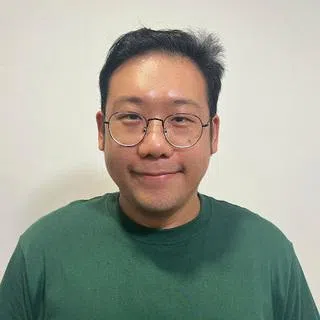

Host: James Loo Interviewee: Lim Siong Guan
James Loo (Loo): Hello and welcome to ThinkChina Conversations. I am James Loo. And with me today is Mr Lim Siong Guan, a key architect of Singapore’s modern civil service. Since entering the service in 1969, he helped craft policies that guided Singapore through major economic transformations and strengthened its role in Asia. As head of the Civil Service from 1999 to 2005, Mr Lim championed disciplined, long‑term policymaking, enabling the country to navigate complex regional dynamics, including its evolving relationship with China. Thank you for joining us today, Mr Lim.
Lim Siong Guan (Lim): My pleasure, James.
Loo: Singapore celebrated its 60th birthday last year in 2025. Much has been said about how it has grown from a third world to a first world nation. You have had a long career in Singapore’s civil service. What was the experience like as a young civil servant in the 70s? What challenges did you face? And how has your perspective on effective governance evolved over the years?
From uncertainty to strategy: Singapore’s foundational ideas after independence
Lim: As we look back to Singapore’s independence, it was unanticipated. It was unplanned. It was in many ways unwelcomed. Because before that, the whole thesis was that Singapore needed to go back to its geographic and historical roots, which was then to seek a merger with Malaya. But that time in Malaysia did not work out. And so Singapore was independent in 1965 and having to recognise that we were on our own. No one was responsible for our existence. No one was responsible for our living. And so we had to figure out our own way forward.
So the idea was to learn from everywhere, but to think for ourselves because we had found ourselves in a very unique situation. As you try to understand: How do we explain Singapore’s survival and success? And… for me and a few friends, we asked ourselves that question and decided that there were two foundational ideas which explained so much about Singapore.
The first was that, as you know, we hardly have any natural resources. We have a small population. We have a small landmass. And Mr Lee Kuan Yew, as prime minister, artfully marketed Singapore as a brand. As we see for so many things around us, establishing a brand becomes the way by which you are able to attract customers and attract attention. So similarly, the idea of a nation brand: that if a nation has a strong nation brand, it would be able to attract foreign investment. It would be able to better attract foreign talent. It would be able to attract foreign tourists.
So that was the idea for Singapore: it was a nation brand about trustworthiness, about being a people and a government who keep our promises. That we are reliable. We are dependable. That we have a people who is prepared to work hard. A people who pay attention to efficiency and to productivity. So that was, to me, the main idea and the main explanation as to how Singapore managed to survive and connect with the whole world.

But there was a second, very important reason: That is the reality of Singapore being a nation with so much diversity in terms of race, religion, and cultures. And for the government under Mr Lee Kuan Yew to have created a social framework and a legal framework which emphasised the need for this diversity to not create problems and divisions in the country, but instead to look for that unity and, if at all possible, to look for benefits which come out of that diversity.
So looking back at the past 60 years and being clear about the foundational ideas and, most particularly, about Singapore being on its own, well, that was a time when the civil service would have found it to be very exciting times. And the biggest excitement was to be able to accomplish things which a lot of people around the world don’t expect Singapore to be able to do. So this openness to ideas from everywhere, a willingness to be different, a willingness to try out ideas, and a willingness, therefore, to be driven by the point about ideas you can find from everywhere.
And people can offer their ideas. But in the end, the real test is about…the practice is about seeing that done. It can be done, and it can be done in a way which benefits Singapore, both for our growth and for the stability of the country.
Working with giants: how Lee Kuan Yew and Goh Keng Swee shaped Singapore’s leadership culture
Loo: You have had the opportunity to work with two key figures that have shaped Singapore as a nation: Our founding Prime Minister, Mr Lee Kuan Yew, whom you mentioned, as well as Deputy Prime Minister, Dr Goh Keng Swee. How was it like working with them? And how did they differ in their leadership styles?
Lim: I’ll say for Mr Lee Kuan Yew, I remember the very first day I reported for work with him as his principal private secretary. He told me, “In the course of your work, you are going to interact with officials from various foreign governments.” He said, “When you do so, never look on the ground. Look them in the eye because they need to respect you as a representative of Singapore.” Those words were not just such an encouragement. It was, to me, such a powerful imperative.

This sense that you are looking for people to look at Singapore, to look at possibilities with Singapore, but to respect us as a people who are out to get things done which are good for the nation.
Mr Lee Kuan Yew was a wonderful teacher. Every task he gave to me, he took a lot of effort to explain to me why he wanted that done. And I learned this as a very important part about leadership: It’s only in explaining the reasons why we want such and such to be done that we can give our people that freedom to adjust ideas according to circumstances on the ground, that we leave our people therefore with that freedom to suggest other ideas to be able to get the goals accomplished, maybe in a better way.
So that was a big thing I learned from Mr Lee Kuan Yew as a teacher. He obviously was a person who thought long term. His belief was that the government needed to adopt policies. You need to be able to respond to crises. But at the same time, you need to set the country on a path that gives it the best chances for its continued survivability and sustainability.

So he had these long‑term ideas. But at the same time, he paid enormous attention to critical details. There was one time when he was really very upset with papers submitted to the cabinet, which he felt were not well written. He felt there were ideas which were not well expressed. And so he called together all the permanent secretaries and deputy secretaries for a big scolding session. And permanent secretaries and senior civil servants had to attend courses on writing good English, meaning simple and plain, to be able to express your thoughts in a way such that the reader can fully understand what you’re trying to get across.
We had to attend a course run by the wife of the High Commissioner, the British High Commissioner in Singapore. That’s just an illustration of the detail which Mr Lee Kuan Yew went into, in what he believed was really critical for the progress, advancement, or development of the civil service.
The other thing, for example, that we all know, was that he believed very much in the greening of Singapore to distinguish Singapore from other cities in the world, which are concrete jungles. And he went to the extent, for example, that when we were having flyovers in Singapore, he insisted that there must be planting under the flyovers.
So of course, there were all kinds of reasons given as to why the sunlight can’t get below the flyovers, why it’s not realistic to expect the greening under the flyovers. And Mr Lee Kuan Yew kept insisting that people needed to think this through, to experiment, and so forth, which is how we ended up with… If you noticed, many of the expressways in Singapore with flyovers have a gap in the middle. That means instead of one broad flyover of ten lanes, for example, you end up with two with five lanes and five lanes with a gap in between. And that’s for the sunlight to get through so that the plants can grow under the flyover.
So that’s about Mr Lee Kuan Yew and his insistence on people doing a good job, thinking of ideas and not just taking the easy way out.
For Dr Goh. I think Dr Goh was the big…he was the big experimenter. He was the doer. He was the tryer. He was the learner. I served most of the 1970s under Dr Goh in the Ministry of Defence. And there was…as you know, the Ministry of Defence had to build up the Singapore Armed Forces, which was a critical element of what we needed to do as an independent country: To build up a capability which we never had to deal with as a government. To build up a force with credibility to deter, to give us military deterrence.
And Dr Goh had this saying plastered all over the SAF: The only way to avoid making mistakes is to not do anything. And that, in the final analysis, will be the ultimate mistake. So far as Dr Goh was concerned, if you don’t try, you are sure to fail. He said, “If you try, you may or may not succeed. But if you don’t try, you are sure to fail.”

Mindef was a very exciting place to be in. It was open to new ideas. It was open to experimentation so far as Dr Goh was concerned. The sin was never about making mistakes. Unless the mistake was caused by your negligence; not paying enough attention to the job. But the sin was never about an idea tried and failing. The sin was not realising you were making a mistake. Or if you knew that you were making a mistake, not correcting the mistake. That’s the big sin.
And many of us thrived under that kind of an environment where you knew you were doing something which had never been done in Singapore, yet you were given that space to try, to experiment, to learn by doing.
One big characteristic of Dr Goh was that you cannot go to him with any kind of proposal and say that, “Minister, there is no alternative. This is what we have to do.” His response simply was that if there was no alternative, you didn’t need him as a minister to make any decisions since there’s no alternative. So he insisted always that there must be at least one alternative. It is only by looking at the alternative that you can make a good decision about trade‑offs. What’s the cost of taking one course as opposed to a different course?
So Dr Goh was that kind of a person who said, “If it works, then that’s a great idea. You improve as you go along. If it doesn’t work, then you abandon it.”
I’ll just give one short story. I was the project director for the Junior Flying Club, which was a club Dr Goh decided we should set up to have students from secondary two onwards join as members, in order to encourage or to have the youth interested in flying. It’s because we were building up the Air Force and needed fighter pilots. Of course, everybody who is in the Singapore Armed Forces needs to be citizens. And importantly, we never had the tradition about flying, and most definitely not in flying jet fighters.
And so we had the Junior Flying Club. And the students who were at pre‑university level, or what we now call junior college level or polytechnic, were now at an age where they could get a flying licence called a private pilot licence. And the attraction of joining the club was that students were sponsored to go learn flying. And mind you, you can get a private pilot licence younger than being able to get a driving licence in Singapore.
And Dr Goh, always with a very economic mind, sought always for economy and efficiency and so forth. He decided that we should buy gliders for the flying training to save on fuel costs. So we looked around the world for what we call powered gliders, which are gliders with propellers so that they can take off on a normal runway. But once you are in the air you turn off the engine, and there you can fly around and learn the skills of flying in a glider.
So we went in a hurry to buy these gliders, and we bought 11 of them from Germany and the UK. And even before we uncrated all the 11 — we uncrated only about half of them — we discovered that we couldn’t use the gliders for flying training because the thermals, which keep the… the convection currents which keep the gliders in the air were not available in Singapore. So Dr Goh’s point there was that if it doesn’t work, it doesn’t work. So okay, just switch and we go to the normal way by which we trained pilots.
And to be frank, we never even uncrated all the 11 that we bought. And Dr Goh is that kind of a minister. You know it doesn’t work, so why waste your time and energy to go and uncrate it? Just in case the auditor would come along and find that you had ordered 11 and didn’t use the 11.
So that was the environment we worked with. And we learned this need for clarity of goals. And if you are not on the path to get to that goal, just abandon what you’re doing and correct what you’re doing to get on to the right path.
Singapore-China relations: from Deng Xiaoping to modern partnerships
Loo: 2025 also marked 35 years of diplomatic relations between Singapore and China. In the late 70s and 80s, Deng Xiaoping saw Singapore as a learning model for China. Had Mr Lee or Dr Goh shared any stories of their experiences interacting with China?
Lim: Mr Lee, I must say, was someone who believed very much in the power of culture. Culture being the values and attitudes that we bring to life. And he had always observed the highly entrepreneurial spirit of the Chinese, particularly in mainland China. And so after his conversation with Mr Deng Xiaoping, he came to the conclusion that what China needed was opening up the space and giving people the freedom to exercise their entrepreneurial spirit, and the economy of China will explode, as it were.

So he was very clear after his discussion with Deng Xiaoping that… that was the man who would open up China, and the economy of China will explode. So that definitely is one observation.
The other observation is about Dr Goh. He was appointed as economic adviser to Beijing, most particularly about the opening up of the eastern coast of China. Dr Goh was the kind of person who wouldn’t waste his time. So the fact that he agreed to be the adviser and put in so much time to understand the issues and offer his advice — that very act is evidence of what he saw where China was going and the worthwhileness of the work. Because he believed in the success of China. Certainly at that stage, it was the growth of the economy of China.
Loo: So in the case of China, what do you think Deng saw that inspired him to take a leaf out of Singapore’s book?
Lim: I think very much of it would really have to do with the fact that 75% of Singapore is Chinese. And you look at what Singapore has been able to accomplish after independence. This was only, what? 13 years after independence? A country that had no natural resources. A country that many in the world didn’t expect to succeed. And yet it was able to get on this path of transformation, this path of progress. That must have been for Deng Xiaoping an enormous image of what is possible for China.
Mr Lee Kuan Yew rode with Mr Deng Xiaoping back to the airport when he was flying back to China. And along the way he asked, so what did Deng Xiaoping think about what he had seen in Singapore? And apparently the answer he got was, “Yes, everything is very good, very impressive. But of course, Singapore is a small place.”
Now, that’s a very important comment that was made. In other words, the sense of, yes, everything that he sees is impressive. It’s inspiring. And most definitely, if Singapore can do it, then China can do it in an even bigger and even grander fashion. And maybe the only test is whether these ideas work in Singapore because you’re a small place, or whether the ideas are fundamentally sound and can have its much, much bigger expression in China.
To this day, Singapore and China still maintain inter‑governmental projects such as the Suzhou Industrial Park, the Tianjin Eco‑City, and the Chongqing Connectivity Initiative. Some have said that with the great advancements that China has made, it is now Singapore that has to learn from China. Do you think that is the case, or are there still lessons that large nations like China can glean from small states like Singapore?
I think we have to recognise that the reason for the inter‑governmental projects was because China saw value in these areas. There were some things that Singapore was doing in some instances could have been mystifying to them. And it’s the discovery of how these things work. But I’ve always seen these projects as kind of…they are projects seen as mutually beneficial, mutually… that there’s mutual learning, there’s mutual progress that can be made from that.
But obviously, to have such projects and to continue having these projects, you will have to look at something seen as mutually beneficial.
Now, obviously, Singapore also needs to take this perspective that this is not a one‑way street at all. This is also an opportunity for Singapore to learn not just the specifics on the project, but also the cultural elements, about attitudes and approaches, and how you take an idea, transplant the idea into China, and translate it into something which is much bigger, much grander.
At the end of the day, you have to recognise that China is a continental economy. We are a small state. If you look at the projects, I think it’s good to recognise what is it that Singapore, as a small state, was able to experiment with, was able to modify what we see elsewhere in the world, and create a system by which you can make this run well in Singapore.
And I think, recognise first that in many ways we run a high‑trust economy. It is an economy where we are attracting investors in terms of their expectations of the quality of products they (can) produce. You are operating in a high‑trust space where you talk about a great attention to quality, to reliability. And that is just a fundamental idea of how you create success for Singapore.
So that’s one element about… If you are operating in the business sector, in a part of the economy which requires high trust, that was something that Singapore was able to offer.

When you look at the Suzhou Industrial Park, you can look at the technicalities of designing an industrial park, where you have this live‑work‑play environment where people have their homes, workplaces, and places for recreation. But the big thing about the Suzhou Industrial Park is: having built the industrial park, how do you get investors? And the investors are going to come in wanting something of value.
If you want the investors, you need to be able to bring investors who are there and expect to be able to make their money and recover the money, not in one year, but maybe ten years, maybe 15, maybe 20 years. And you need to be able to assure the investors that there’s a consistency in the policy. That there’s a kind of support that you’re going to get. And your investment money is safe, and you get all the profits and all the returns you were expecting to get, over 20 years, even 30 years.
So this is not just a matter of hardware. It’s not just a matter of infrastructure. A lot has to do with software. A lot has to do with even the hardware. You know, sort of where you look out for the people dimension. You look out for the dimension about relationships which are there for the long term.
So if you look at it in this way, then I’m sure that there are elements of other things that happen in Singapore which might be of interest to China. But from Singapore’s end, we need to recognise that in every instance, it never is a translation or just a transfer of an activity from Singapore to China. It never is. Every one of the projects up to now – and it will be for the future in every project that we can be working out with China – is going back to the ideas, but how do you translate that in a different dimension? Because all these dimensions are just totally different when you consider China.
Because… I close with a remark which a CEO of one of the companies mentioned to me once. He said that if you want to be truly innovative, you need to go back to fundamentals. And it is that way if we just say, “go back to the fundamentals”, but now apply the fundamentals in a different social context, a different cultural context, a different economic context.
Long-term planning vs crisis response: how governments stay on course
Loo: China is often seen as placing great emphasis on long‑term strategic planning, whereas US policy can appear more reactive and driven by short‑term political cycles. You have extensive experience with policy planning and had a hand in many key policies in Singapore that are still implemented to this day. In your view, how should governments balance long‑term planning with the need for rapid response to crises?
Lim: When you look at the role of government, I think I can summarise it simply as: the role of government first is to protect its people. Second, to maintain order in the present. And third is to move the country to be ready for the future. I think a good government will have to deal with all three.
Protecting the people, of course, is an ongoing thing. Maintaining order is so that people can get on with their lives. People can experience a country where there is stability, social harmony, and all the opportunities to go after the things which are most meaningful for you in life.
But there’s the third leg, which is about readiness for the future. And mind you, there are some things which take a long time. You think about it, right? If there is something where the transformation needs to take place in the schools, anything you try to make through the schools, if you say two years kindergarten, six years primary school, six years secondary school, maybe two years national service, and then four years in university, that’s 20 years. Anything which you think you will have to transform for the long term. But working through the education system is 20 years.
Which means to say that if we don’t have clarity as to where we need to get to as a country in 30 years, you are never going to make these changes to the education system. And there are some things which if you don’t change through the education system, you’re never going to be able to position yourself to do well 30 years from now. So that is the big challenge.
So I don’t see this ever as trying to balance the long term with the short term. I think thinking about the long term, where you are trying to get to or where you need to get to in the long term is what gives you stability of direction. There’s a coherence in what you’re trying to do. There is an integration of efforts towards where you’re trying to get to for the long term, which may be 15, 20, 30 years.
But along the way, you have to live with the realities of life. You have to live with things as they are today, even as you are positioning the country for this continued success over the long term. And so you have to make adjustments.
So you have a direction which is… for the long‑term goals. That gives you, as I said, stability in your efforts and an integration of efforts to get there. But at the same time, there will be deviations you are going to make because of what is happening day to day. But because you have that long‑term direction in mind, you make the deviations, you make the tactical decisions to deviate, to deal with the current issues as you go along. But having the long‑term goal means that you will always meet these mid‑course corrections and ask yourself, “How do I get back on course?”

Because if you…if we run a country based on just a series of short‑term measures, simply because of the issues that you have to handle, you go through a series of short‑term measures as some people say… it may well be that going into a future is about climbing… like climbing up a ladder. But it would be a great disaster if we were to climb up the ladder, and when we reach the top, find that the ladder had been put against the wrong wall.
You need to have clarity as to where you’re trying to get to, so that you get your ladder on the right wall. Rather than having people go up, make all the changes, and find that it was all wrong.
So to me, this thing about long term and short term, it is absolutely critical to have a long‑term perspective as to where you need to move as a country or where the government needs to help people make the adjustments as a country. But at the same time, you need to meet people’s needs for today. But that long term is what gives you stability of direction.
The big challenge, of course, is this. If the world is unchanging, then what you need to do for the long term is quite straightforward because the future is predictable. If the future is unpredictable — however you understand the factors which will affect that future — then there’s this technique called scenario planning, where you say, okay, I don’t know exactly how the future is going to be like, but I can create or imagine two, three, or four different scenarios as to how the future might turn out. And I can work out a strategy for each of those futures.

Get the ThinkChina Weekly Newsletter
Insights on China, right in your mailbox. Sign up now.
By subscribing, I agree to SPH Media's Terms and Conditions and Privacy Policy.
But that is a situation where you know what are the factors that will influence, in a major way, the futures but you do not know how these factors will actually play out. But today, I think the really big challenge we have is you don’t even know what are the major factors that are going to come out in future.
And that’s the puzzle we have to address. How do you position your country for a future of unknown unknowns? And you can’t try to answer that puzzle by somebody coming around to say, well, what are these unknowns that you have to prepare for? Because by definition, there are things you just don’t know and you can’t answer the question.
For which some people may well say, “Since we don’t know what may happen in future, there’s nothing we can do about it. Wait until it happens and then we deal with it.” But I think that if you consider that there are things you have to do to position yourself for the long term, which may take 15, 20, 30 years to bring about, then we have to think of a way by which to position the country for these unknown unknowns, rather than wait for things to happen.
And especially today, technology is moving so fast. We understand the unpredictability of all this. So the question is, how do you position long term?

My own view about this is that you can’t figure out exactly what you need to do to deal with the situation as it unfolds in the next 15, 20, 30 years. You have to see what actually happened, and then you can figure out what specific action you have to take.
But there is something which is really, really critical which we can work on, which is about culture, about values. It is about perspectives. It is about attitudes. It is about approaches that you take. It is about beliefs as to what you need to be and what you need to be capable of for the future. And you work on those to prepare yourself.
So therefore you are preparing for the ability to deal with changing situations rather than deal… rather than develop specific plans to deal with it, because you do not know what the situation is going to be. But you can still definitely think in terms of developing the capabilities for it.
And a lot of it has to do with attitudes. It’s about, for example, if you say… it’s about… whether we need people to be persevering, whether we need people to have courage to try out new things, whether we are people who are going to learn through doing. How relational are we going to be as opposed to being transactional?
So to me, this is the real challenge. It’s not about long term versus short term. It is more about… you need both. And it’s very critical to have clarity of the direction you are taking towards a long term. But your challenge is: How do you conceive of the direction you need to do when you can’t predict what that long term is?
Staying relevant as a small state in an era of great power competition
Loo: It’s interesting you mentioned the world of unknown unknowns, because these days it seems we are constantly reminded of how powerless a small state like Singapore is in an era of great power politics. So how do you think we will be able to maintain Singapore’s relevance and influence on the global stage, and ensure that we continue to be of value to the world?
Lim: I think the most critical question we have to address is about ourselves. What are we? What is the identity which you believe you have today? And what is the identity you believe you have to develop into for the coming years?
So it is not a matter of…for example, you can talk about Singapore in many ways, okay, you are reliable, you are trustworthy. How do you…how do you interact with the countries of the world? And you want to be able to influence the countries. I’m not terribly sure, that Singapore ever started off by saying I want to be able to influence these countries.
We started off by saying, what do we need to survive? What do we need to get the investments and the talent to help us make progress and deal with the changes in the world and the technologies that come along?
But the most critical thing is this thing about behaving in a way which allows people to trust you. And that applies to investors, just as it also applies to other countries. How do we act in a way in which people can trust you? If you sign an agreement, you are going to deliver on the agreement, even though sometimes it’s a lot more troublesome than you had imagined when you agreed.
You have a policy which says that we want to be friends with everybody in the world who is willing to be friends with us. Or we want to be as helpful as we can be, but quite obviously we are small, and what we can actually do is limited. But you have, you are establishing your reputation in the world as a country that can be trusted.
The advantage that you have, if you can call it an advantage, as a small state is that you are too small to threaten anybody. This is unlike if you’re a big state, then people are wondering, can I trust you? But you’re a small state. You can’t threaten anybody. And you want to be friends with them, with as many people as possible.

So this idea about being useful to other people and so forth is just an integral part of maintaining friendship, maintaining relationships, maintaining, you can say, relevance, relevance in the world.
So I would say, yes, it is difficult. The circumstances change. And you are dealing with all these unpredictabilities of the future. But the reality is, as you look at, you know, you’re talking… We started off by talking about 60 years of independence and so forth the reality as you look in the past, uncertainty has always been there.
And maybe therefore, people’s…not necessarily pessimism, people’s sense of anxiety is…they wish very much that the future is predictable. But mind you, every country in the world is facing such an anxious situation. And the way forward is whether you maintain that awareness of what is happening in the world, whether you maintain the alertness when things happen, and whether — and this most particular of all — whether you have the agility to adjust.
And so long as you understand these are the qualities that you need, our chances of being able to deal with situations are always going to be there. Everything in the world is a relative kind of thing. Can you do better, even though you’re small? Can you do better than others, who are facing the same challenges but don’t have the same capacity for adjustment? So that’s a big… that’s a challenge for Singapore.
The role of Singapore’s civil service: integrity, service and excellence
Loo: What role do you think civil servants play in maintaining Singapore’s relevance? And how different is it from, say, your time as a civil servant? Are there different demands placed on civil servants today?
Lim: Well, I’ve been out of the civil service since 2006. And so, in all fairness, I can’t comment on the civil service because I’m not in the flow of information. I’m not in the flow of what they have to do.
But when you consider the role of civil service, I think Mr Lee Kuan Yew has made a comment before. He said, no matter how brilliant the ideas of his ministers may be, they have no value unless they are implemented. And the implementation vehicle is always the civil service.
And so you need a service which is aware of its responsibilities, aware of what is expected of it. They’ve got three values in civil service, which I think have been very well thought through. They talk about integrity, service, and excellence.
Integrity is the most fundamental thing to how you get trust from the public. Service is a constant reminder that your job is to serve the public, and not just serve the public today, but serving the public for all the years to come. How do you position? How do you make changes in good time? How do you communicate these changes to people? How do you help them meet the challenges of the day?
And third is about excellence, which is, as some people have said, you need to recognise right; The government has no money other than the money which they tax and charge. The people want is…you know, the charges the government makes and the taxes which they collect. And so for that, you need an accountability to the way you spend the money. People need to see that you are pushing for efficiency, that you are pushing for effectiveness, and, most particularly, that you drive yourself to be the best that you can possibly be.
Many of these things are internal drivers, internal attitudes, and this is what energises civil service. I think there’s no change there.
But what is terribly important for the civil service is to say that: with technology changing so fast, with all the challenges of geopolitics and geoeconomics, we really require a civil service…mind you, because a lot of the information, a lot of the data is in the hands of the civil service. The ministers are there to decide among choices: Which is the choice they believe best serves the interests of Singapore?

But where does all their information come from? What’s the data upon which they make their decision? Those things are produced by the civil service. The civil service needs to have… I think the biggest challenge they have is future orientation. It’s a clarity as to what is the Singapore that we need to… To move Singapore towards in the years to come, what are the capabilities and capacities you need to develop? The civil service needs to be actively thinking about this. Actively preparing themselves also to be able to continually perform this function.
You know, like people say, if the civil service does a bad job about doing services day to day, not to worry too much. People will complain, the noise will come, and the civil service will realise, oh, I should have done better here.
If the civil service doesn’t do a good job of thinking about the future, nobody will know that it has not done a proper job until the crisis happens. There’s this saying which says that it is only when the tide runs out that you discover who has been swimming naked. That, to me, is the most primary of all the challenges in the civil service.
How do you position yourself to have this clarity about thinking of the future despite all these uncertainties and unpredictabilities? And yet to maintain a certain consistency and clarity in the way about how you prepare yourself and ready Singapore for this changing future? It’s not an easy job.
And of course, at the end of the day it is the ministers who are the… who are elected by the people and who have to make those choices according to what they consider to be in the best interests of the country. But it is the civil service who has to feed the ministers with the data and the… and provide the capacity for implementation. Because you can have good ideas, but nothing comes out of good ideas if you can’t implement them well.
Immigration, identity and social cohesion in Singapore’s future
Loo: Now, the world is facing a demographic crunch as its population ages rapidly, straining health care systems and labour markets. The Singapore government has committed to tapping on immigration to tackle the issue of a declining population. How can Singapore remain open and inclusive while also maintaining a strong sense of national identity, cultural values, and social cohesion?
Lim: There’s a thesis that has been put forward in The Hidden Wealth of Nations. And the thesis is that the hidden wealth of nations lies in the quality of the relationship among the citizens. The degree to which they trust one another. The degree to which they look out for one another.
It is the kind of idea which Dr Goh Keng Swee especially used to make a lot of his speeches, something he called “enlightened self‑interest”. Where you make space for one another but not look at the making space for one another as you giving up something. He said enlightened self‑interest is: Sometimes you give up in an area in order to benefit the whole.
So like in the case of Singapore, right? If you look out for one another, you want to help every child succeed the best way possible. You want to create job opportunities for everybody in the population. You want to be a country where your citizens feel they have the best opportunity to develop themselves as best possible according to their talents and abilities.
That you make this provision because when you have a country where everybody feels that they have been given the opportunity to be the best they can be, people have mutual respect, people have mutual consideration. And you accomplish what Dr Goh called “enlightened self‑interest”.
If we keep going as a country where you have this strong relationship among the citizens and a high level of trust between the people and the government, a high level of trust between the employers and employees, high level of trust in the family between parents and children, high level of trust just among people at every level, you’re going to answer all the concerns that you have listed out.
And when you look at it in terms of… You have to look at the social dimensions in this, rather than just concentrate on economic dimensions. In a funny kind of way, if you ask people in the most fundamental way about what they think is important for Singapore in the future, what is important for their lives and for the lives of their grandchildren, it’s interesting. As I ask these questions, people that… Very often, the most important perspective they have on what makes a good Singapore for their future and for the future of their children and grandchildren is a gracious society. The society where people look out for each other.
It’s quite interesting that the top idea was not an economic one. It was a social one. So…and it’s not easy, right? You have to keep working at it. I have no doubt we have to work it through our education system. Just have to work it through…just government practice and government policy.

But my own feeling about this is that when you set this as the way the country is — people are considerate, people are looking out for each other, kindness and respect are just integral habits of life — then even if you need to bring in immigrants and so forth, they are going to come to your country and say, oh, that’s the way you’re expected to behave. That is what will keep us going forward.
We need to recognise one thing, right? What a country can be, in my simple mind, is determined by just three factors. The first is geography. Where you are in the world, what natural resources you have, what kind of climate you have, what your landmass is. Right? And that’s limited. You can’t choose to be elsewhere in the world. We are where we are.
Second is demographics. The size of your population, the makeup of your population, their education skill levels, and so forth. And the third is technology. So just three factors, right?
Technology is what gives us the ability to make up in some way for your physical limitations, your geography. Technology is what allows you to make up in some way for the human limitation, demographics.
But at the end of day, technology is the only thing we have to help Singapore distinguish itself in the world from…most importantly from the economic point of view, technology is the only thing we have. Look at it from that point of view: Technology is life and death for Singapore.
We need to be in front, able to absorb all the new changes that you find in the world of technology. If Singapore expects to be that, you can never be in front without taking in people from outside who are already closer to the front than we are.
Despite all our best efforts, the survival of Singapore is very dependent on our being able to have access to the expertise and the cooperation and contributions of people who are all the time working at the front of changes in the world. And the key for us is whether we can be among some of the fastest‑moving countries to be able to have access to this expertise, not only in terms of what technology can buy, but in terms of people with the brains and with the experience to be able to make their contributions to what is necessary for Singapore’s continued survival and success.
So to me, the human dimension is about relationships, and it’s the social environment you create. It is that which is going to determine how open we are about mixing around, about working with people from elsewhere in the world and people from different cultural backgrounds and social backgrounds from us. And for those people who want to be involved with Singapore, they need to understand also that this is a place which functions in this way. Culture is the big thing.
Managing foreign influence while preserving Singapore’s independence
Loo: You’ve talked about social integration and trust across all levels of society. Singapore’s small population makes it highly sensitive to foreign influence, and the influx of immigrants really shifts the city state’s cultural and political landscape. Are there any concerns when it comes to handling foreign influence in Singapore?
Lim: Personally, as I look at it, I think Singapore… Singapore has to be Singapore. We are unique in the world. We are unique not only in terms of our smallness, we’re unique in terms of the speed at which we have to absorb change, and the speed at which we have to adjust to things that are going on. And the dexterity to which you can function with all these changes that are taking place.
This capacity to decide for ourselves. Because no one else is responsible for our survival and no one else is responsible for our existence or our living. I think this is so critical for Singapore. And therefore we cannot afford to have foreign influence, which makes it difficult for us to exercise our own convictions, our own beliefs, and our own steadfastness in saying that this is really what is critical for Singapore’s survival and success.
So we have to be very careful about foreign influence. At the end of the day, we cannot afford to actually just look around and be like somebody else. You need to be where you are at and recognise the fact that it is difficult. It may even be lonely.
In fact, some Singaporeans, you know, you talk to them and talk in terms of a certain pessimism. Or maybe it’s not pessimism. It’s anxiety about the future because of all of these changes. Quite frankly, it is anxiety that is going to give us the best chances of succeeding, of surviving. A sense of crisis.
In terms of recognising that none of this is guaranteed for us, and how do you position ourselves to be able to best function despite the fluidity of so many things, despite all the changes taking place, despite all the unpredictabilities?
There’s natural anxiety. I think Mr Lee Kuan Yew even gave a speech one time based on the book… there is a management book produced by Intel in 1988, I think. It says Only the Paranoid Survive. Wow, okay. So, you need to be paranoid. Not in terms of going crazy, but you need to be paranoid in terms of that anxiety and yet be able to recognise that the anxiety is what gives you the best chances of recognising what you need to do, the adjustments you need to make, and the changes that you need.

Some of the changes you have to make ahead of time. And some changes are going to take a generation to make. And yet, changes that take a generation can, you know, like you say… If the change needs a generation, you have to start yesterday. Rather than have a big argument as to when we can start making the change.
So my point is: You begin to think differently when you recognise that the path to survival for Singapore? That we have to figure it out ourselves. But do all this within this context about us wanting to have as many friends as possible in the world, that we need to be an active contributor to the success of ASEAN. We need to be an active contributor to the success of many of the global norms of what is good behaviour in the community of nations.
A message to young Singaporeans: embracing change and shaping the future
Loo: Mr Lim, what is one lesson you hope young Singaporeans would remember?
Lim: There are so many things I’ve been talking about. I would say change. As Heraclitus said, change is constant. But change is exactly the opportunity that we have. I think Singapore can be the best place in the world, where its citizens can hope to be the best they can possibly be. This is a place where we can create that opportunity.
At the end of the day, Singapore is our own creation. Singapore is what it is because of what we are willing to put in. But it’s not just putting in today. You’re putting in something where the fruits may only be there 20 years from now, but the willingness to do that is in order to position yourself well for the future.
So, think about the future. All the time. This willingness to change and the clarity of thinking? No one else is going to think for us. But so long as we give importance to that, I think we create hope for ourselves. No one else can give… no one else can create that hope for us.
Loo: Thanks so much for sharing your insights with us, Mr Lim. Before we end this conversation, we would like to present you with an artwork designed by our talented colleague.
Lim: Oh, thank you so much. Wow! Brilliant.
END OF INTERVIEW
Related: [Video] George Yeo: America’s deep pain — and why China won’t colonise | [Video] Jereme Leung: From Nanyang to Jiangnan — where taste becomes memory
Popular This Month
Get the ThinkChina Weekly Newsletter
Insights on China, right in your mailbox. Sign up now.
By subscribing, I agree to SPH Media's Terms and Conditions and Privacy Policy.