There’s no city like Singkawang: Where Hakka is the lingua franca and Cap Go Meh dazzles
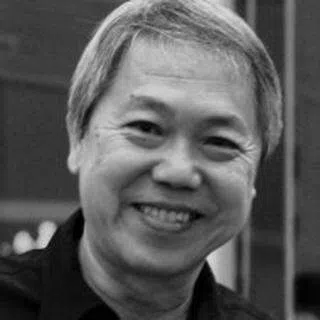
In Singkawang, West Kalimantan, writer Teo Han Wue found kindred spirits, a vibrant Chinese community and a chance to witness the colourful culmination of Chinese New Year celebrations there — a spirit-medium parade, known to the locals as Cap Go Meh or Pawai Tatung.
2 Apr 2026
Culture

(Photos: Teo Han Wue, unless otherwise stated.)
Recently I joined a group of like-minded travellers to spend our Yuanxiao (15th day of the Chinese New Year) in West Kalimantan away from our families.
What made us go on a journey from Singapore that took us more than 12 hours flying, transiting and driving before we finally arrived late into the night at a rather small quiet city called Singkawang?
I had for a long time been wanting to visit the city where the Spring Festival celebrations end with a spectacularly climactic spirit-medium parade, known to the locals as Cap Go Meh or Pawai Tatung. Now I finally managed to persuade some friends who were just as curious to come with me and to find out for ourselves what the biggest Chinese New Year parade in Southeast Asia looked like.
A distinctive city that celebrates Chinese heritage
The term Tatung is probably Hakka of origin referring to the spiritual mediums who go into a trance presumably possessed by gods, ancestors or supernatural beings. The parade acts as a spiritual cleansing ritual to ward off evil spirits and bring good fortune to the city in the coming year. It originated in the 18th century as a ritual to ward off diseases and evil influences, initiated by early Chinese Hakka settlers in Singkawang to combat a plague about 250 years ago.

Singkawang, 150 km north of Pontianak, capital of West Kalimantan, situated exactly on the equator, is a coastal city known for its majority ethnic Chinese residents, representing about 60% of its 250,000 population, which also includes Malays, Dayaks and Javanese. The city, whose residents are mainly farmers, fishermen and traders, was part of the gold-mining Lanfang Republic established by a Hakka, Luo Fangbo, in 1777 until it was ended by the Dutch in 1884.
It is also called the “City of a Thousand Temples” and has been consistently recognised and frequently cited by the Indonesian government as the most tolerant city in the predominantly Muslim republic. Perhaps what makes the city exceptional is how these descendants of immigrants from Guangdong, China, since the 18th century, have preserved their Chinese heritage as seen in their customs and religious practices besides the languages they speak.
Though we had previously heard much about the predominance of the Hakka population, it was only when we began to move around in the city that we realised how widely spoken the Hakka dialect actually is. One could perhaps quite justifiably call Hakka the lingua franca of its ethnic Chinese population. This I found out by randomly asking people on the street if they spoke Hakka.

In fact it was even more prevalent than I had imagined. Our guide Amin, a native of Singkawang, seemed to be speaking Hakka on his mobile all the time. To my amazement, he was even heard conversing in Hakka with a number of local Malays in many of the places we visited. In most of the Chinese restaurants we went to, surprisingly, orders were taken in Khek (what the locals call Hakka) and Mandarin often enough besides Bahasa Indonesia. Quite a number offered menus with names of dishes written in Chinese too.
Where Hakka is the lingua franca
I was struck by how bilingual and even multilingual Singkawang is compared to other Indonesian cities I know. Indeed I have never heard of any place outside China where Hakka is so widely and naturally spoken, much less in the entire Southeast Asia.
As the only Indonesian city with an ethnic Chinese majority headed by a Hakka lady wali kota (mayor) Tjhai Chui Mie, Singkawang prides itself for the unique annual Cap Go Meh celebrations that draw visitors from all over Indonesia and beyond.

Fortunately we had heeded the warning and booked our flights, hotel rooms and transport almost one year in advance to avoid disappointment due to heavy bookings nearer the date. Singkawang is not served by any airport and we flew from Singapore via Jakarta to Pontianak where we drove for more than three hours to reach our destination.
On entering the city on the night of our arrival, we noticed how the buildings and streets were decked with elaborate lighting decorations which consisted of colourful lanterns of different sizes so brightly lit as though to live up to its fame of being the “Indonesian Chinatown”.

ThinkCulture Newsletter
Your fortnightly dose of Chinese history, culture, and cartoons. Sign up now.
By subscribing, I agree to SPH Media's Terms and Conditions and Privacy Policy.
There is however no grander symbol of Singkawang’s Chinese character than the magnificent Seu Kheu Thai Pak Khung Temple, which we visited on the eve of Cap Go Meh. As the city’s largest temple, groups from various other minor or subsidiary temples that would be taking part in the Pawai Tatung the next day, converged here to pay their respects first. Built on a hill surrounded by scenic lush green hills in the Roban area in 2022 on the site of its 150-year-old predecessor, it typically combines elements of Confucianism, Buddhism and Taoism and its architectural design resembles the traditional Chinese style of the imperial palace in China.
After visiting Seu Kheu Thai Pak Khung Temple, the mediums took turns to go through the same rites again at the Tri Dharma Bumi Raya Temple, which is Singkawang’s oldest temple built in 1878 in Jalan Sejahtera right in the busiest part of the city centre.

What we saw at both the biggest and the oldest temple was like a ritualistic preamble to the grand Pawai Tatung, which would be launched by the mayor early next morning.
Interestingly Cap Go Meh in Singkawang is mainly a morning event though it is according to Chinese traditions a night event especially with the display of lanterns as clearly indicated in the term Yuanxiao, the first full moon, and Cap Go Meh being “the 15th night”. Nonetheless, there were scattered activities such as lion and dragon dances in the streets with brightly lit lanterns in the evening.
More than 700 teams from temples and civic organisations with about 25 members each carrying their own mediums dressed up in brightly coloured, outlandish costumes as the deities by whom they were supposed to be possessed on sedan chairs or palanquins specially fitted with sharp nails and blades. These mediums would enter into a state of trance and perform extreme acts of self-mortification such as stabbing or piercing their bodies, cheeks or tongues with steel skewers, swords, or nails, and standing or sitting on sharp blades without apparent injury or pain.
A tribute to folklore
The significance of these acts lies in the belief that they would purify the city and keep it safe from misfortunes. While the practice has its origin in Hakka tradition, it has evolved over time by incorporating Dayak and Malay elements resulting in a rather unique multicultural fusion peculiar to Singkawang.
Apart from the more important gods such as Thai Pak Khung (Tua Pek Kong or Da Bo Gong) and Guanyin, the Goddess of Mercy and Guan Gong, there were other minor deities such as Nezha, Hong Hai’er and Sun Wukong, the much endearing Monkey God from Journey to the West. Some of these might just be fictional characters from Chinese literary classics, but they have become such well-entrenched figures in Chinese folklore especially in Chinese communities everywhere. There were many other even lesser deities that most of us would be completely unfamiliar with.
Mediums from Dayak groups were especially conspicuous in the parade due to their attire particularly their headgear as well as ceremonial accoutrements such as ketapu, a cap adorned with hornbill feathers, and carved trophy skulls (of monkeys rather than humans for modern use) worn around the neck.

The parade weaved through the main streets in the city centre where the main part of the road was lined with temporary spectator stands with ticketed seats on one side, while many watched the procession from the other side of the road which was barricaded. Each of the groups would stop from time to time as though for a brief performance. Many spectators took advantage of the lax crowd control and moved around freely to have selfies taken with the paraders.
Naturally, I refused to be stuck in the seat I had paid for and chose to weave in and out of the parade as I wished, trying to take as many photographs as possible and talking to people as though I was a young journalist once more.
My Singkawang experience keeps me thinking how fascinating the evolution of this unique Cap Go Meh parade must have been from the beginning to what it is today.
It also makes me wonder why such a colourful, characterful and visually rich carnival-like event hardly ever appears as subjects or themes in Nanyang art or Indonesian art.
Related: [Photos] From Nanjing streets to family memories: A historical photo collector reflects on Chinese New Year | [Big read] Online Chinatowns: Connecting or isolating overseas Chinese?
Popular This Month
ThinkCulture Newsletter
Your fortnightly dose of Chinese history, culture, and cartoons. Sign up now.
By subscribing, I agree to SPH Media's Terms and Conditions and Privacy Policy.