Remembering Xiaohei, the Capricorn dog of Taipei [Part 1]
Taiwanese art historian Chiang Hsun remembers long walks in New York City, Paris, and along the river in Taipei, where he came across a little puppy that he dubbed Xiaohei, or Little Black. Despite a conscious effort to walk away and not get attached, perhaps it was destiny that brought them together?
3 Jan 2025
Culture
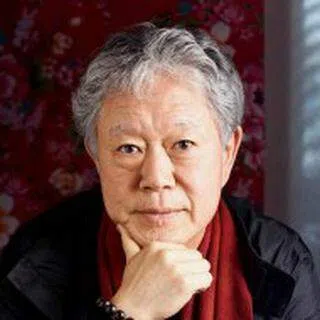

On 16 December 2010, I was rushed to the emergency room at National Taiwan University Hospital due to a heart attack. Two stents were inserted, and I stayed in the intensive care unit for four days.
I underwent rehabilitation after I was discharged and the doctor earnestly instructed me to exercise and walk 20,000 steps every day.
I have always loved walking. Whether in New York or Paris, I often walked from morning to night, along the streets and alleys, over countless bridges, and through sections of forests. I could sit down any time to enjoy the scenery, read a book, or simply daydream.
Walking in NYC and Paris
For a while, I enjoyed living in Brooklyn. I would cross the Brooklyn Bridge every morning, taking in the vast river flowing underneath. The bridge itself is a marvel of early 20th-century industrial engineering, retaining the classical elegance of its stone structure, yet also brimming with the vibrant energy of the coming steel age.
From the bridge, I would gaze at the dazzling cityscape of Manhattan, its grandeur inspiring a deep sigh, as if it were all but a fleeting dream of an empire.
Reading a city in this way felt more real than reading a book.

I’d walk through Central Park with autumn leaves falling down around me, and tread on the fallen foliage all the way to Park Avenue and then to the Solomon R. Guggenheim Museum, not realising that it was already dusk.
I guess wandering through a city like this from morning until night must reveal its astonishing cultural energy.
Paris was where I wandered in my youth, walking along the Seine from the east to the west. Crossing bridge after bridge, the nondescript Pont des Arts comes into view. To the left stands the Académie Française, while on the right is the Louvre Museum. Eastward lies the Île Saint-Louis, the “new bridge” from four centuries ago; westward, the Eiffel Tower that signalled the city’s entry into the 20th century.
I walked from the Left Bank to the Right Bank, and back again. Paris demands to be traversed along both banks of the river, on foot, like needle and thread, stitching the city’s oldest and most precious memories into one’s innermost clothing.
Back then, Mother was afraid that I would fall victim to pickpockets abroad and thus sewed a pocket into the innermost layer of my clothing where I could hide important documents or money.
That pocket held the Paris of my youth; it was right against my chest, and carried the gentle warmth and flutter of a heartbeat. Without looking at it or opening it up, I knew that the beautiful city would always be there. Whether or not you went, she was there, never leaving nor forsaking you.

Pont Mirabeau is actually much more elegant than Pont Alexandre III. The 2024 Paris Olympics opening ceremony was over-the-top — Pont Alexandre III’s gilded splendour, that bridge built to welcome the Tsar, is covered with imposing statues gleaming gold, a flamboyant display of an empire’s insufferable arrogance before its fall.
French poet and playwright Guillaume Apollinaire gazes at the industrial dawn of the early 20th century and at a city rising from the ashes of a fallen empire. The Eiffel Tower can be seen from any corner. Beneath Pont Mirabeau, the water ripples; hand in hand, liberated from the ostentatious displays of wealth, the city’s new residents stroll across the bridge with light steps.
You can walk all the way to Bois de Boulogne, where the overflowing desires of the previous night lie scattered among the forest thickets: discarded condoms, women’s stockings, marijuana joints…
One sees all desires, refine to vulgar, perfectly aligned along its east-to-west axis.
An “axis” is the transmission and continuation of culture. Many far-sighted rulers have spoken of Paris’s “axis” — from the statue of King Louis XIV in front of the Louvre, through the Place de la Concorde and across the Avenue des Champs-Élysées, past the Arc de Triomphe, all the way to La Défense and the Grande Arche welcoming the 21st century, at the westernmost end of the city’s axis.

Do I miss Paris? Not really — It’s always with me, tucked away in the innermost pocket, held against my heart.
Taipei, a ‘living hell’ for those on foot
Cities you can truly leave behind are usually the ones without space for a leisurely stroll.
That is why the city I live in is pretty unwalkable.
International media outlets call it a “living hell” for pedestrians.
Some get cynical and rebut, hands on hips: “Yes, we are a ‘living hell’ for pedestrians. So what?”
“Okay, okay… So fierce…” Street quarrels also terrify pedestrians.
I made sure to follow my doctor’s instructions: 20,000 steps a day. I’ve been diligently following this routine since being discharged from hospital, starting each morning with a walk along the river from south to north after breakfast.
In the early days, this river carried all sorts of rubbish from the upper course: mattresses, sofas, various types of shoes, clothes, hats, as well as floating bras, and blue-and-white flip flops. Sometimes there would be animal carcasses and driftwood. A bloated pig carcass lingered by the riverbank for several days, rotting and crawling with fiddler crabs, emitting a foul stench.
In my memory, it was as if the river’s upstream hated the downstream, intent on making it suffer. In the end, the entire river became a foul, rotting mess, impossible to approach.
Living on the fourth floor overlooking the river, I’d be gazing out the window when suddenly a bag of trash would fly past, landing in the water. Nearby shipbuilding factories also discharged paint directly into the river, turning it blue one moment, green the next, and then red — like something out of a fantasy movie.

Forty years ago, I taught at the architecture faculty of a university across the river. Speaking about the river, I said, “If the river’s upstream and downstream hate each other, the river also becomes a living hell for pedestrians.” At the time, I didn’t dare to walk near the river — the stench was suffocating.
There was a student who switched to study hydraulic engineering, and after graduation worked at an agency similar to the Water Resources Agency. He wrote to me once, saying: “I am striving to change this river every day.”
I really want to thank him and his colleagues. Because of the work they do “every day”, the garbage outside people’s houses have reduced, the stench has eased and small factories no longer casually discharge wastewater. The river water has become clearer, there are now walking trails and the mangroves along the riverbank are thriving. More and more people are strolling there.
The river’s downstream can finally thank the upstream, and they no longer hate each other.
In the winter of 2010, I could finally walk 20,000 steps along the river with peace of mind.
A winter’s walk in Taipei
I remember it was around 10 January and I had just celebrated my birthday. As usual, I was out clocking my 20,000 steps. After the winter solstice, the northeasterly monsoon winds along the river intensified and I braved the winds, wrapping my head and face and keeping warm with a hat, scarf, coat and thick wool socks.
Shortly after leaving, I walked past a small Tudigong (土地公, Lord of the Earth and the Land) temple. Thirty minutes further along, I came across a stone carving workshop catering to garden design, producing everything from copies of Venus and Cupid statues to Kshitigarbha with his staff and attendant Diting seated beside him.

Diting is said to be a mythical beast with the head of a tiger, horn of a rhinoceros, and ears of a dog, serving as Ksitigarbha’s mount. Ksitigarbha made the great vow to save all beings in hell, vowing not to achieve Buddhahood until all hells are emptied. What a heartbreaking vow! How could it possibly be fulfilled?
Thankfully, Diting was there every step of the way; its keen dog ears detecting the groans of the suffering and bringing Ksitigarbha to them. Such a devoted and dutiful creature truly touches the heart. “Do you want to keep one?” “No, no!” Why did a voice in my heart refuse so quickly?
For a century, the river’s upstream and midstream flowed through the city’s most prosperous areas — Monga (now Wanhua District), Ximending. Prosperity always creates massive amounts of trash. As the upstream became clogged with refuse, it spread to the midstream — Dadaocheng (大稻埕) and Dalongdong (大龙峒) — where the riverbanks were lined with shops selling groceries and necessities. The gold trade flourished and cabarets were plentiful. Before long, the midstream was also clogged and the boats couldn’t reach the area, giving way to the burgeoning railway.
I spent my childhood in Dalongdong within the bustling 44 Kan Site started by the Tong’an (同安) people — much like a neatly categorised department store comprising 44 commercial shops.
Yet, hanging from and floating among the screw pine (林投 lintou, also known as pandan) forest along the riverbank were carcasses of cats and dogs.
Perhaps even as a child, I already understood that behind the city’s prosperity lay the rotting bodies of so many pets…

We moved downstream near the river estuary and I would often look south and ponder: “Oh upstream, what would you bring me?”
Back then, that area was called “Taipei County” (台北县), encircling the prosperous heart of the city. This vast “county” was the gathering place for those who had recently come to the city to work: Sanchong, Luzhou, Wugu, Banqiao, Xinzhuang, Zhonghe… Housing prices were low and there were many basic factories around that offered a job to these workers struggling to make ends meet. At Daqiaotou early in the morning, young workers from Sanchong sat by the roadside, waiting for their boss to call their names. Once called, they’d climb onto the truck, calculating the day’s wages.
ThinkCulture Newsletter
Your fortnightly dose of Chinese history, culture, and cartoons. Sign up now.
By subscribing, I agree to SPH Media's Terms and Conditions and Privacy Policy.
Abandonment and loneliness
Having always lived on the city’s edges, what I saw was not just the glitter, but also the gritty reality of those fighting to survive.
Initially, not many people came downstream. But after the Guandu Bridge was built, more tourists came and land prices rose. Tall buildings sprung up one after another and it was easy for residents of the city centre to drive out and dump their unwanted trash — including abandoned pets — in the “remote areas”.
Pets are also part of the bustling cityscape. In the expensive neighbourhoods in the heart of the city, there is a pet hospital on each corner of an intersection.
After the 21st century, refuse floating down from upstream decreased but the number of large trash bags and abandoned pets brought by car via the bridge increased.

Looking upstream from downstream, there is always a mix of admiration, envy and also terror. Downstream dwellers can only plead: “Can you not treat those downstream with such selfish arrogance?”
Abandoned pets are the most difficult kind of “trash” to deal with: huskies, poodles, Akitas, Shiba Inus…
Why were they abandoned?
A collar was still on its neck, and a pretty elaborate one too — pink leather with two golden heart-shaped buckles, strangling the dejected neck of the abandoned pet. It was an exceptionally heart-wrenching sight.
The sadness wasn’t just for the discarded animal, but for the lost love those hearts symbolised — a poignant reminder of what had been. Now that the love is over, the bitterness runs so deep that even the pet is hated.
When they abandoned it by the riverbank, did they not look back? Could they hear the pet’s plaintive whimpering?
As I walk on the left bank of the downstream of what’s now known as “New Taipei City” (新北市), my joyful mood is often turned into deep sorrow by the whimpers of pets abandoned upstream.
Does prosperity necessarily mean the ruthless trampling of life in this manner?

Yet, I’m helpless. I don’t have a solution. These vast numbers of abandoned pets seem like a deceptive facade of the city’s prosperity, making the downstream gaze upon the upstream as one might watch dazzling fireworks, each burst a fleeting heart shape. So this is the nature of celebrations — where cherished love can instantly become discarded trash.
If love can so quickly turn into trash, can we still find peace in our present love and comfort?
Stray animals and the reality of life and death
The riverbank path resembles the path of cultivation. Sea hibiscus trees dot the path, bright and colourful in the morning, withered and fallen to the ground by the afternoon. There is a tiny Tudigong temple, with incense and fruits offered daily by nearby residents. And there was also a murder — two bodies drifted back with the tide, coming to rest by the temple, as if reporting the crime to the deity.
On the path of cultivation, signs posted by the authorities warn: “Caution: Crab crossing”. Yet, I still see the tiny crushed bodies of crabs.
Among the grass grows Chinese Elder, with tiny white flowers. Injured dogs know to chew on them.
Stray cats and dogs wandering by the river probably don’t quite evoke the same sadness. Although their lives are hard and they sometimes snarl and bare their teeth at the sight of humans, they mostly flee with their tails between their legs, disappearing into the many hidden dens along the riverbank.
Once pets have known love and then been abandoned, they lose the instinct to even snarl. They want to be near humans, wagging their tails pleadingly, yet fear abuse. Trapped in the awkward contradiction between affection and terror, their eyes dart nervously as they live in constant fear.
Emaciated and covered in sores, they are not agile and often injured by speeding vehicles. Dragging their broken leg, they hide in the bushes, eyes wide with fear as pedestrians pass by.

On the path of cultivation, many things are “unbearable”; I cannot comprehend why life must endure such torment. But my compassion is useless; it does nothing to ease their pain. The line from the Diamond Sutra that most resonates with me is: “In reality, there is no world of sentient life from which to seek deliverance.”* On the path of cultivation, am I to discard my empathy like a useless, worn-out shoe, never sparing it another glance?
And so, at times when I feel like taking a second glance, I quietly warn myself: “In reality, there is no world of sentient life from which to seek deliverance.”
If I looked back, what kind of karma would it be?
What made me look back was Xiaohei (小黑, lit. “little black”), which disappeared ten years ago. Should I tell its story?
It was January 2011, when I had just started my 20,000 steps a day routine. The northeasterly monsoon winds had arrived and a cold fog settled over the river. The abandoned pets that I normally see had also taken cover. Along the empty riverbank, the Venus and Ksitigarbha statues scattered around the stone carving workshop remained undisturbed. Diting seemed to be listening to the whistling wind, discerning its direction.
Finding Xiaohei
I heard a whimper among the bushes and immediately told myself, “Don’t look back…”
It was the cry of a very young puppy; not just one of them. I continued to tell myself, “Don’t look back.”
And then, I looked back. I followed the cries to a gap between the rocks on the riverbank and saw two squirming puppies, one pure black and the other brindled.
Life is innocent; it never knows why it has to suffer on earth.
I squatted down to look at them and touch them. They sucked on my finger with all of their strength, so eager to live. I looked up; along the freezing riverbank, I couldn’t find a female dog that could take care of them. “Where’s their mother?” Shouldn’t they have a mother?

I am a treasured child taken care of by my mother; her care was a given.
Perhaps only a spoiled and pampered life can develop such an arrogant sense of entitlement.
Among all sentient beings, the fallen sea hibiscus, the crushed crabs and the abandoned pets all know the absence of entitlement better than I do.
The arrogant presumption of entitlement is perhaps only because one doesn’t know karma yet…
When you look back, squat down, reach out your hand to touch them, and when your finger is being sucked on, you can’t help but call out: “Xiaohei.”
A friend of mine who studies animals told me that they are not allowed to name the frogs and mice in the dissection room — once they have names, they will be unable to dissect them.
But I called it “Xiaohei”.
I brought them milk and they grew quickly. Xiaohei, the Capricorn — it looked handsome and beautiful. When spring came, it sat in front of me, dignified and at ease, making me envious of its noble appearance.
This article was first published in Chinese on United Daily News as “懷念,摩羯小黑(上)”.
*translated by William Gemmell from Chinese to English at vincentpoon.com
Related: Life and life lessons in the old markets of Taiwan | Taiwanese art historian: Searching for peace and strength on the island of Taiwan
Popular This Month
ThinkCulture Newsletter
Your fortnightly dose of Chinese history, culture, and cartoons. Sign up now.
By subscribing, I agree to SPH Media's Terms and Conditions and Privacy Policy.