Singapore’s Nyonya culture: Entering Chinese hearts through their palates
Despite the naysayers, Singaporean Liao Xuemin saw an opportunity to introduce Nyonya treats to China, and now she is reaping the rewards, boasting ten outlets of her Little Nonya store across China. Lianhe Zaobao journalist Zhu Yuxuan finds out what makes Little Nonya a success.
31 Dec 2025
Culture
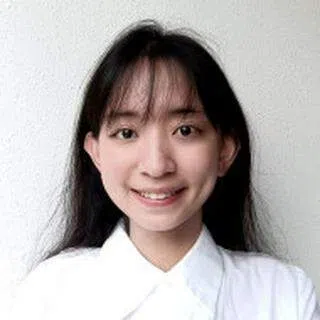

“As a Nyonya, I opened a shop selling Nyonya pastries in Shanghai because I wanted to bring Singaporean culture to China,” said 27-year-old Singaporean Liao Xuemin, who founded Little Nonya, China’s first handmade Nyonya pastry brand.
The Baba Nyonya (Peranakan) refers to the descendants of early Chinese immigrants to Southeast Asia who intermarried with local indigenous populations. Babas (males) and Nyonyas (females) predominantly live in Singapore, Malaysia and Indonesia.
In 2019, Liao founded Little Nonya in Shanghai. Two years later, she opened her first physical store, and today, the brand boasts ten outlets across China. Colourful Nyonya kueh (bite-size snacks or desserts) and fragrant pandan cakes are among her best sellers.
Opportunities and challenges
Although the shops are thriving today, Liao admitted that her journey has not been easy. She grew up in Singapore and graduated from Temasek Polytechnic with a diploma in food, nutrition and culinary science. In 2019, Liao gave up an offer to read at Singapore Management University to start a business in Shanghai with her cousin.
After arriving in Shanghai, she realised that although the catering market was fiercely competitive, it was flushed with opportunities. Therefore, she was determined to stay and strike it out.
She said, “Nine out of ten people around me were not supportive. They thought I was too young and was worried I couldn’t handle the pressure. More importantly, Nyonya kueh production is a complex process, and no one in China had commercialised it yet.” But it was precisely because no one was doing it that Liao saw an opportunity.

“I’m willing to endure hardship, and this is a worthwhile endeavour,” she said.
Liao started off selling Nyonya pastries online, then operated a food truck at universities. In 2020, Little Nonya set up a stall at the Bund Finance Center weekend market on the Shanghai Bund, gradually building a fanbase.
However, the sudden Covid-19 pandemic cast a shadow over her budding business. During Shanghai’s lockdown, Liao was stuck in Singapore and could only remotely guide her staff in making Nyonya kueh via video calls. Recalling that period, she admitted, “Those were really exhausting times.”
In 2021, Liao returned to Shanghai to open her first physical store, and two years later, she progressively opened larger outlets in urban Shanghai. Today, Little Nonya has seven stores in Shanghai, as well as one store each in Suzhou, Hangzhou and Jinan. Future plans include further expansion through joint ventures or franchising.
Bringing Nyonya cuisine closer to Chinese palates
Liao does not see Little Nonya as just a business, but also a vehicle for cultural dissemination. She hopes to introduce Nyonya culture to more Chinese consumers through these colourful bite-sized pastries.
However, achieving this is not easy. Joey Yeo, vice-chair of the Singapore Chamber of Commerce and Industry in China (SingCham) and managing director of Iconlife Shanghai, pointed out that food is a natural icebreaker that can bridge cultural distances and forge better understanding among people from different backgrounds. However, the biggest challenge for Singaporeans opening restaurants in China is the differences in taste, making market adjustments necessary.
Traditional Nyonya kueh tends to be on the sweeter and richer side. However, in China, “not too sweet” is often the highest praise for a dessert. To address this, Liao reduced the sweetness and used zero-calorie sugar in her popular pandan waffles, in alignment with Chinese consumers’ pursuit of a healthier diet.

Furthermore, Liao also adjusted her ingredients. Due to transport and cost limitations, Little Nonya could only source raw materials such as pandan leaves (also known as screwpine leaves) from Hainan. She also insisted on using ingredients imported from Singapore to recreate the most traditional flavours, hoping to convey Nyonya culture by preserving its authentic characteristics.

ThinkCulture Newsletter
Your fortnightly dose of Chinese history, culture, and cartoons. Sign up now.
By subscribing, I agree to SPH Media's Terms and Conditions and Privacy Policy.
These efforts have yielded evident results; today, 80% of Little Nonya’s customers are local Chinese.
Nyonya culture: from TV drama to dining table
Nyonya culture’s popularity among the Chinese public is largely due to the Singaporean TV drama The Little Nyonya.
First aired in Singapore in 2008, the drama became highly popular across Southeast Asia. In 2020, GHY Culture and Media acquired the rights and produced a remake, bringing the Nyonya trend to China. Liao shared that many of her customers came to her shops to try the pastries because of the show.
Among them, the spicy dried prawn glutinous rice roll (rempah udang) featured in the 2020 version of The Little Nyonya flew off the shelves. Liao commented, “Because we sell authentic products, the drama also brought significant exposure to the brand”.
Cai Ying (38), a Chinese national teaching in Henan, recalled first encountering Nyonya culture through the TV series The Little Nyonya when she was studying in Singapore. She also watched the new version when it premiered.
When interviewed, she said, “For me, the plot isn’t the main point; what matters is that it reminds me of my life in Singapore and the local customs and traditions there — it’s heart-warming.”
Opportunities for Nyonya culture in China
In recent years, Nyonya culture has gradually spread beyond Southeast Asia, and is becoming more widely known in China. Besides Nyonya cuisine, elements like clothing and ceramics have also entered the public eye, becoming new windows for Singapore–China cultural exchange.

In June, Singaporean Nyonya fashion designer Raymond Wong showcased his collection and designs of traditional Nyonya attire, the kebaya, at the Capital Museum in Beijing. He hopes this would allow more Chinese people to understand Peranakan culture as well as the multicultural characteristics of Singaporean society.
However, SingCham’s Yeo cautioned that while Nyonya brands have expansion potential, they still cater to a niche market in China. People would only truly appreciate Nyonya products once they understand the culture; the pace at which they develop cannot be compared with Chinese brands such as Mixue Ice Cream & Tea and ChaGee.
To encourage people to engage with this culture, Liao also opened a handicraft store in Shanghai, where she teaches Nyonya kueh-making and also sells items such as kebayas and Nyonya ceramics. She said, “Selling these beautiful ceramics and teacups is also a way to spread the culture.”
This article was first published in Lianhe Zaobao as “吹进中国人厨房与心房 娘惹风尚正新潮”.
Related: Wang Gungwu: What does it mean to be ethnically Chinese in Singapore? | Prof Eddie Kuo: Singapore’s ethnic Chinese have never been a unified collective
Popular This Month
ThinkCulture Newsletter
Your fortnightly dose of Chinese history, culture, and cartoons. Sign up now.
By subscribing, I agree to SPH Media's Terms and Conditions and Privacy Policy.