 big read
[Big read] From transport tool to entertainment: Reigniting China’s motorcycle industry


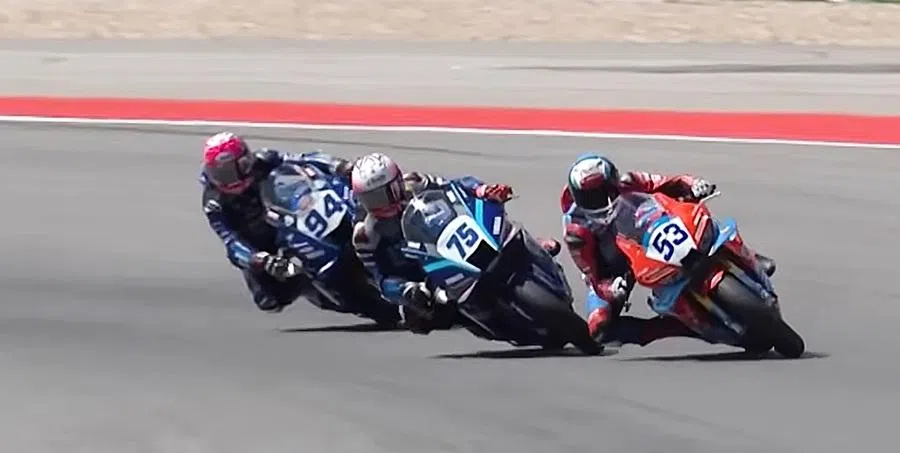
Chinese motorcycle manufacturer ZXMOTO’s win in the World Superbike Championship has captured international attention towards China’s “Motorcycle Capital” Chongqing. Lianhe Zaobao correspondent Liu Liu speaks with motorcycle enthusiasts and industry insiders to trace the industry’s breakthrough, growth and trajectory.
(Edited and refined by Josephine Hong, with the assistance of AI translation.)
“I remember seeing Zhang Xue and thinking, ‘What is this kid doing in Chongqing?’ He told me he was here to build a bike — to realise his dream.”
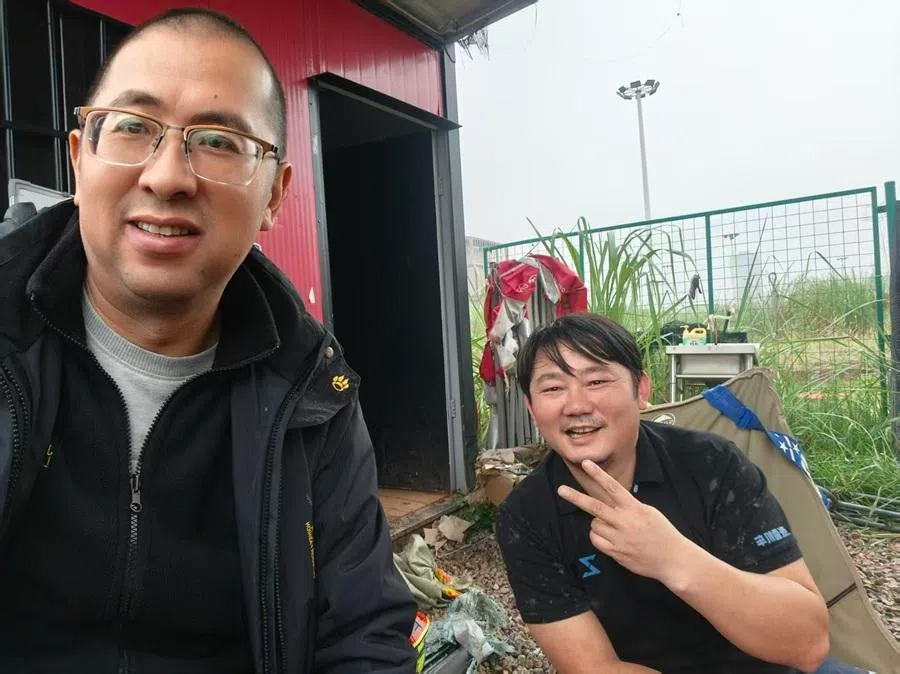
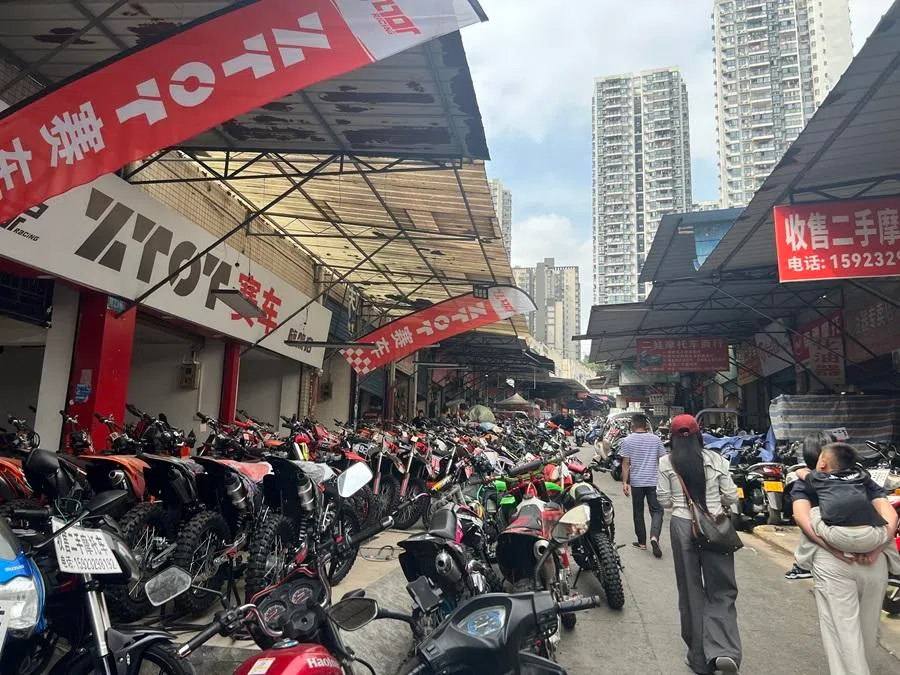
Standing outside the Laodingpo motorcycle parts market, Tang Zisong, an instructor at the Chongqing Automobile and Motorcycle Sports Association, told Lianhe Zaobao (LHZB) that he reunited with Zhang Xue in this neighbourhood over a decade ago.
Building bikes and dreams
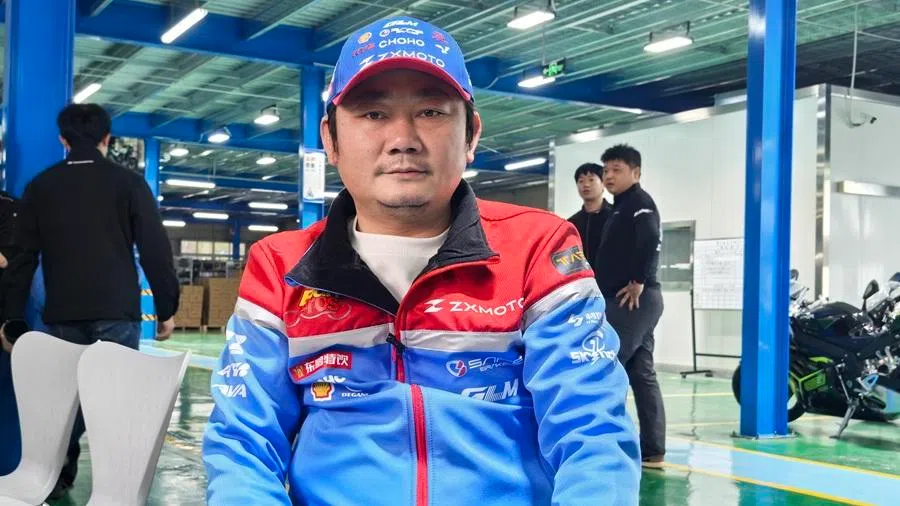
At the end of March, Chinese brand ZXMOTO claimed victory at the Portugal round of the World Superbike Championship, shattering a century-long monopoly held by European, Japanese and American manufacturers. Its founder, Zhang Xue became a national sensation.
A pivotal chapter in the lore of his success is his arrival in Chongqing with a mere 20,000 RMB (US$2,900) in 2013 to launch his business. His first stop was the Laodingpo motorcycle parts market in Jiulongpo district.
Tang, who opened his shop in Laodingpo in 2005, recalled meeting Zhang at a national motocross championship in 2007. They only became familiar with each other after Tang saw Zhang sourcing parts in the area and realised that he intended to manufacture his own vehicles.
Tang admitted that he was sceptical of Zhang’s dream of building a motorcycle. Tang said, “He understood the machinery but knew nothing about the market. He didn’t even know where to buy parts. If he wanted to buy just ten components, the manufacturers definitely wouldn’t have given him the time of day.”
However, Laodingpo — dubbed the “Huaqiangbei of Motorcycles” (Huaqiangbei in Shenzhen is known for having one of the largest electronics market in the world) — where “one could build a bike from a single screw”, provided the necessary entry-level conditions for grassroots entrepreneurs like Zhang. In previous interviews with Chinese media, Zhang noted that while he lacked resources when he arrived in Chongqing, he could procure every single part for a motorcycle within this motorcycle parts market.
Historical engine of Chongqing
Once the largest motorcycle parts hub in southwest China, the Laodingpo area is now surrounded by automotive parts stores and dealerships. Compared with the modern auto parts market rising nearby, Laodingpo has become less prominent.
“Engines were so in demand back then that buyers wouldn’t even test them — they’d just hand over money and take the bike immediately.” — Liu, a taxi driver in Chongqing
While it no longer sees the frenzy of its heyday, it remains a spiritual landmark for local riders. Liu, a taxi driver living nearby, recalled his father assembling bikes there: “Engines were so in demand back then that buyers wouldn’t even test them — they’d just hand over money and take the bike immediately.”
Yu Zekai, a post-90s motorcycle professional and enthusiast, told LHZB that while he did not witness the boom personally, he heard from seniors that Laodingpo was once a place of hidden masters — an era of “wild growth” where experts could build an entire motorcycle with their own two hands.
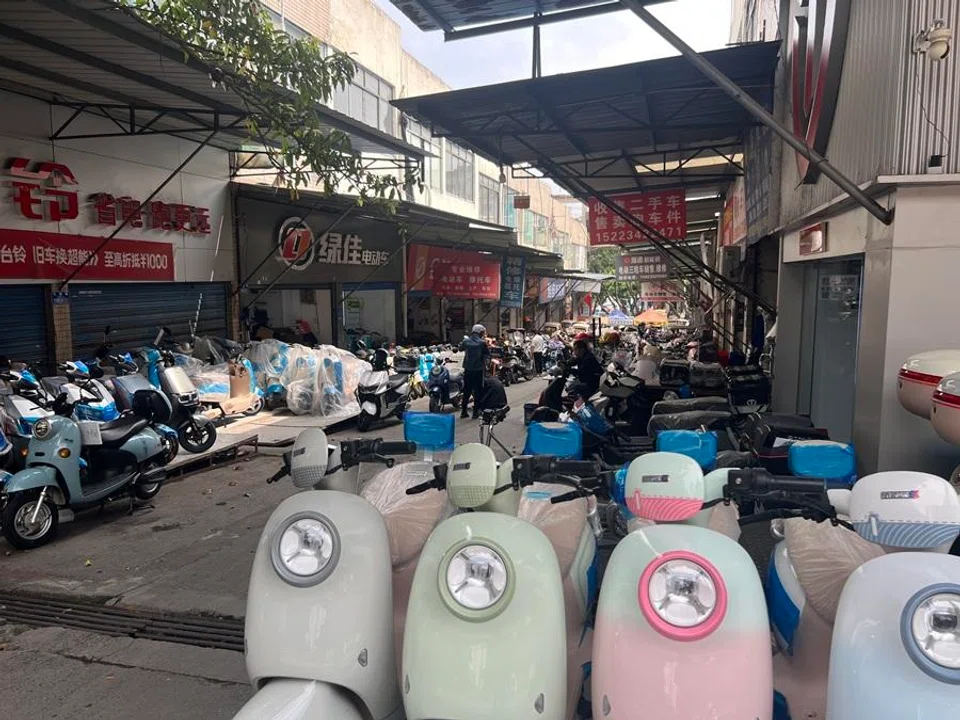
However, as the industry became more regulated and the people more sophisticated and brand-conscious, building a motorcycle by hand has become a thing of the past. I observed that today’s Laodingpo primarily focuses on the sale of complete vehicles, including sportbikes and electric models. Tang Zisong added that the rise of e-commerce has impacted the brick-and-mortar parts markets; dedicated parts vendors have dwindled, often bundling parts with vehicle sales.
In the 1980s, as China became the “Kingdom of Bicycles”, motorcycles soon followed as a vital tool for both transport and livelihood, widely used for long-haul trade and short-distance passenger transport. Popular rhymes of the time — such as “A motorcycle with two baskets, happily rushing towards prosperity; riding all over the place, his income surpasses that of (former General Secretary of the Chinese Communist Party) Hu Yaobang” — reflected the wealth aspirations of the burgeoning private economy. For years, the “motorcycle army” of millions returning from Guangdong for the Chinese New Year was a common sight.
How Chongqing became a motorcycle hub
Wang Shi, founder of China’s real estate giant Vanke, mentioned in his autobiography Roads and Dreams that as early as 1981, he was assigned a motorcycle and would often take it for a spin on the newly built ring road in Guangzhou.
Chongqing’s dominance in the motorcycle industry was forged by two factors. First, the rugged terrain created a demand for motorcycles. Second, the military-industrial complex of the 1960s and 1970s provided the early expertise.
Li Xueping, vice-president of the Chongqing Automobile and Motorcycle Industry Association, said in an interview, “In those days, owning a motorcycle could support a family or lead to wealth.”
Chongqing’s dominance in the motorcycle industry was forged by two factors. First, the rugged terrain created a demand for motorcycles. Second, the military-industrial complex of the 1960s and 1970s provided the early expertise. China’s first civilian motorcycles were produced by Chongqing Jialing Group, a state-owned enterprise of military roots.
By the 1990s, private giants like Zongshen, Loncin and Lifan emerged following market reforms, turning Chongqing into China’s most vital production base and solidified the city’s status as the “Motorcycle Capital”. Today, it boasts 51 large-scale (annual revenue of 20 million RMB or more) motorcycle manufacturers and over 410 large-scale parts enterprises. Last year, Chongqing produced over 7.8 million motorcycles, becoming a top producer accounting for over a third of the national total.
Policy paradox
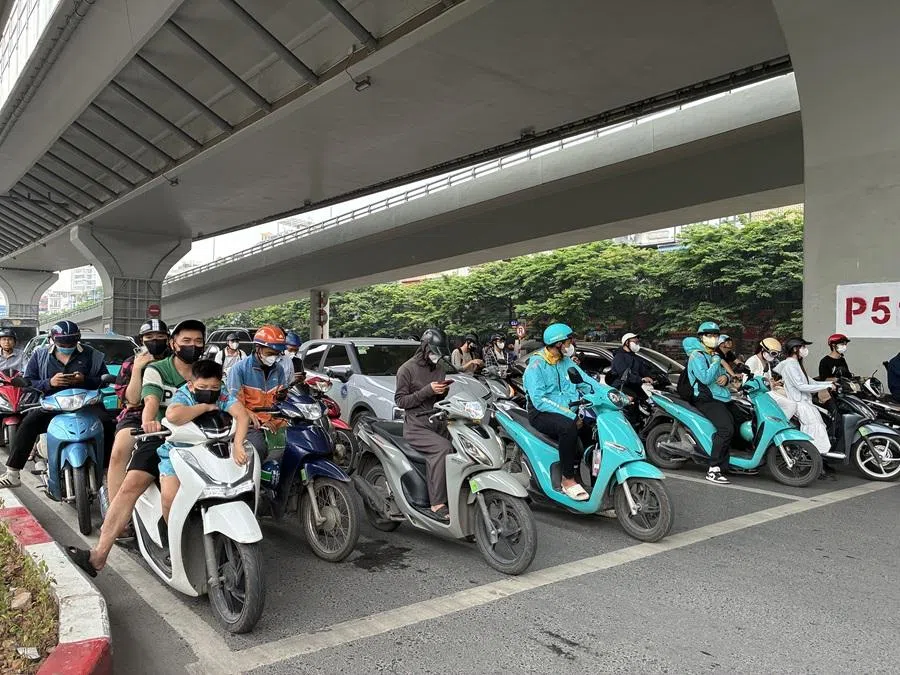
Zhang Xue’s victory has reignited the heated debate over motorcycle restrictions. The 2025 China Motorcycle White Paper indicates that the domestic market is shrinking due to urban bans and mandatory scrapping policies.
Since 1990, many Chinese cities have restricted motorcycles for safety and management.
At the time, there was a saying that “if you want to die quickly, buy a kick starter” to describe the dangers of riding motorcycles. “Kick starter” was an old term for motorcycles. The first generation of motorcycles used a “recoil starter” and needed to be started by “kicking” the engine.
High-profile voices like Tsinghua University professor Li Daokui have renewed calls to lift these restrictions, arguing that the social context for which the policy was implemented has fundamentally changed.
Li Xueping believes these bans not only stifled market growth but also slowed the upgrading of the industry.
Beyond policy, stigma around riders remains. Negative news about motorcycle gangs, street racing and noise pollution are common.
Yu Zekai argued that while these phenomena exist, reckless riders are a minority. “As a tool, it depends on how it is used. How is the tool to be blamed?”
As people have more purchasing power, they upgrade to cars, naturally reducing the demand for motorcycles.

The 2022 Chongqing forest fires provided a counter-narrative, as motorcyclists volunteered to ferry firefighters and supplies to the front lines, showcasing a spirit of community and responsibility.
Zhang Jun, a volunteer firefighter and delivery rider from Beibei district, Chongqing, was selected for the “China Good People List” (中国好人榜) for his work.
Yet, despite such moments, as of the end of last year, over 170 medium-to-large cities in China still strictly enforce motorcycle bans. Only about 30 cities have fully lifted restrictions.
Shift from utility to entertainment
Besides traffic safety and urban governance issues, the predicament faced by the motorcycle industry is also related to China’s overall economic development and industrial restructuring.
A report by Market Reports World released in March shows that while 80% of global demand comes from emerging economies for daily commuting and production, developed nations treat motorcycles as luxury leisure products.
When interviewed, Qiu Dongyang, a vice-president at Chongqing University of Technology, said that this is consistent with China’s development trajectory. China has experienced a period of rapid economic development, with overall GDP rising. As people have more purchasing power, they upgrade to cars, naturally reducing the demand for motorcycles.

“It is unlikely motorcycles will fully regain their past glory as a dominant industrial pillar. However, there is still some demand, such as for package delivery, but the domestic market will mainly develop towards entertainment,” he added.
The 15th Five-Year Plan (2026-2030) released by Chongqing in February repeatedly emphasised the creation of a smart connected new energy vehicle capital, emerging industries such as artificial intelligence and advanced materials, and the goal of building a trillion-RMB industrial cluster.
Chinese media once reported that around 2002, the profit from a Chinese motorcycle could be as low as 30 RMB.
The “Action Plan for High-Quality Development of Chongqing’s High-End Motorcycle Industry Cluster”, released in January 2024, encourages the traditional motorcycle industry to upgrade towards recreational medium-to-large displacement engines and high-end manufacturing.
Yao Shujie, an economics professor at Chongqing University, noted that Zhang Xue’s success proves Chinese motorcycles can compete internationally, opening a new track and market for the industry. The industry’s development must cater to market needs and the upgrading consumption expectations of the public, achieving more technological breakthroughs.
Technological reforms and going global
Following the World Superbike Championship victory, ZXMOTO gained international recognition and received over 1,000 overseas orders, with a first batch of exports slated for Europe in June.
Led by Jialing Group in the 1990s, China’s first wave of exports went to Vietnam, offering motorcycles at almost half the price of Japanese models. Several other Chinese motorcycle manufacturers followed. Chinese motorcycles once accounted for 80% of the Vietnamese market, posing a huge challenge to Japanese brands.
However, during the rapid expansion, Chinese motorcycle manufacturers faced fierce competition and price wars, causing the industry to shift from high-speed growth to crushed profit margins, intensifying involution and forcing most companies to exit the market.
Chinese media once reported that around 2002, the profit from a Chinese motorcycle could be as low as 30 RMB. The price competition was reflected by the saying: “Domestic motorcycles are sold by weight.”
This current wave of exports is different. Last year, China produced 22.1 million units, with nearly 60% exported. The average export price has doubled in a decade to over US$660. Li Xueping noted that the market is now more mature, with better legal frameworks and regulatory oversight on quality. However, the profit gap is still vast compared with high-end products from overseas. Industry data showed that the combined profits of China’s top ten firms last year were roughly 8 billion RMB, which is less than the motorcycle business profit of Honda alone.
Yao Shujie said that China’s motorcycle technology innovation has been lacking. The popularity of ZXMOTO may stimulate the lower-tier market, promote the technological transformation of existing motorcycle manufacturers, and bring technologies to a higher level.
Wang Yao, vice-president of strategic investment at Zongshen Group, a leading motorcycle manufacturer, said when interviewed that ZXMOTO’s victory proves that motorcycles are neither low-end nor traditional; but in order for more “Zhang Xues” to thrive, it is necessary to build up the industrial system.
With the increasing uncertainty surrounding international oil prices due to the Middle East situation, industry insiders foresee growth of Chinese electric motorcycles in overseas markets.
He said that only then can competition shift from price competition over a single product to a complete ecosystem of R&D, supply chain and service, to ensure a more sustainable industrial development and build better brand awareness. He also pointed to electric motorcycles as an important future track for exports, driven by energy security, environmental protection and other concerns.
According to data from Chinese customs, exports of electric motorcycles grew by over 40% in the first two months of this year, becoming a significant growth driver in the two-wheeled transportation sector. With the increasing uncertainty surrounding international oil prices due to the Middle East situation, industry insiders foresee growth of Chinese electric motorcycles in overseas markets.
From production tool to a leisure item
Behind ZXMOTO’s rapid rise is the burgeoning culture of leisure riding. While market penetration is still in the single digits, the industry is growing rapidly.
The 2025 China Motorcycle White Paper pointed out that the Chinese motorcycle market is undergoing a profound transformation from “tool-centred” to “entertainment-oriented”, with the differentiation of consumption structure and the iteration of technological innovation reshaping the industry ecosystem. Large-displacement recreational motorcycles have become the core driving force for growth.
In Chongqing and places in southern China such as Guangdong and Fujian, demand for leisure models accounts for as much as 20% to 30%, significantly higher than other southwestern regions.
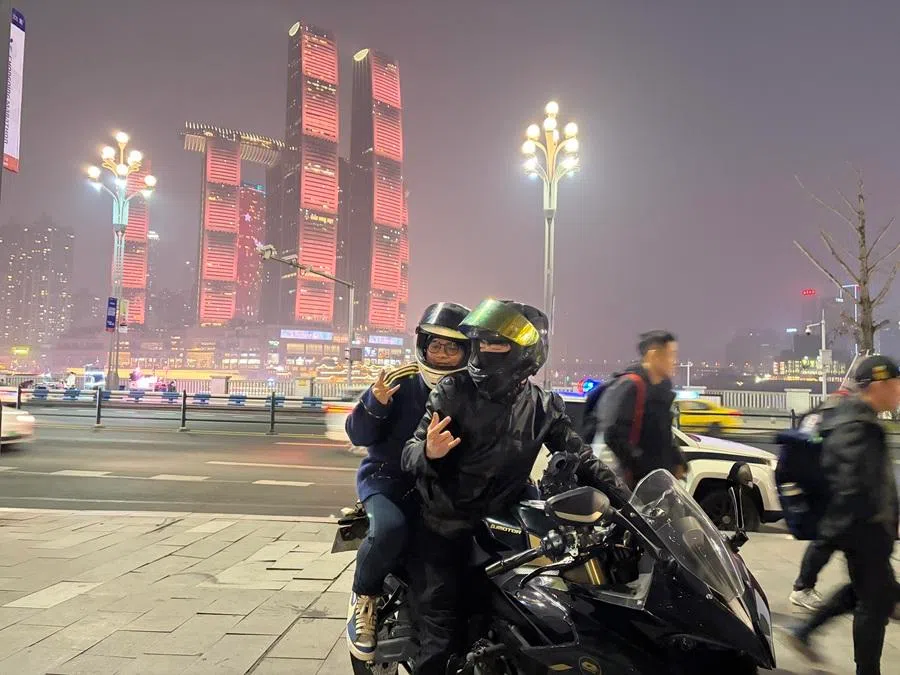
Wang Yao said that a “Motorcycle Capital” is as much about culture and lifestyle as it is about factories — the social atmosphere is an integral part.
Luo Yuru, a post-80s Chongqing motorcycle enthusiast nicknamed “Da Miao” (大喵), founded the “Mountain City Female Riders” club in 2022. When interviewed, she shared that she often rode her mother’s scooter when she was a child, and “motorcycles are like a habit and a daily means of transportation that are engraved in my bones”.
She noted that her club has grown every year, with 600 members at present. She believes that Chongqing’s tolerance for motorcycles is highly representative of the rest of China, giving it a natural appeal to motorcycle enthusiasts.
The viral Nanbin Road motorcycle photoshoot trend combines motorcycle entertainment with commercialisation. In this city famous for its motorcycles, using motorcycles as a travel experience is becoming a new consumption scenario.
This article was first published in Lianhe Zaobao as “张雪机车鸣响国际 重庆摩都引擎重燃?”.

![[Video] Lim Siong Guan: Can Singapore survive?](https://cassette.sphdigital.com.sg/image/thinkchina/e168c5c1a28b42fe72448478a1c7c9f4e4d41500b920c3141fa5f40677706b27)