[Photos] My serendipitous bond with Japanese photographer Koichi Saito
With the aid of rare photos, historical photo collector Hsu Chung-mao reflects on his chance encounter with celebrated Japanese photographer Koichi Saito, against the backdrop of a decades-long personal journey in historical photography and publishing.
6 Mar 2026
History
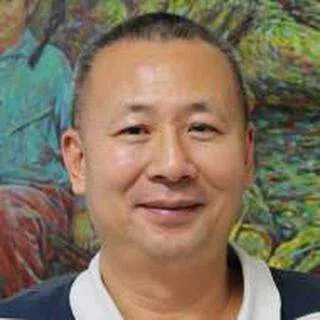

(All photos courtesy of Hsu Chung-mao.)
I have had some serendipitous encounters in my life. One of them was meeting the distinguished Japanese photographer Koichi Saito and later publishing two major photography albums of his work on China. That period was filled not only with professional passion, but also with warmth and human connection.
Before recounting this remarkable story, let me first briefly describe my relationship with Japan, particularly in the field of publishing news and historical photo albums.
Living and learning in Japan
In 1990, one year after being injured during the Tiananmen incident, I applied to chairman Yu Chi-chung of the China Times for six months of recuperation in Japan. At the same time, I hoped to travel and learn, something I had long wished to do. Mr Yu approved my request and generously funded the trip.
In Japan, I stayed at the home of my Japanese friend, Naka-san. I moved about freely, visiting not only art galleries and museums but also immersing myself as much as possible in everyday Japanese life. Every morning before dawn, Naka-san would wake to iron his shirt, don a suit and leave for work. When he left, I was still asleep, because I often wrote until two or three in the morning.


Before that, I stayed at a guesthouse. The landlord’s friends saw me wandering around daily without visible employment and jokingly called me kami-yui no teishu (髪結の亭主, lit. hairdresser’s husband) — a classical term referring to a husband supported by his wife. Whenever I told my Japanese friends about this, they laughed at how old-fashioned the phrase sounded.
During that trip, I made friends from Japan, Taiwan, and mainland China, gaining insights into daily life and work in Japan. I am still in touch with a few friends from mainland China.
Japan in the 1990s
With this personal experience as foundation, I felt confident when I led a China Times team to Japan in 1993 to produce a special Japan edition. I interviewed Diet member Shintaro Ishihara and visited the Ministry of Foreign Affairs to interview the head of its China Division. I also had opportunities to communicate with officials on a personal level.
That year, the G7 Summit was held in Tokyo. Russian President Boris Yeltsin attended, and I was impressed at his ability to hold an audience; his tongue-in-cheek remark that he could not be sure of being allowed to return to Russia whenever he travelled, for instance, drew loud laughter.
At that time, Japan was still an economic powerhouse, with an economy roughly seven times the size of China’s. The whole world wanted a piece of Japan’s prosperity. Restaurants of all sizes were filled with foreign workers — Koreans, mainland Chinese, Taiwanese, Turks, Southeast Asians. Everyone had come to earn high wages.
Mainland Chinese workers fell into two categories. One group consisted of intellectual elites studying at prestigious universities such as the University of Tokyo, Waseda and Keio. Their Japanese proficiency was outstanding, praised even by Japanese natives.


The other group came under the pretext of attending Japanese language schools but primarily worked; they slept in class while teachers pretended not to notice, since many such schools operated to profit from their tuition fees. Many stayed behind to work illegally after their visas expired. For many mainland Chinese, the decision of whether to return home or remain as undocumented workers became a recurring dilemma.
Editorial ambitions
In 1995, the 50th anniversary of the end of World War II, referred to in Japan as “50 years after the war”, Japanese publishers released many related works, including Japan’s 50 Postwar Years by Mainichi Shimbun, and 20th Century Japan, published annually by Kodansha. At the time, Japanese publishers were still thriving, and invested heavily in production. Their historical photo albums carried a powerful sense of the era, which amazed me.
My purpose in Japan was not merely observation, but practical learning. I suggested that China Times publish Taiwan’s 50 Postwar Years, modelled after Mainichi Shimbun’s volume. This large-format album, priced at NT$2,500 (US$90 to US$95 in 1995), involved ten colleagues — five responsible for photographs, and five for writing. Though I was listed as deputy editor-in-chief, I was in fact the chief editor. It was my first time leading the editing of a large-scale historical photo album. After publication, it sold exceptionally well. Photo books usually have limited sales, but this one sold over 30,000 copies, setting a new record.


Two years later, I collaborated with Han Sheng Publishing on a two-volume set, Joys and Sorrows of the Chinese (中国人的悲欢离合) and The Great Migration (大迁徙), and then with Commonwealth Publishing on Scenes and Times of the Chinese (中国人的山河岁月). In the following two years, I worked with Jin Xiu Publishing on the complete 60-volume series 20th Century Taiwan. Apart from support from their editorial staff, I selected and purchased all the images and wrote all the text myself — approximately 300,000 words over three years. Even during business trips, I wrote on airplanes and in hotels whenever I had spare moments.
Learning from the best
Unlike my earlier imitation of Japan’s 50 Postwar Years, when compiling 20th Century Taiwan, I no longer followed Kodansha’s layout. Instead, I flew to London and purchased numerous European and American historical photo books to study their editorial styles. Japanese publications can sometimes be too fragmented; I prefer a grand, sweeping presentation, closer to European and American aesthetics.
In addition, I acquired many prewar Japanese photo albums about mainland China and Taiwan from Jimbocho in Tokyo. At that time, mainland China’s economy had not yet taken off, and Taiwanese had not fully recognised the value of such materials, so prices were low. I bought in bulk, shipping box after box back to Taiwan. I became close friends with Nagamori, owner of Shinsendo Bookstore. Fifteen years later, when many mainland Chinese buyers came looking for items, he would tell them, “All the good pieces have been purchased by Mr Hsu from Taiwan.”


From the beginning, I went to Japan with a mindset of learning. I knew Japan was more advanced, and I respected and appreciated its strengths, but I did not idolise it — the purpose of learning was to catch up and eventually surpass it. My mainland Chinese friends felt the same. Their Japanese was excellent, but we were all clear that we were Chinese. Our goal was to work hard so that Chinese people could surpass Japan in all fields. Having said that, we got along extremely well with our Japanese friends and left with wonderful memories.
During that period, I travelled to Japan three or four times a year, mainly for interviews, publishing and acquiring old photographs. After 2010, my professional focus shifted to mainland China. I visited Japan less often, mainly for family trips, while travelling to Europe more frequently to purchase valuable historical images.
Looking back, 30 years have passed in the blink of an eye. Our professional capabilities are far stronger than they were then.
Meeting Koichi Saito
In 2017, while providing materials for the Suzhou Art Museum’s Exhibition of Jiangnan Historical Images, I came across a 1965 Suzhou photo collection published by the Japanese photographer Koichi Saito. I found it exceptionally well done. I asked my contact Honda-san to help me contact Mr Saito, and discovered that he was still alive, in his eighties.


Saito is best known for following and photographing Yukio Mishima, a colourful Japanese writer, actor and playwright. Some of his most famous photos include those that depict Mishima posing heroically with a drawn samurai sword, taken two weeks before Mishima committed seppuku.
Through friends, we arranged to meet at a cafe in Tokyo Station Hotel. At first, he was somewhat reserved — it was our first meeting, after all. I said I was interested in publishing his China photographs. He recounted his 1965 visit to mainland China — one year before the Cultural Revolution — as part of a Japanese youth delegation, during which he photographed many cities. I expressed my desire to publish these works.


He was puzzled. I was just an individual, not an editor from a major publishing house — why would I want to do this? I told him the truth: I hadn’t thought much about it — I just felt I wanted to do it, simple as that.
Soon after, accompanied by his daughter, he visited my Taipei office to discuss the project. I believe he made the trip mainly to confirm my seriousness and our capability. He brought all his original negatives. We signed a simple agreement. He said he did not care about money; he only wanted to publish his photo album.
Canon had previously sponsored his Shanghai and Beijing albums in Japan. After reviewing Japanese editions, I boldly promised him that the album I produced would be of higher quality than Japanese and German publications.
From dream to fulfilment
One year later, The Years of China, 1965 (岁月中国,1965), published by Shandong Pictorial Publishing House, was released in mainland China. It was soon selected as one of China’s Top Ten Photography Books of the Year — a judge told me it was unanimously approved without hesitation.

Later, he told me he had other works. I learned that after China’s reform and opening up, he had been there over 80 times, producing tens of thousands of negatives. I proposed publishing another album. At that time, mainland China’s economy was strong, and I secured substantial sponsorship through some friends.
In 2019, we published Looking Back On 40 Years (40年后再回首), with an exhibition at the China Millennium Monument in Beijing. On opening day, Mr Saito flew to Beijing with his daughter, son, daughter-in-law and granddaughter — they were overjoyed.


I fulfilled my promise, as the two albums I produced for Saito were of far higher quality than his original Japanese editions. Later, when he was interviewed at home in Japan by a Tokyo correspondent from Xinhua, he displayed the two large albums on his desk and said the experience was “like a dream”.
It is every photographer’s greatest dream to hold a grand exhibition and publish a high-quality photo collection. In that instant, that dream was realised for him.
A full-circle moment
I also took him to visit Visual China, which is now the world’s second-largest image archive after Getty Images. Its founder, Chai Jijun, has been a friend of mine for 20 years. In 2016, it acquired Bill Gates’ Corbis commercial image archive, after Gates expressed that he no longer wished to run it.
The company’s employees were remarkably young; when Saito and his family visited, they marvelled at the youthfulness of the staff. Japanese companies, by comparison, tend to have many elderly employees.
At that moment, I suddenly realised: this was the first time I was leading a veteran Japanese professional photographer to visit a Chinese company more advanced than those in Japan. Such a possibility would have been unimaginable 30 years ago.

Back then, we went to Japan to learn, earnestly copying them with the aim of one day surpassing them. I had not expected that day to arrive so soon.
Of course, publishing Saito’s albums was not meant to prove this point. It was simply an unexpected revelation. And as far as our friendship is concerned, it represents not only a bond between two individuals, but also enduring goodwill between our peoples.
Thinking of this serendipitous connection always fills my heart with warmth.
Related: [Photos] Collapse of the Japanese empire’s ‘Manchu dream’ in northeast China [Eye on Dongbei series] | [Photos] How Sichuan rose from a famine unbeknownst to the world to become a ‘Land of Abundance’ [Eye on Sichuan series]

Get the ThinkChina Weekly Newsletter
Insights on China, right in your mailbox. Sign up now.
By subscribing, I agree to SPH Media's Terms and Conditions and Privacy Policy.