Young Chinese at the UN: Global citizens or Beijing’s ambassadors?


Over the past decade, a growing number of Chinese youths have entered international organisations for work and study. This could be related to China’s closer ties with the outside world and the broadening horizons of the younger generation. Lianhe Zaobao Shanghai correspondent Li Kang finds out more.
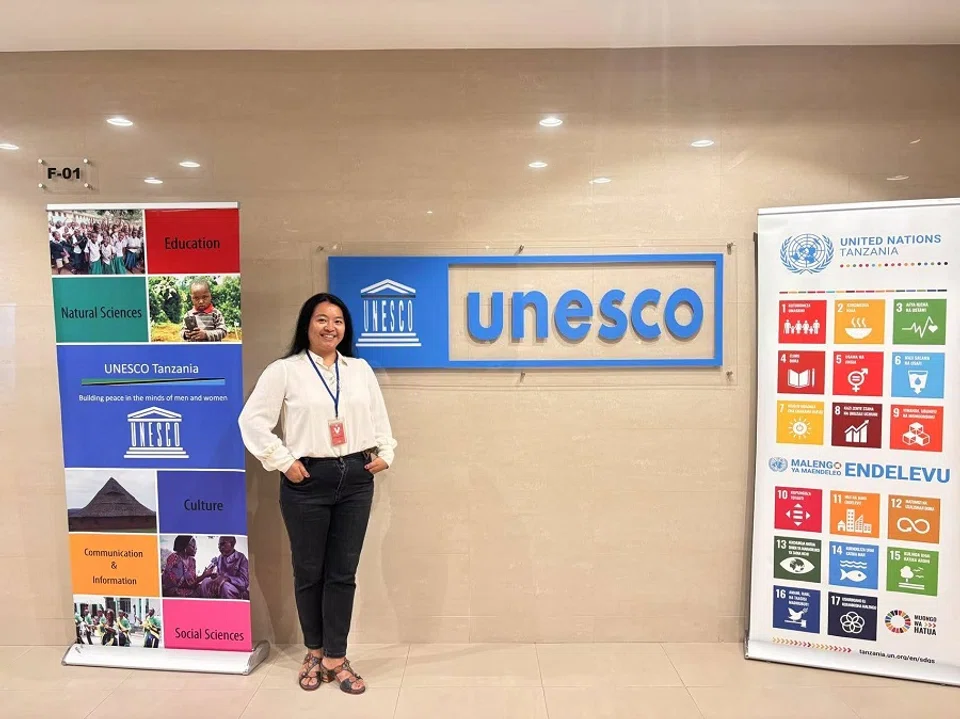
“The UN has little presence back home in China. Here in Africa, everyone has interacted with UNESCO at some point,” explained Huang Shudan, when asked by Lianhe Zaobao why she chose a UNESCO (United Nations Educational, Scientific and Cultural Organisation) internship in Tanzania after completing her PhD in the US. The 1990s-born Chinese national arrived last October for a one-year term.
...the number of Chinese citizens employed by the UN has doubled over the past 14 years, from 794 in 2009 to 1,647 in 2023, an increase of 107%.
Increasingly popular choice for Chinese youths
In recent years, it has become increasingly common for highly educated young Chinese like Huang to work or intern at international organisations. According to data from the official UN website, the number of Chinese citizens employed by the UN has doubled over the past 14 years, from 794 in 2009 to 1,647 in 2023, an increase of 107%.
These youths with an international perspective, who are moving beyond traditional educational and career paths, have also received structured support from Chinese officials.
Among the pathways to joining international organisations, the cooperative internship program between the China Scholarship Council (CSC) and these entities offers a fast track for many young Chinese. Candidates selected through the CSC receive official recommendations, allowing them to advance directly to the interview stage.
Huang was selected after going through CSC’s resume screening, written test and interview, before making it past UNESCO’s interview round. As an overseas intern endorsed by the government, she also received a monthly stipend of US$2,400 from the CSC.
Since its launch in 2016, the CSC project has seen a significant increase in available positions, with continuous improvements to its guidelines. According to the CSC website, the government aimed to send 188 interns last year, partnering with several UN specialised agencies, the International Telecommunication Union, and the International Organization for Migration.
Another group of Chinese youths directly apply to the international organisations, competing with global applicants. Tang Leyan, 24-year-old Tsinghua University master’s student, applied on her own and started her internship at the UN headquarters in New York in December 2024.
... more than ten universities, including China Foreign Affairs University and Beijing Language and Culture University, have launched undergraduate programmes focused on international organisations and global governance.
Interested in cross-cultural communication, Tang joined Tsinghua University’s Center for Global Competence Development during her first year of master’s studies. There, she networked with seniors experienced in working and interning at international organisations while also actively searching for opportunities. After being accepted by the UN, Tang also successfully applied for the US$2,400 per month scholarship from the CSC.
China steps up training of global governance talent
Established in 2018, Tsinghua University’s Center for Global Competence Development exemplifies how China’s top universities are aligning with the national global strategy. Following President Xi Jinping’s 2015 call for global governance reform, several ministries launched initiatives to cultivate talent and encourage Chinese youths to participate in international governance.
In addition to CSC partnerships, the Ministry of Human Resources and Social Security has created a talent information service network to share international organisation vacancies. Similarly, the Ministry of Education has developed platforms and provided internship guides for university graduates.
Moreover, more than ten universities, including China Foreign Affairs University and Beijing Language and Culture University, have launched undergraduate programmes focused on international organisations and global governance. Beijing Foreign Studies University and Renmin University of China have also established schools of international organisations. Meanwhile, interest in Model UN activities that simulate UN discussions have trended towards younger students, going from universities to high school and middle school campuses.
At the grassroots level, the high threshold for applying to international organisations has created opportunities for study abroad agencies to offer application coaching and consulting services, with fees ranging from a few thousand to over ten thousand RMB. Self-organised mutual aid groups have also emerged on Chinese social media platforms, where Chinese youths interested in international organisations exchange application experiences and share interview tips.
Culture shock and career hurdles
Chinese youths face various challenges upon entering international organisations.
Huang spent her first three months in Tanzania on the verge of a mental breakdown. She described the damaged roads and congested traffic as making “even sitting in a vehicle feel extremely dangerous.”
She also encountered significant professional hurdles. Tasked with writing research reports, she was hampered by the lack of field research opportunities. Despite numerous consultations with her supervisor, she was ultimately forced to leverage personal connections to secure departmental funding.
... while China’s contribution to the UN budget has increased to 20% this year, the proportion of Chinese staff within the entire UN system is currently only around 1.67%. This means that China is still “underrepresented” in the UN. — Professor Zhang Guihong, Fudan University
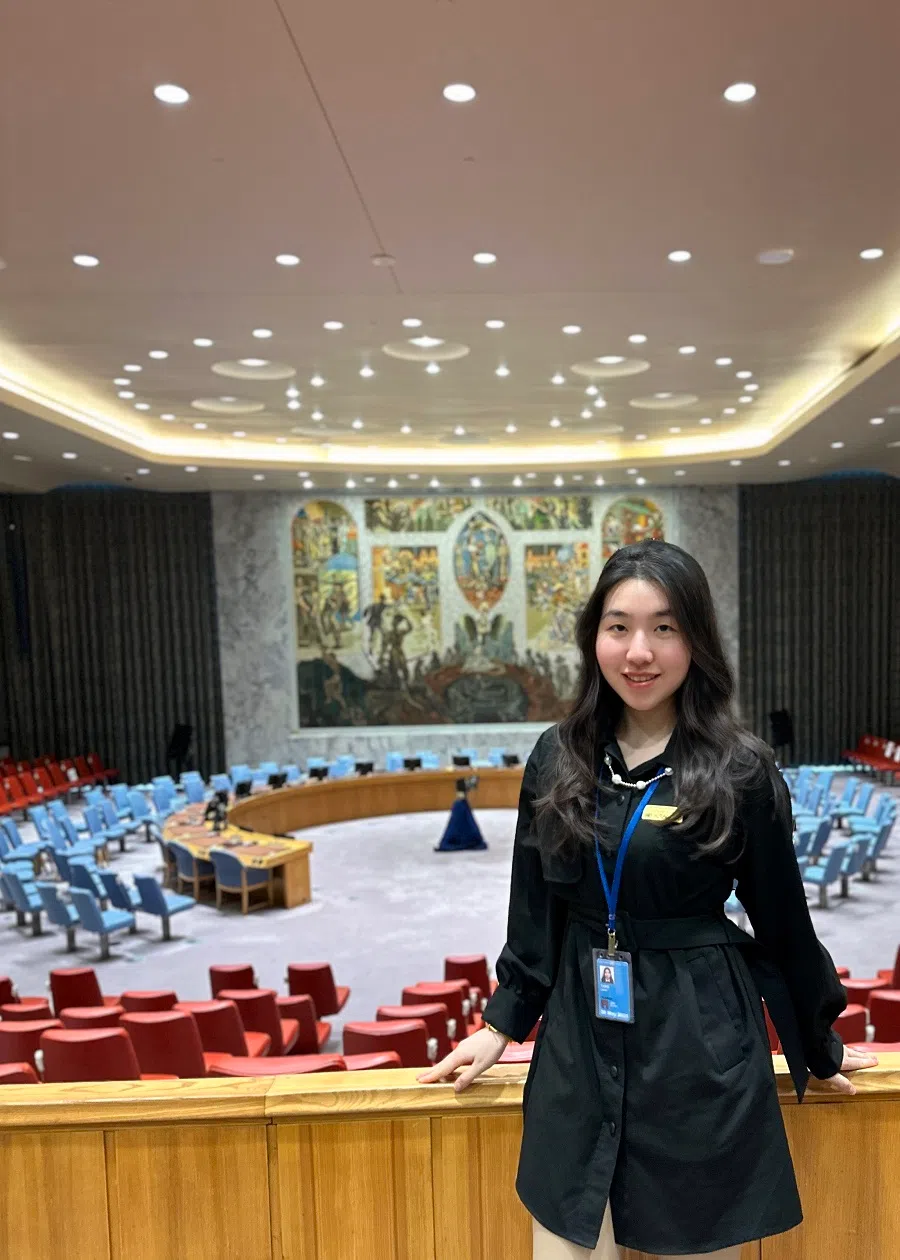
In her second week, Tang started sending her supervisor a weekly report, as is standard practice in China. “But my boss only cared about me completing my tasks efficiently, at my own pace,” she said.
China not yet at the point of replacing US
Zhang Guihong, professor and director of the Center for the Study of the United Nations and International Organizations of Fudan University’s Institute of International Studies, told Lianhe Zaobao that over the past decade, a growing number of Chinese youths have entered international organisations for work and study, reflecting China’s growing global engagement and the expanding horizons of its younger generation.
However, Zhang pointed out that while China’s contribution to the UN budget has increased to 20% this year, the proportion of Chinese staff within the entire UN system is currently only around 1.67%. This means that China is still “underrepresented” in the UN.
Amid China’s more active participation in global governance, Chinese narratives such as the “Belt and Road Initiative” and the “community with a shared future for mankind” have appeared more frequently in UN resolutions in recent years, raising concerns among Western countries, including the US.
Meanwhile, during Donald Trump’s first presidency, the US withdrew from both UNESCO and the UN Human Rights Council (UNHRC). Entering his second term in office, the US again withdrew from the World Health Organisation and signed an executive order pulling the US out of the UNHRC.
The Trump administration’s reduced global engagement arguably created a perceived leadership vacuum, allowing China greater opportunity to expand its influence and pursue a leading role in global governance.
China is not ready to replace the US as a world leader. China should remain modest and keep a low profile, genuinely promoting the joint development of global governance and international values. — Professor Zhu Feng, Nanjing University

Zhu Feng, professor and dean of the School of International Studies at Nanjing University, said in an interview that if the US withdraws from international organisations, China is prepared to increase its global governance capabilities and contributions by strengthening multilateral communication and cooperation.
However, he also pointed out that China is not ready to replace the US as a world leader. China should remain modest and keep a low profile, genuinely promoting the joint development of global governance and international values.
On the right track
Zhu views the increasing number of young Chinese joining international organisations as crucial for developing their international skills, and essential for maintaining China’s future global competitiveness. He dismisses concerns about China seizing power from the US within these organisations as “pure fabrication,” asserting that the rise of China’s youth represents hope for the country’s future.
Huang believes the value of her UN work lies in implementing policies that directly benefit people. She notes that while many Americans from diverse economic backgrounds work in international organisations, these positions in China are typically filled by exceptional individuals. “When any ordinary Chinese youth can join the UN,” she argues, “then we’re truly on the right track.”
This article was first published in Lianhe Zaobao as “美国加速退群 更多中国年轻人进入国际组织”.