Lin Tianmiao: Making art through sickness, life and play
Chinese artist Lin Tianmiao’s artistic career began later in life, after she became a wife and mother. Her inspiration for artmaking comes from everyday life and objects, her experience as a daughter, wife and mother, and her ability to see the bright side amid major life and death encounters. For her, transforming the mundane into the sublime helps make “play” never end. Curator and writer Tan Hwee Koon takes us through Lin’s recent exhibition “Lin Tianmiao: There’s No Fun in It!” at the Power Station of Art (PSA) Shanghai.
13 Mar 2026
Culture
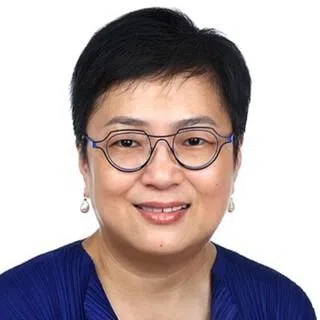

(Photos: Tan Hwee Koon, unless otherwise stated)
In 2002, I first encountered Lin Tianmiao’s artwork Spawn #3 (2001) at Imagined Workshop: The Second Fukuoka Asian Art Triennale at the Fukuoka Asian Art Museum in Japan.
I was shaken to the core when I saw Lin’s installation: a larger-than-life, gender-neutral image of her bald head and naked body, taken shortly after she had given birth. It was “confined” physically by tumour-like thread balls growing all over her body, downwards from her chest, and tied via thread to egg-like thread balls on the ground.
The balls suggest the quantity of eggs she could potentially produce in her lifetime; at the same time, expressing her duties and conditions, as a woman trapped by her traditional child-bearing societal role in a patriarchal system. This resonated with my own awkward circumstances of trying to make sense of my new role, transitioning from a daughter raised as an equal to boys, playing with Lego rather than dolls, to a woman struggling to navigate unfamiliar terrain and the traditional expectations society still places on the contemporary female.
A fine example of ‘women holding up half the sky’
Lin Tianmiao, born in 1961 in Taiyuan, Shanxi province, is a leading representative of “women holding up half the sky” (女人能顶半边天), achieving international recognition and success like her male peers. Growing up in an artistic family with a traditional ink painter father and a Chinese dance teacher mother during the Cultural Revolution, Lin was trying to make sense of the rapid changes during the 1980s following reform and opening up, and the impact of globalisation in the 1990s.
She married leading Chinese new media artist Wang Gongxin in 1988 and left for the US, where she worked as a textile designer and was active in the art scene before returning to Beijing in 1995. Lin’s artistic career began after she became a wife and mother, following her inclusion in two landmark “women’s art” exhibitions in China that coincided with the 1995 United Nations Fourth World Conference in Beijing: 1) “Woman’s Approach to Contemporary Art”, Beijing Art Museum; and 2) “Chinese Women’s Artists Invitation Show”, National Gallery of China.

My conversations with Li Tianmiao about her art and life began more than 20 years ago, from Japan to Beijing to Singapore. I also witnessed Lin Tianmiao’s phenomenal rise in the early 2000s as her art practice took off internationally as an artist active on the Biennale and Triennale scene — namely, Second Fukuoka Triennale (2002), Fourth Gwang Ju Biennale (2002), Ireland Biennial (2002), Guangzhou Triennale (2002), Fourth Shanghai Biennale (2002) and Second Echigo-Tsumari Art Triennale (2003).
Lin was also featured in seminal group exhibitions including “Inside Out: New Chinese Art”, Asia Society, New York (1998-1999); “Mahjong: Contemporary Chinese Art from the Sigg Collection”, Kunstmusuem Bern, Bern (2005); “Multiplex: Directions in Art, 1970 to Now”, The Museum of Modern Art, New York (2007); “Half Life of a Dream: Contemporary Chinese Art from the Logan Collection”, San Francisco Museum of Modern Art, San Francisco (2008). In 2012, Lin had her first major solo museum exhibition in the US: “Bound and Unbound”, Asia Society, New York.
The paradox: ‘There’s No Fun in It!’ — I hope the ‘play’ never ends
The title of Lin Tianmiao’s recent major retrospective solo exhibition at the Power Station of Art (PSA) Shanghai, hinges on the Chinese character “玩” or “play”… And “没什么好玩的!” translates into “There’s no fun in it!” But reading the underlying subtext reveals the artist’s aspiration or intent for “玩” or “play” to never end — not for a lifetime.
From 30 September 2025 to 4 January 2026, PSA presented more than 40 representative artworks from different periods — her earliest work from 1994 to present 2025, on loan from major museums and private collections in China and overseas spanning three decades of her prolific artistic career. This is PSA’s ninth landmark research project, curated by Dr Pi Li, artistic director of Tai Kwun Contemporary, Hong Kong. He said this of Li’s work: “In stark contrast to the cynicism, consumerism and hedonism of the era, Lin’s work retained a distinct force. Across her decades long career, she has persistently experimented with new materials and new vocabularies. From her own vantage point, she has delicately captured life’s manifold experiences — whether the joy of giving life or the helplessness of confronting illness and ageing. Her art is not only an expression of individual experience but also a reflection on the complex emotional conditions of contemporary society…”
Viewing “Lin Tianmiao: There’s No Fun in It!” is like catching up with an old friend and her major milestones in different phases of her life and womanhood journey.
As the visitor exits the Level 5 lift and enters the exhibition space, they see the exhibition poster “There’s No Fun in It!” before entering the transitional “Draft Space” 《草图空间》 — where the artist’s “fun” and “play” begin with the freedom to explore all potential ideas and possibilities. After this “playful” zone, the audience is redirected to walk through a narrow passageway via the south to north axis of the “Crossing Space” 《十字空间》, lined on both sides with two tall rows of framed brightly coloured vertical strips “shouting” loud “fragmentary writings” in both English and Chinese.


《i-情》i-mpression (2024), is the artist’s inner mono dialogue as if her voice is thinking aloud to herself and she is doing self-reflection after her recent second cancer episode… 重要的是怎么使用当下 (What matters is how you use the present moment) | HOW CAN ONE OBSERVE THEIR SURROUNDING LIKE A VOYEUR? | 过程即是身体 (The process is the body) | 我是 (I AM) WHO? | 你看到的是颜色,我看到的是只是黑白 (What you see is colour; what I see is black and white).


Identity and self-expressions through the repetitive action of binding and unbinding
Occupying the space near the central cross junction position of this exhibition at the “Crossing Space” is the 2025 remake version of Lin Tianmiao’s 1997 artwork titled There’s No Fun in It!《没什么好玩的!》— on which her PSA retrospective exhibition is named.


In general, Lin’s more recent artworks such as Little Things《小人国》(2025) and Each Drop, Each Dot《一点一滴》(2022) are positioned on the left of the “Crossing Space” and her earlier artworks are on the right in Exhibition Hall 1 and 2. Lin Tianmiao’s most prolific early artwork Bound and Unbound《缠了,再剪开》(1997) began as an impulse to bind the household objects around her following the birth of her son.


Through the surreal installation of white bound objects rendered functionless from her everyday life, and video projection image of a pair of scissors cutting, Lin effectively expressed her conflicting emotions of wanting to break away from her condition, and at the same time, bound by her societal role as wife and mother. Incidentally, “Bound and Unbound” was also the title of Lin’s first major solo exhibition in the US at the Asia Society, with a survey of her art from 1995 to 2012.
ThinkCulture Newsletter
Your fortnightly dose of Chinese history, culture, and cartoons. Sign up now.
By subscribing, I agree to SPH Media's Terms and Conditions and Privacy Policy.
In Exhibition Hall 1, I would like to highlight three white cotton thread (and winding) early artworks in this exhibition. In Family Portrait《家庭肖像》(1998), by winding the frames of different shapes and sizes, Lin Tianmiao has stripped them of their individuality to emphasise the mandatory and conformity of family structures. Lin also offered her audience a “lived experience” from the view from her own body height perspective through a passageway restricted by white thread in 1.62 meters《1.62米》(2003).

In Boys and Girls《男孩女孩》(2004), Lin Tianmiao examined the antithetical and yet interdependent nature between the two sexes via the categorisation of the gendered and culturally coded toys bound in white thread. Lin Tianmiao’s inspiration and impulse for artmaking comes directly from her life, everyday objects, bodily experience, and condition as a daughter, wife and mother. Major life and death encounters are also documented in her art practice.

Evolving new medium to mark the milestones in her passage of life and death encounters
In 2011, following the loss of her mother to cancer, Li Tianmiao began introducing skeletons and bones of different animal species, including those of human beings, in her art. The skeleton and bones in her artworks featured in the 2011 exhibition titled The Same《一样》at the Beijing Center for the Arts.
These artworks became associated with her contemplations about death, reflected in the artwork titles: All The Same《都一样》; The Very Same《没什么不一样》; One and The Same《没准儿一样?-1》?; Two and The Same《没准儿一样?-2》?; Three and The Same《没准儿一样?-3》?; Four and The Same《没准儿一样?-4》?; Five and The Same《没准儿一样?-5》?; Six and The Same《没准儿一样?-6》?; Maybe the Same《可能一样》; The Same for N Times《N年的一样》; The Grey Sameness《灰的一样》; The Gold Sameness 《金的一样》; The Black Sameness《黑的一样》; Must be the Same《就是一样》. Bones wrapped in shiny extravagant silk threads in a range of rainbow colours or covered under layers of gold leaf are featured in her epic compositions.
This marked a stark contrast with and departure from Lin’s early signature colourless artworks made with the humble, subdued and non-reflective cotton thread common in everyday life. Lin Tianmiao has taken an active agency with her skeleton and bone compositions in her seemingly extravagant celebration of life and the will to stay alive, rather than conforming to a passive sombre remembrance of the demise and the departure.

Between the two monumental 2011 artworks highlighted in this PSA retrospective, the muted grey composition in The Grey Sameness《灰的一样》and the gold eruption in The Same for N Times《N年的一样》— Lin Tianmiao has not only explored the notion of the centre and the periphery but also pushed the boundaries into a dramatic explosion. Another highlight of this exhibition is the 2014 work Loss and Gain《失与得》, a surreal hanging of a group casting hybrid shadows of various tools grafted onto skeletal fragments, injecting new life and transforming the skeletal parts. At the same time, the tools are rendered functionless in the process.


More recently in 2022, Lin Tianmiao’s close encounter with death was expressed by her attempts to quantify her cancer treatment journey in Each Drop, Each Dot through 92 pieces of stark black and white sketches in archival ink on paper on white frames. These sketches were hung in three rows, grouped on three sides of the walls. This composition was partially covered by a translucent curtain veil with embroidery of various hospital equipment — inviting the viewers to enter into her private and personal space.

Although it was my first time seeing Each Drop, Each Dot in person, I felt a strong connection to this series of “automated drawings” paper works made by Lin during her first cancer treatment — recalling our conversations during the Covid period, and Lin expressing her will to survive and tenacity in the face of her major health crisis. What kept Lin Tianmiao going was her art, she was constantly sketching while waiting for her treatment. Her flexibility in recovering and adjusting to adverse life circumstances and her persistence in holding firm and pushing through to survive is reflected in her art.

Lin Tianmiao’s art is not only an expression of her individual experience, but also resonated with the collective experience of an era and the universal experience. Her sincere expressions of the uncertainties and vulnerabilities of being human, and a woman (a daughter, wife and mother) through her medium resonate with both the local and international audiences — transcending cultures, generations or countries.
Lin Tianmiao’s major retrospective, named after a significant artwork from her early art practice, is not a conclusion but a return to the beginning state of “play” or art making following her passage through life and encounters with death. Beginning from the birth of her son in 1996 to her mother’s passing in 2011 and her resilience surviving two rounds of cancer, 2021-2022 and 2024-2025… I read “playground” and “play” as a metaphor for Lin Tianmiao’s involvement in art and artmaking. Underlying the phrase “There’s No Fun in It!” is Lin’s intent to continue “playing” and never stop till the end. The artworks in the exhibition “Lin Tianmiao: There’s No Fun in It!” can be interpreted as her “self-portrait” and the exhibition as the curator’s or viewer’s dialogue with Tianmiao and her art over a 30-year period.
The significance of “Lin Tianmiao: There’s No Fun in It!” at the PSA is not only because this is Lin’s major retrospective solo exhibition traversing three decades of her prolific artistic career showcasing more than 40 artworks from 1994 to 2025. Tianmiao is a product of her times. She is also an exemplary figure of “women holding up half the sky” achieving the same level of global respect and success, on par with her male counterparts, with her rapid global rise in the early 2000s on the Biennale and Triennale circuit.
Despite coming from an era when most of her peers were engaging in cynicism, consumerism and hedonism, Lin Tianmiao was persistent in her own path and her pursuit of new mediums and language of expressions. By identifying, celebrating and reflecting upon the significant events and transitions that shape her life journey as an artist (who happens to be a woman), she gave insightful meaning and beauty to our common life experiences. Tianmiao has the ability to transcend the mundane (ordinary or repetitive) with her simple medium from our everyday life (body, thread, bones) into the sublime.


Related: Chinese artist Zeng Fanzhi: Constructing a visual language all his own | Who are the Nanyang women artists?
Popular This Month
ThinkCulture Newsletter
Your fortnightly dose of Chinese history, culture, and cartoons. Sign up now.
By subscribing, I agree to SPH Media's Terms and Conditions and Privacy Policy.