Redefining cultural integration: Reflections of a new immigrant in Southeast Asia
Given Singapore’s history as a migrant society, those who come here will have to find ways to integrate as best they can into this multicultural environment. Researcher Cindy Qi thinks back on her own journey over the past 20 years.
31 Dec 2025
Culture
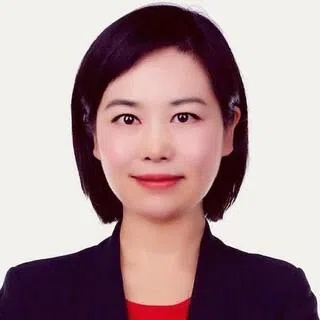

Recently, I attended a talk on multiculturalism and identity in Singapore. The speaker posed a discussion question to the audience: “When introducing yourself to foreign friends, would you say ‘I am ethnic Chinese’, or ‘I am Singaporean’?” The hall fell briefly silent, before different answers emerged: “Singaporean”, “ethnic Chinese”, and “It depends.”
As I listened to these responses, a familiar ripple of emotion arose within me. As a new immigrant who has lived in Singapore for more than 20 years, I am long accustomed to the country’s rules and rhythms, and through years of work and daily life have gradually learned to understand and participate in the cultural pulse of this land. Yet whenever the conversation turns to the deeper question of “identity”, memories of my place of origin, local experiences and cross-cultural reflections still intertwine within me, forming a distinctive and personal resonance.
Over the years, the story of the Chinese community in Singapore has come to mean more to me than the past of our forebears who “went south” to Nanyang, or Southeast Asia. It also encompasses the understanding, reinterpretation and renewed participation of later arrivals. It is precisely through these layered experiences that I have continually re-examined “Nanyang Chinese culture” — a culture that has never been a passive extension of tradition, but an open narrative, constantly rewritten and shaped through ongoing encounters.
Seeing oneself through layers of history
The outside world often regards “Southeast Asian Chinese” as a homogeneous group, but a closer look reveals that Chinese communities are in fact layered composites of immigrant cultural memories from different historical periods.

The first generation consisted of Hokkien, Teochew, Hakka and Cantonese migrants who moved south from the 19th century up to World War II. They formed tightly knit communal networks through dialect groups, clan associations and ancestral halls. Their festivals and religious practices closely followed traditions from their places of origin, laying the cultural foundation for what is today known as “Nanyang Chinese culture”.
The second generation comprised local Chinese who grew up from the postwar years to the early period of Singapore’s nation-building. Mostly born locally, they were shaped by local education, bilingual policies and the broader context of building a new nation. Over time, they came to integrate “Chinese culture” with a “Singaporean identity”, becoming a crucial bridge in the transition from tradition to modernity.
The third generation consists of new immigrants who arrived after China’s reform and opening up, especially from the 1990s onward. They primarily use Mandarin, with fewer ties to dialect groups or clan networks. Their cultural backgrounds differ from those of the earlier dialect-based communities, and upon first arriving in Singapore they often approach local traditions with curiosity and a need to reinterpret them. The arrival of this generation has ushered Chinese culture into a new phase of integration, reshaping it in terms of language, values, and ways of life.
I belong to this generation. When I came to Singapore from Xi’an more than twenty years ago, I was drawn on the one hand to the vitality of its multicultural society, and on the other hand I became acutely aware of my distance from local Hokkien and Cantonese traditions. Only after many years of living here did I gradually come to understand that the Chinese culture before my eyes was not a direct transplantation of Chinese tradition, but a Nanyang life form shaped jointly by Malay, Indian and colonial histories. For this reason, new immigrants often occupy a subtle and complex position: ethnically seen as “Chinese”, yet culturally experiencing a sense of both closeness and estrangement.
Organic shifts amid inter-generational changes
One of the most frequently discussed issues in recent years is the apparent weakening of Chinese language proficiency among the children of new immigrants. Many children in immigrant families are fluent in English, while their Mandarin remains at a basic conversational level. This has left parents anxious, and even self-reproachful, fearing that culture may be interrupted or lost at some point along the way.

In reality, this is not the result of individual family choices, but a natural outcome shaped by broader social structures. With English dominating education and public life, children grow up in an almost entirely English-speaking environment at school, and their linguistic focus inevitably shifts. Yet a weakening of language should not be read as the disappearance of culture. Many families have developed new ways of transmission — through traditional festivals, hometown cuisine, family migration stories and Chinese-language digital media — allowing culture to continue in more everyday, lived forms.
A local Chinese-language teacher once told me, “A child may not know how to write the phrase shen zhong zhui yuan (慎终追远, honouring one’s ancestors), but will still remember to visit their grandparents during Qingming.” At its core, culture is often not sustained by language alone, but by the internalisation of values and the continuity of emotional ties.
ThinkCulture Newsletter
Your fortnightly dose of Chinese history, culture, and cartoons. Sign up now.
By subscribing, I agree to SPH Media's Terms and Conditions and Privacy Policy.
Earlier generations of immigrants commonly held on to the idea of “returning to one’s roots” (落叶归根), whereas today’s new immigrants are more inclined to accept the realities of “putting down roots where one lands” (落地生根), or even of global mobility. We regard Singapore as home and are willing to seek new positions of identity within a multicultural society. As such, cultural inheritance is no longer centred on “restoring tradition”, but on “building new connections in the local context”.
It is also worth noting that new immigrants from different regions have infused local Chinese communities with fresh cultural textures. Unlike the early southern migrants, who were bound together by dialects, clan networks and local traditions, many northern new immigrants today primarily use Mandarin, and their cultural expressions tend to reflect a more holistic sense of Chinese cultural identity, as manifested in festival rituals, family values and an interest in history. This relatively “de-regionalised” mode of expression aligns more easily with Singapore’s broader “pan-Chinese” narrative, and has become part of the ongoing renewal of Nanyang culture.
Looking at the present moment, the future of Nanyang Chinese culture does not hinge on preserving any single version of tradition, but rather on continued participation in the collective shaping of local culture. Culture here has never been a simple extension of the ancestral homeland; it is the outcome of constant local encounters, absorption, and reconfiguration. Whether in the emergence of Peranakan culture, or in the interweaving of local Mandarin with Singlish, all point to the way culture grows organically and uniquely in this place.

For our generation of new immigrants, the more pressing question is not our children’s level of Mandarin proficiency, but how to remain open amid change — and, in ways that speak to the present, help the next generation rediscover what it means to be “Nanyang Chinese”.
Navigating diversity bridged by understanding
From Zheng He’s fleets anchoring at Malacca to the countless families who have since put down roots in Singapore, the 600-year history of Nanyang Chinese migration is, at its core, a history of adaptation, crossing boundaries, and renewal. Our generation of new immigrants is neither the sole guardian of tradition nor a detached observer of culture. Instead, we stand at the intersection of different experiences and memories, building bridges. We take root here, even as we reflect; we remember where we came from, while jointly shaping what lies ahead.
The meaning of cultural transmission is not to turn the next generation into “who we once were”, but to enable them to find their own ways of answering a question that remains ever relevant: “As a Singaporean Chinese, how do I understand myself, and how can I contribute to this multicultural society?”
In recent years, I have often reflected on this as well. If cultural stories are collectively written by countless individuals, can we, as later arrivals, contribute in some small way by helping more new immigrants find a sense of belonging and build their identities here? It is with this conviction that, with the support of the Community Foundation of Singapore, we have helped initiate a public-interest project focused on culture, education, and youth development. We hope that in the years ahead, it will help build more bridges of understanding between the new and the old, tradition and modernity, on this land — and accompany more people toward a more assured sense of identity.
The future of cultural inheritance often takes shape through the small, cumulative actions of many. Who will start writing the next chapter? Perhaps the answer lies in our shared participation.
This article was first published in Lianhe Zaobao as “当代南洋华人:文化融合的再定义—一位新移民对华人文化传承的感悟”.
Related: What Chew Shou Zi and two art exhibitions tell us about being Singaporean | I want to write you a letter, Singapore | The future of Singapore’s ethnic Chinese community: Reinforcing distinctiveness amid change
Popular This Month
ThinkCulture Newsletter
Your fortnightly dose of Chinese history, culture, and cartoons. Sign up now.
By subscribing, I agree to SPH Media's Terms and Conditions and Privacy Policy.