 big read
[Big read] How China builds influence, one parliament at a time


Beijing is paying for parliaments and palaces from West Africa to beyond. The buildings look like gifts, but they quietly anchor China inside the everyday spaces where power is performed. Are there really no strings attached? Lianhe Zaobao correspondent Lim Zhan Ting finds out more.
(Edited and refined by Candice Chan, with the assistance of AI translation.)
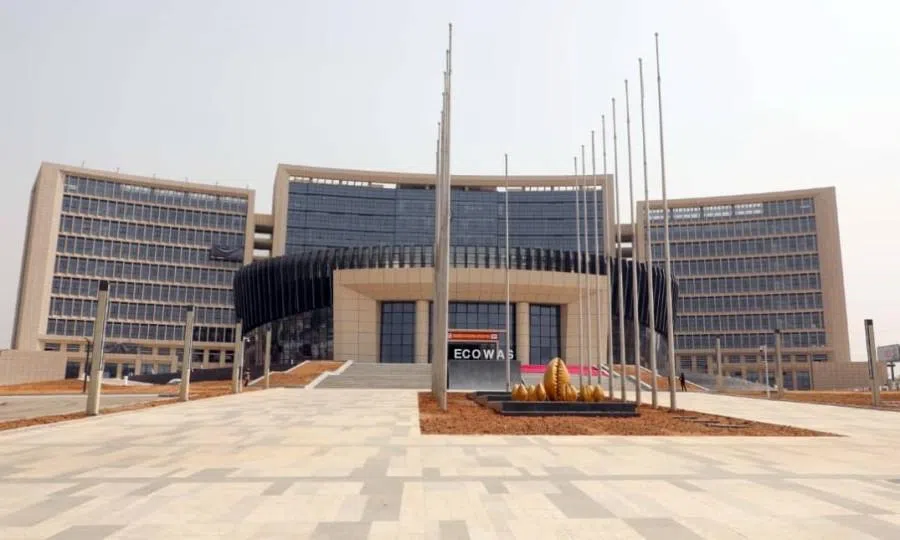
Along the highway linking Nigeria’s capital, Abuja, to its international airport, the curved new headquarters of the Economic Community of West African States (ECOWAS) stands out against the open skyline. Soon, the building will serve as a central meeting place for representatives of more than a dozen West African countries. Yet the project that symbolises regional cooperation was funded and constructed through a non-repayable grant from China.
Foreign-funded sovereignty symbols
Daniel (pseudonym), a resident living near the ECOWAS complex, told Lianhe Zaobao: “I think it’s lovely. It’s a good infrastructure. Normally, you would expect that level of infrastructure within the central business district; to have it on the airport road is a sign of expanding development, which is a good thing for our region.”
He also raised a question: “I think it’s a big question mark if ECOWAS cannot pay for their own building. What is ECOWAS doing? But of course, China has every right to be generous.”
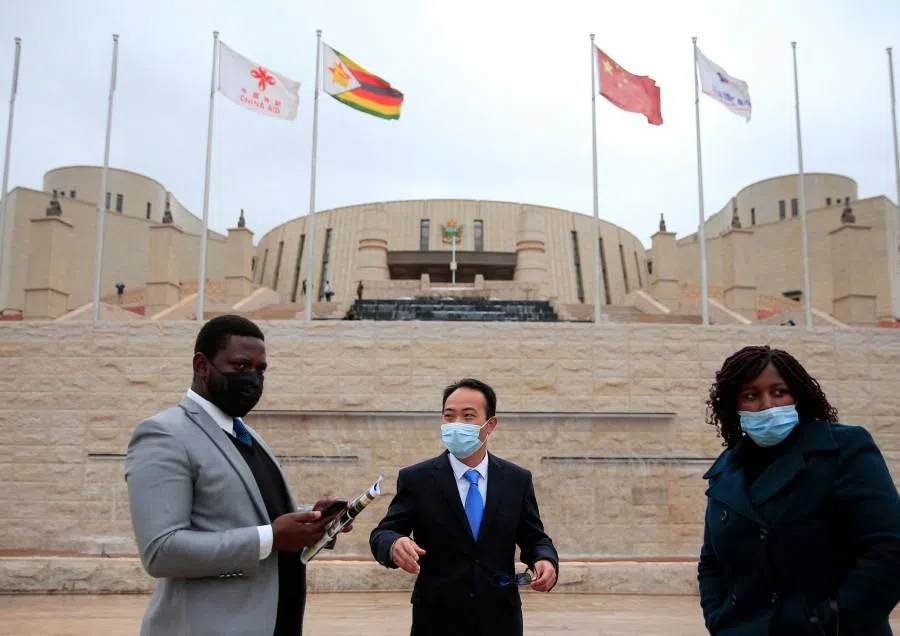
In Africa in particular, China has built or helped build parliamentary complexes or presidential palaces in at least 15 countries.
The building, whose construction began in 2022, is estimated to have cost nearly US$32 million. It integrates a parliamentary chamber (also called a congress building), a secretariat and committee facilities, and is expected to open in March this year.
The ECOWAS headquarters is only the latest example of China funding political landmarks across the Global South. In Africa in particular, China has built or helped build parliamentary complexes or presidential palaces in at least 15 countries. Apart from ECOWAS, which is a regional organisation, the rest are individual nation-states. Public information shows that most of these projects are provided as grants, with a small number financed through interest-free loans.
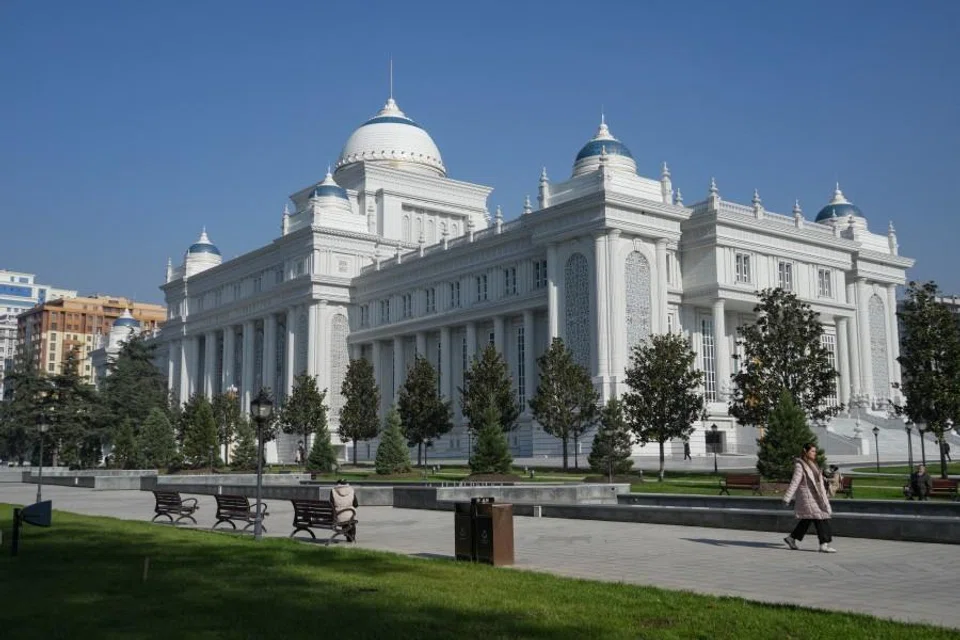
Beyond Africa, Central Asian country Tajikistan and Pacific island nation Vanuatu have also in recent years received Chinese-built parliamentary buildings or presidential palaces as gifts.
As China increasingly emphasises cooperation with the Global South — especially as it expands its footprint in Africa — its practice of building parliamentary buildings and presidential palaces has drawn greater attention. A particularly intriguing question arises: why are these iconic symbols of national sovereignty being financed and built by a foreign country like China?
“Newly independent states need effective administrative institutions to ensure social stability and economic development. That’s why China began building government buildings in Africa at a very early stage.” — Professor Tang Xiaoyang, Chair, Department of International Relations, Tsinghua University
Consolidating political influence
China’s practice of providing free assistance to build government buildings in developing countries can be traced back to the 1960s. Professor Tang Xiaoyang, chair of the Department of International Relations at Tsinghua University and a specialist in African studies, noted when interviewed that after gaining independence from colonial rule, some African countries lacked even basic government office facilities. Western aid, he said, tended to focus on economic or livelihood sectors and rarely covered such infrastructure.
China’s thinking, Tang explained, was different. “Through its own development experience, China came to understand that without a strong government, a country cannot function properly. Newly independent states need effective administrative institutions to ensure social stability and economic development. That’s why China began building government buildings in Africa at a very early stage.”
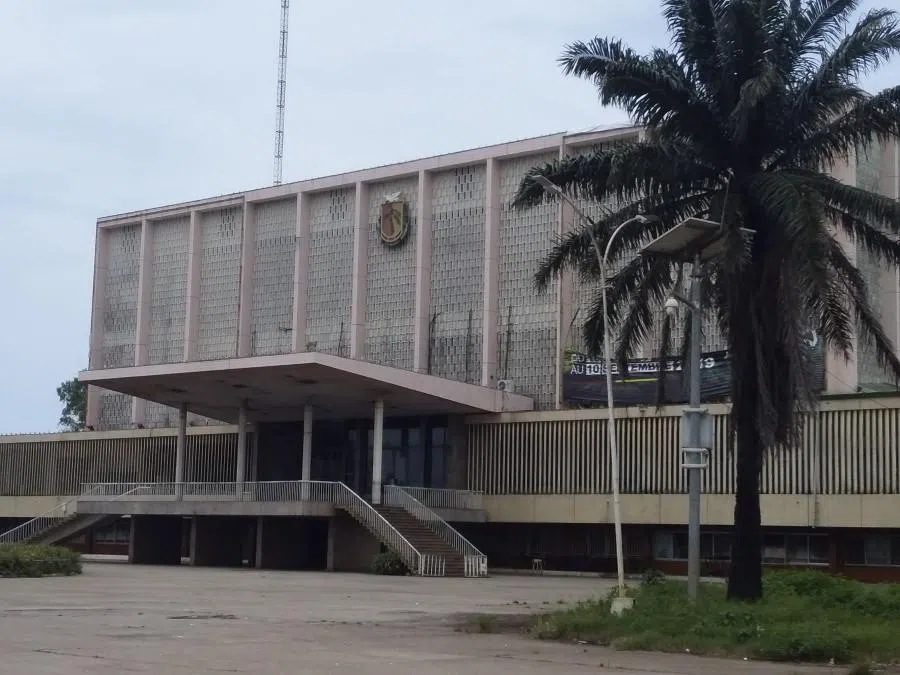
For example, the Palais du Peuple (Palace of the People) in Guinea was constructed by China in 1966. Such assistance has continued to the present day. Some data show that China has built more than 200 government buildings in Africa, including parliamentary complexes, presidential palaces, and general office buildings.
Tang emphasised that government buildings as aid projects differ fundamentally from infrastructure such as bridges, highways and power plants that generate direct economic returns. The latter are usually advanced through commercial loans and account for the vast majority of China’s overseas cooperation projects.
What is the diplomatic and strategic significance of such projects? Innocent Batsani-Ncube, a senior lecturer in African Politics at Queen Mary University of London, believes that investment in parliament buildings fulfils one of China’s main foreign policy goals of sustaining long-term political influence in Africa.
... the key to China’s long-term influence lies in maintenance arrangements following completion. — Batsani-Ncube, Author, China and African Parliaments
Batsani-Ncube, who was active in Zimbabwean civil society for many years, analysed in his 2024 book China and African Parliaments that financing and maintaining the parliament buildings enables China to hedge political influence through continued direct access to dominant cross-party political elites in each receiving country.
He further explained that many African countries operate under multi-party politics. “So it is the only arena where you find people that are not in government, but that are politically influential.” As such, China is not only gifting buildings to ruling parties, but also sending signals to opposition forces, establishing contact even before they might come to power.
Having conducted field research at several African parliamentary buildings, Batsani-Ncube noted that the key to China’s long-term influence lies in maintenance arrangements following completion.
Taking Lesotho’s parliament building as an example, he pointed out that the project relied almost entirely on Chinese building materials and technology, with Chinese-style doors, windows and other features. After construction was completed in 2012, Chinese personnel continued to be involved in operations and maintenance for extended periods, partly because Lesotho lacked technicians capable of handling the systems.
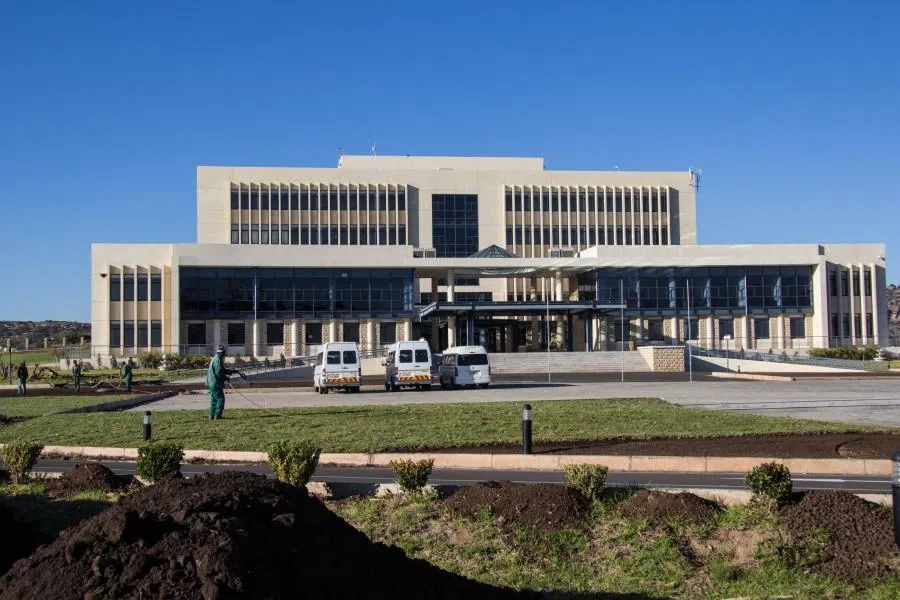
Even when political power changed hands locally, China continued to participate in negotiations over follow-up maintenance agreements and funded the procurement of replacement materials that could only be sourced from China. The maintenance work itself was also undertaken by Chinese companies.
Batsani-Ncube writes: “In constructing the building in this manner, China sought to make itself indispensable to the management and maintenance of the Lesotho Parliament building. This would grant China continuous access to Lesotho’s political system and secure its long-term foreign policy interests.”
“From the mutual assistance among Third World countries in the past to today’s shared development of the Global South, this is a political principle inherited from history.” — Tang
Landmark buildings help incumbents build political capital
From the perspective of African countries, a key reason for accepting China’s free assistance is financial constraint.
Tang Xiaoyang noted that some countries simply cannot allocate large sums to construct government office buildings. “This is an unavoidable reality for the least developed countries. But if their national strength improves in the future, they may no longer need this kind of assistance.”
He stressed that such projects are usually proposed by the recipient governments themselves, and that China’s infrastructure offers good value for money while China is also willing to provide support. “From the mutual assistance among Third World countries in the past to today’s shared development of the Global South, this is a political principle inherited from history.”
In Batsani-Ncube’s view, beyond meeting practical office needs, these landmark buildings may also serve as tools for incumbents to strengthen their political capital.
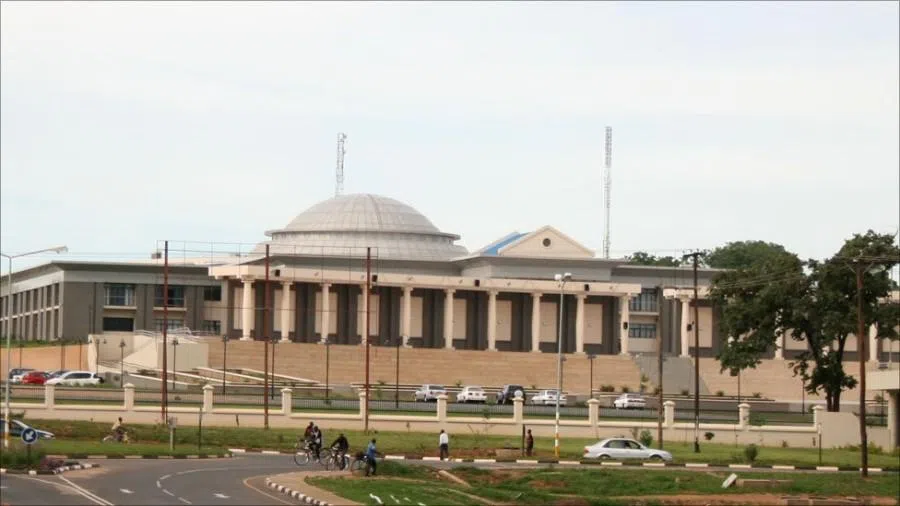
He cited the Malawi Parliament Building that China completed in 2010. Then-President Bingu wa Mutharika was a “big ideas President” who was keen on monument building, and repeatedly pledged during his campaign to build a new parliament. After its completion, he described the building as “an extremely important milestone for the Malawi Government”.
“This isn’t soft power; it isn’t sharp power. Perhaps, and most likely, it is subtle power... about entering the other but through consent and negotiation.” — Batsani-Ncube
Batsani-Ncube pointed out that, unlike Western donors who often seek to influence the direction of parliamentary debates, China is not primarily concerned with shaping discourse. Instead, it focuses on providing a space for convening.
“This isn’t soft power; it isn’t sharp power. Perhaps, and most likely, it is subtle power... about entering the other but through consent and negotiation.”
Landmarks as image-builders
On a seaside hilltop in the Pacific island nation of Vanuatu, a Chinese-funded presidential palace overlooks a deep blue bay. Milroy Cainton, a bar owner operating nearby, joked: “It’s a million-dollar spot! We are also happy that China is building that building in front of our close neighbours in the region (Australia and New Zealand), because they are doing nothing to help us.”
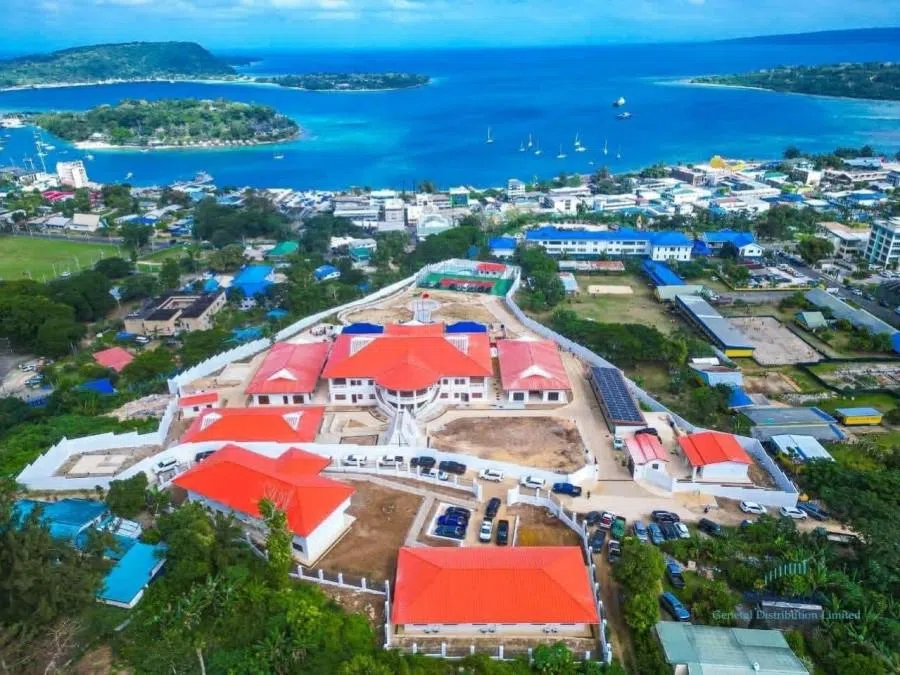
Ordinary citizens like Cainton rarely enter the presidential palace, but such eye-catching buildings inevitably shape public perceptions of the donor country. For Vanuatu, which has long relied on foreign aid, the presidential palace delivered in July 2024 enhanced China’s presence in a region traditionally dominated by Western influence.
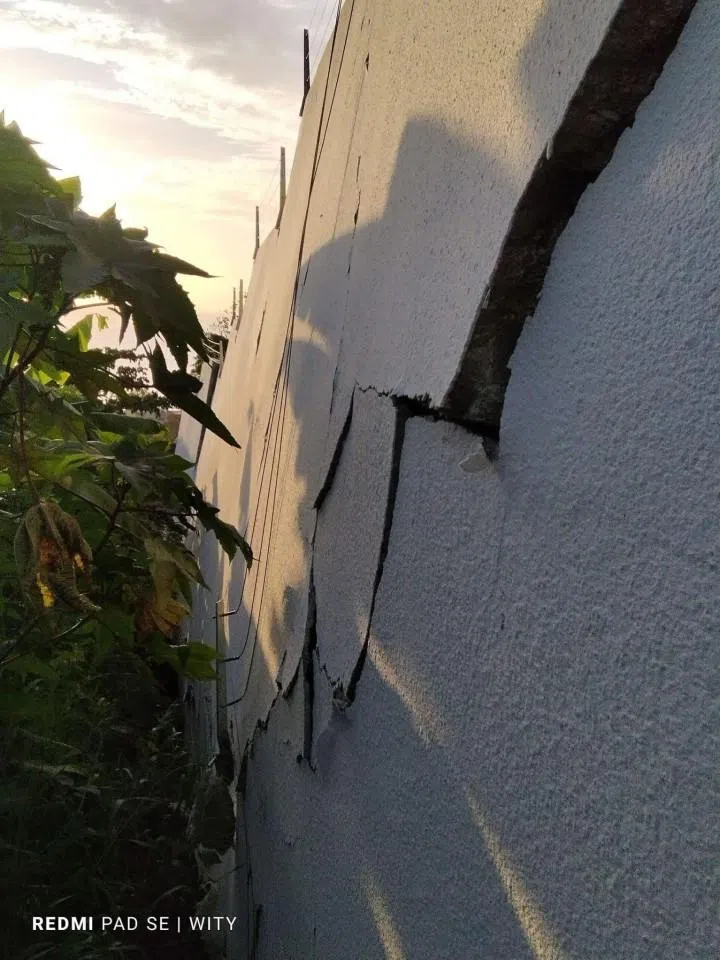
In December 2024, a 7.3-magnitude earthquake damaged parts of the palace. Some Australian media outlets reported that the Chinese construction failed to comply with building codes. But in Cainton’s view, no building could withstand an earthquake of that strength. “To say that it’s poorly built, it’s completely misleading.”
... such buildings add to the aesthetics of African cities and allow China to project its image in a cost-effective way, amplifying China’s soft power among ordinary people. — Philip Olayoku, Coordinator, Nigeria’s West African Transitional Justice Centre
In Malawi, student Harry Kumwenda, who visited the parliament building last year for an event, also expressed admiration for China. “It is modern architectural style which contrasts with many of the basic government and commercial buildings nearby... Malawi gets their national assembly without spending domestic funds and we appreciate the China government for their development support.”
By contrast, Nigerian citizen Emmanuel Nzenwa was struck by the sheer scale of the ECOWAS headquarters. “My personal impression is that the building is quite imposing and intentionally large. It clearly aims to project authority and permanence.”
Across many corners of the Global South, these landmarks have become carriers of China’s image. Philip Olayoku, coordinator at Nigeria’s West African Transitional Justice Centre, told Lianhe Zaobao that such buildings add to the aesthetics of African cities and allow China to project its image in a cost-effective way, amplifying China’s soft power among ordinary people.
Public discontent more often directed at local governments
That said, public opinion in Africa is not uniformly positive. Batsani-Ncube noted that some Malawians he encountered questioned the quality of “made-in-China” buildings, worrying that they might not be durable.
Others expressed concern that project leadership was not in local hands. Some asked why, instead of direct Chinese construction, the aid funds were not given to recipient countries to allow local contractors to build.
On social media, many African netizens also questioned why relatively better-off countries or regional organisations could not raise funds themselves. Referring to the ECOWAS headquarters, one netizen commented: “Fifteen member states can’t scrape together US$32 million for construction? Shameful — it feels like wanting to be beggars forever.”
Olayoku analysed that resentment toward Chinese-built buildings often reflects dissatisfaction with domestic leaders. “What are you doing with our money if you cannot build Parliament for us?”
As for claims that China trades buildings for conditions unfavourable to Africa, Olayoku said: “It’s not so much the fault of China, but also the irresponsibility, if I could use that word, or the unpreparedness of African leaders, of regional leaders to be able to measure up to the terms of negotiation of these external actors.” He argued that China’s presence in Africa is now a reality, and African countries should focus on establishing clear rules of cooperation.
Because parliamentary buildings are venues where leaders gather, China’s role in building them has sparked speculation about potential surveillance.
For many Chinese observers, however, these overseas “made-in-China” political landmarks are seen as symbols of national strength that inspire national pride.
A Chinese construction worker involved in building Cameroon’s parliamentary complex said that when the building was handed over in 2024, he felt “proud that China had completed a great project”. He added that local workers often described China’s efforts simply as “good”.
Some architecturally distinctive landmarks have even become tourist attractions. Tajikistan’s parliament building, completed in 2024 and incorporating ethnic design elements, has drawn many visitors taking photos. Chinese tourists frequently share their impressions on social media; one blogger wrote: “The strength of our motherland lets us stand tall in every corner of the world.”
Denial of spying allegations
Because parliamentary buildings are venues where leaders gather, China’s role in building them has sparked speculation about potential surveillance. A 2020 report by the US conservative think tank Heritage Foundation bluntly stated: “Africa may be the most permissive region on earth for Chinese spying and espionage.”
The report claimed that “if Beijing’s surveillance blankets the most sensitive offices of some African governments, the CCP can gain insights into leaders’ personalities, habits, and preferences that would help Beijing tailor its influence campaigns directed at senior leaders”.
France’s Le Monde went further, reporting that servers belonging to Chinese telecom giant Huawei at the African Union headquarters in Ethiopia were found to be transmitting data daily to Shanghai, and that listening devices were hidden inside the building.
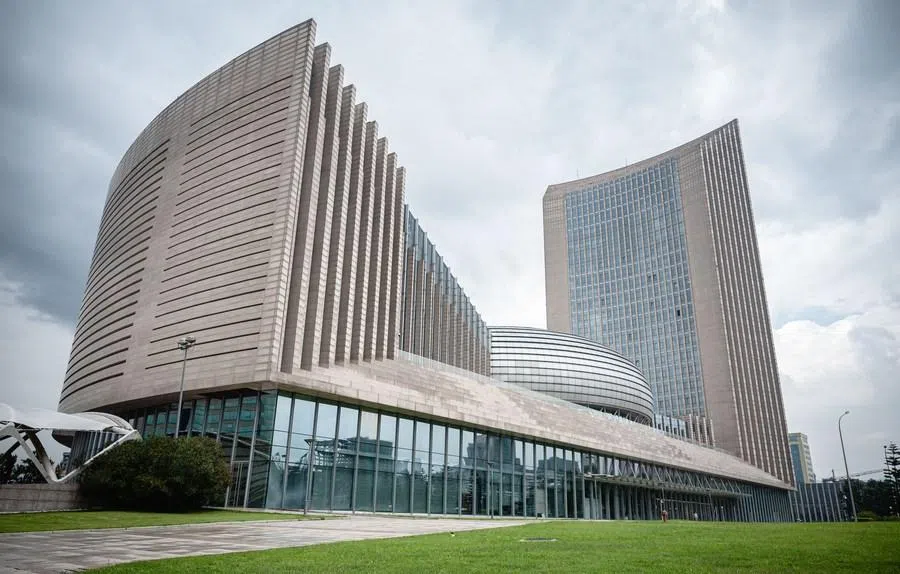
China has firmly rejected these allegations as groundless, while the African Union likewise condemned the reports as false, stressing that China could neither spy on nor needed to spy on the AU, and reaffirming the strong relationship between Africa and China.
“... does it mean displacing the West in terms of political influence? That the Global South countries are not interested in the West? And the answer is no. Because those countries, they want both.” — Batsani-Ncube
Olayoku noted that within diplomatic circles, debates over whether China is pursuing a new form of imperialism in Africa have long existed, with some fearing that such aid projects come with hidden costs.
But he emphasised: “Let’s face the reality. We cannot afford this kind of building at this time. And so the Chinese have come to help. But we have to do is to put our house in order so that even if China does not have the genuine intention of giving us the visa gift from China, then we are able to manage the situation to the advantage of our own people, you know?”
Batsani-Ncube summed up China’s influence in Africa: “China has set the pace… for Western countries now, containment is the only thing that they can try. But does it mean displacing the West in terms of political influence? That the Global South countries are not interested in the West? And the answer is no. Because those countries, they want both.
“China provides them an alternative. The West can no longer provide what are called conditionalities… the Global South countries, the small countries are in a better position now.”
This article was first published in Lianhe Zaobao as “天上掉下殿堂真有此事 中国无偿援建所为何事?”.

![[Big read] When the Arctic opens, what happens to Singapore?](https://cassette.sphdigital.com.sg/image/thinkchina/da65edebca34645c711c55e83e9877109b3c53847ebb1305573974651df1d13a)