
China grounds itself by grounding Boeing


While China intended to retaliate by imposing a halt on Boeing aircraft deliveries, the consequences are posing greater challenges for China’s own airlines and aerospace ambitions than for Boeing. Academic Ghulam Ali explains.
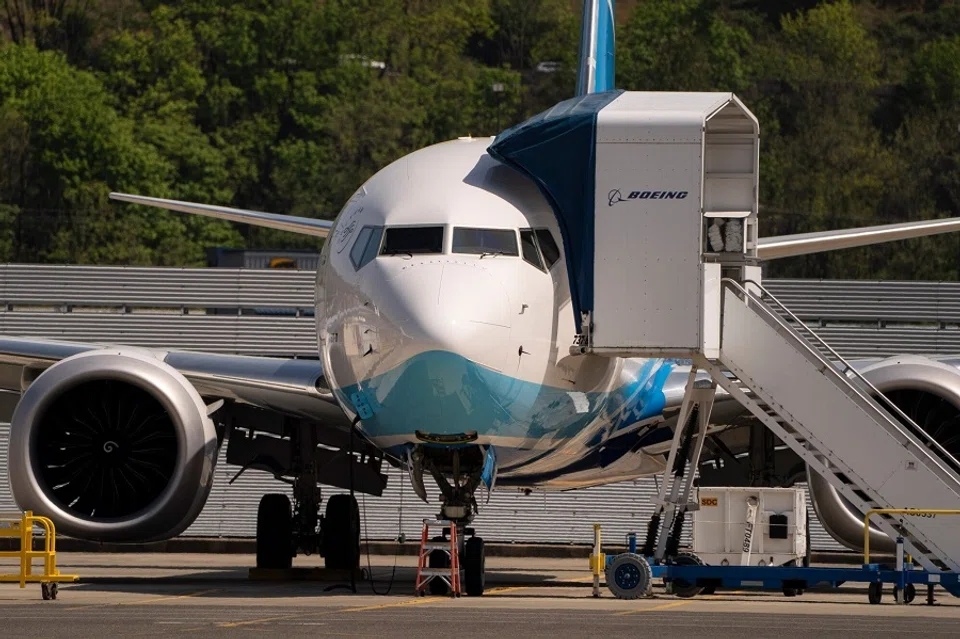
As a part of the retaliation against US President Donald Trump’s sweeping tariffs, China identified US airplane manufacturer Boeing as one of its targets. China instructed domestic airlines to get approval before receiving delivery of already-ordered aircraft and placing new orders for Boeing jets. It also halted the delivery of spare parts from US suppliers.
Against the backdrop of the intensifying US-China tariff war, as China returned Boeing 737 Max jets bearing Xiamen Airlines livery to the US on 20 April, it caught international headlines. The plane flew from the Zhoushan completion centre near Shanghai, where it had been awaiting final modifications and delivery along with many other planes intended for Chinese carriers but whose future home remained unclear.
Airbus would be unable to increase deliveries to address the shortfall quickly.
Cutting one’s nose to spite one’s face?
A closer look at China’s aerospace situation reveals the weaknesses of its decision, which came at a time of surging demand for air travel and the need for a large number of new aircraft for its fleet. According to the Airbus Global Market Forecast, by 2043, China’s aviation service market will be the largest in the world, with 11,160 aircraft in service, of which 9,520 will be new deliveries (including passenger aircraft and freighters), accounting for 20% of global demand.
Given that the Airbus-Boeing duopoly dominates the global aerospace industry, China’s decision to close a window with Boeing, at least for now, will impose considerable constraints. Airbus, the main alternative, cannot provide an immediate solution.
As of January 2025, Airbus reported a backlog of 8,684 jets, with the volume of aircraft awaiting production and delivery representing 10.1 years of shipments at 2019 production levels or 11.3 years based on 2024 deliveries. Airbus would be unable to increase deliveries to address the shortfall quickly.
COMAC-made planes may not be a ready solution
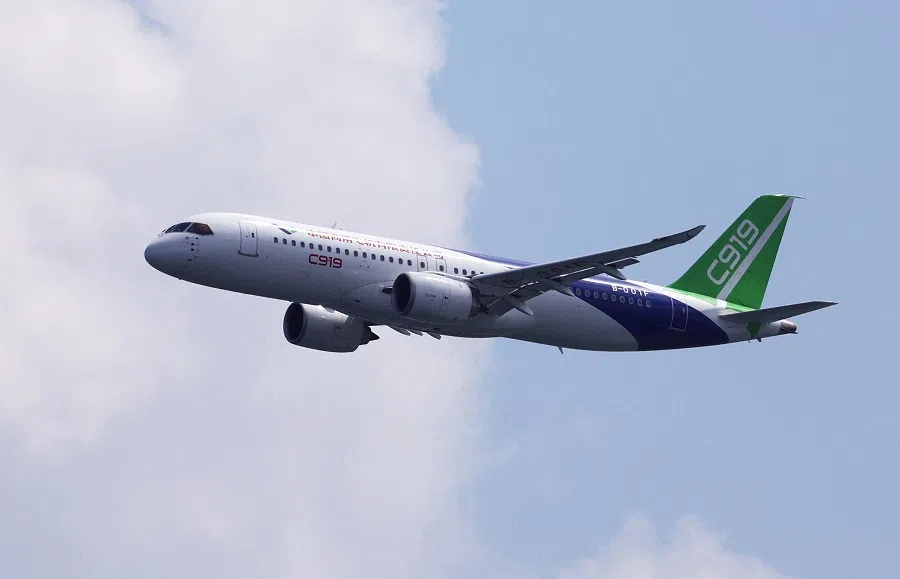
Another alternative for China is to increase domestic aircraft production through the Commercial Aircraft Corporation of China, Ltd. (COMAC). China developed the single-aisle, narrow-body C919 and began working on the wide-body C929. However, COMAC’s production remained limited and heavily dependent on the supply of key components such as engines and avionics from foreign suppliers, particularly from the US and Europe.
In 2024, COMAC delivered only 12 C919s, far fewer than its Western competitors. Moreover, COMAC has not received certification from the European Union Aviation Safety Agency (EASA) or the US Federal Aviation Administration (FAA). This limits its operations to domestic markets and friendly countries.
China’s decision to halt the supply of spare parts is even more risky. Chinese carriers rely heavily on US-made components for both Boeing and domestically produced aircraft, including engines, avionics, structural parts and essential consumables. Aircraft require scheduled maintenance, with checks ranging from weekly line maintenance to comprehensive overhauls every few years, all of which depend on a steady supply of certified spare parts.
The halt creates immediate pressure on Chinese airlines to maintain their fleets, particularly Boeing jets, and may result in grounded aircraft if alternative sources cannot be secured. As Bloomberg noted, “...local [Chinese] airlines now face the issue of repairing and maintaining hundreds of aircraft from the US manufacturer in their current fleets.”
While airlines have built up some inventories and may seek used parts or third-country suppliers, these are only short-term solutions. A prolonged boycott of spare parts will threaten to increase maintenance costs, disrupt operations, and expose the aviation sector’s deep reliance on US technology.
Without diplomatic de-escalation, the C919 is unlikely to gain FAA validation for years, confining it to China’s domestic market and allied nations.
This halt will also exacerbate challenges in securing Federal Aviation Administration (FAA) Type Certification for the COMAC C919. While certification is ostensibly a technical process, geopolitical friction will further contribute to delays.
The C919’s reliance on US-made engines, avionics and structural components, now subject to export controls, forces COMAC to either redesign systems with unproven domestic alternatives or seek third-country suppliers, both of which prolong FAA reviews. Without diplomatic de-escalation, the C919 is unlikely to gain FAA validation for years, confining it to China’s domestic market and allied nations.
More harm to China than to Boeing or the US
If Beijing aimed to harm the US in response to tariffs, the decision to suspend cooperation with Boeing was not the right battleground. Aerospace industry experts argue that it will harm China more than the US jet manufacturer. In the burgeoning air travel trends, demand for new airplanes far outpaces the production that the Boeing and the European consortium of Airbus together can produce.
This did not impact Boeing’s business. Several countries were poised to receive orders previously designated for China.
Beginning with the first trade war during Trump’s first term, China reduced its purchases of Boeing from 668 between 2015 and 2020, to just 109 between 2020 and 2025. This did not impact Boeing’s business. Several countries were poised to receive orders previously designated for China. Indian carriers, Air India Express and Akasa Air, were quick to receive most of the airplanes built for China. Similarly, Malaysia Aviation Group took advantage of China’s recent halt to Boeing airplanes and approached Boeing to finalise a contract.
Boeing’s relationship with China is deeply intertwined with US-China geopolitics. During President Nixon’s historic visit to China in 1972, the two sides signed an agreement for the first Boeing jet for China, which was handed over in May 1973, marking a turning point in bilateral relations and the beginning of decades-long commercial cooperation.
Today, Boeing again finds itself at the centre of geopolitical rivalry as China responds to steep US tariffs by halting new orders and deliveries of Boeing aircraft. While China intended to retaliate by imposing a halt, the consequences are posing greater challenges for China’s own airlines and aerospace ambitions than for Boeing.
![Hokkien roots, Brunei soil: My father’s journey across borders and spiritual planes [Eye on Fujian series]](https://cassette.sphdigital.com.sg/image/thinkchina/71f359b221f9d122e33e939974a2a8159629f5990340bdf70135adfea2d6a086)