[Big read] AvePoint co-founder Jiang Tianyi’s tenacious spirit of self-reliance
As the son of Chinese intellects that were “sent-down” to the coal mines during the Cultural Revolution, AvePoint co-founder Jiang Tianyi knows the value of education. Lianhe Zaobao associate business editor Hu Yuanwen speaks with Jiang to learn more about how he went from being a humble paperboy to the co-founder of a cyber security company listed on NASDAQ and the Singapore Exchange.
4 Dec 2025
Economy
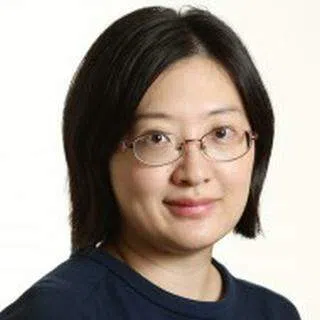

(Photos provided by interviewee unless otherwise stated.)
On the morning of 11 September 2001, under a brilliantly clear New York sky, Jiang Tianyi was preparing to take his usual subway commute across the Hudson River to his office at the World Trade Center.
Just before entering the station, he glanced up and saw thick black smoke rising from the North Tower. “At first, I thought it was a helicopter accident. It wasn’t until I saw the second plane strike the South Tower that I understood the severity of what was happening.”
Military jets roared overhead, bringing cinematic scenes of war to life. His pager vibrated incessantly, relaying grim news of the Pentagon attack and the Pennsylvania commercial flight crash.
On the riverbank, crowds surged in panic and terror filled the air. Jiang remembered pushing a distraught colleague into a taxi before thrusting some cash at the driver to get them away quickly.
During his journey home, he heard someone sobbing nearby. He also witnessed the South Tower collapse in flames, the intense heat from burning jet fuel having completely melted its steel frame. For weeks afterward, a burnt smell hung over Brooklyn.
Even now, 24 years on, Jiang’s eyes still well up with emotion at the mention of that morning that irrevocably altered countless lives. Luckily, all his colleagues at Lehman Brothers, whose office was on the 40th floor of the North Tower, survived. A coworker who joined just two days earlier had also received an offer from another firm whose office was on the 80th floor. “No one made it out of there that day.”
The tragedy prompted a profound reassessment of his life: “The money on Wall Street was good, but life is so fragile. I realised I needed to do something more meaningful.”
In 2002, Jiang left his lucrative career in financial trading system development to pursue a PhD in the then emerging field of data mining at New York University. The following year, he co-founded AvePoint, a cyber security firm. Today, the company is listed on both NASDAQ and the Singapore Exchange.

Jiang, now 51, was born in Chengdu and went on to complete his education and begin his career in the US. A decade ago, he developed a connection to Singapore because of his marriage. Today, the city-state is home to him, his mother, wife and five children, as well as a base for his company’s regional expansion.
Born to medical school graduates sent down to the coal mines
Jiang grew up in China during the 1970s, at the end of the Cultural Revolution. His parents graduated with excellent grades from Beijing Medical University (BMU, now Peking University Health Science Centre) and were sent down to a coal-mining region in Gansu. Jiang and his sister, who is older by six years, were born during that era.
He shared, “I remember that the water was always yellow and murky. After it had been drawn from the river, the water needed to be put aside for a long time to settle. Starch was then added to remove impurities before the water was boiled and fit to drink. All of China was poor then, so we did not feel that our lives were especially hard.”
Jiang’s parents were classmates in BMU. Their graduation coincided with the start of the Cultural Revolution, so they got married in a hurry and were sent down together to Gansu. His father came from a landowning family in China’s northeast, and all his familial assets were confiscated during that period. As an “undesirable element”, Jiang’s father was deployed as a coal miner near Lanzhou.
“Coal mines were very dangerous and explosions were common. It may be unimaginable for a college graduate to mine coal today, but it was the norm then.”
Elder Jiang: everything can be taken away, except one’s knowledge
After working in a coal mine for a year and a half, Jiang’s father was transferred to the facility’s clinic on account of his medical background. Meanwhile, Jiang’s mother worked in the mining zone hospital during that period. The experience shaped his family’s firm belief in knowledge. “My father likes to say that wealth, businesses and social standing can all be taken away, but not the knowledge in our brains. From young, he pledged to become proficient in math and science, so he could travel the world.”

Jiang spent the earliest years of his life in Gansu, Chengdu and Beijing. As his parents were busy working in Gansu, they sent him to Chengdu to be cared for by his maternal grandmother. There, he played hide-and-seek with his friends in air raid shelters, and with mud and stones.
During his time at the Chengdu Meteorological College’s kindergarten, Jiang’s interest in science grew. “I saw the weather balloons released at the college every day. Even though children were not allowed near, the mysteriousness attracted me.”
When it was time for him to start school, Jiang followed his parents back to Beijing. While they taught and did their postgraduate studies, he studied at the Beiyi Affiliated Primary School (北一附属小学).
China’s reform and opening up changed the lives of countless Chinese intellectuals, including the Jiangs. Jiang’s parents were among the first batch of Chinese academics to visit the US. His father left first in 1985. In summer of the following year, his mother brought his 12-year-old self for a family reunion while his elder sister remained in China to prepare for her gaokao (national university entrance exams).
“I thought it was just a summer trip, so I packed only a few changes of clothes and set off.” However, that journey became a turning point in his life.
Countless “firsts” overwhelmed him as a teenager: his first flight, his first taste of American milk and orange juice, his first encounter with air-conditioning. During a layover at John F. Kennedy Airport, he and his mother spent the night on a bench in the terminal. The peculiar mix of novelty and bewilderment remains vivid in his memory to this day.
From ‘deaf-mute’ student to self-reliance
In North Carolina, reality quickly set in. Although he had been a top student in China, Jiang felt like a “deaf-mute” in the US since he could not understand or speak English. With no Chinese-speaking classmates, he resorted to gestures to communicate. “I didn’t even know the ABCs, I had to look up every single word in the dictionary.”

As Jiang’s family could not afford private tutoring for him, his school’s English as a Second Language programme became his only lifeline. “Every night before bed, I dreamt of waking up the next day able to speak English fluently.”
After the Tiananmen incident, Jiang’s parents, like many of their fellow Chinese intellectuals in the US, chose to remain.
It was only in the US that he realised his family faced significant financial constraints. They shared a three-bedroom house with two other visiting scholar families, with three people to a room and only one small, worn desk in it. So, Jiang often followed his father to study at the research institute’s library.
To save money, his mother took him to neighbourhood garage sales for second-hand clothes. The most embarrassing moment came when they stumbled upon a sale at a classmate’s home, where Jiang was mocked by his classmate for purchasing used clothes.
Odd jobs for pocket money
At 12, Jiang resolved to become self-reliant. “From then on, I never asked my parents for a single cent.”
He began delivering the local free newspaper, Bethesda Almanac, in seventh grade. Starting on foot, he could only deliver to 250 houses in the landed estate each day. Earning two cents per delivery, Jiang made a few dollars from working one day a week. In eighth grade, his punctuality even earned him the “Carrier of the Month” award and a two-gallon tub of Swensen’s ice cream.
After saving enough, he bought a second-hand bicycle, boosting his delivery capacity to 300-400 copies each run.

Jiang also took on seasonal work, mowing lawns in summer and raking leaves in winter. After buying a lawnmower, he went door-to-door. “If they liked me, I’d go every week, earning about US$20 each time.”
In the wealthier estates, it took him at least an hour to clear the yard of each house. But poisonous ivy often climbed trees in the yards. As careful as he was, the toxic sap would still sometimes drip onto his skin and seep into his bloodstream, spreading to all parts of his body. On several occasions, the “poison” made him itch all over. The worst episode occurred during a year-end history exam when he struggled to finish the test with half his face itching unbearably.
Subsequently, Jiang worked in an ice cream shop and as a private tutor, dedicating at least 15 hours each weekend to work. The rest of his time was spent on homework and school activities, leaving no room for entertainment.
Reflecting on the arduous years of his youth, Jiang finds them very meaningful. “American society encourages children to be self-reliant. Want to watch a concert? Earn the money to buy a ticket yourself. It was tough, but I learnt early on that I could survive through my own efforts.”
Wrestling for self-defence
Through his hard work, Jiang bought clothes and even a Walkman for himself. At a time when his father’s full-time income was just over US$1,000 a month, he was already earning several hundred dollars monthly. “I was confident from a young age that I could make money.”

When his mother moved to California during his ninth grade, he learnt how to cook for himself and his father. Using a popular recipe book, he mastered Sichuan dishes like mapo tofu and mayi shang shu (a dish with minced meat and vermicelli).
Despite living in an affluent neighbourhood inhabited by diplomats and researchers, his family’s financial situation meant that he often wore the same old clothes and still struggled with English fluency, leading to teasing from classmates. This motivated him to join the wrestling team. “I wanted to become physically stronger so I wouldn’t be bullied,” he shared.
Jiang consistently ranked at the top of his class despite spending his free time on part-time jobs. To save on school fees, he attended a public school. After being admitted to Cornell University in 1993 to study engineering, he faced international student fees exceeding US$20,000 in the first two years, forcing him to apply for student loans from the bank.
To save on school fees, Jiang completed his bachelor’s and master’s degrees in just three and a half years instead of five. “My high school offered Advanced Placement courses. I took all the college-level classes I could, which allowed me to skip the entire first year of university studies.” By further accelerating his studies in university, he saved another half a year.

Once he became an American citizen, his tuition fees dropped and he could apply for study grants for lower-income families.
It was in Cornell that Jiang first developed a connection to Singapore. “There were many Singaporean students there, and they were exceptional in their studies.” He recalled that the Singaporeans often studied through the night, shared notes, and strived for straight A’s. “It was only later on that I found out they were scholarship recipients under pressure to meet strict requirements.”
Many of those peers now hold leadership roles in Singapore’s public service and private sectors. Jiang’s curiosity towards the country is rooted in that period.
Disillusioned Wall Street developer becomes start-up founder
After graduation, Jiang first worked in Bell Labs at Lucent Technologies before heading to Wall Street two years later. “At the time, I felt that the growth prospects at Bell Labs were limited, while Wall Street was attracting the most ambitious young talents.”
Developing trading systems for institutions like Deutsche Bank and Lehman Brothers offered substantial financial rewards, but he gradually grew disillusioned with it.
“I felt I was becoming too specialised. I was constantly thinking about how to speed the trading system up by fractions of a second, but grew dull in other aspects.”

The September 11 experience prompted Jiang to reassess his life. His future co-founder, Gong Xunkai, who is 12 years older, started his own venture after being laid off from Lucent Technologies in 2001. In 2003, Jiang formally joined the start-up. “In the first two years, we had almost no income. We couldn’t afford exhibition fees, so we resorted to leaving pamphlets on the parked cars of exhibition goers.”
Their breakthrough came from Public Service Enterprise Group, a New Jersey-based utility company that became their first client. “We provided SharePoint backup solutions, a very niche field then.”
Operating strictly within its means, the company avoided debt entirely until its first funding round of US$6 million in 2006. “The biggest challenge wasn’t finding clients, but dealing with lawsuits,” Jiang said. A company accused them of stealing intellectual property, leading to a two-year legal battle. “While we didn’t have to pay damages, a lot of time and energy were spent on testifying.”
In 2021, AvePoint listed on NASDAQ, raising US$490 million, including US$200 million through the issuance of new shares.

“Going public wasn’t the endpoint, but a beginning.” Today, the company operates 31 offices across 21 countries spanning five continents, employing over 3,000 staff, including nearly 400 at its international R&D hub in Singapore.
Quarter of revenue from government contracts
Government contracts now account for a quarter of the company’s revenue, primarily involving the management of confidential data.
Since its 2021 NASDAQ listing, revenue growth has consistently hovered around 20%, with a forecast of 24% projected for 2025. Annual recurring revenue, excluding one-time items, has also seen double-digit growth and is expected to reach 25% this year.
In recent years, AvePoint has also adopted a more balanced strategy focused on sustainable profit growth rather than pure expansion. Operating profit has also climbed steadily from US$6 million (3.1% margin) in 2021, to 8.1% in 2023, and further to 14.4% in 2024, with 17% projected for 2025.
With a current market capitalisation exceeding US$2.7 billion, the company is targeting annual revenue of US$1 billion by 2029 through steady expansion in markets such as Singapore, Japan and Germany.

AvePoint established its Singapore operations in 2009. “Technical capability is very important in bidding for Singapore government tenders. This allows us to purely focus on innovation.” A significant portion of the company’s intellectual property is registered in Singapore, with the Monetary Authority of Singapore a key local client. Jiang acknowledged that his company is considered a small one in the US market, and its Series C investors were seeking an exit. So, it brought in 65 Equity Partners, a Temasek subsidiary, which acquired those shares, paving the way for its secondary listing subsequently on the Singapore Exchange in 2025.
Moving to Singapore to preserve children’s Chinese foundation
The decision to settle in Singapore owes much to Jiang’s Singaporean wife. The couple met at an industry conference in Singapore in 2008. “We dated long-distance for four years, seeing each other every two to three months.”
After tying the knot at Capella Singapore in 2012, his wife moved with him to the US. However, following the birth of their second child, they found it increasingly difficult to cope. Coupled with their desire for a bilingual educational environment for their children, they decided to move back to Singapore. “Our children risked losing their Chinese foundation entirely in the US. Here, they at least have a bilingual environment,” he said.
Today, four of their five children attend local public schools, with only the youngest still in kindergarten. Jiang’s 82-year-old mother has also relocated to Singapore. His father, who is also 82, remains in the US to continue his academic research, cared for by his sister, a dentist.

At 42, Jiang took up the challenge of running full marathons. “Long-distance running is a test of mental fortitude, particularly suitable for the middle-aged.” In his phone, he stores running routes from business trips around the world. “Going for a run is the best way to beat jet lag,” he shared.
Having completed 11 marathons, his bucket list now includes competing in a triathlon and trekking to Everest base camp.
When asked about his hopes for his children, he said, “I’ll let them decide for themselves when they turn 21.”
Having said that, his wish is that the thirst for knowledge and tenacious spirit that began with his father would be passed on for generations to come.
This article was first published in Lianhe Zaobao as “AvePoint联合创办人蒋天毅 知识改变命运 九一一逃过一劫也推了他一把”.
Related: How Jenny Lee became Asia’s ‘Iron Woman’ of venture capital | Liu Chang: The reluctant heiress who saved her father’s agriculture empire

Get the ThinkChina Weekly Newsletter
Insights on China, right in your mailbox. Sign up now.
By subscribing, I agree to SPH Media's Terms and Conditions and Privacy Policy.