Lawrence Wong: China at the heart of Asia’s stability and prosperity
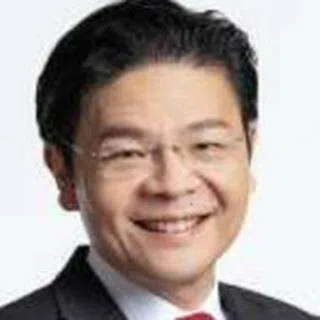
China’s growing economic scale, technological innovation and active engagement in trade and regional initiatives make it a crucial force in shaping Asia’s stability, growth and prosperity over the next 25 years. This is the transcript of the speech delivered by Singapore’s Prime Minister and Minister for Finance Lawrence Wong at the 2026 Bo'ao Forum for Asia (BFA) Annual Conference on 26 March 2026.
26 Mar 2026
Politics

Chairman of the National People’s Congress Mr Zhao Leji, chairman of the Bo’ao Forum for Asia Mr Ban Ki-moon, distinguished guests, ladies and gentlemen, I am delighted to be here in Hainan Island for the first time and to join you for this 25th anniversary of the Bo’ao Forum for Asia.
This milestone comes at a time of profound change in the world. Hence the theme of this year’s conference — on “new dynamics, new opportunities, and new cooperation” — and it is a theme that is both timely and pressing.
New dynamics
We are seeing these new dynamics unfold all around us. The foundations that have sustained decades of global stability are under severe strain.
The war in Ukraine is entering its fifth year. The conflict in the Middle East is in its fourth week and may well drag on. These wars have claimed many lives and inflicted immense suffering on populations.
They are not distant events — they have real consequences for all of us, driving up food and energy prices, disrupting supply chains and raising the risks of a global economic slowdown.
More fundamentally, we are witnessing a worrying breakdown of the institutions and norms that have long anchored the global system. For decades, international law and multilateral rules provided guardrails for states’ behaviour. They did not eliminate conflict, but they tempered it and brought a measure of predictability to international relations.
Today, those guardrails are weakening. International relations are increasingly shaped by geopolitical rivalry and zero-sum thinking. States feel less bound by rules, and more inclined to act whenever they have the power to do so. Small and middle-sized countries feel this most acutely. But even large powers will find that a world where the strong do as they please is ultimately more dangerous for all. When rules give way to raw power, order breaks down, and no country — big or small — is truly secure.

These geopolitical shifts are spilling over into the economic domain. For nearly eight decades, the global economy prioritised efficiency — integrating markets, and optimising production across borders. That model is being reworked. Resilience and security are taking precedence. Countries are moving to reduce dependencies and reconfigure how they engage with the global economy.
All this makes it harder to address shared global challenges. Whether it is tackling climate change or ensuring the safe and responsible use of artificial intelligence (AI) — progress on these matters depends on collective global action. But in today’s environment, it has become far harder to find consensus. As a result, our problems are building up, and compounding into more serious risks for all.
New forms of cooperation
Given this context, how do we move forward?
In the past, our instinct was to seek broad, multilateral arrangements. These remain important. But in today’s more complex and fractured world, multilateral agreements are extremely hard to reach. Yet given the challenges we face, we cannot afford to wait for every country to move together — at the same time and at the same speed.
So we must find new ways to cooperate. To be clear, this does not mean abandoning multilateralism. On the contrary, we must continue to strengthen and reform global institutions — including the WTO and the United Nations — so that they remain effective and relevant.
But alongside these efforts, we also need more flexible approaches to cooperation. One practical way is for smaller groups of like-minded countries and partners to create plurilateral arrangements. These can move faster — to test ideas, set standards and deliver results.
We already see this practical and pragmatic approach at work. Agreements like the Regional Comprehensive Economic Partnership (RCEP) and the Comprehensive and Progressive Agreement for Trans-Pacific Partnership (CPTPP) are advancing economic integration; while the Digital Economy Partnership Agreement (DEPA) is breaking new ground in digital trade.
These are not exclusive clubs. They are open and inclusive frameworks that set high standards, and that others can join when they are ready. And in this way, they complement — rather than replace — the multilateral system.

So in practice, we are likely to see a landscape of multiple, overlapping coalitions — different groupings of countries working together on specific challenges. This may not be the ideal model for global cooperation. But in today’s circumstances, it is a practical way to move forward, and to sustain momentum. And if designed well, these coalitions can complement and reinforce one another, and serve as building blocks for a more resilient global architecture over time.
China’s role
As we build this new generation of pathfinders, China will play a critical role — given its growing economic weight and increasing capacity to shape global outcomes.

Get the ThinkChina Weekly Newsletter
Insights on China, right in your mailbox. Sign up now.
By subscribing, I agree to SPH Media's Terms and Conditions and Privacy Policy.
China has placed science, technology and innovation at the centre of its development strategy. It is already at the forefront in key emerging areas, including digital and green technologies. More importantly, it is advancing innovation at scale — accelerating adoption and driving progress across industries. China is therefore well positioned not just to participate in the next wave of technological change, but to shape and lead this change.
At the same time, we see growing global interest in Chinese culture and innovation — from films, music and games, to consumer brands and digital platforms. This is especially evident among younger audiences around the world, and reflects China’s expanding influence in both the creative and digital economies.
With its growing capabilities, China has contributed to global development, for example through platforms like the Asian Infrastructure Investment Bank (AIIB) and the Belt and Road Initiative. Singapore supported both initiatives early because we recognised their potential to enhance connectivity, generate opportunities, and uplift communities across the region.
China has also taken steps to assume greater responsibilities in the international system. It has voluntarily given up certain WTO developing-country benefits, and indicated its readiness to shoulder obligations commensurate with its level of development.
Beyond this, China continues to contribute ideas to global discussions, through its “Community with a Shared Future” and four key global initiatives on development, security, civilisation and governance. These reflect China’s growing engagement in shaping the global agenda. Singapore welcomes this constructive engagement, and will work with China in areas of shared interest, including on sustainable development and global governance.

Singapore also believes that China can play an even bigger role in supporting regional prosperity and stability. China’s vast domestic market can be a powerful engine of growth for the region. China’s 15th Five-Year Plan, with its greater emphasis on domestic consumption, points in this direction and will create new opportunities for the region.
China can also help shape the region’s evolving economic architecture. At a time of growing fragmentation, the world needs strong advocates for open and rules-based trade. Here in Hainan, the free trade port stands as a concrete example of China’s commitment to openness. And we hope China will continue in this direction — supporting open markets, and strengthening confidence in a predictable and stable global trading system.
In emerging domains, China’s scale and capabilities also position it to influence new rules and standards in emerging domains. We recognise and value China’s efforts, including through its current chairmanship of APEC, to advance trade digitalisation and AI for trade. China’s active participation in global discussions on AI governance will also be critical to building international consensus on the safe and responsible development of these technologies.
Partnerships for regional growth
Looking ahead, Singapore has confidence in China’s long-term prospects. That is why we have been a leading source of new investments into China for more than a decade. We will continue to partner China closely, and deepen collaboration in areas of mutual benefit as both our economies evolve.
We will also work with China to deepen its integration into regional economic frameworks. In particular, we support and welcome China’s interest in joining CPTPP and DEPA. Integrating an economy of China’s scale into these agreements is not straightforward. But doing so will bring significant benefits to the region, and strengthen the relevance of these high-standard arrangements.
We also see tremendous potential for deeper cooperation between China and ASEAN. The recent upgrade of the ASEAN-China Free Trade Agreement will further strengthen our economic links. And there are opportunities to collaborate on shared challenges — for example, leveraging China’s strength in renewable energy to support ASEAN’s energy transition, including through initiatives like the ASEAN Power Grid.

When Singapore assumes the ASEAN chairmanship next year, we will work with fellow member states to deepen regional integration and strengthen partnerships. In Asia, we will work closely with partners like China, Japan, Korea and India. Beyond the region, we will expand engagement with key partners, including the Gulf Cooperation Council and the European Union. Through these efforts, we will keep ASEAN open, connected, and a driver of growth and cooperation in the global economy.
Conclusion
The 25th anniversary of the Bo’ao Forum reminds us how far Asia has come through openness, cooperation and shared progress.
The new dynamics of our time understandably cause anxiety and uncertainty. But they also open up new possibilities — for innovation, growth and renewal. Whether we realise these opportunities will depend on our ability to work together — practically, flexibly and constructively.
Ultimately, Asia’s future will not be determined by circumstance, but by the choices we make. We can drift towards rivalry and fragmentation. Or we can choose cooperation and openness. If we choose well, Asia can continue to be a source of stability, dynamism, and hope for the future. And the next 25 years can be even more remarkable than the last. This future is within our reach. Let us build it together. Thank you very much.
Related: Marking 35 years: Singapore’s grounded approach to China engagement | [Video] George Yeo: America’s deep pain — and why China won’t colonise
Popular This Month
Get the ThinkChina Weekly Newsletter
Insights on China, right in your mailbox. Sign up now.
By subscribing, I agree to SPH Media's Terms and Conditions and Privacy Policy.