[Big read] Xiang Biao: The life we miss while chasing the future
Amid the onslaught of AI, how do we preserve our humanity? Anthropologist Xiang Biao speaks with Lianhe Zaobao associate editor and Fukan editor Woo Mun Ngan as part of Lianhe Zaobao’s Future 365 interview series, saying the best way to stay human is to focus on the present and appreciate what surrounds us.
16 Mar 2026
Society
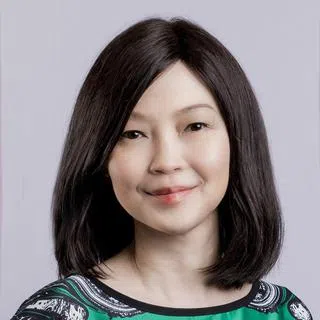

(Edited and refined by Candice Chan, with the assistance of AI translation.)
As an academic, Xiang Biao is keen on engaging deeply in public discussions through dialogue.
Published in May 2025, Hello, Stranger documents his in-depth conversations with scholars and experts from multiple disciplines. Through these dialogues, the book explores how modern individuals can rediscover others and reflect on themselves in an increasingly alienated society, rebuilding connections among people and between individuals and society.
The Self as Method was published earlier and also drew much attention. Also structured through dialogue, it proposes using one’s own lived experiences as a vantage point from which to examine the world, pose questions, and develop new lines of thought.
In late autumn of 2025, when Xiang Biao attended an academic symposium at Peking University commemorating sociologist Fei Xiaotong, Lianhe Zaobao took the opportunity to conduct a dialogue with him on the Peking University campus. He noted that the Chinese language has become increasingly rigid. Through natural, thoughtful public dialogue, he hopes to counter this rigidity and rebuild the capacity for expression and thought.
He said: “On the one hand, dialogue stimulates me to raise new questions. On the other hand, with the expansion of education, young people today already possess strong thinking abilities. What they need are not simple answers, but new perspectives and more refined concepts that can help them think independently.”
Dialogue is both Xiang Biao’s research method and his way of sensing the world. He is also known for explaining complex academic ideas in language that is remarkably plain and clear.
Born in 1972 in Wenzhou, Zhejiang, Xiang Biao is one of the most internationally renowned anthropologists today. He entered the Department of Sociology at Peking University in 1992 and received his PhD in Social Anthropology from the University of Oxford in 2003, where he became a professor in 2015. He is currently the director of the Max Planck Institute for Social Anthropology in Germany. His representative works include Global “Body Shopping”: An Indian Labor System in the Information Technology Industry and Communities Across Borders (《跨越边界的社区》).
Xiang Biao also has deep ties with Singapore. In 2003, he spent a year as a postdoctoral fellow at the Asia Research Institute of the National University of Singapore. In The Self as Method, he mentions that year as one of the happiest in his life. The open academic atmosphere at NUS profoundly shaped his understanding of scholarship as a human endeavour. Even today, he recalls his time living in Singapore with vivid clarity.
Finding meaning in what we do
Xiang Biao’s research began with migrant populations and gradually turned toward analysing the broader spiritual dilemmas faced by people in contemporary societies. Concepts he has proposed — such as “suspension”, the “work hole mentality”, and the “disappearance of the nearby” — are not only descriptions of the present but also profound warnings about the future of social relationships, community forms, and urban development, and these ideas resonate widely.
Back in a 2014 interview, Xiang employed the concept of “suspension” to capture today’s existential predicament: people relentlessly pursue an uncertain future while feeling powerless, leaving life itself devoid of substantive meaning.
Fast forward ten years, when everyone talks about “involution” and “lying flat”, that sense of suspension continues to define many lives. Time always seems insufficient, yet in the midst of busyness, people feel a sense of barrenness — anxiety about the future and an inability to engage fully with the present.
Xiang says: “Suspension is essentially the feeling of being controlled by time. Why do we feel controlled? Because we believe that what we are doing now has no meaning in itself — it is only for the sake of some future. But the paradox is that if we don’t do it now, there seems to be no future at all. This kind of busyness is driven by fear — the fear that if we miss this train, we will never catch up again.”

When students study tirelessly only to get into a good university, when office workers push themselves relentlessly just to earn enough money to buy a house, and when every present moment is seen merely as a springboard toward the future, life becomes a never-ending escape that never truly arrives anywhere. In the end, people become slaves to time, falling into a repetitive “work hole” — busy yet empty, exhausted yet unable to find a place to rest.
How can one break out of this suspended state? How can the bottomless “work hole” be turned into a liveable “nest”?
Xiang says the most direct approach is to “focus on the present”, including paying attention to what he calls the “nearby”.
“Think carefully — who are the people around you? How do you relate to and cooperate with them? What exactly is happening in that process? Paying attention to the present is the first step to planting your feet on the ground. But to truly liberate yourself, the key is to find meaning in what you are doing itself.
“Many people say that what they do has no meaning. But in life, many things we consider meaningful may, in terms of results, be ‘meaningless’. For instance, a long conversation with a friend or a meal with family may not produce any tangible output. Yet, the process gives rhythm to time and texture to space. If you approach your own work in this way — whether writing an article or preparing a proposal — discovering the details and meaning in the process can at least prevent you from floating. Once your feet are firmly planted, even resistance to injustice will have a foundation. Otherwise, attention to inequality will only make you feel powerless.”
Must social vitality depend on relentless struggle?
The same applies to the “work hole mentality”. Instead of viewing one’s current job as a painful but temporary tool merely for quickly making money and achieving “class mobility”, it may be better to treat work as a nest to be built, rather than a hole to endure.
“My suggestion may sound a bit harsh, but in the long run it is necessary.
“The success rate of enduring everything in order to achieve upward class mobility is extremely low. Psychologically, you need to turn work from a ‘hole’ into a ‘nest’. Even if this ‘nest’ is far from your original dream, it is part of your life right now — it is the reality you must manage and face. That means trying to improve it: communicating with colleagues, raising problems with supervisors.”

Such small shifts — communicating, responding, solving problems — prevent us from exhausting ourselves through constant attempts to escape, and instead help us gain a more grounded, easy sense of control and reality.
Looking at Singapore, “suspension” and the “work hole” are hardly unfamiliar collective symptoms. Yet paradoxically, young people’s “relative comfort” sometimes triggers anxiety about declining competitiveness due to a lack of “hunger”.
Xiang believes this sense of “relaxation” among young people is not unique to Singapore, but a global phenomenon reflecting the old development model built on relentless striving.
“Some of society’s anxiety about this stems from reliance on traditional notions of competitiveness. But it also produces an important negative consequence: the issue of declining birth rates.
“Young people feel extremely tired. They don’t want their children to struggle in the same way. If they ‘lie flat’ a little, it may actually make things more sustainable. New economic forms such as leisure, culture, creative industries, and lifestyles that emphasise family and community may emerge from this. More importantly, we should rethink whether a society’s vitality must depend solely on individuals pushing themselves to the limit. Is this mode of existence sustainable?”
Even the concept of efficiency, Xiang argues, deserves reconsideration. Modern society defines efficiency very narrowly — producing more in less time.

“But if a person’s efficiency is calculated purely as an ‘asset’, then perhaps the peak is between ages 20 and 40. After that, efficiency declines.
“By this logic, living too long becomes inefficient. Growing old makes you a negative asset. Sitting quietly and daydreaming is considered a waste. Loving only one person for a lifetime is extremely inefficient. It sounds absurd, yet in everyday life we are already implementing this logic.”
Should we fully accept this principle of efficiency, or should we rethink it and rediscover those values that cannot be quantified but are nevertheless essential?
Resisting convenience to rediscover the ‘nearby’
Xiang’s call to focus on the present and the nearby is his response to the phenomenon he describes as the “disappearance of the nearby”.
What does this mean?
When the elevator doors close and two strangers in the confined space lower their heads, pretending to scroll through a phone screen without signal, avoiding any possible eye contact — that, in Xiang’s eyes, is the most vivid image of the disappearance of the nearby.
Under the dual impact of urbanisation and digitalisation, Xiang observes that young people’s perception of the world is split into two extremes. On one end is an intensely privatised self — one’s grades, job, and relationships with parents or partners. On the other end is the world on the smartphone, with distant crises and global events packaged with emotional narratives and striking images, but thousands of miles away from real life.
Between these two extremes, the concrete realities of everyday life — who your neighbours are, where your food comes from, how public transport works, who keeps the community clean — are blank spaces. In other words, when more and more people rely on food delivery for meals and online shopping for all necessities, we become strangers within 500 metres of our own radius.
Although the “disappearance of the nearby” brings great convenience, it also carries hidden costs. Personal life becomes abstract and hollow, filled with anxiety about oneself and a sense of helplessness toward distant events, leaving emotions unstable.

Xiang questions: “When the ‘nearby’ disappears, how do we understand our concrete relationship with society? How do we understand the public sphere? Even if we wish to help the poor out of humanitarian concern, we lose the materials needed to imagine their concrete lives.”
To address this disappearance, Xiang proposes the “reconstruction of the nearby”. Start with simple actions: get off one stop earlier and walk home; go to the wet market instead of buying groceries online; greet the security guard downstairs or the clerk at the convenience store; learn about your parents’ stories when they were young and the world they lived in.
These seemingly small actions are in fact conscious acts of resistance against a lifestyle built entirely on convenience.
Xiang further encourages people to “deliberately create a little inconvenience for themselves”, and through that process rediscover the nearby, and what life feels like.
Social thinking should shift toward horizontal diversity
Xiang enjoys philosophical reflections on various issues. He once had a highly engaging dialogue with Michael Sandel, the renowned Harvard political philosopher, about meritocracy.
Based on that dialogue, Xiang points out that the traditional imperial examination system also promoted merit-based selection. However, those who failed the exams could still gain respect and recognition in society through Confucian cultivation.
Modern meritocracy, by contrast, ties one’s entire value to their success or failure at a single examination. Those who succeed attribute their advantages entirely to their own talent and justify them as deserved, while those who fail must bear the stigma of “not working hard enough” or “not being smart enough”.

“During periods of overall economic growth, this logic can still function, because even those who fall behind still see improvements in their lives. But when growth slows and most people’s lives do not improve, the negative consequences of meritocracy become very clear.
“This allows the successful to feel justified while making the unsuccessful blame themselves, thereby obscuring structural injustice and intensifying social divisions.”
He calls for society to move beyond rigid “vertical hierarchies” toward an appreciation of “horizontal diversity”.
“Why is a kindergarten teacher who inspires countless children considered of lower value than someone dealing in financial derivatives? They are the ones often responsible for financial crises.”
According to Xiang, such disparities exist largely to maintain the myth of meritocracy, rather than to respect the diverse value of individuals.
AI forces us to become more human
When facing a future in which artificial intelligence may replace many jobs, Xiang remains cautiously optimistic. He believes that AI most threatens the kinds of work that are “most like machines” — highly procedural and repetitive tasks.
“That’s actually a good thing. It forces us to become more human.”
He envisions an inspiring future scenario: AI takes over tedious calculations and process-based tasks, freeing human labour to move on a large scale into fields that require human warmth — education, caregiving, artistic creation.

Imagine teachers guiding only five or six students, a sixfold increase in elderly care, and three times as many artists. Why should such a future be impossible? The real obstacle, Xiang argues, lies in our limited economic imagination, as we assume that only traditionally “productive” work creates value.
This leads to the ultimate question that Xiang is most concerned with: redefining the meaning of life.
In an age when the narrative of continuous progress may be ending, when rising material prosperity may no longer be sustainable and even generational decline may occur, what will sustain individual hope and the future of society?
“Moving into the modern age, much of life’s meaning around the world has come from the idea of progress, the expectation that material life will keep improving. But many young people today face the reality that their lives may not improve at all, and may even be worse than those of their parents. This may seem like a personal issue, but it will influence economic structures, political forms, and even international order. In response, will we become more aggressive and expansionist in order to obtain more resources? Or will we develop a more gentle, inward-looking collective character? This is the question about the future that concerns me most.”
A conversation with Xiang Biao is inspiring. It reminds us that many of the profound structural problems of modern society have no permanent solutions. Yet, by understanding human nature and social complexity and by engaging in clear, thoughtful reflection, we can rebuild connections with what is near — reconnecting with real life and with real people — amid the powerful currents of efficiency and competition. In this uncertain age, this can help us anchor ourselves and reduce inner exhaustion.
In Xiang’s words, we must learn to see the near, see ourselves, and see society. Such seeing is the foundation of existence and the capacity to face the future.
Xiang Biao’s recommended booklist:
From the Soil: The Foundations of Chinese Society by Fei Xiaotong
Home Is Where We Are by Wang Gungwu
One-Dimensional Man by Herbert Marcuse
This article was first published in Lianhe Zaobao as “人类学家项飙谈陌生化时代如何生存”.
Related: Professor Ho Teck Hua on Singapore’s tech future: ‘The story wouldn’t feel right without us’ | Lang Lang on the future of classical music

Get the ThinkChina Weekly Newsletter
Insights on China, right in your mailbox. Sign up now.
By subscribing, I agree to SPH Media's Terms and Conditions and Privacy Policy.