Tu Zhiliang: The man who believes Chinese medicine can save the world
Just as Chinese restaurants thrive wherever there is an ethnic Chinese community, Gu Sheng Tang TCM CEO Tu Zhiliang wants the same for TCM services. Lianhe Zaobao senior lifestyle correspondent Dennis Ng speaks to the wuxia fan with a vision of saving the world through traditional Chinese medicine.
11 Mar 2026
Society
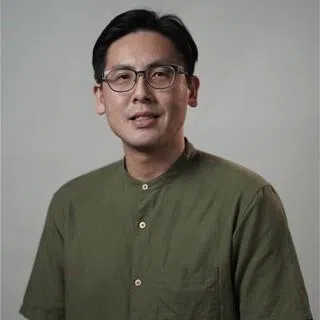

Growing up in the heyday of wuxia or martial arts novels, Tu Zhiliang, founder and chairman of China’s traditional Chinese medicine (TCM) chain Gu Sheng Tang TCM, holds the philosophy that “a real hero is one who serves the country and the people” close to his heart.
Tu, 48, said with a laugh during an exclusive interview with Lianhe Zaobao at Gu Sheng Tang TCM’s clinic in Novena, “I was completely obsessed with Gu Long’s wuxia novels during middle school and high school, to the point of being ‘possessed’! I felt the world of wuxia was very pure, full of chivalry and tenderness. The characters valued loyalty and honour, acted decisively to reward kindness and punish evil, and were unrestrained and carefree. That world was so inspiring — it made you feel you could truly roam the land dispensing justice, rooting out villains and eradicating evil, robbing the rich to help the poor!”
He especially admires the perseverance of Guo Jing, the protagonist of Jin Yong’s wuxia novel The Legend of the Condor Heroes. “Guo Jing is simple and honest by nature. Although he isn’t particularly clever, he never gives up no matter what difficulties he faces. He learns with steadfast dedication, eventually mastering formidable martial arts and ultimately rising to the top of the martial world. I think entrepreneurship is much like practising martial arts — when confronted with obstacles, you mustn’t try to bypass it. You have to persevere and stay focused on tackling the key challenges and pain points in the field of traditional Chinese medicine.”
It is precisely this long-term perseverance and deep cultivation that has enabled Gu Sheng Tang TCM to gradually build its current business blueprint. Headquartered in Guangzhou, China, Gu Sheng Tang TCM now operates around 100 TCM medical institutions across 21 cities in China, as well as 19 TCM clinics in Singapore, with a total of approximately 10,000 employees. The Group’s revenue in 2024 was about 3 billion RMB (roughly US$437 million).
His wife was his motivation
Growing up, Tu’s life had no direct connection with TCM. He was born into a rural household in Sichuan’s Kaijiang county, and spent his childhood working in the fields. During his primary school summer holidays, he helped his parents sell home-grown vegetables at the local market to supplement the family income. His parents had a profound influence on his development. “During the farming off-season, my father would run small businesses, and I learned from him how to keep accounts. My mother was the eldest daughter in a large family with six younger siblings and had a strong sense of responsibility towards the family. From her, I learned generosity in conduct and kindness in dealing with others.”

Due to his outstanding academic performance, Tu progressed smoothly through his studies and went on to major in computer science at Chengdu Technological University. After graduating, he joined the Chinese healthcare company iKang Guobin Healthcare Group as a sales professional, rising within just six years to become deputy general manager of the eastern China region.
During his time at iKang Guobin, he was primarily exposed to the Western medical system and had limited understanding of TCM. It was not until, at the suggestion of his father-in-law Li Zhengmu — a professor at Guangzhou University of Chinese Medicine — that he took several doses of Chinese herbal medicine. When his previously elevated triglyceride and glycaemic index returned to normal, his perception of TCM changed.
However, China’s TCM industry was in need of renewal. In 2010, fraudster Zhang Wuben posed as a nutrition expert and popularised the dietary therapy idea that “illnesses caused by what we eat can be cured by what we eat”, which quickly gained widespread attention. He was eventually exposed as a fraud by the Ministry of Health in China. The episode highlighted the public’s strong demand for health preservation, alongside a shortage of high-quality TCM services — a gap that Tu recognised as revealing the commercial potential of the TCM industry.
Tu also shared a more personal motivation behind his entrepreneurial journey. “My wife is a TCM practitioner. When we had just confirmed our relationship, my father-in-law did not think highly of me. He believed that businesspeople are primarily profit-driven and not particularly dependable, and he would have preferred his daughter to marry someone more scholarly. So at the time, I resolved to make a name for myself in the TCM field and prove my ability.”
Introducing AI avatars to TCM
In 2010, Tu founded Gu Sheng Tang TCM (固生堂), a name that conveys the idea of “strengthening the foundation and nurturing growth for enduring vitality”. He introduced a “TCM partner” model, establishing clinics in partnership with practitioners and granting them equity stakes. Gu Sheng Tang TCM takes charge of operations and management, allowing doctors to focus solely on consultations without administrative concerns.
Under the traditional TCM treatment model, revenue has often relied heavily on the sale of herbal medicine. At Gu Sheng Tang TCM, however, 80% of consultation fees are paid directly to the physicians. This not only substantially increases their income, but also encourages them to reduce unnecessary prescriptions, thereby building a strong reputation.

The new TCM clinical service model developed by Gu Sheng Tang TCM has attracted many renowned practitioners, laying a solid foundation for the company’s growth. In December 2021, Gu Sheng Tang TCM was listed on the Hong Kong Stock Exchange, becoming the first TCM chain service stock.
While it may be in the TCM field, Gu Sheng Tang TCM actively embraces cutting-edge technology, revitalising the ancient practice. For example, at GovWare 2025 in Singapore, Gu Sheng Tang TCM launched its “Master TCM AI” system, providing an intelligent platform for practitioners worldwide to learn from the experience of China’s top tier TCM doctors.
Tu shared, “Traditionally, the knowledge of TCM masters was passed down through a few books. I began to consider whether AI could digitise and permanently preserve the experience of these renowned doctors, much like ensuring Hua Tuo’s medical skills would endure for eternity. This idea led to the creation of the Master TCM AI system. We have so far developed AI avatars for over ten leading practitioners.”
TCM masters often validate the effectiveness of their prescriptions through years of clinical practice and numerous patient cases. Focusing on individual leading practitioners, Gu Sheng Tang TCM trains its AI model by inputting their historical clinical data to generate treatment and prescription recommendations. The master then refines and optimises the AI model to ensure it closely reflects their own diagnostic and treatment approach.
Helping doctors and patients trust AI
Tu noted, “TCM masters have limited consultation time, but many patients seek them out. With the AI avatar, a master can effectively consult with numerous patients simultaneously. Patients go online and directly consult with the AI avatar, which then generates a prescription. A physician, often a student of the master, reviews and approves the prescription before the medicine is delivered to the patient.” He added that prescriptions generated by the AI avatar now match the master’s own with up to 90% similarity.
Another application is AI-assisted diagnosis and treatment. “Less experienced TCM practitioners can select an appropriate master TCM AI avatar, follow the master’s consultation steps, and generate diagnoses and prescriptions with AI support, allowing them to better learn the master’s clinical expertise. For example, some TCM practitioners in Singapore may encounter complex cases they lack experience with; by consulting the AI avatar, they can overcome these gaps and improve their clinical skills.”

Get the ThinkChina Weekly Newsletter
Insights on China, right in your mailbox. Sign up now.
By subscribing, I agree to SPH Media's Terms and Conditions and Privacy Policy.

In developing the Master TCM AI system, the primary challenge was not the technology itself, but how to help the masters trust AI. “Some renowned practitioners are very traditional in their thinking and may see AI as a fraud, waiting to steal all their knowledge. How do we convince a master that AI can replace them, and may even surpass them in the future? Are they willing to accept this concept and train the AI avatar? This is a challenging process.”
Because the consultations are not conducted by the practitioners themselves, some patients are inevitably sceptical of the AI avatars. Tu explained that Gu Sheng Tang TCM has not yet rolled out large-scale online consultations using the AI avatars; instead, the system is currently used by the masters themselves, who continuously fine-tune the AI’s diagnoses and prescriptions. He believes that public trust and acceptance of AI will evolve alongside global technological developments.
High recognition of TCM
In March 2024, Gu Sheng Tang TCM began its overseas expansion, starting in Singapore with the acquisition of the local branch of Shanghai Bao Zhong Tang. In 2025, the company acquired 14 clinics from Chinese Medical Centre, accelerating its growth. As of February 2026, the Group operates 19 clinics locally and plans to expand the network to 50 clinics by the end of 2026.
Tu revealed an interesting statistic: the return visitor rate at Gu Sheng Tang TCM’s Singapore clinics ranks among the highest in the Group, exceeding that of many mainland Chinese cities, demonstrating strong local recognition of TCM. “Take our Novena clinic as an example: the return visitor rate is around 46%, meaning nearly half of patients choose follow-up consultations. Furthermore, Singaporean patients spend roughly three times more than in China, reflecting their greater willingness to spend on treatment.”
He noted that while ethnic Chinese make up 70% of Singapore’s population and acceptance and recognition of TCM is very high, there is a shortage of high-quality TCM practitioners. “It’s not that Singaporean doctors lack intelligence or ability — it’s an issue with the healthcare system. Western medicine graduates in Singapore can undertake clinical training and research in hospitals, but TCM graduates lack strong clinical training opportunities. Singapore does not have large-scale TCM hospitals, yet clinical experience is precisely what TCM values most. Moreover, Singapore lacks sufficient evidence-based medical data. After prescribing medicine, if doctors themselves are unsure about its actual efficacy, how can they treat patients effectively?”

Another challenge is the local herbal medicine supply chain. Tu said that most of Singapore’s herbal medicines are imported from Taiwan, yet many Taiwanese pharmaceutical factories were built decades ago. Their production technology is outdated, and both output and quality cannot compare with factories in mainland China. “Chinese herbal medicine is a weapon for treating illness. Without quality medicine, the therapeutic effect will be poor. We import herbs directly from China and process them in our own factory. Good medicine combined with good doctors leads to good clinical efficacy.”
To advance research and talent development in Singapore’s TCM sector, Gu Sheng Tang TCM donated S$1.06 million (roughly US$839,000) to Nanyang Technological University (NTU) in January 2026. In future, Gu Sheng Tang TCM will regularly invite leading TCM experts from China to serve as visiting professors in Singapore, where they will deliver seminars and provide clinical guidance. The funding will also help strengthen the foundations of evidence-based TCM, combining NTU’s research capabilities with Gu Sheng Tang TCM’s clinical network to enhance the scientific credibility of TCM in Singapore.
Gu Sheng Tang TCM has also entered into a strategic partnership with 1doc, an integrated healthcare platform under Singapore’s iAPPS Health Group. 1doc currently operates 30 clinics locally, serving around 80,000 patients. Under the agreement, dedicated TCM consultation zones will be set up within the 1doc clinic network, fully managed by Gu Sheng Tang TCM. Patients will be able to access integrated treatment plans combining Western medicine and TCM, and experience comprehensive health management spanning prevention, diagnosis and rehabilitation.

Tu’s vision is to make TCM part of mainstream global healthcare. “In mainland China and Taiwan, TCM is already mainstream, but that is not the case elsewhere. I believe Singapore is the most likely place to achieve this goal. I plan to start from here and gradually expand TCM into Southeast Asia, and even North America. Wherever there are Chinese communities, there are Chinese restaurants, and I hope that in future, Gu Sheng Tang TCM will also have a presence in those places.”
Cherishing father-daughter time
Tu has a ten-year-old daughter, and the family lives in Guangzhou. However, since 2024 he has occasionally spent longer periods in Singapore, sometimes staying for up to a month at a time. He explained, “If you want to open up your company’s first overseas market, you must understand the characteristics of that market. Only by actually living there for a period can you gain a deeper understanding of the country’s humanistic environment and way of life. That’s not something a few days of business visits can achieve. This is especially important for a service-based industry like ours.”
He has a very favourable overall impression of Singapore, finding the people especially warm and friendly. He says with a smile, “Compared with Hong Kong, people in Singapore are less impatient. It’s very clean here, and people observe the rules, which gives you a strong sense of security. Some of my wife’s relatives live here. They speak softly and gently, and although their HDB flats aren’t large, their lives feel warm and comfortable — there’s a real sense of bliss.”
What, then, does he find difficult to adjust to? Tu admitted that the biggest challenge is the hot weather with no change of seasons. “The heat and humidity of Nanyang mean you’re easily bitten by mosquitoes. But staying in air-conditioning for long periods can also leave you prone to chills and qi deficiency. So every morning I drink a tonic soup brewed with American ginseng, or with ginseng and cordyceps, to replenish my qi.”
He acknowledged that he had inevitably missed some of his daughter’s developmental milestones. “My work often takes me back and forth across China, Singapore and Hong Kong. I used to designate every Sunday as ‘Dad Day’ to spend time with her, but now with a busier schedule, I can only see her a few times a month. Still, we video call every noon.” Whenever they do have the chance to be together, he makes a point of doing things she enjoys. “My daughter loves painting and art, so most of the time I take her to art exhibitions or galleries.”
This article was first published in Lianhe Zaobao as “让中医像中餐一样走向世界 一个武侠迷的济世梦”.
Related: Innovative drugs: The new battleground in US-China rivalry | Why China’s Covid expert won’t let AI take the lead
Popular This Month
Get the ThinkChina Weekly Newsletter
Insights on China, right in your mailbox. Sign up now.
By subscribing, I agree to SPH Media's Terms and Conditions and Privacy Policy.