[Big read] Li Zexiang: The professor behind China’s drone boom and its future engineers
When DJI CEO Frank Wang’s undergraduate project failed, most would have turned him away. But Professor Li Zexiang, a leading innovator in China’s engineering education, recognised his potential and took him under his wing. Han Yong May, deputy editor-in-chief of SPH’s Chinese Media Group, sits down with Li as part of Lianhe Zaobao’s Future 365 interview series, to find out how his new engineering education system is building a new generation of engineers.
17 Mar 2026
Technology

(Edited and refined by Grace Chong, with the assistance of AI translation.)
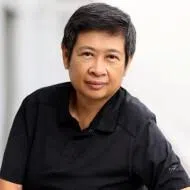
Professor Li Zexiang, who frequently travels between Hong Kong, Shenzhen and Songshan Lake, leads a fast-paced yet disciplined life. A white top has almost become his “uniform”. On the day of the interview, he added a dark wool vest, giving him an especially scholarly air.
Li was born in Hunan, China, in 1961. In 1978, he was admitted to the Central South Institute of Mining and Metallurgy. In 1979, he received a scholarship from Alcoa to study at Carnegie Mellon University in the US, pursuing a dual degree in Electrical Engineering and Economics. He later obtained his master’s and doctoral degrees from the University of California (UC), Berkeley, before working as a research scientist at MIT and serving as an assistant professor at New York University.
In 1992, at the age of 31, Li moved from the US to The Hong Kong University of Science and Technology (HKUST), where he founded the Automation Technology Center and Robotics Institute, bringing the traditional American engineering education model to Hong Kong. However, when he established Googol Technology in Shenzhen in 1999, he realised that this system — despite producing many leading scholars and executives of multinational corporations — left students ill-prepared to directly develop high-tech product innovations in the rapidly growing manufacturing and startup environment of Shenzhen at the time.
“I found it very difficult to recruit students who could actually build things.”
This led him to reflect: why did this globally recognised education system fail in the context of innovation and entrepreneurship, where one must go from zero to one?
“Traditional education works by teachers setting the questions and students solving them. But in the real world, no one gives you the questions.”
Li began to realise that the goal of traditional engineering education is to train master’s and doctoral students, or problem-solving “cogs in the machine” within large corporations — rather than entrepreneurs who can define problems and create products from scratch.
Students who identify problems and ask questions
The first person to inspire Li’s path in engineering education reform was Frank Wang (汪滔), who was then studying at HKUST. A lifelong enthusiast of remote-controlled helicopters, Wang’s undergraduate thesis was a drone. However, on the day of his defence, the system malfunctioned and the drone could not take off, earning him only a C grade and preventing him from pursuing further studies at top universities in Europe or the US.
Li, however, saw an opportunity for new engineering education in Wang’s failure. Among many higher-achieving students, he exceptionally admitted Wang as a graduate student, valuing innovation and practical skills over grades. More importantly, he prized students who could identify and define problems themselves, then integrate various technologies and resources to solve them.

During his graduate studies, Wang had more time to refine his drone design. While studying, he also registered a company in Shenzhen, selling controllers to hobbyists. Li not only provided Wang with academic guidance but also helped him secure funding and talent support.
In 2009, DJI (大疆创新), symbolising “boundless ambition”, took its first fully developed drone, the Zhufeng (珠峰号), to Mount Everest. Not only did it fly, but it could also levitate autonomously, achieving the first-ever aerial drone footage of the mountain in history. Following the successful test flight, DJI gained widespread acclaim, and orders poured in.
A teacher helping a student start a successful company may be a coincidence, but guiding successive cohorts of students toward technological innovation requires a new educational system, which Li calls “new engineering education”.
Education, innovation and entrepreneurship require both conviction and physical vitality. For this reason, Li has long led students on hikes, bike rides and sports, maintaining a constant “onward-marching” pace in his actions.
Where ideas take root
Li’s schedule is extremely full. In addition to mentoring enrolled students and supporting young entrepreneurs, he is also a co-founder of listed company Googol Technology, fully engaged in the comprehensive “industry-academia-research” science and technology innovation work. When Lianhe Zaobao requested an exclusive interview on new engineering education, his team suggested: why not visit the places where these ideas are actually taking root, rather than just sit down for an interview?
And so we decided to visit Shenzhen InnoX Academy, the XBotPark robotics base and shared factory in Songshan Lake, the Hong Kong Center for Construction Robotics (HKCRC) jointly established by HKUST and UC Berkeley, as well as the School of Future Technology at Shenzhen Polytechnic University. Other bases for new engineering education include Ningbo, Chongqing, Changzhou, and most recently, Hunan.
At Shenzhen InnoX Academy in Nanshan district, almost everyone we saw was in their twenties or thirties. Some were students, others had just graduated. They appeared to have been working intently for long hours, with a few so exhausted that they were sleeping on sofas in the corridors. Yet, when discussing the products they were developing, their eyes lit up.

The exhibition hall showcased many hard-tech products developed by Li’s students or affiliated entrepreneurs, such as the Yunjing robotic vacuum and mop, Zhenghao outdoor power supply, and the stringless guitar from LiberLive — creating the impression of stepping into a robot wonderland.
One place, one school, one platform
The goal of traditional education is to obtain degrees. Especially in Chinese communities, there is a saying that “one cannot be successful in life by being a worker”, and parents often prefer their children to devote themselves to academics rather than hands-on technical skills, hoping they attain a degree — and the higher, the better.
This raises the most immediate concerns for parents and students: will entrepreneurship interfere with studies? What if exams go poorly and a startup fails — will there still be a fallback option?
Li stressed that the design of new engineering education is not about having students “abandon formal education to take risks”, but rather integrating project-based learning and entrepreneurship training into a four-year degree structure. This requires collaboration among universities, the government and industry.
“We work with local governments and universities to establish a secondary college with an entirely new system at each school. We select first-year students and use project-based courses throughout the four years. By the time they reach their graduation project, it becomes their first step toward entrepreneurship, allowing them to gain both entrepreneurial skills and a degree.”
“One place, one school, one platform” is a phrase often used when discussing new engineering education. It means that a local government provides space and support, while the university provides a structured talent development pathway to establish a platform linking industrial resources, mentor networks and incubation mechanisms.

Take the Hong Kong project as an example: “one place” refers to InnoHK, the innovation and technology initiative supported by the Hong Kong government; “one school” is the curriculum developed jointly by HKUST and UC Berkeley; and “one platform” is the HKCRC. The Hong Kong government aims to leverage deep “industry-academia-research” integration to address traditional construction industry pain points, using a solid technological foundation to incubate products that can be practically applied in the field.
A spark in their eyes
One successful product developed by a student team is a “transfer robot”, and the process was not a case of students inventing in isolation at school. For the first six months, the students had to immerse themselves on construction sites, working alongside labourers to identify industry pain points and define real needs.
These HKUST students already had backgrounds in mechanical, electronic or computer engineering, but were unfamiliar with the construction industry. By moving bricks and cement with the workers, they gradually shifted from purely technical thinking to industry-oriented thinking, learning to discover practical problems that need solving rather than relying solely on imagination to “invent” products.
In a conversation with a key promoter of the new engineering education system, we talked about students who show a “spark in their eyes” when they are capable of innovation and entrepreneurship — something Li values most. He shared a story:
“A few years ago, we organised a training camp at HKCRC with construction companies like Vanke. Experienced industry workers and entrepreneurs analysed some of the sector’s pain points, but the most important thing was for students to go on-site, just like your interview, and work on construction sites for several months. Before entering the site, the students were fair-skinned and well-fed; two months later, they were tanned and lean, but they had a spark in their eyes. This showed that they had found good, real problems, and they knew what steps to take next.”
Would a focus on projects weaken engineering students’ foundation in maths and science?
Li’s response was straightforward: “In the traditional model, students forget what they learn after exams. Projects force them to learn and to apply it immediately. Through this process of practical application, they truly understand what mathematics and mechanics are all about.”

The previous curriculum focused only on analysing and solving problems, which were usually set by the teacher. New engineering education, however, trains students to identify problems themselves. “The key is how to find good problems. Using design thinking tools and empathy to understand fundamental human needs is extremely important.”
He further clarified what he means by a “good problem”: it should not only have social value but must also be commercially viable.
A ‘design soul’
American contemporary historian of science George Sarton famously said, “Science is our greatest treasure, but it needs to be humanised or it will do more harm than good.” True innovation often emerges at the intersections of disciplines — it requires not only precise calculation but also a profound understanding of human nature.
Li understands this well. His approach to new engineering education has also entered the Guangzhou Academy of Fine Arts. Four years ago, the Da Vinci Innovation Experimental Class was established there, integrating hard technology with design to cultivate interdisciplinary talent.
When evaluating the outcomes of new engineering education programmes, Li uses a metric called “entrepreneurial density”, proposed by the Kauffman Foundation, which specialises in the study of entrepreneurship. “Entrepreneurial density” refers to the proportion of a university’s graduates who go on to start or co-found businesses and successfully obtain funding.
At traditional centres of engineering education in the US, such as Massachusetts Institute of Technology and Stanford University, the entrepreneurial density is only in the single-digit percentages. By contrast, at Olin College of Engineering — a small private university in Massachusetts that emphasises interdisciplinary, project-based learning and close ties with industry — the entrepreneurial density is five times that of Stanford.
“Our collaboration with the Da Vinci Innovation Experimental Class at the Guangzhou Academy of Fine Arts has been running for four years. Several student startup teams have already reached the angel investment stage and secured private investment, with an entrepreneurial density of 26%,” said Li.

Li is very pleased with this outcome. He explained that some of these students entered the academy through the humanities track, while others came through the science track, but their high school education was broadly similar. From their first year, the programme focuses on strengthening their foundations in mathematics and science while cultivating design thinking, before guiding them to apply their knowledge through hands-on practice.
Why are local governments willing to invest?
The reason this education and incubation model has been able to continue advancing in Shenzhen is not due to ideals alone. The headquarters of Shenzhen InnoX Academy is located in Creative City in Nanshan district. Covering around 15,000 square metres, the academy includes innovation workshops, laboratories, a lecture hall and a multi-purpose indoor sports court. Teams currently undergoing incubation can also rent office spaces there at relatively low cost.
Why are local governments willing to commit so many resources over the long term to the new engineering education system?
Standing in the exhibition hall displaying student products, Li said, “The tax revenues these companies have generated for the local government have already far exceeded the funding the government initially provided to support this programme — by roughly ten or even 20 times.”
He specially emphasised that this figure excludes early flagship companies such as DJI or Googol Technology, but mainly refers to firms incubated over the past decade that are still growing. According to periodic statistics, this new engineering education system has gradually fostered around 270 companies.
There is a saying in the startup world: entrepreneurship is a “one in ten chance of survival,” and it rings true. The vast majority of entrepreneurial attempts end in failure, so new engineering education must also teach students how to face failure. I asked Li’s students the same question, and their answers were unanimous: “We don’t talk about failure, only iteration!”

I noticed that Li’s students often display this kind of resilient, positive energy — perhaps linked to his habit of taking them on hikes and long walks, always keeping them in a forward-moving mindset.
Guiding so many entrepreneurial students while helping them find investors and solve supply chain problems along the way, how does Li define himself: as an entrepreneur or an educator?
His answer is as modest and down-to-earth as his character: “I’m just a teacher.”
Difficult for Singapore to replicate the model
This interview naturally raised a question: what lessons could Singapore draw from the new engineering education model?
Li remained cautious in his response. He does not see new engineering education as a “Chinese model” that can be copied wholesale, but rather as a way of thinking.
He believes that Singapore has a well-established education system, a solid research foundation, and a highly internationalised talent pool; however, when it comes to prototyping, supply chain density, and the cost of trial and error, its conditions differ from those in China.
“Over the past 40 years, the Guangdong-Hong Kong-Macau Greater Bay Area has built one of the world’s most systematic and comprehensive supply chain networks. When Nvidia’s Jensen Huang visited HKUST, he astutely pinpointed the Greater Bay Area’s advantages.”
Li knows full well that it is not easy for startups to assemble all the suppliers they need. That is why he established a shared factory in Songshan Lake not long ago to enable young entrepreneurs to quickly sort out their supply chains.

He explained that these resources are available not only to companies within the system, but to other entrepreneurs as well. “The supply chain in the Greater Bay Area isn’t just for the Greater Bay Area but the whole world. We also hope these resources can support entrepreneurs in Singapore, and even across Southeast Asia.”
During the few days of interviews in Hong Kong and Shenzhen, we repeatedly encountered visiting student groups from around the world. At the robotics base and shared factory in Songshan Lake, we even happened to meet a group of students from Nanyang Technological University who had just finished their tour and were about to board their bus. It was clear that Li’s philosophy of innovation and entrepreneurship — and the new engineering education system he has built — are influencing the future of engineering education in different ways.
Li Zexiang’s recommended booklist:
Celebrating Entrepreneurs: How MIT Nurtured Pioneering Entrepreneurs Who Built Great Companies by Edward B. Roberts
Disciplined Entrepreneurship: 24 Steps to a Successful Startup by Bill Aulet
Ninja Future: Secrets to Success in the New World of Innovation by Gary J. Shapiro
This article was first published in Lianhe Zaobao as “改革动手创新筑就育才高地”.
Related: Pudu Robotics founder Zhang Tao: Humanoid robots will be bigger than cars | Skylink founder Wesley Shen’s unstoppable quest to get rich

Get the ThinkChina Weekly Newsletter
Insights on China, right in your mailbox. Sign up now.
By subscribing, I agree to SPH Media's Terms and Conditions and Privacy Policy.