Singapore’s leaders see a dangerous new world
As the global order fragments and great power tensions rise, Singapore’s leaders are signalling a new era of strategic vigilance — one shaped by resilience, credibility and long-term survival, observes Lianhe Zaobao editorial consultant Goh Sin Hwee.
11 May 2026
Politics
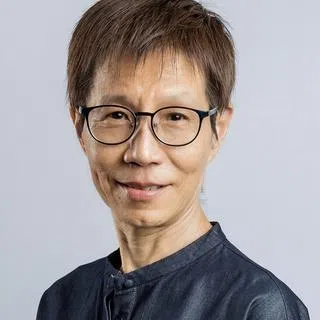

Singapore foreign minister Vivian Balakrishnan attended at least four international and diplomatic engagements in April. At each, he inevitably spoke about, or was asked about, the disordered global situation, with his remarks growing more candid and pointed each time.
At the European Chamber of Commerce Singapore annual general meeting on 29 April, Balakrishnan said forthrightly that the greatest hindrance to free trade often arises from domestic politics within countries, particularly those that are unable to benefit from the economic gains of free trade. He also urged European businesses to explain and demonstrate the value that free trade brings to society at large to governments and the wider public across Europe.
At the 25th ASEAN-European Union Ministerial Meeting in Brunei on 28 April, Balakrishnan urged ASEAN and the EU to uphold international law and not succumb to the temptation of force. Otherwise, it would be like granting a licence for big powers to resort to the threat or the use of force, under the guise of correcting “historical errors” or pursuing a “just cause”, to pursue expansionist ambitions.
At a fireside chat hosted by CNBC at Jewel Changi Airport on 22 April, Balakrishnan warned that if China-US relations were to break down and lead to conflict in the Pacific, the consequences would be worse than those of the conflict in the Middle East and the current crisis caused by disruptions in the Strait of Hormuz.

At the 17th Asia-Pacific Programme for Senior National Security Officers on 21 April, Balakrishnan described the repudiation of globalisation as tantamount to “vandalising our own lifeboats”. While countries must safeguard their national security interests, they should also deepen cooperation with trusted partners.
He also reiterated that Singapore would act in its own long-term national interest and firmly refuse to choose sides, adding that if it must say no, it will not flinch from that.
What do politicians’ comments signal?
With Balakrishnan repeatedly spelling out global crises and Singapore’s guiding principles at international forums, is this a sign that Singapore is getting anxious?
Singapore may be pressed by circumstances, but it must not fall into chaos. The recent public remarks by Balakrishnan, Prime Minister Lawrence Wong and Deputy Prime Minister and Minister for Trade and Industry Gan Kim Yong are based on the government’s assessment that the world order is undergoing fundamental fragmentation, and reflect the necessary thinking and planning in response. In the face of multiple existential challenges, Singapore needs even more an approach that cuts through the fog, identifies issues with precision, and is guided by clear-headed strategic foresight.
The core spirit of recent remarks by Balakrishnan and several other political leaders may be summarised as: rejecting coercion under a “law of the jungle”, upholding the baseline of international law, affirming Singapore’s values and international credibility, and strengthening internal cohesion as well as the country’s collective capacity to respond to crises and future challenges. In articulating Singapore’s positions and principles to the international community, these statements in fact reflect its underlying strengths: a calm, reliable, and trustworthy partner in times of uncertainty.

For example, even in times of severe crisis, Singapore does not detain essential goods and strictly honours commercial contracts. Balakrishnan said that this consistently predictable approach to diplomacy and economic cooperation, both in normal times and in crises, is key to strengthening Singapore’s international credibility. Likewise, Singapore does not take part in any attempts to close off or intercept maritime routes, or to impose transit fees in surrounding waters.
As for the point made to European society that the greatest obstacle to free trade lies in domestic politics, the underlying argument is that if the economic gains of globalisation are not properly distributed within countries, or if insufficient support is provided to help vulnerable groups improve their livelihoods, then political pressures arising from social tensions will spill over. In such circumstances, free trade — and by extension foreigners — risk being portrayed as a “beast” that deprives people of jobs and welfare. Similarly, the benefits of digitalisation and artificial intelligence for the economy and productivity must also be carefully managed and broadly shared, so that society as a whole can move forward and improve together.
Setting a precedent
Balakrishnan’s rhetoric has become increasingly forceful, as a Pandora’s box of multiple crises has been opened. The consequences of great power politics tearing apart the old order are now triggering a chain reaction. Even if the situation in the Strait of Hormuz eases temporarily, the precedent has already been set of weaponising critical global chokepoints.

Get the ThinkChina Weekly Newsletter
Insights on China, right in your mailbox. Sign up now.
By subscribing, I agree to SPH Media's Terms and Conditions and Privacy Policy.
Beyond affirming its commitment to upholding international law, Singapore must also work with like-minded international partners to ensure that such a catastrophic practice is not replicated in any other maritime or transport channel. Efforts should also be made to re-establish and strengthen international trade and commercial networks, ensure the sustainable flow of energy and food supplies, and develop safe and reliable international mechanisms to support the new forms of cooperation and connectivity driven by artificial intelligence.
The potential high risk of a major power conflict erupting in the Pacific is also not being alarmist. If China-US relations break down and war breaks out in the Pacific, and if a crisis such as the blockade of the Strait of Hormuz caused by conflicts in the Middle East were to occur in the Strait of Malacca, the consequences for Singapore and its Southeast Asian neighbours — which are heavily dependent on international trade — would be catastrophic.

In this sense, Balakrishnan’s remarks reflect that Singapore’s vigilance in peacetime is no longer merely a precautionary mindset, but a sustained alertness to national security, economic lifelines and social harmony. Rather, amid an increasingly complex international landscape and rapid technological advances, it involves assessing both risks and opportunities together, and shaping a future favourable to Singapore through strategic thinking and action, innovation and policy direction — a more proactive and forward-looking form of “thinking ahead to danger”.
The example of Apple
Veteran technology reporter Tripp Mickle of The New York Times, who covers Apple and the Silicon Valley tech industry, compared three chief executives in a Q&A about how he views Apple’s future ahead of its expected leadership change in September. He noted that under founder Steve Jobs, Apple was a frontier brimming with imagination and innovation — from the launch of the iconic iMac to the smartphone revolution ushered in by the iPhone — all within roughly a decade.
Under current CEO Tim Cook, Apple achieved remarkable commercial success, but has also become more conservative, focusing more on maximising profits from the products pioneered by Jobs. A key factor is Cook’s deft ability to navigate relationships and secure access to the China market. He is skilled at dealing with ministers in Beijing as well as officials in Washington and US President Donald Trump.
The incoming successor, John Ternus, comes from the product division and has been with Apple since the early 2000s, meaning he is very familiar with the innovation and creativity of the Steve Jobs era, while being an important part of the more cautious, rational decision-making style under Cook. As such, people hope Ternus can combine both — embodying Jobs’s creative vision while drawing on Cook’s operational expertise, continually delivering strong profitability for the company.

Like the rest of the world, Singapore has reached a critical juncture of major transformation, to be steered through by its fourth-generation leadership. Prime Minister Lawrence Wong reaffirmed at the NTUC May Day Rally that, whether facing an energy crisis or an AI revolution, no Singaporean will be left behind.
Singapore is not a company — it is our nation and our home. In the new landscape, being vigilant in times of stability must go beyond caution to embracing change proactively, and, above all, supporting one another as we move forward together; this is a form of intangible capital.
Such reserves of mutual support and living together in harmony help the country remain steady in times of crisis, and make “welcome home” — whether to one’s own family or to Singapore as a home — more meaningful.
This article was first published in Lianhe Zaobao as “把危机说透 新加坡急了吗?”.
Related: Middle power or not, Singapore must step up | [Video] Lim Siong Guan: Can Singapore survive?
Popular This Month
Get the ThinkChina Weekly Newsletter
Insights on China, right in your mailbox. Sign up now.
By subscribing, I agree to SPH Media's Terms and Conditions and Privacy Policy.