
Trump tariffs could clip the wings of China’s air cargo firms


Trump’s rapid-fire policy changes have sent shockwaves through China’s air cargo sector, an industry heavily reliant on cross-border e-commerce. How are logistics companies responding to this situation?

(By Caixin journalists Zou Xiaotong and Wang Xintong)
US President Donald Trump’s trade barrage — particularly the elimination of a duty-free allowance for small packages that has been crucial to e-commerce platforms — has thrown China’s air cargo sector into turmoil.
“Every day brings new drama from Trump, leaving everyone unsure how to respond,” lamented a veteran Shanghai-based air freight forwarder.
... it has become increasingly clear that strategic shifts — exploring new markets and developing business beyond cross-border e-commerce — are crucial for logistics firms.
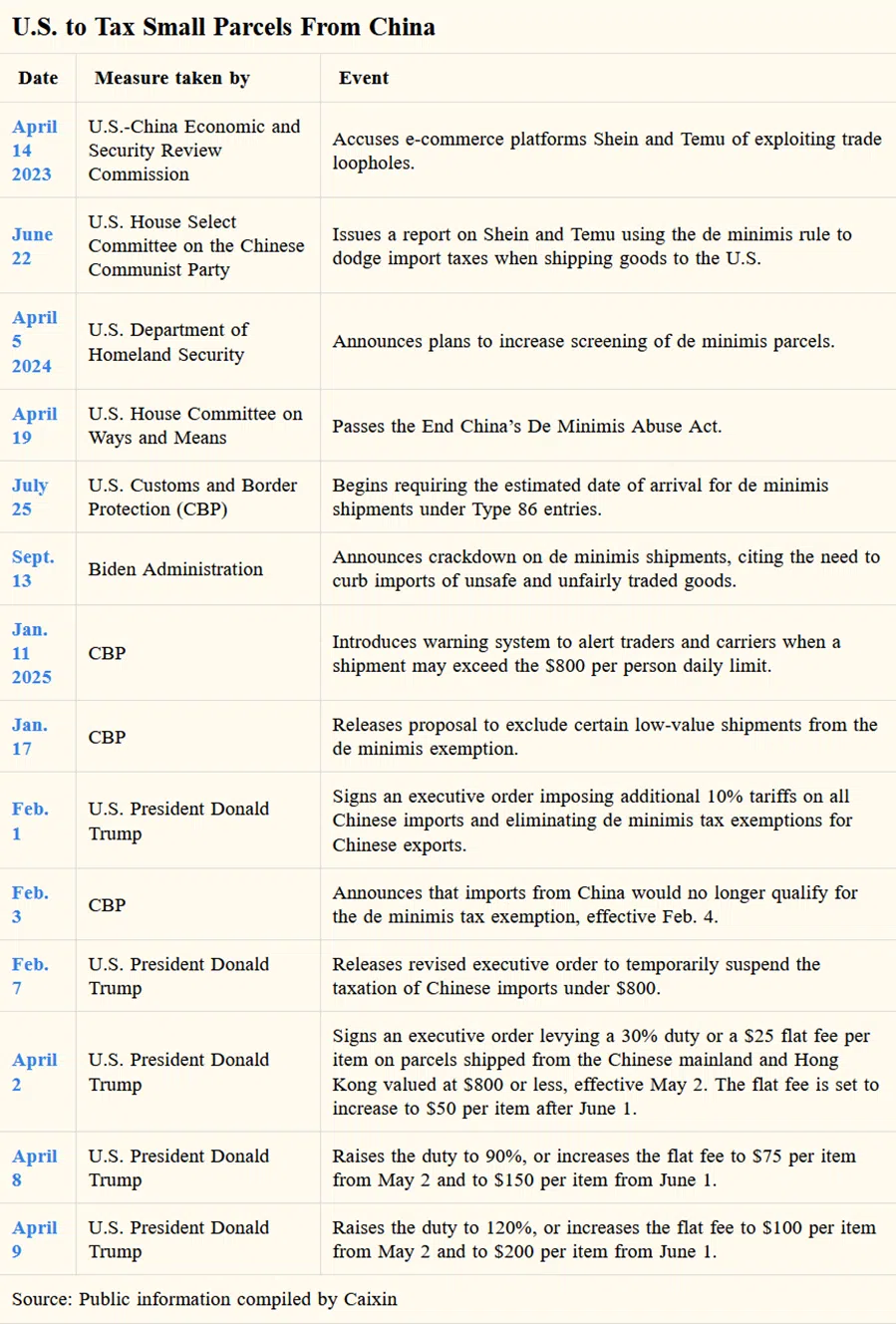
Since taking office in January, Trump has repeatedly raised tariffs on Chinese goods, with some now facing duties as high as 245%. The president has also ended the duty-free “de minimis” policy for parcels valued at or under US$800 shipped from the Chinese mainland and Hong Kong. These shipments will be subject to a tariff equal to 120% of their value or a flat fee of US$100 starting 2 May, with the flat fee set to rise to US$200 from 1 June.
These rapid-fire policy changes have sent shockwaves through an industry heavily reliant on cross-border e-commerce, which constitutes 60% to 70% of China’s total air cargo volume. The immediate impact included a brief uptick in air cargo rates as firms rushed to get shipments out before policy changes took effect, followed by a steep drop-off as demand plummeted.
The cancellation of the de minimis exemption “could cause cross-border logistics companies to lose the entire US market”, said Gao Jie, general manager of Guangdong Goldjet International Logistics Co. Ltd. China’s three biggest state-owned airlines — which have more international cargo routes than their domestic peers and have grown to rely on e-commerce for growth — are likely to be among the hardest hit.
Amid escalating trade tensions, it has become increasingly clear that strategic shifts — exploring new markets and developing business beyond cross-border e-commerce — are crucial for logistics firms.
Shockwaves
Several logistics company sources told Caixin that a rush earlier this month to ship general goods before a US tariff hike came into effect on 9 April caused a bump in air freight rates.
“Inquiries for general cargo on US routes dried up after (9 April), and shipments of items like auto parts and electronic components ground to a halt.” — a veteran Shanghai-based air freight forwarder
Data from TAC Index, a freight monitor that tracks weekly average general cargo prices on major global routes, partly reflects this: between 1 April and 7 April, its Hong Kong outbound index rose 2.9% week-on-week, while the Shanghai outbound index gained 2.5%.
The global Baltic Air Freight Index calculated by TAC — a key indicator of international air freight prices — fell slightly by 0.1% from the previous week.
The trend reversed in the week ending 14 April, with all three indices falling between 0.6% and 3.7% week-on-week, according to TAC data.
Air freight shipments plummeted. “Inquiries for general cargo on US routes dried up after (9 April), and shipments of items like auto parts and electronic components ground to a halt,” said the Shanghai-based air freight forwarder, noting that tariffs above 100% render air freight economically unviable.

This disruption mirrors what happened in early February, when Trump’s abrupt end to the de minimis exemption caused immediate chaos: Chinese merchants and logistics firms scrambled to adjust their pricing and supply chains, air cargo demand collapsed, and US customs struggled to clear a massive backlog. On 7 February, the Trump administration was forced to roll back the policy until “adequate systems are in place”. The White House reinstated the policy on 2 April.
Trump’s April moves had less of an impact on air cargo pricing than the shock in February, which saw a 50% plunge in rates within a week, several logistics industry insiders told Caixin. This is partly due to the fact the exemption wasn’t instantly cancelled and the expectation among some firms that further changes might be on the horizon.
Moreover, US customs authorities currently lack the capacity needed to process the large volume of goods coming from China, according to several people working at trading companies and selling goods on cross-border e-commerce platforms.
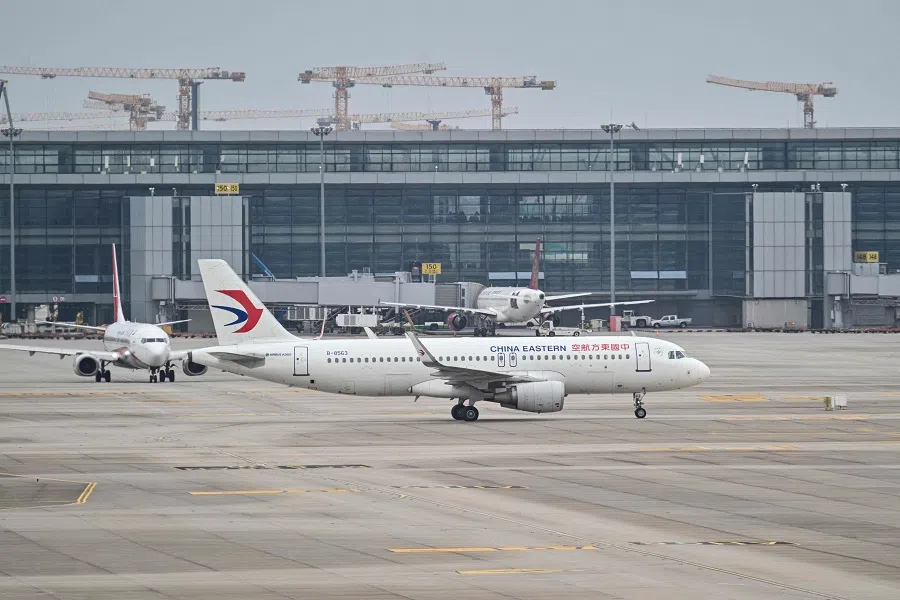
The end of de minimis could be a major blow to China’s “big three” state-owned airlines — Air China Ltd., China Eastern Airlines Corp. Ltd. and China Southern Airlines Co. Ltd.
In a move that seemed to symbolise how the authorities may struggle to cope, a glitch in US customs’ computer system on 11 April prevented the use of a new code to exempt all freight already in transit from the new tariffs, including cargo already on the way from China. For ten hours, the Automated Commercial Environment system was unable to accept the lower duty rate of 10% for entries that qualified as in-transit shipments filed since 9 April.
State-owned carriers face headwinds
The end of de minimis could be a major blow to China’s “big three” state-owned airlines — Air China Ltd., China Eastern Airlines Corp. Ltd. and China Southern Airlines Co. Ltd.
Their cargo arms thrived during the pandemic as capacity on other routes was crunched but their profits slumped afterwards. E-commerce provided a vital boost starting in mid-2023.
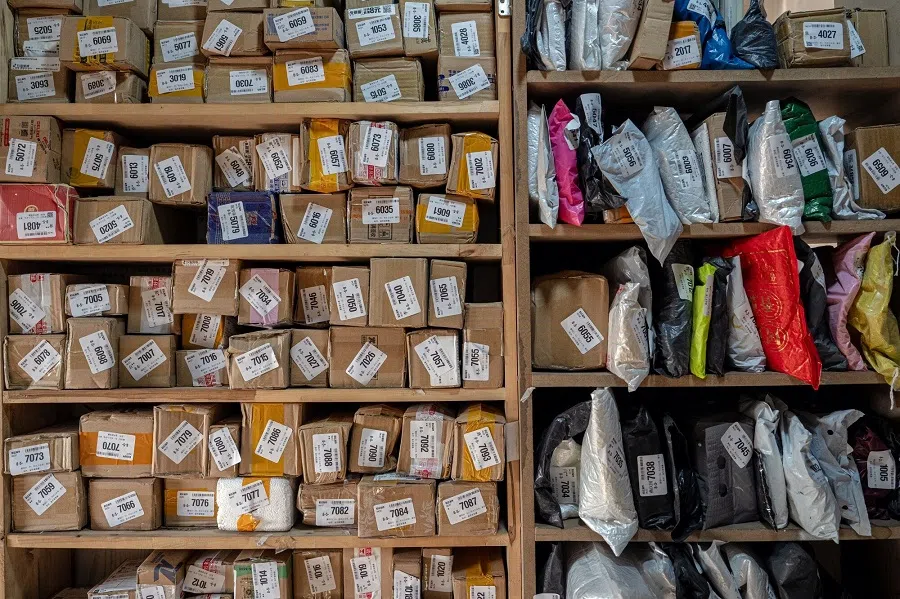
China’s total cross-border e-commerce trade value reached 2.63 trillion RMB (US$361 billion) in 2024, up 10.8% year-on-year, according to a General Administration of Customs official.
Boosted by e-commerce, Air China Cargo Co. Ltd.’s profits jumped 69% to nearly 2 billion RMB last year; Eastern Air Logistics Co. Ltd.’s profits rose 8% to 2.7 billion RMB; and China Southern Air Logistics Co. Ltd.’s profits surged 72% to 4.2 billion RMB, according to company statements.
Air China Cargo listed on the Shenzhen Stock Exchange in late 2024, becoming the second listed aviation logistics firm after Eastern Air Logistics. Its IPO was one of the largest in China last year.
China Southern Air Logistics, however, suspended its Shanghai IPO application in February, with one logistics source citing the company’s concerns about the outlook of cross-border e-commerce as a potential key reason.
According to the China Federation of Logistics and Purchasing, 168 new international cargo routes were opened in 2024, many of which were to Southeast Asia. In March alone, 21 new international routes were added, primarily within Asia and to Europe.
In its 2024 annual report released 16 April, Eastern Air Logistics warned that US tariff adjustments and the looming cancellation of the de minimis tax exemption for small parcels from China would likely significantly impact demand and further affect the company’s sales.
The US represents the largest market for both Air China Cargo and Eastern Air Logistics, with routes to the country accounting for 48% and 43% of their respective international routes, according to a January report by Huachuang Securities Co. Ltd.
Scrambling to diversify
In response to this turmoil, Chinese air freight firms are exploring opportunities beyond the US market. Eastern Air Logistics, for example, is strengthening its European presence and exploring the Middle East, South America and Southeast Asia.

Gao’s logistics company is looking toward countries participating in Beijing’s “Belt and Road” initiative, a multibillion-dollar infrastructure investment scheme aimed at boosting trade between Asia, Africa and Europe. “By combining multiple markets, we hope to match or even surpass the scale of the US market,” Gao said.
“The tariff uncertainties are too great,” said an airport source in South China, suggesting companies shouldn’t “put all eggs in one basket” and instead expand into emerging markets.
According to the China Federation of Logistics and Purchasing, 168 new international cargo routes were opened in 2024, many of which were to Southeast Asia. In March alone, 21 new international routes were added, primarily within Asia and to Europe.
Some industry insiders are eyeing the transshipment trade — routing goods ultimately bound for the US through third countries like those in Southeast Asia — as they anticipate that the US authorities will struggle to immediately track the origin of these re-routed goods.
Peng Wei, general manager of Kuala Lumpur-based logistics firm Teleport’s China branch, said they have recently received many inquiries from e-commerce merchants.
Since early February, “we’ve seen a surge in both cargo volume and demand on China-Southeast Asia routes”, he noted. “This was largely driven by the regional expansion of Chinese e-commerce platforms, which has significantly boosted demand for small parcel air freight.”
Logistics firms are also seeking growth beyond cross-border e-commerce. Eastern Air Logistics, for instance, generated 3.3 billion RMB last year from “direct-from-origin” solutions. This cold-chain logistics business specialises in transporting perishable goods directly from farms and producers to end markets. While this was just over half the 5.9 billion RMB from its cross-border e-commerce business, it represented a 73.32% year-on-year increase.
Despite the US tariffs, opportunities remain for China’s air freight industry, according to an executive from one of the “big three” airlines’ cargo divisions. At a recent industry conference, the executive expressed confidence in the durability of online shopping habits, growing global demand for China’s high-end manufactured goods such as pharmaceuticals and semiconductors, and the broader trend of Chinese firms expanding internationally.
Kelsey Cheng and Ding Yi contributed to this story.
This article was first published by Caixin Global as “In Depth: Trump Tariffs Could Clip the Wings of China’s Air Cargo Firms”. Caixin Global is one of the most respected sources for macroeconomic, financial and business news and information about China.
![Hokkien roots, Brunei soil: My father’s journey across borders and spiritual planes [Eye on Fujian series]](https://cassette.sphdigital.com.sg/image/thinkchina/71f359b221f9d122e33e939974a2a8159629f5990340bdf70135adfea2d6a086)