China’s rural decline: The missing chapter in Zhu Rongji’s legacy
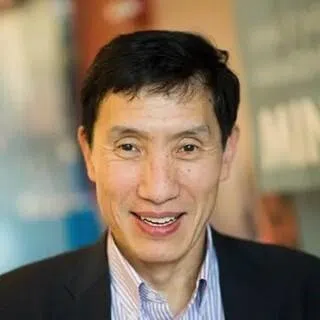
Nostalgia paints the late former Premier Zhu Rongji as China’s ultimate reformer. But a closer look at the 1990s reveals severe policy reversals that left the vast rural population behind. Professor Yasheng Huang analyses the missing piece of the picture.
14 Aug 2026
Economy

Former Chinese Premier Zhu Rongji, who has just passed away, is being remembered with a lot of nostalgia. I share that nostalgia. I greatly admire and miss his plain-talking, direct, no-nonsense style — a breath of fresh air in the often stultifying and vague rhetoric of officialspeak. I am also nostalgic for an era when China sought to globalise its economy, had a working and pragmatic relationship with the West, and eased cross-strait tensions with Taiwan. There is a lot to miss about him and former Chinese President Jiang Zemin.
What is not remembered in obituaries
This nostalgia is understandable, but it is not the right way to assess a leader, in part because a successor’s performance is partially a function of the performance of his predecessor. To make this point concrete, to those who are not happy with the current policy direction in China, I ask, “Who selected Xi Jinping to be the party secretary?”
We do not know what really happened, but a widely accepted view is that Jiang advocated Xi to succeed Hu Jintao. To those who complain about the statist direction in China, one could make a reasonable argument that Zhu was instrumental in creating the statist policy machinery of the Chinese state today.
The correct way to use a successor to judge his predecessor is to look at how the successor changed the policy direction. What a successor moves quickly to redirect the policy direction tells you what his predecessor did, either right or wrong. US President Donald Trump’s first-term tariffs on China were, whatever one makes of them, a verdict on the China policy of the Obama years before him. His second-term crackdown on immigration was a statement about what had happened at the southern border under former US President Joe Biden. Xi pursued an anti-corruption campaign because his predecessors allowed corruption to fester. Successors reveal predecessors that way — an urgent policy orientation is evidence of what happened under the previous administration.

Now apply that test to Zhu Rongji. When former Chinese President Hu Jintao and former Premier Wen Jiabao took over in 2003, the central project of their first five years was the countryside. They spoke constantly and explicitly of the “三农危机”, the crisis of the “three rurals”: agriculture, the rural areas and the farmers. For five years in a row, Hu and Wen issued No.1 policy directives to address the crises unfolding in the Chinese countryside. Whether they succeeded is up for debate. My own view is that they did a lot to rebalance policy priorities and that Xi Jinping has continued to work on this issue.
Yet none of this fact of three rural crises appears in any of the Western memory of Jiang and Zhu — not in the retrospectives, not in the accounts of the “reform decade”, and not in the obituary The New York Times (NYT) ran on Zhu, which ranked him “second only to [the late Chinese leader] Deng Xiaoping” among China’s reformers. Seriously? The fact that China was 70-80% rural in the 1990s, and the country was going through three rural crises affecting 70-80% of the population, failed to register any mention or any effect on this appraisal of the leadership team of that era.
Since the obituaries will not describe it, I will. What follows is drawn from my 2026 book, Statism with Chinese Characteristics.
When GDP grew but labour lost
Start with the number that matters most for a country that was then 70-80% rural. In the 1980s, real per capita rural income grew at 10.9% a year. Under Jiang and Zhu, it fell to 3.9%, while headline GDP growth barely changed, from 8.2% to 8.1%. Growth held; the countryside’s share of it fell sharply.
One way to see this is to show an elasticity effect: in the 1980s, each point of GDP growth was associated with 1.36 points of rural income growth; under Jiang and Zhu, that fell to about 0.5 (To anticipate any criticism, the rural income figures here include labour migrant income.)
When 70–80% of the population sees income growth lag behind GDP growth, the inevitable result is a decline in the household income-to-GDP ratio. Below is a graph of the rural/urban population-weighted household income relative to GDP. There is a striking pattern: all the decline in that ratio happened in the 1990s, from 0.54 in the 1980s to 0.44 in the 1990s. There was a small decline under Hu and Wen, from 0.44 to 0.43, and there was a rebound under Xi Jinping to 0.46.
Let me repeat this point: the well-known problem of low household income to GDP was not stretched over a long span of years; the entire decline happened during the Jiang-Zhu era and it was compressed and concentrated during the period from 1989 to 2002. The decline was overwhelmingly due to the policy regime of that era.

Inequality moved with it — the Gini coefficient rose from 32 in 1990 to 42 by 2002, taking China from roughly East Asian levels of inequality to Latin American ones within a single leadership era. The mechanism was in large part financial. The story is this: in the 1980s, under the leadership of Chinese Premier Zhao Ziyang, China undertook deep, substantial financial reforms in the rural economy; in the 1990s, almost all of these reforms were reversed. This part of the story is either unknown or almost entirely forgotten. (Most amazingly, for a policy action that affected the welfare of 70-80% of the Chinese population, and for a policy action, when accurately presented, that should fundamentally shape how we think about China’s growth process, I have found a total indifference and incuriosity from my fellow scholars.)
Dismantling the 1980s rural financial safety net
In the 1980s, China had liberalised rural finance: credit cooperatives were pushed towards member control, informal lenders were tolerated as competition, and bank loans financed roughly 40% of rural private firms’ startup capital. In the 1990s, under Zhu Rongji’s leadership of the financial system, that opening was systematically undone. Rural credit cooperatives were ordered to redirect lending back into agriculture, reducing credit available to rural industrial and service businesses. Collateral rules tightened: a 1995 law barred farmland and rural housing from being used as loan collateral, just as the coming property boom was about to make land the main source of Chinese wealth.
And in a State Council decree Zhu signed in July 1998, informal rural finance was banned outright, with public-security organs instructed to investigate and punish informal lenders. The number of rural credit cooperative branches fell from more than 400,000 in 1985 to about 91,000 by 2003, while the share of rural households able to obtain any loan dropped from roughly one-third in 1986 to just 10% by 2002.

Get the ThinkChina Weekly Newsletter
Insights on China, right in your mailbox. Sign up now.
By subscribing, I agree to SPH Media's Terms and Conditions and Privacy Policy.

GDP growth continued, powered by investment and foreign direct investment, but labour was displaced for a variety of reasons. One was a push factor: the failure of rural businesses led to a sudden increase in rural labour supply, which depressed the labour share of income. The share of manufacturing output paid out as wages fell from 6.3% in 1992 to 3.4% in 2002, roughly halving over the decade. On the other side of the ledger, private consumption fell from 51% of GDP in the 1980s to 46% under Jiang and Zhu, and later to 37% under Hu Jintao. The mercantilist model was born.
Lowering the poverty line while spending on megaprojects
There is one more piece of small but pointed evidence of how the Chinese leadership viewed the welfare of the rural Chinese in the 1990s. China keeps an official rural absolute-poverty line — the threshold below which a person qualifies for some minimal state support. In the government’s own Rural Household Survey Yearbook, the line can be tracked year by year.
Before 1998, it was raised every year. After 2003, it was raised every year. But across Zhu Rongji’s five years as premier, it was lowered three times, in 1998, 1999 and 2002, held flat once, and raised only once. In no other period of the reform era did the state cut the amount it was willing to spend to support its poorest citizens. And it did this in the same years China was funding the Shanghai Maglev, the urban projects and construction, the start of a massive infrastructure drive, and several rounds of salary increases for civil servants.
Below is the screenshot of the rural absolute poverty lines. The second column from the left is the RMB figure establishing the absolute poverty lines. I reproduced this table in Chapter 3 of my 2026 book.

This brings me to one claim in the NYT obituary that I take strong exception to: that Zhu was second only to Deng among China’s reformers. Above Zhao Ziyang?
Consider what Zhao did. In Sichuan, he pioneered the rural reforms that, on their own, ended the hunger of roughly a tenth of the Chinese population. As premier, he drove price reform, the rise of the township and village enterprises, the liberalisation of rural finance, the introduction of market competition, the legitimation of private ownership, and the opening of the coastal economy — and he did it over the strong opposition of the revolutionary elders who still held real power.
To me, it is just amazing how an individual who dramatically improved the welfare of hundreds of millions of the poorest Chinese has disappeared from memory entirely. I understand why the Chinese state does not mention Zhao, given that he fell from power during Tiananmen, but Western journalists and scholars? What is their excuse?
Some will say Zhao’s achievements were really Deng’s. They were not. Deng set the general direction; the specific reforms were designed and driven by Zhao. If you believe everything Zhao did was because of Deng, then you can say the same about Zhu. It was Deng who put Zhu in charge of the economy, and through much of the 1990s Jiang and Zhu made policy decisions following the general direction Deng had set. If we credit Zhu with his reforms rather than assigning them all to Deng — as we should — then we owe Zhao the same. One cannot use Deng to credit one man and discount another.
A nuanced legacy
None of this is a blanket verdict on Zhu Rongji. I admire him for many of his leadership qualities. I think China’s World Trade Organisation accession was a bold and genuinely good decision for the Chinese economy. Zhu, more than many Chinese leaders, had a global mindset, and I think the broad move towards private ownership was, on balance, a net positive. His other policy actions, such as fiscal reforms of 1994 and his large-scale privatisation — mostly of small, loss-making firms rather than the big firms — left mixed legacies that require separate discussions, which I did in my book. In this piece, I focus on rural China.
Let me end on this point — you do not have to believe anything I said here. Do some research on what was officially acknowledged in the Chinese policy documents around 2004 and read Will the Boat Sink the Water?: The Life of China’s Peasants by two Chinese journalists, Chen Guidi and Wu Chuntao, which has incredible details of the rural plight in the 1990s, as well as some really interesting details of Zhu Rongji himself.
This article was first published in Substack by Yasheng Huang, as “Zhu Rongji, A Complex Leader with a Complex Legacy”.
Related: Zhu Rongji’s death triggers China’s ‘superpolitics’ | Zhu Rongji: A legacy of transforming China’s economy and forging relations with ASEAN
Popular This Month
Get the ThinkChina Weekly Newsletter
Insights on China, right in your mailbox. Sign up now.
By subscribing, I agree to SPH Media's Terms and Conditions and Privacy Policy.