Former Chongqing mayor who outlasted Bo Xilai meets his downfall
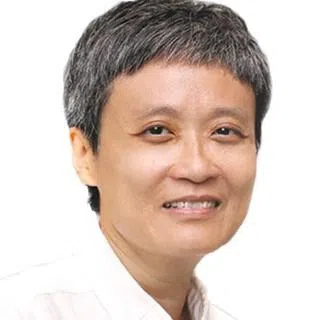
Huang Qifan survived the downfall of two Chongqing party bosses and earned a reputation as a political untouchable. Now, nearly a decade after leaving office, he is under investigation. Lianhe Zaobao associate China news editor Sim Tze Wei examines his career.
15 Oct 2026
Politics

(Edited and refined by Candice Chan, with the assistance of AI translation.)
“Oh, Qifan.”
In March 2011, during China’s annual Two Sessions — the meetings of the National People’s Congress (NPC) and the Chinese People’s Political Consultative Conference (CPPCC) — Bo Xilai, then Communist Party secretary of Chongqing, had addressed the mayor sitting beside him, Huang Qifan, in this unusually familiar manner in front of the media.
It was my first time covering the Two Sessions, and I had been assigned to the Chongqing delegation’s open media session. Back then, I barely understood what the Two Sessions were about, much less why I had to spend so much time wandering around the Great Hall of the People. Many details have since faded from memory, but that casual “oh, Qifan” has stayed with me all these years. It gave me a glimpse of how senior Chinese officials could address their subordinates in front of the media.
That day, Bo seemed reluctant to end the media session. He suggested to Huang that the two of them stay behind to take more questions, while the other delegates left. Reporters were eager to seize the opportunity, with one asking Bo outright whether he would be “heading to Beijing” the following year, when the Chinese Communist Party (CCP) was due to undergo a leadership reshuffle at its 18th National Congress.
Bo was completely at ease with the media. By contrast, Huang spent much of the session smiling pensively, his eyes narrowing to almost slits behind his glasses, speaking only when his superior called on him. There was a clear division of labour: the mayor dealt with practical matters, while the party secretary held forth on the bigger picture.
How Huang fell
In 2012, Bo was removed from office and subsequently expelled from the CCP and dismissed from public service. The following year, he was sentenced to life imprisonment for bribery, embezzlement and abuse of power, and stripped of his political rights for life.

Wang Lijun, then Chongqing vice-mayor and police chief whose dramatic flight to the US consulate in Chengdu set off the political storm, had already been sentenced to 15 years in prison in 2012. By a simple calculation, his sentence would nominally end around 2027, although his actual release date remains unclear. After Wang’s downfall, Huang told reporters that he had personally gone to the US consulate to persuade Wang to come out.
Now Huang himself has come under investigation. The possibility of Wang walking out of prison just as Huang faces the prospect of going in would make for a dramatic reversal of fortunes.
More than a decade on, why has Huang, who managed to emerge from Chongqing’s political turmoil with his career intact, suddenly found himself back in the spotlight? Is the investigation linked to old dealings or newly uncovered evidence? How far back might investigators dig? The questions invite no shortage of speculation.
Huang’s career
Huang, now 74, spent 15 years in Chongqing, serving first as vice-mayor and later as mayor. Over that period, he worked under six successive Chongqing party secretaries: He Guoqiang, Huang Zhendong, Wang Yang, Bo Xilai, Zhang Dejiang and Sun Zhengcai.
Both Bo and Sun eventually fell from grace, yet Huang managed to keep his job throughout their tenures, remaining mayor until the end of 2016. It was little wonder that he earned a reputation as a political roly-poly toy who could be knocked about but never quite toppled.
In November 2012, Huang was also elected to the CCP’s 18th Central Committee, widely seen as a sign that he had successfully weathered the fallout from the Bo-Wang scandal and landed on his feet. Towards the end of that year, Zhang stepped down as Chongqing party secretary and was succeeded by Sun. According to media accounts, Huang became so emotional during his remarks at Zhang’s farewell ceremony that he wept for some time and struggled to continue speaking.
Between 2015 and 2016, speculation was rife about Huang’s next career move. Some suggested he might be transferred to Beijing to become deputy head of the Central Leading Group for Comprehensively Deepening Reforms (now the Central Comprehensively Deepening Reforms Commission), while others tipped him to chair the China Securities Regulatory Commission.
Neither materialised. Instead, Huang was moved to a less prominent role. In February 2017, he became vice-chairman of the NPC’s Financial and Economic Affairs Committee, a position he held until March 2018.
In January 2018, he was also elected to the Chongqing Municipal Committee of the CPPCC, albeit without a leadership position. His transition from the ministerial-level post of Chongqing mayor to vice-chairman of an NPC committee, and then to an ordinary member of a local political advisory body, was interpreted by some as a demotion. Yet others saw the arrangement as further evidence that he had safely made it through the political upheaval.
Staying in the public eye

Get the ThinkChina Weekly Newsletter
Insights on China, right in your mailbox. Sign up now.
By subscribing, I agree to SPH Media's Terms and Conditions and Privacy Policy.
Even after leaving Chongqing politics, Huang — once dubbed the “financial mayor” for his role in driving the municipality’s economic growth to the top of the national rankings — remained very much in the public eye.

He was a regular fixture at economic forums, delivering speeches on everything from macroeconomic trends and industrial policy to local governance. His frequent appearances even earned him the label of an “internet celebrity official”. He published books, penned forewords and held a string of academic appointments, including distinguished professor at Fudan University, executive vice-chairman of the academic committee of the China Institute for Innovation and Development Strategy, and academic adviser to the China Finance 40 Forum. In October 2018, he also became vice-chairman of the China Center for International Economic Exchanges.
Did his unusually high public profile end up drawing unwanted scrutiny? Or was it a deliberate attempt to cultivate a public image that might offer him some protection?
Born in Zhuji, Zhejiang province, Huang began his career at a coking plant in Shanghai, before moving into the Shanghai municipal government. In October 2001, he was transferred to Chongqing as vice-mayor, beginning a 15-year stint in the municipality.
Following news of Huang’s investigation, rumours began circulating on overseas social media about a possible connection between his case and that of Peng Jing, a prominent Chongqing lawyer.
Peng, a founding partner of Chongqing Jingsheng Law Firm, has long provided legal services to local government departments and state-owned enterprises (SOEs). Earlier media reports had suggested that she had gone missing. However, there is not enough publicly available information to establish a direct link between the two cases.
No one is untouchable
Meanwhile, media reports have pointed to further developments involving Chongqing’s state-owned assets and financial sectors. Xie Wenhui, former party secretary and chairman of Yufu Holding Group, a state-owned asset management and investment company based in Chongqing, was placed under investigation on 12 September, followed by Wu Jian, former party secretary and chairman of Southwest Securities, a financial services firm based in Chongqing, on 30 September. All three men — Huang, Xie and Wu — have career histories that intersect with Chongqing’s state-owned assets and financial sectors.

During his years in Chongqing, Huang concurrently served as party secretary of the Chongqing State-owned Assets Supervision and Administration Commission from September 2003 to February 2011.
At his initiative, Chongqing established Yufu Asset Management Company in 2004. The company became involved in SOE reform and the management of state capital through the disposal of non-performing assets, corporate restructuring and strategic investment.
According to Caixin, Huang’s downfall is said to be linked to irregularities in mixed-ownership reforms involving certain Chongqing SOEs during his tenure as mayor. The authorities, however, have yet to disclose any details of the allegations against him.
It has been 15 years since I heard Bo address Huang with that memorable “oh, Qifan”, and nearly a decade since Huang stepped down as Chongqing mayor.
For a man who survived one of China’s most dramatic political storms to now be under investigation years into retirement is surprising yet expected.
Surprising, because he emerged unscathed when the storm was at its fiercest, only to fall from grace long after leaving its epicentre.
Expected, because as China’s anti-corruption campaign continues to sweep through the political establishment, it is becoming increasingly clear that no one is truly untouchable — not even the most resilient of political survivors.
This article was first published in Lianhe Zaobao as “从“奇帆啊”到被查,重庆往事未了?”.
Related: China’s underground market for anti-corruption leaks | Top tigers fall in Xi’s endless purge
Popular This Month
Get the ThinkChina Weekly Newsletter
Insights on China, right in your mailbox. Sign up now.
By subscribing, I agree to SPH Media's Terms and Conditions and Privacy Policy.