From meme to a PR crisis: How footballer Mbappé crossed China’s red line
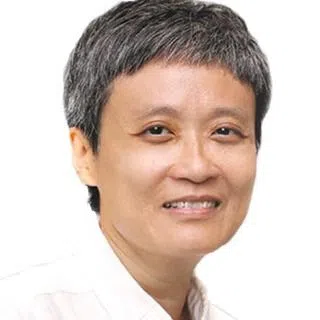
A misjudged joke which ended up linking footballer Kylian Mbappé to Mao Zedong triggered a public relations crisis. Lianhe Zaobao associate China news editor Sim Tze Wei explains how this episode sends a stark signal about the boundaries of political satire and Chinese market power.
29 Oct 2026
Politics

(Edited and refined by Bai Kelei, with the assistance of AI translation.)
French football star Kylian Mbappé rarely misses on the pitch, but the Real Madrid forward will certainly regret the spectacular own goal he scored in China.
A seemingly harmless joke about a “Chinese dictator” has triggered a major public relations crisis. Within 24 hours, two names that few would expect to see linked — Mbappé and Mao Zedong — had set off a firestorm in China.
On 27 October, Chinese brands including Eastroc Beverage, Mengniu and Milkground announced that they were ending their partnerships with Mbappé. The controversy soon reached the Chinese foreign ministry’s regular press conference. State broadcaster CCTV reportedly suspended its broadcasts of Spanish La Liga matches and pulled related advertisements. Chinese social media platforms also imposed restrictions, while table tennis star Fan Zhendong, who plays in Europe and had previously mimicked Mbappe’s goal celebration, swiftly unfollowed the footballer.
The speed of China’s response was striking. From netizens and private companies to state media and government departments, the reaction was remarkably coordinated, with all seemingly showing Mbappé the red card for the same reason: zero tolerance for acts that hurt national sentiment. A Guangming Daily video drove the point home with a bold caption: “Zero tolerance for insulting China’s late, great leader.”
Unintentional slip sparks online storm
So what exactly did the football star, nicknamed “Donatello” (a reference to a character from the cartoon Teenage Mutant Ninja Turtles), do?
In an online video subtitled in Chinese, Mbappé was asked which internet meme about himself made him laugh the most. He replied in French, “There are so many. The one that makes me laugh the most is when somebody took a video of someone, some Chinese dictator, and photoshopped my face onto it. I use that meme quite often when I play PlayStation games online with my friends.”
Mbappé did not mention “Mao Zedong” but referred to a “Chinese dictator”. The video’s creators had also superimposed his face on an image of Mao, complete with the late leader’s hairstyle and Zhongshan suit.
Chinese football news platform Dongqiudi circulated the material in China but said it did not translate the remarks because they “involve harm to China and its people”. As a result, some Chinese netizens initially had no idea what Mbappé had actually said, even as they were bombarded with posts about the backlash against him.
Madrid Zone, an unofficial account tracking Real Madrid news, reported that the production team behind The Bridge, the programme in which the remarks appeared, had apologised for the controversy. It explained that the footage was behind-the-scenes material recorded in April.

Mbappé is seen laughing heartily in the clip. His failure to name Mao was most likely due to his unfamiliarity with Chinese politics and history. He may genuinely have thought the joke harmless. But a joke’s intended meaning and the way its audience interprets its historical and political implications could be worlds apart.
Interestingly, Mbappé himself had been branded a “dictator”. During his time at Paris Saint-Germain, netizens mocked what they saw as his excessive influence over the club, comparing him with figures such as Mobutu Sese Seko, the former leader of what is now the Democratic Republic of the Congo. The jibes suggested that Mbappe could even dictate which players stayed or left. French teammates also jokingly called him “Mobutu”.
Mbappé did not find the comparison funny. He said there was nothing amusing about being likened to figures responsible for historical suffering, adding that such jokes reflected a “lack of political awareness and cultural empathy” among some people.
For its part, China’s official assessment of Mao’s legacy does not entirely rule out criticism. In June 1981, the sixth plenary session of the 11th Central Committee of the Chinese Communist Party (CCP) adopted the “Resolution on Certain Questions in the History of Our Party since the Founding of the People’s Republic of China”. While affirming Mao’s historical standing, the resolution acknowledged that he had made serious mistakes during the Cultural Revolution. It nevertheless stressed that his “contributions are primary and his mistakes secondary”.
But a formal historical resolution is a far cry from an irreverent political meme. Publicly mocking a deceased CCP leader is bound to touch a sensitive nerve. While not every Chinese citizen may be able to explain precisely what was objectionable about Mbappé’s remarks, ridiculing the image of a great leader is taboo in China.
Cultural divide over political humor
Get the ThinkChina Weekly Newsletter
Insights on China, right in your mailbox. Sign up now.
By subscribing, I agree to SPH Media's Terms and Conditions and Privacy Policy.
“Dictator” is itself a disparaging political label. In 2000, during an interview with then Chinese President Jiang Zemin on the CBS television programme 60 Minutes, the host Mike Wallace asked him directly, “You are the last major communist dictatorship in the world. Am I wrong?” Jiang laughed and replied in English, “Of course. This is [sic] big mistake.” Jiang firmly rejected the label and defended China’s political system.

China and the West have long differed sharply over what constitutes acceptable political humour and where the boundaries lie. Western countries have their own taboos too, but the limits vary from one country to another, as does the range of subjects considered off-limits.
In France, poking fun at politicians is part of public life. Political satire is seen as an expression of free speech, and humour as a way of challenging authority. The tradition ranges from comedian Laurent Gerra’s impersonations to the satirical cartoons of Charlie Hebdo.
Mbappé may have assumed that a “Chinese dictator” was fair game for a joke. But the complex symbolism Mao carries in China may have been far beyond what he imagined.
Western media outlets including the BBC recently reported a resurgence of interest in Mao among Chinese online communities. Younger generations have embraced him as “Teacher Mao”, while the Selected Works of Mao Zedong has topped the annual borrowing list at Tsinghua University’s library.
Apologies fail to calm fans
As the backlash mounted, Mbappé and Spanish La Liga president Javier Tebas apologised on the same day. Real Madrid, which did not issue an explicit apology initially, followed suit a day later.
Many Chinese netizens were unconvinced. They said the apologies showed no genuine remorse, only fear of losing commercial gains. French newspaper Le Monde reported that Mbappé’s sponsorship deals with two Chinese brands were worth a combined 50 million RMB (about US$7.5 million).

At the Chinese foreign ministry’s regular press conference on 28 October, a spokesperson told Agence France-Presse that China “has taken note of the apologies made by those concerned”, signalling that the fallout is likely to subside.
From key supply chains and rare earths to access to its vast consumer market, China has more leverage than ever to respond to what it sees as foreign insults. For foreign companies and individuals, the margin for error is shrinking.
A market of 1.4 billion people has enough clout to make even the biggest commercial stars think twice. That market power may not necessarily translate into soft power and win China greater international goodwill, but this episode sent a clear message to anyone interested in earning renminbi — take a good look at whose face is printed on it.
This article was first published in Lianhe Zaobao as “姆巴佩一记乌龙球吃了中国的红牌”.
Related: Confucian new tianxia order: Humaneness to restrain nationalism and save globalisation | [Photo story] The Cultural Revolution: A Taiwanese reflects
Popular This Month
Get the ThinkChina Weekly Newsletter
Insights on China, right in your mailbox. Sign up now.
By subscribing, I agree to SPH Media's Terms and Conditions and Privacy Policy.