Why China and the US need each other to compete
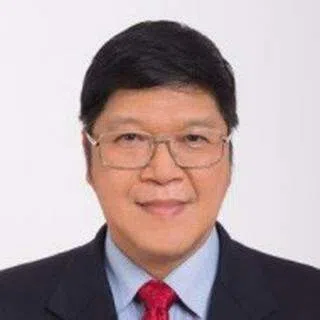
Far from heading towards complete decoupling, China and the US remain locked in a relationship where mutual dependence underpins both competition and cooperation, reshaping the future global order, notes academic Tan Kong Yam.
6 Aug 2026
Politics

(Edited and refined by Candice Chan, with the assistance of AI translation.)
In recent years, Sino-US relations have frequently been described as entering a “new Cold War”, with many arguing that the two countries are heading towards comprehensive decoupling. However, this is not an accurate assessment of how things really are.
Today’s Sino-US relationship is neither like the two isolated blocs of the Cold War between the US and the Soviet Union, nor an “economic divorce” that can be easily accomplished. What will truly shape the future international order is a new reality: the greatest strategic advantage enjoyed by both sides is founded precisely on their deep dependence on one another, in what might be called the “Sino-US domination-dependence paradox”.
The US continues to command the world’s most advanced semiconductor design capabilities, electronic design automation (EDA) software, cutting-edge AI chips and key manufacturing equipment, maintaining its lead in technological innovation. China, meanwhile, possesses the world’s most comprehensive manufacturing system, accounts for around 90% of global rare-earth refining capacity, and occupies a central position in numerous critical industrial supply chains. The US cannot easily free itself from Chinese manufacturing, while China still depends on international markets, advanced technologies and the global financial system.
While both countries seek to reduce their reliance on each other, every round of “de-risking” policies has tended to encourage the other side to accelerate indigenous innovation and industrial upgrading, thereby creating new competitive advantages.

As a result, the world has neither returned to the era of high globalisation nor entered a phase of complete decoupling. Instead, it is moving towards a new pattern of managed interdependence. The recent summit between US President Donald Trump and Chinese President Xi Jinping illustrates that both sides recognise competition can continue, but that allowing it to spiral out of control would impose unbearable economic and political costs. The real focus for the future is therefore not whether competition will persist, but which side will be able to secure greater strategic dominance within a relationship of mutual dependence.
A new pattern of competition
This competition is no longer confined to military power, but now revolves around bottlenecks in global industrial supply chains, core technologies and technological ecosystems. The US leverages advanced chips and critical technologies to preserve its advantage, while China relies on its manufacturing strength and control over key minerals to expand its global influence.
Although US export controls on advanced semiconductors have increased pressure on China in the short term, they have also spurred many AI companies such as Huawei, Semiconductor Manufacturing International Corporation (SMIC), and ChangXin Memory Technologies (CXMT) to speed up breakthroughs. This shows that sanctions do not necessarily halt innovation, but might change where innovation takes place.
If semiconductors represent America’s “strategic sword”, rare earths are one of China’s most important strategic bargaining chips. In recent years, Beijing has adopted refined export management rather than imposing comprehensive embargoes. By maintaining limited supplies while ensuring continued global dependence on Chinese production, it has turned the supply chain itself into a new geopolitical instrument.
The same logic is reflected in the area of energy. The Iran issue is not only about Middle Eastern security, but also about China’s energy security and America’s global influence. Much of China’s imported oil still passes through strategic maritime chokepoints such as the Strait of Hormuz, while the US maintains its longstanding maritime dominance. Technology, energy, supply chains and finance have become increasingly intertwined, so that the core issue in future international competition is no longer who can completely free itself from the other, but who takes the most irreplaceable strategic high ground within this web of interdependence.

The competition over energy further reveals the essence of the Sino-US domination–dependence paradox. Rising international oil prices not only increase petrol prices and inflation in the US, raising financing costs, but also undermine consumer confidence, forcing Washington to weigh domestic economic and political costs before escalating geopolitical conflicts. Meanwhile, China has continued to expand its strategic petroleum reserves while actively diversifying its sources of energy imports to strengthen its resilience against external shocks. This illustrates that, in the era of globalisation, energy is both a strategic weapon and a shared constraint; no country can be completely free of mutual dependence.
Pax Silica versus WAICO
For this reason, Sino-US competition is not a traditional zero-sum game. Rather, it is a long-term contest within a deeply interconnected global system, in which both countries continually adjust their dependencies, strengthen their comparative advantages and reduce their strategic vulnerabilities. The notion that “dominance is built upon dependence” has become one of the defining characteristics of international competition in the 21st century.
And if the 20th-century international order was built primarily upon military power, maritime supremacy and the US dollar system, then great power competition in the 21st century is increasingly centred on complete technological ecosystems. Artificial intelligence depends on advanced semiconductors; semiconductors rely on critical minerals; AI factories require stable energy supplies, data centres and high-speed networks; and advanced manufacturing depends on robotics, cloud computing and digital infrastructure. These elements are mutually reinforcing, together forming the new foundation of national competitiveness.
This emerging international order may be described as the Pax Silica. Unlike the Pax Americana, which was built around military alliances and free trade, the Pax Silica focuses on semiconductor supply chains, artificial intelligence, cloud computing, cybersecurity, digital infrastructure, technology standards and industrial ecosystems. Future international influence will no longer depend solely on who possesses a leading technology, but on who is able to dominate the entire technological ecosystem.

Get the ThinkChina Weekly Newsletter
Insights on China, right in your mailbox. Sign up now.
By subscribing, I agree to SPH Media's Terms and Conditions and Privacy Policy.
Within this framework, global AI competition is gradually evolving into a contest between two technological ecosystems. China is promoting the World Artificial Intelligence Cooperation Organization (WAICO), emphasising openness, cooperation, capacity building and digital inclusion, particularly for countries in the Global South. It seeks to expand AI applications in healthcare, education, agriculture and smart cities while advocating respect for different development paths and digital sovereignty. The US, meanwhile, is advancing a version of the Pax Silica by building trusted semiconductor supply chains, secure cloud platforms, cybersecurity frameworks, and export control mechanisms, thereby seeking to reduce dependence on China while maintaining global technological leadership.

The fiercest arena of future competition is therefore likely to be not between China and the US, but across the Global South. Many developing countries hope to gain access to China’s relatively affordable and mature digital technologies, while also maintaining access to the advanced technological networks led by the US and its allies. As a result, most countries are unlikely to simply choose sides — they are more likely to pursue a “dual-track” strategy, promoting digital transformation under the WAICO framework while simultaneously taking part in advanced manufacturing and high-tech cooperation within the Pax Silica system.
The high cost of full-blown rivalry
Beyond semiconductors and rare earths, active pharmaceutical ingredients (APIs) also represent an important potential strategic advantage for China. China has long been a major global supplier of APIs for generic medicines. Although Beijing has not weaponised pharmaceutical supplies, this industrial advantage has already prompted the US to promote the reshoring of pharmaceutical manufacturing. Nevertheless, global supply chains that have developed over several decades cannot be fully reconstructed within a short period.
The financial sector likewise illustrates the changing nature of competition. America’s most powerful strategic instrument is not its aircraft carriers, but the international financial system dominated by the US dollar. The dollar enables the US to freeze overseas assets, restrict international payments, impose financial sanctions and influence global capital flows. In the face of this, China has not sought to challenge the dollar’s dominance directly. Instead, it has adopted a gradual strategy by building parallel financial infrastructure, including the Cross-border Interbank Payment System (CIPS), the digital renminbi, the mBridge multi-central bank digital currency platform and local-currency swap networks. China’s objective is not to replace the US dollar immediately, but to expand alternative options over time and reduce the world’s dependence on a single financial system.

More importantly, this deep interdependence across technology, energy, supply chains and finance also reduces, to some extent, the likelihood of a full-scale conflict between China and the US. During the Cold War, strategic stability rested upon nuclear deterrence through mutually assured destruction. Today, the two countries are gradually developing a new form of strategic deterrence based on mutual constraints across supply chains, technology and finance.
The US controls advanced semiconductors, core equipment and the dollar system, while China commands critical manufacturing capabilities, rare-earth resources and key supply chains. Both possess strategic tools capable of imposing high costs on the other, but using them to the fullest extent would also inflict severe damage upon their own economies.
Consequently, competition between the two countries is likely to endure over the long term, but they are also more likely to maintain cooperation amid competition and preserve channels of communication to prevent rivalry from escalating into uncontrolled conflict.
An era of managed rivalry
The future international system will neither return to the two opposing blocs of the Cold War nor recover the highly globalised order of previous decades. Instead, it will enter a new phase of managed interdependence. Great power competition will continue to deepen, technological ecosystems will become increasingly fragmented, global supply chains will become more politicised, and international financial networks will grow more diversified and fragmented.
Even so, comprehensive decoupling remains difficult to achieve because the greatest strategic influence enjoyed by both China and the US is rooted precisely in their continued deep participation in the global system. The key in future competition will therefore not be who can eliminate dependence altogether, but who can more effectively manage dependence, exploit dependence and transform dependence into strategic advantage.
Over the coming decade, the world is therefore unlikely to be dominated solely by either the US or China. Instead, it is more likely to enter an era of managed rivalry, characterised by intense competition, mutual checks and balances, and reciprocal constraints. In this new era, dominance will derive from dependence, while dependence itself will become one of the most important sources of strategic power.
Related: From rule-taker to rule-maker: China’s AI challenge to US dominance | The new AI blocs: Are China’s WAICO and America’s Pax Silica splitting the tech world?
Popular This Month
Get the ThinkChina Weekly Newsletter
Insights on China, right in your mailbox. Sign up now.
By subscribing, I agree to SPH Media's Terms and Conditions and Privacy Policy.