Salt-baked chicken and tea-smoked ham: Songyang’s unforgettable flavours
A literary trip to southern Zhejiang unlocks the sensory soul of Songyang — a paradise where ancient mountain villages blend rich cultural history with unforgettable delicacies. Writer Shen Jialu uncovers the rare, centuries-old art of tea-smoked ham and more.
26 Jun 2026
Culture
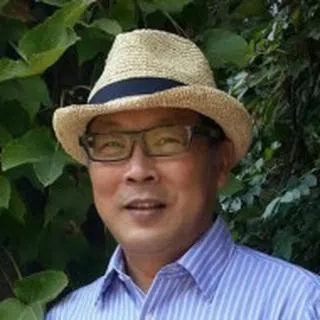

(Photos by Shen Jialu.)
I attended a literary event in Songyang in southern Zhejiang, and for days after I got back to Shanghai, every time I checked my phone, short videos about Songyang kept popping up: the ancient villages of Chenjiapu, Yangjiatang, Songzhuang, Youtian, Xikeng… Grandiose descriptions exploded like fireworks — “a forgotten pearl”, “the last hidden paradise of Jiangnan”, and “the Potala Palace of Songyang”.
Yet short videos are limited in what they can hold. If you have enough time, I suggest staying at a guesthouse for a few days and following your instincts as you seek your own utopia.
Chat with local residents over tea, and sit at a cliffside café watching clouds drift across the sky, listening to cascading streams and partridges calling to one another. Such tranquil beauty has the power to penetrate the soul.
Charm, vitality and culture of ancient villages
I feel there are three interesting points about Songyang’s ancient villages. The first is their rustic charm and undulating terrain with dramatic changes in elevation. Layer upon layer of terraced fields resemble the crackled glaze of Ge ware ceramics (哥窑), every inch of land devoted to tea and grain cultivation.
On the mountainsides are farmhouses with yellow earthen walls, red-grey tiled roofs, and small courtyards, doors and windows, while large pickling jars squat in the corners. Smoke curls from chimneys, vegetable trellises and bean frames surround the homes, wild flowers bloom among trees, and paths meander the landscape, paved with cobblestones as large as sweet potatoes.

The steep ascent recalls the scene depicted by Xu Beihong in his painting Ba People Fetching Water (《巴人汲水》). Anyone with their eyes open would be able to identify medicinal herbs and wildflowers at their feet.
The second point is the vitality of village life. Many ancient villages still preserve ancestral halls, community temples, century-old shops and ancient courier stations. If one visits during a local festival, it is possible to enjoy Songyang Gaoqiang opera and the Twin Dragons of Rainmaking (行雨双龙) performance.
The third delight is cultural refinement. In ancestral halls and grand walled compounds are exquisite examples of carved brick, wood and stone. But how many people can truly read the couplets and plaques and decipher the messages hidden within?
In recent years, under the concept of empowering rural development through culture, Youtian village established the “Songyang Translators’ House” in Wangsong Hall, a Qing-dynasty building. Translators from more than a dozen countries have stayed there, drawing upon Songyang’s abundant creative energy to complete their works. The event I attended was the opening of the Zhou Kexi Literature Museum in Chi’an village, dedicated to the renowned Shanghai translator.
In the past, Songyang was famous for its three pillar industries built on tea leaves, tobacco leaves and mulberry leaves, as merchants gathered and the sounds of scholarly study filled the air.

One evening, county party secretary Liang Haigang took us on a night tour of Songyang old street. Moving confidently through the Confucian Temple, City God Temple, Wang Clan Ancestral Hall (王氏祠堂), Tanglan Guild Hall (汤兰公所) and the former residence of academic He Liankui, he recounted the county’s history, while a magnificent scroll painting depicting Songyang’s prosperity slowly unfolded before my eyes.
Delicacies along the old street
Prosperous commerce naturally led to thriving teahouses and restaurants. Several years ago, while travelling through Lishui on an assignment, I only skimmed the surface and retained little impression of the local food. This visit to Songyang was far more rewarding.

One specialty is salt-baked chicken, a dish with over a century of history. The chef begins with a free-range chicken caught in the mountains. After cleaning it, the bird is hung to air-dry. Huangjiu rice wine is poured into the cavity to remove any gamey smell and enhance the aroma. Coarse salt is rubbed inside and out, while mushrooms, spring onion knots and chunks of ginger are stuffed into the cavity, as the chicken is tightly wrapped in cotton paper.
A large iron wok is prepared with a thick layer of salt at the bottom. More than ten chickens are arranged inside, covered completely with additional coarse salt and sealed beneath a lid. Firewood fuels the stove, and the flames flicker and curl, releasing waves of fragrance. After an hour, the chickens are removed, carved and served. Their golden colour, crisp skin and tender meat compares well to Guangdong’s famous salt-baked chicken. Several shops on the old street specialise in the dish, which has now been included on Lishui’s list of intangible cultural heritage.
Surrounded by mountains rich in medicinal plants, Songyang is an important producer of traditional Chinese herbs. “Three-leaf green” (三叶青, Tetrastigma hemsleyanum), Solomon’s seal (黄精, polygonatum) and fiddle-leaf fig are revered as the “three horse carriages”, while fritillaria, dendrobium, honeysuckle and magnolia bark are known as the “Four Heavenly Kings”.
For my very first meal in Songyang, I had a local delicacy where Solomon’s seal is simmered into a golden broth, sweetened with honey, into which poached eggs are added. Songyang chefs are remarkably skilled at poaching eggs — the yolk looks like dried abalone, while the surrounding egg white looks like the skirt of a soft-shelled turtle. Traditionally, it was only prepared by a mother-in-law when a prospective son-in-law visited.

Doesn’t Songyang produce mulberry leaves? Indeed it does. Twice, we ate deep-fried battered mulberry leaves. The green, peach-shaped leaves looked as though dusted with fresh snow, and tasted crisp and fragrant — far more refined than Japanese tempura.
The day we were in Chi’an village, the host of CCTV programme Three Meals, Four Seasons (《三餐四季》) Sa Beining was also at Songyang old street with episode guests — academic Li Shu and actress Chen Hao — in search of good food, laughing as they ate hand-pulled noodles, Scholar’s Cakes, vegetable rice and salt-baked chicken. But they missed out on the Solomon’s seal with poached eggs and the deep-fried mulberry leaves — what a loss!

ThinkCulture Newsletter
Your fortnightly dose of Chinese history, culture, and cartoons. Sign up now.
By subscribing, I agree to SPH Media's Terms and Conditions and Privacy Policy.
Before the Qingming Festival, new tea reaches the market very early. Brewed with mountain spring water, the taste is sweet and refreshing. Songyang has long supplied fresh leaves for Longjing tea, and there are also two other teas that cannot be missed.

The first is Dragon Boat Festival tea (端午茶, Duanwu tea), dating back to the Tang dynasty. It is brewed from patchouli, wild chrysanthemum, mulberry leaves, sweet flag, litsea, fish mint and other herbs. It is said to clear heat, detoxify the body and quench thirst, and locals call it the “tea for a hundred ailments”.
The other is Xieli tea (歇力茶, lit. resting strength tea), a strengthening brew that contains various local herbs. It is available along the old street as inexpensive sachets, which can be brewed and drunk straightaway at home. A dish of stewed pig’s trotters tastes delicious when cooked with Xieli Tea.
We also ate qingtuan (清明粿 or 青团, Qingming green rice dumplings), Songyang spring rolls (松阳薄饼), wild ramie shoots and stuffed radish fritters (灯盏盘 or 灯盏糕, lit. lamp cakes) — a snack similar to Shanghai’s fried radish cakes (油墩子). Sa Beining, did you guys really not come across this?
Tea-smoked ham
On our final day, we dined at a tea-themed restaurant near Yanqing Temple Pagoda. The restaurant specialises in incorporating tea into its dishes and has developed more than 20 tea-based creations, including tea-infused pork ribs, green tea pancakes, tea-leaf Tai Chi soup and black-tea beef ribs. I shall not discuss those here, but focus only on the tea-smoked ham.
I had previously come across the term “tea ham” (茶腿) in books, with the best tea-smoked ham being produced in Pujiang, Zhejiang province. Tang Tiehai, a senior member of the Shanghai Writers’ Association, once told me that tea-smoked ham is a more delicately flavoured form of Jinhua ham, best savoured in thin slices, paired with Wuyi rock tea. I later found references to it in the menus of artist Zhang Daqian and the diaries of writer Lu Xun, yet it was rarely seen on the market. To my surprise, I came face to face with it in Songyang.

Led by Chen Jinfu, an heir of this intangible cultural heritage, we toured the workshop. Pig trotters were stacked waist-high in layers beneath a blanket of snow-like sea salt. The smoked hams, blackened from the curing process, hung quietly in a dry warehouse as they continued to mature. I touched one and lifted my fingers to my nose. The aroma was distant, ancient and refined.
I also ventured downstairs to explore a hidden smoking room. Designed to replicate the conditions of a traditional rural kitchen, it featured several small doors for ventilation. Rows of hams hung overhead, while tea leaves and tea branches smouldered on the ground below. Wisps of blue smoke drifted through the room, filling it with a pungent scent, as a worker emerged from the smoke chamber with reddened eyes.
Chen explained that tea-smoked ham is made from the hind legs of locally raised liangtouwu pigs weighing at least 30 catties (15 kilograms), which have been allowed to roam the mountains for more than a year. After being cured with sea salt, they go through shaping, smoking, fermentation, turning, washing and sun-drying. The entire process takes more than three years, by which point the ham has lost half its original weight. The finished product has glossy black skin and is shaped like a pipa lute. When sliced open, it reveals a rich cured aroma and a colour resembling aged rosewood.

That evening, we had poached eggs stewed with smoked ham, and preserved pork steamed with tea-smoked ham. The former was excellent; the latter, however, felt like overkill. The preserved pork was unnecessary — the tea-smoked ham could have done with a solo performance.
Chen has been making ham for over 20 years, and is known as “Brother Ham”. I asked him whether tea-smoked ham could be eaten uncooked.
“Yes,” he replied decisively.
Then I asked, “Has your product entered the Shanghai market yet?”

He said several owners and executive chefs of Shanghai’s prestigious Black Pearl-ranked restaurants had already sampled it and given favourable reviews.
The key issue, however, is price. A single tea-smoked ham costs over 2,000 RMB (US$295), which is not exactly cheap.
However, he said confidently, “Tea-smoked ham is like rare earths. Add a few slices at a critical moment, and the flavour of chicken soup, duck soup or meat broth is instantly elevated. As for entering the Shanghai market, I’m ready.”
This article was first published in Lianhe Zaobao as “茶熏火腿”.
Related: In Tokyo, I served jiaozi — and found a way to belong | Fuzhou: Where every street tells a story and every bite delights
Popular This Month
ThinkCulture Newsletter
Your fortnightly dose of Chinese history, culture, and cartoons. Sign up now.
By subscribing, I agree to SPH Media's Terms and Conditions and Privacy Policy.