
[Video] Hsu Chung-mao: Why I am both Taiwanese and Chinese
Taiwanese historical photo collector Hsu Chung-mao had a front-row seat to history as a war journalist, and became part of it himself when he was injured during the 1989 Tiananmen incident. Decades spent collecting and colourising rare photographs have shaped how he sees the past — and why he sees himself as both Taiwanese and Chinese. In a conversation with ThinkChina’s Charlene Chow, he reflects on history, identity and the twists of fate that have shaped his journey.
19 Jun 2026
Culture
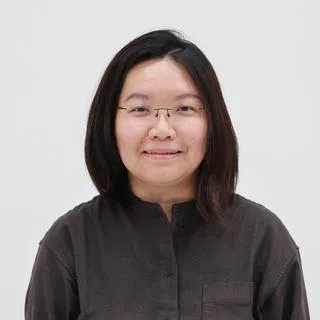

(All photos courtesy of Hsu Chung-mao unless otherwise stated.)
Host: Charlene Chow Interviewee: Hsu Chung-mao
Charlene Chow (Chow): Hello and welcome to ThinkChina Conversations. Today we’re happy to be chatting with historical photo collector and author Hsu Chung-mao, here in his Taipei studio. In the 1980s, Mr Hsu was a China Times reporter. He covered world events like the Israel-Palestinian conflict and the civil wars in Nicaragua and El Salvador. For a time, he was the Southeast Asia correspondent in Singapore. In June 1989, he even got badly injured covering the Tiananmen incident in Beijing. Now, as a renowned historical photo collector, finding, colouring and sharing old photos, making history come alive is his life’s mission. Thanks Mr Hsu for sharing your time, and it’s been a pleasure reading your photo stories on our website.
Hsu Chung-mao (Hsu): Thank you for coming all the way to Taipei. It’s a long way. I feel honoured to have you here in our office.
Chow: Thanks very much. I believe you started collecting old photos in 1995. What captivates you about the medium?
Hsu: The reason I began to collect photos around 1995 was because 1995 was the 50th anniversary of the Second World War. Japan, at least at that time, was the most advanced country in terms of cultural activities and publications. So I went to Japan to learn what they were doing for this special occasion. And I got to know several publications they had done beautifully, for example, Mainichi Shimbun: 20th Century Japan. It was a thick illustrated book with all these journalistic photos, beautifully executed. So I got the idea that maybe we should do something similar.

Catching the collector’s bug
So I went back to my company, which was China Times (《中国时报》), and I was special assistant to the editor-in-chief, so I asked Mr Fan, our editor-in-chief, whether or not we should do something similar? And he said why not? Because it was also the same 50th anniversary of the founding of China Times. So this was a good occasion with very good timing, because if you want a company to spend big money on something, you better have a special reason. And the best reason is for the company to celebrate their own birthday. So these two 50th anniversaries — of China Times and of the Second World War — coincided in good timing. So they said ok, let’s do it. Let’s do a book. So the budget was agreed and approved, so I went to Japan again.
We went to several locations to buy actual photos. One of these important locations is Jimbocho. It is an area in Tokyo’s Kanda district where most dealer shops are located. So I became a frequent goer to that special spot for years. I think that was more or less the same time I started collecting actual photos from Japan, but that was only the beginning. Later on there was much more, of course.

Chow: So that’s when your interest grew and you felt that you wanted to expand your collection?
Hsu: Right. And later on I left my company around 2000. And what would I do after leaving the company? There’s no one paying me. I had to pay for everything myself. So there was this challenge of financial circulation. If I spend so much money to buy these rare books, and what I mean by “rare books” is… because rare photos are part of the rare books. They are in the same category of the rare book-dealing community in the world. So when I use this money… this big amount of money to buy rare photos and rare books, where can I get financial income in return? Well, that’s a big challenge. So inevitably I need to shift my career a little bit from pure writing to something else.
And what was that? There are two possible ways: one is to write picture stories because writing picture stories gets you better pay for less work. Because such a big space will be filled with photos, beautiful photos and people enjoy seeing beautiful photos rather than so many words. No one can really tolerate reading a long article, but they will enjoy seeing beautiful photos, even if there are many. Two is to hold exhibitions. So if I want to write a beautiful photo story with fascinating photos, I need these photos to be really unique. Irreplaceable. So irreplaceable that even the big newspaper companies may not have them. You see that’s a big challenge, right?
Because if you’re saying you’re offering something that even the big companies cannot reach in standard, that’s a really big challenge. You need to be not only cash-rich… or maybe not so cash-rich, but somehow cash-rich. You need to have enough financial backup, and you need to have good insight as to what good photos are. So these are the challenges.
A good photo story: ‘It’s like paper movies’
Two is to hold exhibitions. Holding an exhibition is more complicated than writing a good photo story because to write a good photo story, you need to have the skill to combine words with photos. And that’s not what everyone can do because there’s a special rhythm between words and photos. It’s like paper movies. It’s like paper movies, if I put it rightly.
And number two is if you hold an exhibition, it’s more than just writing a picture story because for writing picture stories… before it was on the papers and magazines, unlike the digital picture story today. Then you need at least 60 to 100 photos to hold an exhibition — historical photos. And to make a historical photo exhibition successful, you need to have the ability to display a series of photos not only in chronological order but in order of historical significance. Sometimes it’s not necessarily… It’s a unique technique to not only hold an exhibition but edit a photo book. It’s like repeating to make your… the common memory of a society, the common memory of a country return before your eyes.

And to edit the memory of a nation, the memory of society, you need to reveal that memory in proportion to the common understanding, and that’s a big challenge. That itself is almost an act of creating. It’s artistic creativity, artistic creation, and very few people can do that. I think to hold an exhibition, to curate a good photo exhibition, is something like that. You need to have just the right emphasis on something people have in common memory. I don’t understand… I’m not sure whether people can understand me, but maybe that’s not so difficult to understand. So that’s very good training for me in every way.
So you see, when I collect photos, that means I need… Of course, we have digital refining today. In those days it was much harder, but now we use digital techniques to refine photos. We can even colourise it with a digital pen, stroke by stroke. And then we study the content to give them some academic significance or meaning before putting it together into another story to tell others, to tell our audience. And then we publish books. So we have the collecting of photos, we have research functions, we have exhibition activities, and we have everything that you will call a museum. Well this is a reason that it’s like self-training all the time. And here you would come to this point where I have a small museum myself.
Affinity with Singapore: one of my favourite old photos
Even when it’s this small, some of the exhibits are really fascinating. For example the one you see there: the coolies from Xiamen. That one, yes. The coolies from Xiamen to Singapore. We once had a photo story in ThinkChina. I think your colleague gave a very good title to the article: From Chinese Coolies to Singaporeans. That’s a very good title.
I remember Lee Kuan Yew once said… He kept emphasising, especially to the Chinese leaders, that we were once peasants and labourers from mainland China. If we could do so well, I see no reason why you can’t do equally well or even better because the people you descended from were from higher educational backgrounds. So he emphasised that several times, and many Singaporeans know that, especially the last generation that heard his speech 30 years ago. He kept saying that at that time. So the sentence is: Yesterday’s poverty has become today’s pride. This is a beautiful sentence actually.

And I remember I put this photo story on ThinkChina, and I think it’s one of the most read photo stories on ThinkChina since ThinkChina began. I even remember that Madam Ho Ching, the wife of former Prime Minister Lee Hsien Loong, put that article in her own Facebook. So that was some of the repercussions. And I even had an enquiry from Singapore, through ThinkChina, that different business companies wanted to use the photo and wished to buy the copyright from me, including the Cathay Group. I don’t know.
But even one time when I went to the Asian Civilisations Museum, I saw the tour guide using a print of that photo to show the visitors. Without my consent. But that’s okay. It’s for a good cause anyway. It’s for a good cause anyway. I don’t mind. I don’t mind, really. I also feel happy that my effort and contribution were recognised and utilised by people who needed it, and for educational purposes and for promotional purposes.
Actually the textbook publisher — I remember it was several years ago — also bought several pictures from me to put in their textbooks. They were entrusted by the Ministry of Education to publish textbooks. So I’m kind of happy and perhaps a little bit proud that some photos, fascinating photos, are used in Singapore school textbooks. That’s an achievement for Taiwan, for Taipei and for our studio. I would be lying to you if I say I don’t feel proud. I am.

Entering the mainland market: right place at the right time
Chow: For the history photo books that you publish, you actually have two labels: one is under the Hsu Chung Mao Studio in Taiwan and the other one is Qin Feng Studio in mainland China. Do you notice that there are different receptions to the books in the different places?
Hsu: At the beginning I used Qin Feng in mainland China for several reasons. One is that I got injured in Tiananmen, so I’m not sure whether they would like to see my name as a writer. But of course that reservation was meaningless. I think they know everything. So I would say it’s kind of for fun that I use a pen name in mainland China: Qin Feng, which sounds very Chinese, I mean mainland Chinese. You know, the southern Chinese and the northern Chinese are a little bit different. In southern Chinese… Mainland Chinese you have Qin Feng, Guoxiong, or something.
In southern Chinese, Hokkien, you see Pekha or Yuzu or Fucai or a southern Chinese name, you know? But for northern Chinese I use Qin Feng, which is quite northern actually, so I took it as for fun. So I use that name to publish many books. I think all together the sales were over 1 million copies. Because the first time I published my picture books…very small books, this small.
It was poor quality paper published by 山东画报出版社, Shandong Picture Book Publishing House. The title was《你没见过的历史照片》, Historical Photos You’ve Never Seen Before. There were three books, small little books, very thin, about 60 pages.And immediately it was a hit in the Beijing Sanlian Bookstore. I think it was the number one bestseller for three months. So wow, I say that was because China at the time, the Chinese mainland at the time, was quite closed, I mean inward-looking.
There was not a wide connection between the outside world and mainland China. And they were eager. They were looking for changes. So it was a good time for me to enter the mainland Chinese book market, set up my own brand and let people see what they haven’t seen before. And these are the photos that I brought with me into the mainland Chinese society, especially photos of the Republican era (民国时代).


They haven’t seen that because somehow they’re still trapped in the old education that it was a dark, horrible, brutal society. And now they know there’re many sides to that society: one is dark, one is not so dark, and there was another side which was quite progressive. So they have a balanced understanding of that time period. So I just came into the book market, to the publishing area in mainland China, just at the right time.
Later I used the brand Qin Feng Studio, then I participated in the rare book market. Because later there was a company engaged with the sales of rare photos and rare books, and I saw… There was also an investment company interested in investing in rare photos, so they contacted me because they wanted to buy something from me. So I said wow, that’s a good opportunity for me to enhance my financial ability. So I managed to sell some rare photos to them, some very good ones. And I was very surprised by the sky rocketing prices and the rising prices of everything in mainland China, including this one.
Very Taiwanese, very Chinese
When you see me as a Taiwanese collector, in that sense I’m not defined by what people normally label “Taiwanese”, like Taiwanese and Chinese. And there was a confusion in the political sense. But for me that confusion does not exist at all. I’m Taiwanese. At the same time I’m Chinese. I’m very Taiwanese and I’m very Chinese.I’m very Taiwanese in the sense that I collected the most valuable and most expensive Taiwanese historical photos. I’m very Chinese in the sense that I collected the most valuable historical photos of Chinese history, of China. So I don’t find these two positions contradicting each other in any way. So in a way I can adapt to the demand of the market of my potential buyers in due time. So there was no confusion, there was no conflicting point, at all.
So when I publish books in Taiwan, then I have an emphasis on the Taiwanese market as to what they want. And when I publish books… When I say “publish”, I don’t mean I’m a publisher in China. But I’m a writer, you know? I have to give my material to some publishers for them to publish my books. And of course they will be adapted to mainland Chinese society, and the mainland Chinese will be happy to the degree they can accept your interpretation of history. But they never contradict myself, they never contradict each other, and they certainly do not contradict my direct feeling about my own people and my country in general.
History is also politics
Chow: So probably you feel that history photo books can actually be a good way… like a cultural bridge across the strait?
Hsu: Yes, especially when the bicoastal relations were fine and good. There were no obstacles. There was no difficulty. As you know, the history book is also a political book. A historical book is also a political book because history is also politics: how you see the past is how you define who you are today and how you will foresee the future. So unavoidably, you need to face how the government will see your works and how the government will see your manifestation of the past. But we’re doing okay, except recently when there was stricter control and so we’re kind of stopping our work temporarily. Yeah, I can still do that, but it just requires more energy and effort. And I don’t think I should need to spend so much time on it, even though I’m still selling rare books and rare photos in the mainland Chinese antique market. This is still going on. There is no difficulty, I would say.


Colour makes the world go round
Chow: A little earlier you mentioned a bit about the colouring, that you added this element into your publishing process. Could you tell us a bit more about the ethos behind wanting to colour old photos?
Hsu: Well it’s easy to explain because we’re dealing with different people and cultures. Colours are the key elements. For example, if we have a black-and-white photo of Singapore’s national flag and a coloured one, which one would be more appealing to you? Of course the coloured one. The Singapore national flag in black and white is hardly the national flag. Another thing is food. You have laksa, and you wear kebaya, and you want to see that in black and white? You don’t see the details.
You don’t see the attraction. You don’t see the charming parts. You don’t see the whole idea.You just see the image. You just see the shape.You just see the shadow. And that’s not what we see, you know? Our memory, our living environment and our families are only in colour. That’s why when colour TV made its debut in the world, all of a sudden, very fast, the black-and-white TV was gone. Some people still make black-and-white movies, but that’s for artistic reasons, and occasionally there’s one, but that’s all.


Chow: So for elements like the clothing or facial complexion or maybe the tiles on the roof, which actually is the most difficult thing to achieve?
Hsu: I think it’s human complexion. Because for those things you can tell, right? I mean, you cannot tell what colour to use. Because if I put this colour or that colour for clothing or the roof of a building, any colour can be okay. But if I colour faces or complexions, immediately you know whether it is natural or not. And it’s quite a challenge. For example, a woman’s face. Yeah, she probably wore makeup. But you don’t know how heavy the makeup was. So you obviously have to decide.
It’s actually painting. But of course there are rules. For example, there’re already degrees of shadows in a black-and-white photo, and you can’t change the degree. If this is very dark and that is very bright, you can’t change that. Yes, you can probably change that, but it will look very fake. It’s like painting. It won’t look like a photo anymore. So it’s like painting and you can’t change that. But to a small degree, you have to decide how heavy the contrast of different colours are. That’s skill. That’s artistic skill.
As I said, you have a beautiful woman, and you have to give her some rosy cheeks. You have to decide the makeup and the colour of the hair. Is it purely dark? Or maybe you have to mix it with a little bit of brown? Something like that. You make decisions on it. So my son Brian did it perfectly, and he really did a very good job. So what he did… What he does is to take the oil painting as reference to see how they do it in the oil painting. I mean real oil painting. You can Google that easily today on the internet and see how oil painting does faces, complexions, etc. Brian takes this as reference and does his own job. So there are different considerations to do the job.

A good coffee table book: it takes a village
Chow: But of course making history come alive is not only just the photos themselves but as you mentioned earlier, how you actually put it all together in a story. I think you’ve actually done several coffee table books, which are big works and large format books. So which would you count as one of your greatest works so far?
Hsu: I have good photos all the time because I keep buying them and I keep using them for photo books. There are two books which are very unique because of quality, but I wouldn’t say that can be attributed to my effort or my craftsmanship because it was done by someone else. It was my friend Zhou Qinghui (周慶輝). He’s an incredible artist and photographer. He’s very good with printing quality, so he helped me print several books, which I consider the best. One is Once Upon a Time in Taiwan. The other is The Republic of China and the Second World War. And another one is Owen Jones…a reproduction of Owen Jones’ book. We reproduced that book. It was an antique book. I think these books were actually done by one of the greatest photographers and printers in Taiwan, and it was excellent.
But I wouldn’t say that’s because of me, you know? Yes, of course, I’m the boss, and I decided to ask my friend to work together. And it did…Well, at the end it’s still under my production, I would say. Anyway I’m not the one to go to the factory or the printing house to supervise. He was the one. Even if I had gone to the printing house, I would not have really understood so much. But he did a really excellent job. So I have three books which I consider the best among those published by me. It’s a joint effort, I would say, for a group of people to work together to make it happen.Of course, you can still say that ultimately it’s our publication. It’s our product.
Memories: a photo reel of life
Chow: And of all the people that you’ve come across, dead or alive, who are some of the most interesting characters that you’ve met?
Hsu: When you say “people I’ve met”, do you mean people I’ve interviewed or? There’re several… it means something very different.
Chow: It could be people that you’ve featured in your books or people that you’ve met in your journey as a historical photo collector.
Hsu: There are flashes of memory, you know? People who stay for a very short time in your encounters, in your memory, and people you get along with, whom you’ve worked with for a long time. I don’t find… I think I find them equally interesting.
They’re all very interesting, but not… Honestly, the person who actually influenced me is of course Maggie, my wife, but it’s not part of my job. I’ve been asked frequently, almost frequently, “Who do you find most interesting in your interviews, of the people you’ve encountered? What’s one of the best photos in your collection? Who do you remember the most? Which photo or book do you favour the most?” I have encountered questions like that, but actually that’s not how I feel about myself. No, it’s not. It’s like you’re doing something when you accidentally come across something interesting — either it’s a photo that you open or someone. No, that’s not how it is.

ThinkCulture Newsletter
Your fortnightly dose of Chinese history, culture, and cartoons. Sign up now.
By subscribing, I agree to SPH Media's Terms and Conditions and Privacy Policy.


It’s a continuous process of adventures. You keep meeting interesting people. You keep seeing interesting photos. You keep experiencing new objects, visions. So it’s a continuation of experiences rather than picking something unique.
Everything is unique. Otherwise it would not be an adventure. It’s not like a movie adventure where you go through the valley of the dead and finally you see the fire dragon. And you pull out a sword, and you fight the fire dragon. No, it’s not like that. It’s never like that.
If you say “what kind of unique experience I’ve had”, of course there’s Tiananmen Square, needless to say. But in Tiananmen Square there was no one particular person. There were several people who accompanied the event in my life.
They appeared, they suddenly were there to help me, we got together, and with the passage of time they faded away.Something like that. Because we’re busy with our own things. So it’s not a carefully selected memory of one thing, one event, or one object. It’s not like that. It’s a series of encounters. It’s a series of experiences. It’s a series of getting to understand new things. I will describe it more properly this way.
Family grounds me
Chow: You mentioned your wife Maggie. Actually, I wanted to ask about the influence of your family, because it seems that your children also help in the colouring of the images — Danyu [Tania] and Danhan [Brian] and…
Hsu: Maggie is from Malaysia. I met… She was a flight stewardess of Singapore Airlines, SIA. We first met in the airplane when I flew from Manila to Singapore. And in people’s normal way, we began to see each other, and after two years we decided to get married. And that was one of the reasons why I was stationed in Singapore. Because before I got married I was stationed in Manila, Philippines. And I didn’t tell my boss. I just moved to Singapore on my own decision without telling anybody. And it was actually not okay because you need to tell your boss what you’re planning to do, especially when moving from one location to the other. But I didn’t tell them. And the reason I didn’t tell them was because I found it difficult to explain. Because the only reason was that I wanted to get close to my girlfriend in Singapore.

But anyway…Anyway I moved around Southeast Asia. In 1989 there was a Tiananmen student movement, student protest, so… Oh, that was not my area because… yes, somehow there was one interesting event. In 1988, there was a first international university student debate held in Singapore, and the finalists were Fudan University and National Taiwan University. That was the first time that students from Taiwan and mainland China met each other overseas in Singapore.
So that was quite big news which attracted attention from everywhere, from among the overseas Chinese community. So I covered the news and got to know the professor, Wang Huning, who is… you saw the story I wrote? Yeah, who is now one of the national leaders in mainland China. And I went there, and I saw them. So there was an overlapping of experiences on news events.


Tiananmen: the bullet that changed everything
The Tiananmen Square student movement lasted more than nearly two months. And the first group of colleagues who were sent there to cover the news were tired. You know we take turns, we take shifts, like after one month. So they said they were so tired. It was going on without any sign of ending, so they wanted someone to take the shift. And because I was in Singapore, it was convenient for me to travel around. So they gave me the assignment to take over the job in Beijing. And that was May 27th. Yes, it was only one week before June 4th. So I was assigned, I went there, and I covered the news. And on June 3rd the army moved in. And we saw it. And on June 4th… Late June 3rd I went back to the hotel, and I couldn’t sleep the whole night because there was turmoil. Shooting.
And on June 4th I went back to the square again with my colleagues. And the tanks and the soldiers were marching and approaching us. They were so close, almost like two metres away. We already had eye contact. We were that close. And my two colleagues retreated first. I couldn’t… I didn’t retreat because I had more warzone experiences.I had been a war journalist for five years already, and I wasn’t afraid so much. Maybe I should have been afraid. Maybe I should have been afraid. Yeah, maybe I should be afraid. But I could not stay when they were coming too close, so I decided to turn my back and leave. And it was just like the electricity being cut, and everything turned black all of a sudden. I lost consciousness for nearly three days, after which I woke up and was very weak. Very weak. I lost lots of blood. Because the bullet hit my neck and passed through my throat. And I actually lost seven teeth. And I was so weak I couldn’t be fully conscious. But the nurse who saved… gave her blood to me, told me that I said to the doctor, “You must save me. I love my wife very much.” I said I didn’t remember anything I said.

And what happened to Maggie was that when this happened, my… because she’s a… for my company, she’s a foreigner anyway, and as we live in Singapore, there was no way for them to get in touch with her because they didn’t know where she was. Of course, my family in Taipei, my parents would know, but they… even they didn’t know… they’re from the older generation who don’t speak English, who don’t have foreign contact, nothing at all. And we actually live in Singapore, right? My relatives, I mean Maggie’s family, saw the news. It was big news all over the world. They saw the news that I was shot, and they immediately called the company. Maggie was in Copenhagen, so the company said, “Your husband was shot and injured heavily in Tiananmen Square.” So the Singapore Airlines called her, so she immediately flew back to Taipei first to stay with my parents and wait for instructions. And then after the week, they decided I could move. Yeah, I still heard gun shots for some time, but it was not clear really. I couldn’t remember that well.
My colleague remembered that very well because he was helping me. The reason why he found out that I was shot was because the doctors and nurses in the hospital checked my pocket and found the hotel key.The hotel key had the number and name: Dongfang — the Oriental Hotel. So they called the hotel, and my colleague who stayed with me in the same place happened to receive the call and realised that I was shot, so he rushed to the hospital to help. So around June 12th, they decided I was able to move. The decision of the company was to move me out, get me out of the place as soon as possible. I think in some way the Beijing authorities also felt the same way. You just save us the trouble and just leave as quickly as you can. You’re not the person we want, so just get lost.
But it’s maybe unfair to say so because they were also helpful. There were people from the government official side who helped Taiwanese compatriots in particular, so they also gave me a hand. And anyway I was… I left the comp…well, the Beijing airport was open again, and I was able to leave. The company sent someone to Beijing to pick… to receive me… to accompany me back from Beijing, through Hong Kong, to Taipei. And Maggie was already waiting for me in Hong Kong. I said, “Why are you still wearing makeup?” “I’m a woman! I need to wear makeup!” and then she cried. It was…
Chow: She must have been very relieved to see you.
Hsu: She cried and… well anyway, so we came back to Taipei, where I stayed in the hospital for another two months.

Chow: But how do you think this experience has… Has it shaped your impressions of the mainland?
Hsu: It did not only shape my impression, I think it shaped everyone who lived in that period in those places. Of course at the beginning you’re frustrated, you’re angry, right? Why did this happen? It’s so tragic. People got hurt and… and there’s nothing we can do. You hope… I mean, you feel deeply helpless. But later when things cooled down, people also felt differently. Maybe it was too rushed. Maybe there were some mistakes, some wrong decisions that the students made. And of course this is political. Maybe that’s not the purpose of this interview, but I think Lee Kuan Yew was right that the reason this student protest could last nearly two months was because there was a deep dispute, a deep division, within the top levels of the Communist Party. That was why they couldn’t make the decision to take strong action.
Because they didn’t know what happened inside. And there was a danger of civil war because you don’t know who’s loyal to who. But after that they tried to minimise the negative factors, for example, Wen Jiabao went with Zhao Ziyang to the square. But later he was also promoted as a prime minister to ease tensions within the party and lower the internal contradictions and cracks of different factions of the party.
A fast-changing China
So after 1992… Well, then in 1991 the Cold War was over, and in 1992 Deng Xiaoping relaunched the reform policy. And people suddenly…There was no need to argue what ideology China should adopt. It was so clear: communism is gone.
Now we need to adapt to the new road, to the new path, to a new bright path for this nation. The country is back on track, so let’s move at full speed without being trapped in the past. That was the mood. So there was a national movement of doing business in mainland China. People were crazy about making money. People were so eager to change their livelihood.
In 1990, the second year, I did go back to mainland China again because my visa was still valid. But they called the superiors and asked me some questions, not too many questions, but they decided to let me in. And I went to see the people who helped me to express my thanks. I even went to Shanghai, to Fudan University, to have a personal talk with Wang Huning. Professor Wang said the concern must be “what’s next for China?” I won’t disclose what we said, but anyway.
Anyway, that’s it. I returned home and found it difficult to get a visa again until 1992, when they relaunched the reform. Then when we went back there was a new climate, there was a new political atmosphere, and there was a new social aspiration. People were more…concentrating more on improving their living standards, so they found business opportunities, they were eager to make money,and they were eager even to find chances overseas. So there was fast development in mainland China in every way.


Encounters with Singapore leaders
And in 1994, in 1993, I suggested to my company to do a national special issue, a special issue on nations, on different nations. We did Singapore, Malaysia, Philippines and Japan. So I organised a work team to these nations, covering different political leaders, social figures, and cultural events. We also had a few pages to a special issue on nations, including Singapore.
That’s why we… I first met… We first interviewed Deputy [Prime] Minister Lee Hsien Loong. He was only 40 years old. He became deputy prime minister at 38 years old, very young. And I first met George Yeo at that time. And in 1993, the same year, we interviewed Senior Minister Lee Kuan Yew. I remember the prime minister was Goh Chok Tong already. That was before the Koo-Wang top official summit between Taiwan and China, and he [SM Lee] was delivering certain messages through our interview. It was a great honour they decided to choose us to express opinions and convey messages, and I was very honoured that he decided to trust me, and I did my best to…Well then in 1993 [1997], we interviewed him again. So you see I was busy with something else, but it was still about China, just without me going in person to cover events.
Easy to take sides, harder to make peace
Chow: So from your time being on the front lines of history, and being part of history at Tiananmen, and also observing history as a collector, what do you think are some of the lessons of the past that could apply to some of the conflicts we see today, be it in the Middle East or…

Hsu: I think that peace is always difficult in war. Because when people are not happy and filled with anger, emotions prevail. Because to make peace you need to compromise. So there will be… If you advocate peace, then there will be criticism to say that you’re compromising, that you’re surrendering, you’re giving in, you are sacrificing the benefits of your own people, the interests of your own people, the interests of your side.
The idea of taking sides rather than making peace prevails easily when people have a confrontational attitude or confrontational sentiments. It’s always difficult. So for now, between Taiwan and mainland China, there’s something similar. It’s so easy to show a tough-guy attitude, being tough and not giving in. “Stand by your principles” and all this beautiful rhetoric. But that could be a trap too: a trap for people not seeing the future. A trap of people not understanding the dangers of war and the horrible consequences of war.
So yes, I know it’s not easy, but I think we have no choice but to stick to the principles of reconciliation and peace. If I had gone back, and I think for many students, if they had gone back to before, I don’t think they would be doing what they did before. I think they would choose to compromise. But it’s too late for what’s past because what’s past is past. But it’s not too late for what’s still before us. And then we have to do things with much caution and be very cautious of everything before us because if we don’t do it correctly, then you would jeopardise all the efforts we have put in for so many years.
Stories left untold
Chow: So after collecting photos for about 30 years and doing all these photo books, what photos are there left to be found and stories left untold? What’s next on your horizon?
Hsu: If I don’t… If I haven’t found them, how could I possibly know what they are? The thing is I don’t have enough money to buy everything I want, you know? It’s… You have seen enough already here in this studio. I don’t know. You will only know when you actually find it. You cannot know what remains to be found if you have not found it.
It’s a very advanced internet system today. We have a very advanced internet. People always have this misconception that you have an interesting discovery by going to a flea market or a pasar and you happen to see something there. Wow, it’s like a shining stone sparkling in a hidden place or this kind of movie scene or novel-like happening. It’s not. These are very smart merchants. They know the value of every piece they sell. If these things are valuable, they will put it up in an online auction market. I’m shopping a great deal on Japan’s Yahoo! auction.
And they will send valuable objects to the big auction companies. So in those days, 30 years ago, we went to this… because all this… the rare books I would collect or buy from them, they probably would search, door by door, for people who might have something valuable, and they would buy it from them.We buy from their shops.So it’s like 30 years ago in 1995, when I mentioned that I went to Jimbocho, to rare books shops near Jimbocho, to different shops, to see what they got. And we found something and, with joy, we bought it. And that was 30 years ago. Today you don’t have to do that because they’re also eager to sell. So they wish to display these objects in places accessible to as many as possible.
So we can easily check from the internet. All shops, all rare books shops and their catalogues of objects ready to be sold. So you just surf. You just search the internet and see what they’ve got. And in fact you don’t need to do that because they will send the catalogues via email to you because they want to sell. Another thing is when there’s an auction, they also send you information. I was buying quite a lot from European dealers — the British dealers, the German dealers and the French dealers — because we attended Hong Kong’s rare book fair. And I don’t go there so often now. I guess I don’t need to. They’ll just send me the catalogues, and new auctions I can see easily from the internet. So it’s only a matter whether you have the cash or not. It’s not difficult at all. People want to sell to those who want to buy,and there’s an easy connection between them: the internet changed everything in the world.

Chow: And is there a project you are currently working on for this year?
Hsu: I’m trying to make a movie. I think we may be working with a Korean movie company for that. I try to… well, you can see my new story in ThinkChina now.
We are trying to make a movie about a Korean patriot called Cho Myeong-ha. He attempted to assassinate a Japanese prince in 1928, and he failed. He was executed and became a martyr in Korea’s modern history. But what happened was in Taiwan, so I plan to make a movie about him. So the story is about the Taiwanese who were against the Japanese colonial government. the Taiwanese anti-Japanese fighters and patriots working together with a Korean patriot. A story about this incident. Something like that. So I’m working quite hard on this. I just finished writing the screenplay. I wrote the screenplay myself. So in a way I was… I am going back to my previous dream, the dream I had when I was young. I finally finished my life mission of raising my children and seeing my parents off.
I believe I have successfully fulfilled my duties, so now is the time for me and Maggie. So maybe I should do something according to the dream of my youth: making a good movie. That’s probably the last thing. But it’s not a simple movie. It’s quite a heavy investment. And, well, as you say, the KMT chair, Cheng Li-wun, promised to assist. It’s in the ThinkChina news story. You can see that. You can read that. It’s kind of fun, you know? It’s kind of fun that she said that. I said, “Oh, you’re also interested in making a movie?” So… well, let’s see what happens, but whatever happens, I’ll be doing my best to make it happen. That’s always my attitude. Trying my hardest to achieve something regardless of what I might receive at the end. I cannot think of what would come at the end because to think that way means hesitation, and that’s not me. That’s not me at all. If I decide to go, I go all the way. Yeah, make it happen. Thank you.
Chow: Okay, we’ll look forward to hearing more about it when it comes out.
Hsu: Alright. Thank you.
Chow: Mr Hsu, we actually have a little something for you. This is something that we give to all our ThinkChina Conversations guests. It’s done by a young graphic artist who also happens to be a journalist at Lianhe Zaobao.
Hsu: Who is she? What’s her name?
Chow: Yifan.
Hsu: Yifan. Okay, thank you.
Chow: Thank you for your hard work, Mr Hsu.
Hsu: No problem.

END OF INTERVIEW
Related: [Video] George Yeo: America’s deep pain — and why China won’t colonise | [Photos] What I saw at Tiananmen in 1989 before I was shot (Part 1)
Popular This Month
ThinkCulture Newsletter
Your fortnightly dose of Chinese history, culture, and cartoons. Sign up now.
By subscribing, I agree to SPH Media's Terms and Conditions and Privacy Policy.