Why city living starves the soul: I left Taipei to find the earth again
Chishang in Taitung county brought Taiwanese art historian Chiang Hsun back to the land. After decades of urban life, he rediscovers dawn, dusk and the seasons — and reflects on how reconnecting with the land might help us recover something we have lost.
4 Sep 2026
Culture
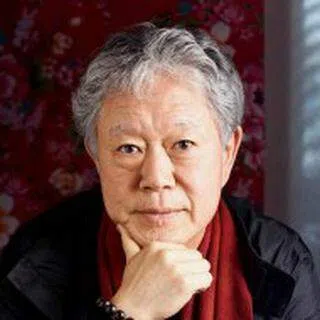

Thank you, Chishang, for allowing me to rediscover the land — to feel the turning of dawn and dusk, and the quiet passage of the seasons.
I spent my childhood in Dalongdong, an old enclave of the Tong’an (同安) people. In those days, Dalongdong was situated on the edge of Taipei’s expanding city, so there were opportunities to remain close to nature. Not far away was the confluence of the Tamsui and Keelung Rivers, and beyond them, Mount Guanyin and Mount Datun rising in the distance.
Every household had a courtyard, and every family grew vegetables and kept chickens, ducks, geese and pigs.
A time without TV or refrigerators
Before the arrival of the industrial age, humanity lived harmoniously with nature, dependent upon the land for their sustenance.
Ordinary households had no air conditioning, no television, and often not even a refrigerator (sometimes there was only a wooden container in which food was kept cool with blocks of ice).
And so, in childhood, I came to know the heat of summer and the cold of winter.
On summer solstice, everyone carried a paper fan.
When Xiaohan (小寒) and Dahan (大寒) came, an earthen jar would appear in the house, filled with burning acacia charcoal. As the house warmed, the air would become permeated with the deep, fragrant aroma of acacia. Everyone gathered around the fireplace, chatting and roasting nian gao (年糕, rice cakes).
My mother would be preparing dinner in the kitchen, and from time to time, she would ask me to go into the courtyard to pick a handful of scallions or a few tomatoes ripened on the vine.
At breakfast there would be eggs freshly laid by the hens. They clucked and called from the courtyard, while the eggs in our hands still held the warmth of their bodies.

Perhaps to save electricity, most people went to bed early and rose early. Life was simple. There were no leftovers and no one seemed to feel that a refrigerator was particularly necessary.
There were no televisions and the internet didn’t exist, so time was not wasted on the endless consumption of irrelevant information. So there was more time to walk toward nature, toward the fields or the riverbanks.
There was no tap water so households drew water from the well at the mouth of the alley, and washed their clothes beside it. The water in the clear streams was clean enough too, and some women preferred to do their washing there.
To the younger generation, these stories are perhaps as faraway as myths…
For ten thousand years, human civilisation was agricultural, dependent upon rivers for its survival. My childhood happened to coincide with the final years of that long agricultural civilisation.
In the brief span of a few centuries, the Industrial Revolution rapidly transformed the ancient bond between human survival and the natural world.
Then came TV and refrigerators
Before long, Taipei had tap water, television, refrigerators and telephones. Air conditioning replaced paper fans and earthen jars filled with burning charcoal.
Little by little, my body forgot how to live with heat, and how to live with cold.
Washing machines came into existence, and no one went to the wells or streams to draw water or wash their clothes anymore.
Tap water was, of course, convenient. But somehow the streams became turbid, carrying a foul smell. The small fish and clams that had once filled them disappeared.
Life had become more convenient, yet the land and its waters were being polluted, and nobody noticed a thing.
Then moonlight and starlight were gone
In 1976, I returned to Taiwan from Europe, at a time when Taiwan was undergoing a rapid transformation.

The earth was covered in asphalt. Big trees were felled, whole stretches of them at a time, and buildings rose one after another.
The buildings grew denser until the sky could no longer be seen. Lights burned through the night, and moonlight and starlight vanished. Countless air conditioners exhaled their waste heat into the streets, and the temperature of summer in the city climbed higher and higher.
I slowly grew accustomed to it all. I forgot the childhood evenings spent sitting outside our doorway, waiting for one breeze after another, as the intense fragrance of the orange jasmine drifted through the air.
For those born after the 1980s, growing up in Taipei or Kaohsiung, the world of their youth must have been a very different one.
The rumble of thunder at Jingzhe (惊蛰). The bittersweet fragrance of chinaberry trees around Chunfen (春分). Lotus blossoms and sudden afternoon thunderstorms in the height of summer. Around Xiaoman (小满) and Mangzhong (芒种), the brilliant red blossoms of the tiger’s claw trees, and dangling strings of shell ginger flowers. During the Qixi Festival, the stars of the Weaver Girl (Vega) and the Cowherd (Altair) beside the Milky Way. In Mid-Autumn, moonlight mingled with the fragrance of osmanthus. Mother would open a new jar of rice wine. “How fragrant…” I would exclaim, again and again.
Around Bailu (白露), each blade of grass in the early morning would hold a bead of dew. Everywhere, the silver grass turned and lifted in the breeze, flashing silver in the morning light.
During university, I joined an astronomy club. We would make our way into the mountains, far from the city’s light pollution, to watch the great Aquarids meteor shower spread across the night sky.
Drifting away from nature in the city
Everything became normal to me. I enjoyed the “progress” brought by the Industrial Revolution in the city: switch on the lights, and morning begins; switch them off, and night arrives. When it was hot, I turned on the air conditioning. When it was cold, I turned on the heating.
I sometimes forget how deeply I once loved moonlight and starry skies. I had also gradually forgotten that I could once sense, with remarkable clarity, the dampness in the air before rain, or locate, even in the deepest darkness, exactly where the gardenias or jasmines were blooming, guided only by their fragrance.

Without quite noticing, I had drifted away from nature, becoming an urban dweller without any real sense of crisis.
The energy crisis had little to do with me. Air pollution, they said, might cause lung cancer? Bottled mineral water might contain microplastics?
But it all seemed so distant, even as the news reports made such a spectacle of it. Like most city dwellers, I accepted all the changes brought by the Industrial Revolution. There was little I could do about them, and so I continued to enjoy the “convenience” of modern life.Meanwhile, nature continued to fall ill.
Returning to nature in Chishang
In 2014, I became an artist-in-residence at Chishang. I lived in Dapu Village, in an old teachers’ dormitory, and adopted the rhythms of life followed by the farmers there: lights out and in bed by eight, awake at around four in the morning, then out for a walk.
The sun rose at different timings as the seasons changed, as did the time of sunset. Slowly, I began to recover the direction of the rising sun, and the place in the sky where it would appear.
Around Chunfen, at 5:17 in the morning, the first light would slowly gather. Dapo Pond looked like an ink wash painting that had not yet dried.

Only when the sun rose above the Coastal Mountain Range (海岸山脈) did the colours begin to reveal themselves. The greens of the leaves differed from those of the grasses. Gold shimmered across the surface of the water. The trunk of the autumn maple was a soft brown. White herons skimmed across the water.
Chishang returned to me the childhood memories of “dawn” and “dusk”. It restored to my retinas the memory of two thousand shades of colour.
My father always rose at daybreak (黎明). It was a habit he had brought with him from the countryside.
“Daybreak” meant sunrise — earlier in summer, later in winter.
Growing up in the city, one discovers that there is actually no “daybreak”.
For city dwellers like me, switching on the lights is “daybreak”; switching them off is “nightfall”.
Searching for daybreak and nightfall
I lived in Chishang for two years from 2014 to 2016, where I found my way back to the daybreaks and nightfalls of my childhood.
I loved the misty mornings of spring in Chishang. I would wake just as the world itself seemed to be waking.
During Xiaoshu (小暑) and Dashu (大暑), I loved to watch the clouds over Mount Luntian burn red with the setting sun. The sun itself had already disappeared beyond the distant coast of Anping in Tainan, yet its afterglow would stain the undulating mountains and sky of the entire valley crimson.
During Xiaohan and Dahan, the paddy fields would already have been harvested and some farmers would burn the fields, and flames would run along the paddy stubble. Across the vast fields, the fire left behind bold black strokes, rough and unrestrained, crisscrossing the earth like calligrapher Yan Zhenqing’s “A Poem on General Pei” (裴将军帖).
I loved watching the operas staged after autumn harvests end (收冬戏) at Bao’an Temple in Wan’an Village (万安村). The winter winds in the longitudinal valley are piercingly cold. The hoarse, weathered voices of the Hakka opera singers seem almost indistinguishable from the sound of the wind.
I checked the thermometer when I reached home. It was 5.6 degrees Celsius that night.
The wind howled through the valley all night. The wooden window frames kept knocking and rattling. It was a sound from my childhood. It had returned to remind me of the force of nature.

I suddenly remembered that when I was a child, there were paddy fields all around our house. Farmers stood barefoot in the mud and water, planting rice seedlings one by one. Taipei, I realised, had once been rural too. There had been a time when the city still shared an intimate relationship with nature, the land, and the changing seasons.
I spent much of my childhood playing on the threshing floor. The farmers would toss and sift the grain, while we children helped chase away the chickens and ducks.
ThinkCulture Newsletter
Your fortnightly dose of Chinese history, culture, and cartoons. Sign up now.
By subscribing, I agree to SPH Media's Terms and Conditions and Privacy Policy.
In Chishang, I realised that I had not simply come to paint. I had also recovered my childhood memories — memories I had lost for a long, long time. Being here made me think again about what it means to carry an agricultural civilisation forward.
In my memories, I had also stepped barefoot in the mud. The soles of my feet had listened to the pulse and breath of the land.
My two-year residency had ended and I wondered if more people should come to Chishang. More young people, in particular. Perhaps they could leave the cities for a while and, here in Chishang, reconnect with the land and rediscover the rhythms of the four seasons.The people who accepted — and rejected — Chishang
In 2016, I gave up my dormitory in Dapu Village. A new generation of young artists were coming to stay.
After that, I gradually began recommending artists for residencies. The first was Lin Chuan-chu.
Chuan-chu came from a rural family. In Chishang, he seemed to effortlessly belong, like a fish in water. He lived in an old farmhouse in Longzaiwei (龙仔尾) and painted every day among the hills and fields. Perhaps, for him, this was also a kind of “return to the place from which one came”.
Once, I recommended another creator. He asked, “Are there nightclubs in Chishang?”
“No,” I said.
So he declined.
For someone unable to leave the city of industrial civilisation behind, I could hardly insist.

There was another young artist who made contemporary installations in the city. He was restless and unmoored, suffering from severe insomnia.
I recommended that he go to Chishang as well. “What am I supposed to do in Chishang?” he asked.
I told him, “No rush, take care of your body first.”
He really did come. He rode a bicycle in the fields, went to Mount Guan to see a traditional Chinese medicine practitioner to restore his health, and began learning Indian meditation and breathwork. He even told me about the “root chakra” and began experimenting with making essential oils from the flowers and plants of Chishang.
Thank you, Lovely Taiwan Foundation, for giving me the freedom to recommend, without restraint, so many artists to come and live and work in Chishang.
The heavens and earth are impartial — I steadfastly believe that each person who comes to Chishang will see a different landscape; a different dawn, a different dusk, and a different turning of the seasons.
The heavens and the earth place no limits on any form of life. Each sentient being is allowed to grow into its own shape. And so, naturally, they place no limits on any of us becoming who we are.
The ‘three books of Chishang’
After living there for two years, I left Chishang but returned often. Chishang has become livelier. Perhaps, a little too lively. When a place becomes busy and hurried, it is difficult to truly understand its dawns and dusks, or the turning of its seasons.
In 2021, I returned to Chishang and stayed for three months. This time, I chose the more remote Longzaiwei.
That year, because of the Covid-19 pandemic, I spent more time with the cats. From that came Longzaiwei · Cats (《龍仔尾.貓》), which was reorganised and republished in October 2025 as Chishang, Wan’an, Longzaiwei · Cats (《池上 萬安 龍仔尾 貓》).
In 2024, I adopted a 90-year-old dormitory dating from the Japanese colonial period. I wanted it to become a place where people could encounter an old building that, after ninety years of earthquakes and typhoons, had remained standing.
I searched through documents and archival materials and discovered that the first resident of the original dormitory was Horio Kazuhiko (堀尾一彥), the founding principal of Fu Yuan Primary School. This led me to write a short book, Chiang Hsun’s Study and Horio Kazuhiko (《蔣勳書房與堀尾一彥》), published in February 2025.
Together with the newly revised edition of Chishang · Chishang (《池上.池上》), originally published as Chishang Diaries (《池上日記》), these books became what I think of as my “three books of Chishang” — my way of expressing the deep gratitude I feel toward this place.

Over the years, many new residents have come to Chishang. Some are Vietnamese brides who married into the community and whose children have grown up here. Concerned about their children’s education, some have gone on to become parent-teacher association presidents at Chishang’s elementary or middle schools.
I used to think of Chishang as a quintessential rural town, a place without much of a nightlife. Now there is a jazz bar, ShanAo Cafe Bar, where people gather to drink.
Zhouzhou (走走池上) and Annbeloved (小安比乐) have also become new gathering places, started by the younger generation of entrepreneurs.
There is only one place: Chishang
I suddenly asked myself: why did I adopt Chiang Hsun’s Study (蒋勋书房)?
Was it because of the rare old building that had endured for ninety years? I don’t think so.
Countless earthquakes. Countless typhoons and torrential rains. Ninety years, and the building still stands, unmoved. I wanted to know: why?
The Industrial Revolution pursued rapid change. Agricultural civilisation, by contrast, learned through the passage of time something of what it means for heaven and earth to endure.
I want to offer my gratitude for Chishang to many people: to Chishang Books (池上书局), forinstance, and to Sister Chiu-chu, who taught me how to wash aiyu jelly by hand.
But when I think of gratitude, the first person who comes to mind is Liang Cheng-Hsien, whom everyone calls “Brother Liang”.
For nearly 30 years, he has persisted in promoting organic agriculture in Chishang. He helped Chishang rice obtain certification and become an internationally recognised brand.
Organic farming was the first step in Brother Liang’s plan for his hometown.
The second was to cultivate a cultural and artistic life in Chishang. The “Spring Ploughing” and “Autumn Harvest” festivals have gained fame in the last decade. Stages are built in the middle of the paddy fields, comparable to the “domes” of the cities, allowing city dwellers who love the arts to experience the pleasure of listening to music and watching dance in the midst of nature. The clouds overhead, the winds moving through the valley, the fragrance of rice wafting through the air — all of them seem to sing and dance together with the performers.
Brother Liang’s third step was to establish medical care for the rural community. Two years ago, the Fangcalay clinic (池上好诊所) was established. Many doctors and healthcare workers answered the call, taking turns to spend time in Chishang, providing home care as well as specialised rehabilitation and long-term care for farmers.
The books are specially dedicated to Mr Liang Cheng-hsien because the ideals he has worked at for three decades have now, one by one, taken shape before our eyes.
I admire Brother Liang, whose heart and thoughts are always with his hometown Chishang. When I am travelling here and there around the world, I remind myself to learn from Brother Liang. In his heart, there is only one place: Chishang.

Once, I went with him to West Lake in Hangzhou. Even on the boat, as we drifted across the lake, he was wondering whether the lotus flowers in Dapo Pond might be cultivated in the same way. He asked the people responsible for the lake, “How do you keep the water clean and clear?” His thoughts were still with Chishang. Always Chishang.
I am certain Brother Liang is already thinking about what comes next for Chishang: how more young people might learn to cherish this place, and how the spirit of Chishang might take a fourth step, a fifth step…
Chishang, the enduring mother of generations
One of the volunteers at Chiang Hsun’s Study, Yeh Yu-hsuan, grew up in Chishang and graduated from Fu Yuan Primary School. Together with another volunteer, Lilian, she has been tending the open ground around the study, planting all kinds of things: lettuce, ice plant, borage, nasturtiums.
As I eat these organic vegetables, I realise that Chishang’s commitment to organic farming has already extended beyond rice to vegetables and fruit.
Visitors come to the study not only to see the exhibitions, nor simply to admire the old building. As the seasons change, they encounter the plants of Chishang as they appear in that particular time of year.
“Have you seen radish blossoms?”
“Or those of corianders?”
Chishang is more than paddy fields — it is rich in the abundance of nature. The younger generation has brought the four seasons of Chishang into the study.
Hsu Yu-ying, an art teacher at Fu Yuan Primary School, also volunteers at the study, teaching the children how to paint the flowers and plants of Chishang.
Te-hui, another volunteer, loves botanical dyeing and weaving and is familiar with botanical oils. She also seems to effortlessly belong to Chishang, like a fish in water.

Everything in Chishang — the land, the sky, and all the living things between them — is beautiful. It is the enduring mother of all who, generation after generation, have made their lives upon this land.
The study is small, but it is like a warm and quiet nursery, gently cradling the spirit of Chishang as it grows, so that it may continue far into the future.
“As lasting as the heavens and as enduring as the earth.” Chinese philosopher Laozi wrote these words more than two thousand years ago. It has only grown more resonant with time, and remains, even now, the most modern of languages.
I dedicate these books to Chishang, to Brother Liang, and to all those — past, present, and future — who continue to care for the beauty of Chishang.
As you walk through Chishang, remember: as lasting as the heavens and as enduring as the earth.
This article was first published in Chinese on United Daily News as “池上,天長地久”.
Related: The Japanese colonial-era principal and his wooden house in rural Chishang, Taiwan | The old days of eating well without a refrigerator
Popular This Month
ThinkCulture Newsletter
Your fortnightly dose of Chinese history, culture, and cartoons. Sign up now.
By subscribing, I agree to SPH Media's Terms and Conditions and Privacy Policy.