Michael Wee: Why Singapore’s PATEC chose Taiwan over SGX
PATEC founder Michael Wee shares why he listed his precision engineering company in Taiwan, how AI revived its hard disk drive business, and his plans for PATEC’s next phase of growth in this interview with Lianhe Zaobao associate business editor Chew Boon Leong.
22 Jul 2026
Economy
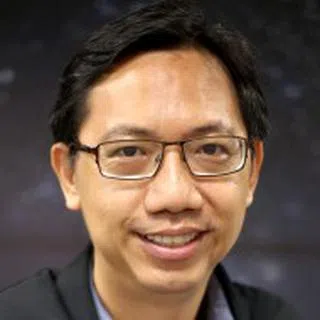

(Edited and refined by Grace Chong, with the assistance of AI translation.)
Precision engineering is an industry where accuracy is everything. Strict processes and exacting standards mean that a difference of just one millimetre can determine success or failure.
Yet for Dr Michael Wee Liang Kiang, founder and chairman of precision engineering company PATEC Group, success has been shaped as much by serendipity as by strategy. A series of unexpected opportunities arrived at pivotal moments, helping to define the course of his career.
One of Singapore’s earliest vocational education graduates, Wee paired determination with those timely breaks to rise from humble beginnings to become the leader of a listed company.
Two years ago, he acquired hard disk drive (HDD) precision components manufacturer Broadway Industrial Group, initially drawn by how well it complemented PATEC’s existing capabilities. Instead, the acquisition delivered an unexpected windfall as the artificial intelligence (AI) boom drove demand for HDD storage.
During the toughest days of the Covid-19 pandemic, he also discovered an opportunity in robotics manufacturing. Today, PATEC spin-off Kabam Robotics has deployed more than 150 intelligent robots in Singapore and overseas, creating a new revenue stream for the group.
Meanwhile, PATEC’s expertise in mechanical press machines, developed over more than two decades, has found renewed relevance. The company is now developing heat sink manufacturing equipment for customers supplying major technology companies such as Nvidia and AMD.
To manage others, start by managing yourself
Now 74, Wee founded PATEC Group in 1992. The precision engineering company, listed on the Taiwan Stock Exchange, manufactures advanced industrial solutions and precision components. Its technologies and parts are now embedded in millions of HDD, game controllers and vehicles made by some of the world’s leading automotive brands.
The company has a market capitalisation of about NT$11.3 billion (approximately US$351 million), more than 2,000 employees worldwide and six manufacturing facilities.

After more than five decades in precision engineering, Wee embodies the pragmatic spirit of an earlier generation of entrepreneurs. Asked about his management philosophy, his answer is disarmingly simple: "If you want to manage others well, you must first manage yourself."
He believes that no one understands a company’s needs better than its owner. A leader must be willing to get hands-on, set the example and do the hard work alongside the team.
When AI began transforming industries, Wee was among the first to enrol in AI courses. A strong believer in lifelong learning, he also pursued a Doctor of Business Administration at West Coast University in the US in his fifties.
Throughout the interview, he repeatedly returned to one principle: hard work.
“I have always believed that nothing in life is impossible. Anything can be achieved. The question is how you turn the impossible into the possible.”
That mindset helped him overcome challenges and steer PATEC through rapid technological shifts and intense competition.
Even so, Wee believes success is a combination of 70% hard work and 30% luck.
“If you do not work hard, you will not be ready when opportunities come. But when you put in the effort, that 30% of luck becomes yours,” he said.
A windfall from a so-called sunset industry
PATEC’s acquisition of Broadway Industrial is, in Wee’s eyes, a perfect example of opportunity arriving unexpectedly.
Last year, Broadway Industrial was delisted through a selective capital reduction exercise and became a wholly-owned subsidiary of PATEC. Before its delisting, the company had a market capitalisation of S$88.68 million (US$68.61 million).
Broadway Industrial’s core business was manufacturing precision components for HDDs. To many observers, HDDs appeared to be a declining industry, rapidly being replaced by solid-state drives (SSDs) and flash memory.

But AI changed the outlook dramatically.
Training AI models requires massive amounts of data storage. Flash memory production capacity has struggled to keep pace with surging demand, while HDDs continue to offer significant advantages in cost and storage capacity.
Over the past two years, shares of leading data storage companies such as Seagate and Western Digital have surged more than tenfold, rising from about US$95 and US$60 respectively in June 2024 to around US$1,100 and US$700 by June this year.
Wee revealed that since acquiring Broadway Industrial, PATEC’s order targets from HDD manufacturers have increased by at least 30%. The group’s memory-related business now generates about US$300 million in annual revenue, making it PATEC’s largest source of revenue.
Ironically, however, HDDs were not what initially attracted Wee to the acquisition.
“Two years ago, AI was still in its early stages and the trend had not yet become obvious. We acquired Broadway Industrial mainly because of its strong management team, skilled workforce, well-equipped factories and stable revenue base. We believed its precision machining capabilities could help us enter industries with higher barriers to entry,” he explained.
“We never expected AI to drive HDD demand so dramatically. In the end, we hit the jackpot and gained far more than we imagined. It was a classic example of an unexpected opportunity creating extraordinary returns.”
A journey shaped by unexpected opportunities
Looking back on Wee’s life, both his personal journey and career have been defined by moments when chance encounters opened new doors.
A born-and-bred Singaporean, Wee was the youngest of eight siblings. His father was a Western chef.
He grew up in an attap house in Bukit Timah. Looking back, he jokes that every trip to the squat toilet was practice for a horse stance.

Coming from a large family, Wee understood from a young age that he would have to rely on himself to succeed. Like many boys, he was naturally curious and enjoyed taking things apart to understand how they worked.
He studied at Lianhua Primary School before enrolling in Tanglin Integrated Secondary Technical School (later renamed Tanglin Secondary School), where he took metalworking classes. He later studied Mechanical Engineering at Singapore Polytechnic as part of Singapore’s first cohort of technical-stream students.
After completing full-time National Service, Wee worked for several years at General Electric. He was later awarded a scholarship by the Association for Overseas Technical Scholarship to study advanced manufacturing technologies in Japan.
The scholarship application itself came with an unexpected twist. As the programme was intended for university graduates, Wee did not meet the academic requirements. Still, he decided to apply simply to try his luck.
When he walked into the interview room, he found himself facing a panel of interviewers. Though nervous, he quietly turned to close the door behind him before greeting them with a smile.
“I think that small gesture may have left an impression on the interviewers and helped me secure the scholarship,” he said.
At the time, Wee had a stable job with good pay and benefits. Going to Japan meant giving up his comfortable position, so both his parents and friends advised him against it.
“The only person who encouraged me was my manager. He told me that opportunities to study overseas were rare. I was still young, so I should go out and see the world.”

Wee spent a year and a half in Japan, including an internship at Fujitec in Osaka. After returning to Singapore, he continued working with Fujitec, spending about five years with the company in total.
He said the experience left a deep impression on him, especially Japan’s corporate culture and its employees’ meticulous approach to work. His ability to speak Japanese and understand Japanese business culture also helped him secure Japanese clients and eventually meet the Japanese partner with whom he would later establish PATEC.
Breaking the ‘Made in Singapore’ myth

Get the ThinkChina Weekly Newsletter
Insights on China, right in your mailbox. Sign up now.
By subscribing, I agree to SPH Media's Terms and Conditions and Privacy Policy.
PATEC was founded by Wee and his Japanese partner, Hisanori Hidaka. In its early years, the company focused on designing and developing automated production equipment, which was manufactured under contract by Japanese firms and marketed across Southeast Asia.
In the 1990s, major manufacturers such as Sony established production facilities in Singapore and Malaysia. With its competitive automation solutions, PATEC gained traction quickly, selling more than 100 production lines to clients within just three years.
The success, however, did not last. Competitors soon replicated PATEC’s systems and flooded the market with imitations priced at half the cost. Facing intense price competition, Wee shifted the company’s focus to manufacturing metal stamping presses and moved production from Japan to Singapore.
The relocation became the first major challenge of his journey running PATEC.
“At the time, customers strongly preferred products that were ‘Made in Japan’. They believed Singapore’s industrial base was still too weak to produce machinery of comparable quality. Some Japanese customers even questioned whether Singapore was capable of making such equipment at all,” he recalled.
Fortunately, PATEC received support from manufacturers in Singapore and Malaysia, allowing the company to survive its most difficult years. By consistently delivering reliable quality and stable output, it gradually earned the trust of Japanese customers and dispelled the misconception that products made in Singapore were somehow inferior.

In 2006, Wee entered the automotive components industry by chance after a client’s supplier of automotive parts ran into difficulties and asked PATEC for support, opening the door to a sector with relatively high barriers to entry.
Today, automotive components are PATEC’s second-largest business segment, generating about US$100 million in annual revenue. Its products are supplied through the supply chains of major automakers, including Volkswagen, Audi, BMW and Toyota. In 2022, PATEC also secured a five-year contract in China to supply components for BYD’s new vehicle models.
With AI reshaping industries, Wee has also begun exploring opportunities in emerging technologies. Last year, he acquired a company that manufactures specialised cutting tools used in machining processes by HDD and semiconductor companies, with the aim of entering the market for precision ceramic components used in semiconductor manufacturing.
He explained that during the chip etching process, wafer fabrication plants need a component to hold wafers securely in place. This component must be made of ceramic and requires specialised cutting tools to manufacture. As chip demand continues to grow, demand for these ceramic components also rises in tandem.
Expanding globally while keeping Singapore at heart
Wee said, “This is a sector with guaranteed market demand. The challenge is that the barriers to entry are extremely high. Customer expectations, production capabilities and the resources required are all extremely demanding. Sometimes, even a surface scratch that does not affect functionality is unacceptable. A one-millimetre difference is not allowed.”
To survive in precision engineering, companies must not only respond quickly to market changes but also develop hard technologies that are difficult to replicate or imitate.
He pointed to PATEC’s experience with metal stamping presses as an example. When the machines became popular in the market, competitors quickly emerged and sold imitation versions at very low prices.
“But true core technology cannot be easily copied. Fortunately, the imitators only copied the external appearance of our machines, not the internal structure. Once customers realised that the copied machines could not deliver the same performance as ours, they gradually came back to us,” he said.

In recent years, PATEC has expanded its presence across Southeast Asia, Europe and China. Despite its global footprint, Wee remains deeply committed to Singapore and has ensured that the company’s Singapore factory continues to maintain a certain level of production.
PATEC employs more than 2,000 people worldwide, including 50 to 80 employees in Singapore.
“I am Singaporean, and PATEC is a Singapore company. I have always hoped to retain some technology in Singapore and contribute to the development of the country’s precision engineering industry,” he said.
“I even considered setting up a mould-making centre in Singapore. But because of factors such as operating costs and market size, the idea has never materialised. It remains one of the biggest regrets of my career.”
Why PATEC chose to list in Taiwan
PATEC is one of the few Singapore companies listed on the Taiwan Stock Exchange. It went public in June 2015 at an IPO price of NT$39 per share. Its share price has since risen more than threefold, reaching NT$184.
Why Taiwan?
Wee explained that PATEC was a small and medium-sized manufacturing company, while Singapore investors at the time were generally more focused on banking and property stocks. This made it difficult for manufacturing companies like PATEC to raise funds locally.
“Coincidentally, the Taiwan Stock Exchange was actively attracting foreign companies to list there. Taiwan also had a strong manufacturing base and many comparable listed companies, making it easier to attract investors. So I decided to bring PATEC to Taiwan,” he said.

Although Singapore is now seeking to revitalise its stock market, Wee said he has no immediate plans to move PATEC’s listing back to Singapore or pursue a secondary listing.
One reason is that the company’s share price performance and investor response in Taiwan have remained positive. Another is his desire to keep the company structure lean and focused on growth.
The next generation charts a new path
Several years ago, PATEC began preparing for its second-generation succession plan.
Wee has two children. His eldest son, Kelvin Wee, officially became CEO in 2021, while his younger daughter, Wee Shi Han, who was previously a reporter with Shin Min Daily News, has also joined the company to support its development.
Wee said his son studied finance and originally planned to pursue investment banking in Hong Kong. He persuaded his son to join PATEC, initially suggesting that he spend one or two years as an intern.
Over time, Kelvin became increasingly involved in the business and now oversees PATEC’s daily operations and strategic planning.
Wee said, “Precision engineering is not an easy industry. The standards are demanding, mistakes are not tolerated, and technical people can sometimes have very fixed ways of thinking. When Kelvin first joined the company, he would occasionally complain that PATEC was overlooked by the market. But he endured the challenges and has grown tremendously.”

He was also pleased that Kelvin identified an opportunity in service robotics during the difficult period of the pandemic.
Although robotics was outside PATEC’s traditional business, Kelvin convinced his father of the sector’s potential. Wee then committed company resources to help him build a team and establish Kabam Robotics.
Today, Kabam Robotics’ service robots are widely deployed at Singapore’s airport, shopping malls and office buildings, becoming a valuable addition to PATEC’s operations.
Looking ahead, Wee remains confident in the next generation’s ability to lead the company.
“Young people have their own ideas and ways of doing things, and I will not interfere. At this stage, I provide support on major strategic decisions and market expansion. The rest is for the next generation to execute,” he said.
“This is not only a way for them to grow, but also necessary for the company’s long-term development.”
This article was first published in Lianhe Zaobao as “百达集团主席黄亮茳:面试时转身轻关门 竟打开不可能人生”.
Related: Frederick Tsao: In a family business, you can never leave | Entrepreneur Alice Hung: How to embrace life’s rollercoaster and stay kind
Popular This Month
Get the ThinkChina Weekly Newsletter
Insights on China, right in your mailbox. Sign up now.
By subscribing, I agree to SPH Media's Terms and Conditions and Privacy Policy.