[Photos] How forgotten wartime photos reshaped China’s history of resistance against Japan
For decades, the Chinese Communist Party and Kuomintang (KMT) gave competing accounts of who led China’s resistance against Japan. In 2005, Taiwanese historical photo collector Hsu Chung-mao’s rare wartime photographs helped bring the KMT’s long-overlooked contributions into the spotlight.
13 Nov 2026
History
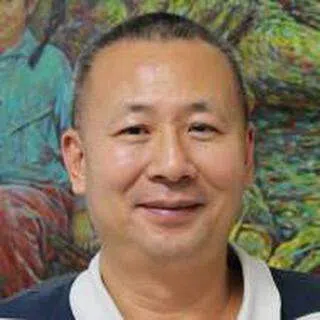

(Edited and refined by Candice Chan, with the assistance of AI translation. Photographs courtesy of Hsu Chung-mao unless otherwise stated.)
The narrative of China’s War of Resistance against Japanese Aggression has long been a major point of contention in Taiwan, mainland China and even overseas Chinese communities. To this day, there is no version that everyone can agree on.
The main dispute is between Taiwan and mainland China, as it touches on the historical rivalry between the Kuomintang (KMT) and the Chinese Communist Party (CCP). Who was it exactly that fought the War of Resistance? The answer raises the question of the legitimacy of political power.
The CCP has long maintained that it led the resistance against Japan, while the KMT insists that it was the principal force in the war and seemingly acted as China’s supreme wartime leader, as the CCP merely exploited the war to strengthen its own position. Over the past two decades, however, there have been subtle shifts in the historical narratives on both sides of the Taiwan Strait, to become more inclusive of each other’s role in the war.
I happened to witness this reassessment of the war’s history first-hand, and even participated in the process. The year was 2005, the 60th anniversary of victory in the War of Resistance against Japan.
First chronicles of war in mainland China
In 2002, I had Images and Reflections: Looking Back at the War of Resistance (《影像與斷想:抗戰回望》) published in Shandong Pictorial magazine, featuring 124 newly discovered and historically valuable photographs from the war.


In 2005, Guangxi Normal University Press published A Moment in the War of Resistance (《抗戰一瞬間》). This book was well-produced and featured a carefully curated selection from my extensive collection of wartime photographs, offering a unique perspective of lower-ranking officers, ordinary soldiers and civilians during the war.
Strictly speaking, this was my first book on the War of Resistance published in mainland China. It was the 60th anniversary of victory over Japan, and a whole decade since I edited Taiwan: 50 Years after WWII (《台湾:战后50年》). I had matured in editing photographs and text, and had published several bestsellers in mainland China.
Thaw in CCP-KMT relations
Here, I have to mention the larger context of cross-strait relations. In 2000, Chen Shui-bian of the pro-independence Democratic Progressive Party (DPP) was elected as president of Taiwan, sending shock waves through cross-strait relations. In 2004, he narrowly won re-election, dealing a second consecutive loss to a KMT that advocated peaceful reunification, although the KMT still held a parliamentary majority.
With the Taiwan independence movement dominating the island’s politics, the time was right for the CCP government and the KMT to work together based on their shared sense of Chinese national identity.


In April 2005, KMT chairman Lien Chan visited mainland China and met CCP General Secretary Hu Jintao, which made headlines. Reconciliation and cooperation between the two parties was the new direction, and the mainland Chinese government relaxed its stance on the historical accounts of the KMT on the battlefield.
Search for collaboration partner
In this context, my extensive collection of war photographs came into its own, which was a key part of my efforts to promote the visual history of the War of Resistance. As it turned out, 2005 was also a pivotal year where mainland Chinese saw images of the war on a large scale. The breakthrough, however, came not through the publication of photographic books, but through a collaboration with Sanlian Lifeweek (《三联生活周刊》) magazine in Beijing.
There is an interesting story behind this collaboration.
Guangzhou-based magazine New Weekly (《新周刊》) was well known for its use of photography. Its youthful editorial team was bold, dynamic and enthusiastic in its visuals. I took the initiative to approach them; through a friend, I met with them, original wartime photographs in tow.
The art director was a young man in his 30s, with the air of an artist. I showed him the photographs, and he thought they were not bad, but there was none of the usual sense of awe that aficionados usually showed when they saw good photographs. A young female editor-in-chief was also present.


We agreed that I would send them article outlines and sample photographs after I got back to Taiwan, which I did, only for the female editor-in-chief to email me to ask: “Mr Hsu, why are all the photographs you sent us of the KMT during the war?”
I thought: it’s over. Despite her youth, she had the mindset of an old bureaucrat with no basic understanding of the history of the War of Resistance, and no curiosity for knowledge. Naturally, she had no intention to challenge the status quo or break new ground.
Finding Sanlian Lifeweek
On my next visit to mainland China, also through a friend’s introduction, I met Zhu Wei, editor-in-chief of Sanlian Lifeweek, with their art director Shang Yuan. Once again, I brought samples of original photographs from the War of Resistance.
Zhu was a seasoned editor with a mind for the humanities. He picked up a copy of Der Spiegel magazine, turned to a photographic feature inside and said that he hoped to produce something similar.
I looked through it carefully. Seven years earlier, I had gone to London just to buy photographic books and illustrated historical magazines from Europe, so I was thoroughly familiar with European editorial concepts and techniques.


I said to him: “We can do even better than this!”
He gave me a look of doubt. But I was not making an empty boast at all. The most important thing was that I understood the techniques of photo editing, while my vast collection of high-quality war photographs were my greatest assets and the source of my confidence.
In the end, with Zhu’s energy, my wholehearted support and Shang Yuan’s skilful art direction, we built a new era in historical war visuals in mainland China.
Pivotal year
The collaboration led to five major cover stories in the Revisiting History series on the War of Resistance.
Part 1 (Issue 11, 2005) Slumbering China: 15–21 September 1931 (《沉睡的中國 1931.9.15~1931.9.21》)
This opening instalment focused on the crucial week surrounding the Mukden Incident of 18 September 1931. It was well received by readers.

Part 2 (Issue 15, 2005) Blood and Fire of the Chinese: 750,000 Troops in the Fierce Defence of Shanghai (《中國人的血與火 — 75萬軍隊慘烈保衛大上海》)
This instalment examined the two battles of Shanghai during the War of Resistance.


Part 3 (Issue 20, 2005) The KMT and CCP Unite in a National Crisis: The Victory at Pingxingguan and the Battle of Wuhan (《國共攜手共赴國難 — 平型關大捷與武漢會戰》)
This instalment focused on the second period of cooperation between the KMT and CCP, as well as the Battle of Wuhan.


Part 4 (Issue 26, 2005) The Whole Nation at War: The Vast Tide of People’s Resistance. (《全民抗戰 — 人民戰爭的汪洋大海》)
This instalment examined guerrilla warfare behind enemy lines and the mobilisation of the entire population.

Part 5 (Issue 33, 2005 — the concluding instalment) Militarism on Trial (《審判軍國主義》)
The final instalment covered the trials of war criminals and the historical reckoning with Japan’s militarist past.

Breaking the visual mould
The 60th anniversary of the war was a major milestone, and it was heavily covered in all the mainland Chinese media. Most outlets, however, simply recycled and rearranged previously used photographs. Few thought to dig up fresh images, and naturally had none to show.
With my support, sales of Sanlian Lifeweek almost tripled. In particular, the issue featuring the Battle of Shanghai had on its cover a heroic image of soldiers from the Central Army’s Training Corps wearing German-style steel helmets and uniforms. Mainland Chinese readers had never seen KMT soldiers looking so dashing, and the visual impact was tremendous.
Sales of that issue soared, and it also caught the eye of the film and television industry. Later, when mainland Chinese filmmakers made wartime dramas and movies, they particularly enjoyed filming KMT soldiers wearing German-style steel helmets because they thought it was cool.


The breakthrough was first apparent in a shift in narrative perspective.
At the time of the 60th anniversary of the war in 2005, mainland Chinese media generally featured very little of the battlefield. The many photographs I provided presented the KMT-led campaigns on a large scale, which was a break from the longtime one-sided historical narrative, lessening its ideological overtones.
Next was a more sophisticated editorial approach.
Zhu Wei established a principle of being detail-oriented; to relook details and change hollow historical accounts, so the truth could be presented as far as possible. To this end, the editorial team adopted a structure where each reporter was put in charge of a single day in history, so they had to get deep into the meat of it.
The series upgraded “cover stories” into “cover features” of over 100 pages, fundamentally altering the magazine’s previous format and changing its character as a publication intended for short-term consumption.
It was not just about expanding content, but about giving a weekly magazine the weight and collectors’ value of a bestselling book. The magazine regarded it as an experiment in focused presentation of major topics.


Achieving a milestone
In its 2005 annual special edition, Southern Weekly (《南方周末》) gave a nod to Sanlian Lifeweek’s War of Resistance coverage, recognising it as one of the media phenomena in that year.
It accurately summarised the series’ central contribution and assessed how Sanlian Lifeweek’s work was based on reconstructing historical detail, comparing it with Southern Metropolis Daily’s approach of preserving the memories of war veterans, and highlighting how unique it was for Sanlian Lifeweek to rely on documentary evidence and images.
To put it simply, the 60th anniversary of victory in the War of Resistance and my collaboration with Sanlian Lifeweek during that period marked a pivotal year in improving visual historical narratives about the war.
For me, to have made quick progress towards promoting the visual history of the War of Resistance just five years after venturing into mainland China was a considerable achievement, and I was glad of it.


Related: [Photos] Cheng Li-wun’s bid to reclaim the Kuomintang’s lost identity in cross-strait politics | [Photos] Fact versus fiction: The portrayal of WWII anti-Japanese martyrs in Taiwan

Get the ThinkChina Weekly Newsletter
Insights on China, right in your mailbox. Sign up now.
By subscribing, I agree to SPH Media's Terms and Conditions and Privacy Policy.