[Photos] What I saw at Tiananmen in 1989 before I was shot (Part 1)
Historical photo collector Hsu Chung-mao recounts a pivotal time in his life and world history, tracing back the events surrounding his near-fatal gunshot wound to the neck as a young journalist during the 1989 Tiananmen incident.
15 Jun 2026
History
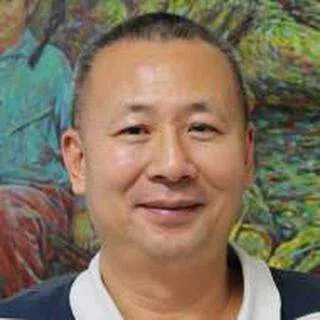

The Tiananmen incident of 4 June 1989 was a major international event, a significant chapter in Chinese history, and the most important event of my journalistic career.
At about six o’clock that morning, I laid bleeding profusely in Tiananmen Square after being shot. Fortunately, some good Samaritans put me on a handcart and rushed me to get medical attention. I was brought to a nearby clinic, but it was closed, so they pushed me to Tongren Hospital on a flatbed cart, and I survived through emergency treatment.
I was transferred to Tiantan Hospital, where I regained some consciousness after three days, though I had no memory of this. After that, I was very weak and drifted in and out of consciousness, hearing sporadic gunfire outside the hospital ward on some nights.
Social tension brewing
My ordeal during the Tiananmen incident was not an isolated incident in my professional life, but an episode in my career reporting on mainland China while based in Singapore. In 1988, an international university debating competition was held in Singapore, where I met teachers and students from Fudan University’s debating team, including Professor Wang Huning, who later became a core leader of the Chinese Communist Party (CCP).
A month after the competition, I visited Fudan and forged lasting friendships. Through my contact with Fudan students, I heard young people’s views on society and living conditions. At the time, mainland China was undergoing a period of ideological transition. There was resistance to reform and opening up, and the policy met with ideological constraints, with widespread economic instability and public grievances.
Chinese citizens could increasingly see the outside world, and comparisons with other countries deepened their awareness of their own poverty. Questions about China’s future were discussed by intellectuals and ordinary people alike. This ideological confusion, combined with dissatisfaction over living conditions, rapidly fuelled social unrest.
In April 1989, I visited Fudan again and secretly spent a night in a student dormitory. One student told me that he had a strong feeling something serious would happen that year, as there were clear signs of deep social unease.
Soon after I returned to Singapore, student demonstrations erupted in Beijing. Every day, I saw extensive reports in the newspapers in Singapore and from around the world — I even saw brief reports in local Vietnamese newspapers when I was there, indicating that the demonstrations were a major international news story.
Given that such events were extremely rare in mainland China with its tight political control, I believe people all over the world were following the developments very closely. Subsequently, at one point even the CCP acknowledged the legitimacy of the student movement, and news agency Xinhua put a positive spin on its reports — this suggested that divisions had emerged among the top leadership, and that the situation was becoming increasingly complex.
Disorganised and messy
My primary assignment was reporting on Southeast Asia, and Beijing was outside my beat, so I could not simply go there on my own. However, by late May, colleagues who had been reporting from Beijing for over a month were exhausted, so I was sent to relieve them.
On 27 May, I flew from the Philippines to Beijing. On the flight, I happened to meet Yang Du, a colleague from the Taiwanese newspaper China Times Express. After arriving that afternoon, we stayed together at the Dongfang Hotel near Qianmen, about a 15-minute walk from Tiananmen Square. After dropping off our luggage, we headed straight to the square.
The student demonstrations were centred on both sides of the Monument to the People’s Heroes, where students sat amidst scattered piles of personal belongings. So I began my reporting, and a few notable incidents stuck with me.


The students had already been there for two months and were visibly tired. They moved in and out, as some left while others from outside Beijing continued to arrive. They were actually very innocent, full of youthful passion and energy, with simple ideas and slogans of “democracy”. Previously, only the CCP existed as a campus political organisation, but now students were trying to establish their own groups. Though they had all kinds of names, most were nothing more than a name and were very loosely organised.
Beijing was practically in political paralysis, and student leaders had to keep creating drama to maintain the enthusiasm. On 30 May, students from several art academies, including the Central Academy of Fine Arts, erected the Goddess of Democracy statue on the northern side of the square, which immediately drew huge crowds and enthusiastic applause.


The hunger strike by the “Four Gentlemen” (Hou Dejian, Liu Xiaobo, Zhou Duo and Gao Xin) also generated major publicity, as they sat in a tent serving as the students’ headquarters. Since Hou was from Taiwan, I sent him a note through student intermediaries, identifying myself as a Taiwanese journalist and requesting an interview. He politely declined, saying he was too busy. Hou was a well-known Taiwanese singer-songwriter famous for composing the song Descendants of the Dragon (《龙的传人》). He later moved to mainland China and became involved in the democratic movement.
The messy protest site and the lack of effective management, as well as the protestors’ poor attitude at times, led to occasional friction between student demonstrators and Beijing residents. Student leaders seemed to be aware of these problems and made efforts to improve. After receiving donations of new tents, they cleaned up the square and put up the cleaner tents in a more orderly way, and things improved. The demonstrations also attracted many overseas visitors as Tiananmen Square became something of a tourist attraction, with both locals and foreign tour groups stopping to take photos.


One evening outside the Ministry of State Security building on the east side of the square, a large crowd gathered around a cadre who was analysing the situation. There were no lights, so his face could not be seen, but his voice was clear as everyone listened intently. Speaking calmly and authoritatively, he was highly persuasive as he analysed current events.
Soon, a camera flash went off repeatedly as someone began photographing him, drawing protests from the crowd. Clearly, this was an official documenting evidence, yet the crowd only protested and did not resort to violence. In this sense, the demonstration was still essentially an expression of dissatisfaction, not an attempt to overthrow the system.
Division within party leadership
Around 28 May, in a small corner near Tiananmen Square, I noticed a group of people gathered around a mimeographed leaflet. Moving closer to take a look, I realised it was a document containing remarks by Chinese President Yang Shangkun criticising General Secretary Zhao Ziyang at a CCP Central Committee meeting. I took one look and knew it was important. I quickly asked someone nearby to read the text aloud word for word while I recorded it. Rushing back to my hotel, I listened to the tape, transcribed it in its entirety, and sent it back to my newspaper.


A senior colleague happened to be in my hotel room when I returned. Because I had just arrived in Beijing, he assumed I was still finding my feet and dismissed the document, remarking that this kind of material was everywhere in the city. But he was wrong. This was an incredibly rare document that had surfaced just before the military crackdown, at a time when Yang Shangkun was also serving as vice-chairman of the Central Military Commission.
On 24 May 1989, Yang chaired an emergency enlarged meeting of the Central Military Commission, during which he sharply criticised Zhao Ziyang for what he regarded as inconsistency and wavering, including Zhao’s opposition to the 26 April editorial in the People’s Daily — which objected to the protests — and his decision to publicly expose divisions within the party leadership in his speech marking the anniversary of the May Fourth Movement.


At the time, records of Yang’s remarks were circulating via handwritten and mimeographed copies. It was quite obvious that the leak had come from individuals aligned with Zhao’s camp. Initially, only a handful of copies were pasted on walls around Beijing, and not many people noticed them. I chanced upon it, and the lengthy transcript I produced became the front-page headline of the China Times the following day. Naturally, once its significance became apparent, students began reproducing it en masse, and copies soon circulated throughout Beijing.
It was the most important internal document of the CCP to be leaked before the Tiananmen crackdown.
Fragments of the whole picture
I am often asked: “What exactly did you see in Tiananmen Square?” and “Did you witness soldiers opening fire?” Before answering, it is necessary to describe the scale of Tiananmen Square.
Tiananmen Square is one of the largest urban squares in the world. It measures roughly 880 metres from north to south and 500 metres from east to west, covering about 440,000 square metres. The areas I routinely moved between included the Monument to the People’s Heroes, Nanchizi, Beijing Hotel, Zhengyang Gate, Qianmen Street and Dongfang Hotel — a circuit covering about three kilometres. Reporting on foot across such distances was physically exhausting.

To put it simply, with events unfolding simultaneously in different corners, it was physically impossible to witness everything that was happening. If you ask a Beijinger for directions and they say, “Just head north, then turn east — it’s not far,” it could easily take more than half an hour to get there. That is Beijing’s sense of distance.
In the years that followed, I often stayed at the Prime Hotel on the northern side of Wangfujing Street, near Dongsi West Street. Even from there, it took about an hour to walk to Tiananmen Square.
The Tiananmen incident happened within a radius of roughly three kilometres around the square. At the time, driving was not possible, and one could only get around on foot; getting even a partial idea was difficult, let alone the entire picture. If there was a disturbance a distance away, it could take half an hour to rush over. That was the fundamental reality of reporting on the ground during those days.
On 2 June, the loudspeakers in Tiananmen Square repeatedly broadcast emergency notices from the Martial Law Command, ordering all foreign journalists, as well as reporters from Hong Kong and Taiwan, to leave the square. The atmosphere became increasingly tense.
From time to time, sharp gunshots were heard in the distance, though it was impossible to tell exactly where it was coming from. Yet neither the student demonstrators nor the journalists on the scene showed any intention of leaving, nor did they seem to show any real sense of urgency that troops might soon move into the square.
That evening, I was on the scene when the first contingent of unarmed soldiers attempted to advance toward Tiananmen Square, only to be stopped by crowds along Chang’an Avenue. The soldiers appeared dejected, clearly under orders not to use force against civilians. As soon as they stopped, they found themselves surrounded by Beijing residents who tried to reason with them, explaining that the people were merely calling for democracy and had no intention of opposing the government itself. In the dark corners of the street, citizens patiently sought to persuade them.
Some of the burly soldiers, however, were armed with live ammunition. One young, pimply soldier in his early 20s looked grumpy as he carried a Type 81-1 assault rifle — one of the People’s Liberation Army (PLA)’s most advanced frontline service weapons at the time, fitted with a lightweight metal folding stock on the right side. It was the first time I had found myself in such close proximity to a belligerent, armed PLA soldier, and it left a deep impression on me. He looked scornful at the citizens’ attempts at persuasion, and finally burst out, “I can’t stand this any more.”
His angry reaction stunned the crowd. I had a strong feeling that it was an ominous sign.
Meanwhile, because the PLA was still avoiding violent confrontation, some Beijing residents succeeded in preventing the troops from entering Tiananmen Square, as cheers of triumph erupted from the crowd. One man even proudly hurled a steel helmet he had seized from a soldier onto the ground in a display of victory.
Bloody clashes
So passed that ominous night. The following night, tanks and PLA troops formally entered Tiananmen Square. They chose to move at night, when the number of people present was at its lowest. Most journalists were moving back and forth between Tiananmen Square and the Beijing Hotel, where the majority of foreign, Hong Kong and Taiwanese reporters were staying.
As I mentioned, no one was in a position to see the entire picture.
I arrived at the entrance of the Beijing Hotel, intending to go upstairs to find some colleagues. However, several security personnel were already stationed at the doorway, roughly searching Western journalists as they entered and forcibly removing the film from their cameras before confiscating it. I got spooked and decided not to enter the hotel, so I turned around and headed back towards the square.
By then, on the southern side of Chang’an Avenue, a tank was already engulfed in flames. Civilians had soaked blankets in fuel, set them alight, and draped them over the tank’s armour plating. The metal tank — which would not burn easily — was clearly damaged.
When I returned to the centre of the square, the scene was even more terrifying.
Military formations had already entered the square. Their rifles were held with the barrels pointed skywards, and warning shots rang out intermittently. As they advanced in disciplined ranks, the soldiers chanted in unison: “If they do not fight us, we will not fight them. If they fight us, we will fight them (人不犯我,我不犯人,人若犯我,我必犯人).”
One civilian chased after the military formation, hitting the soldiers in the rear ranks with a wooden stick. Nearby, a woman on her knees shouted tearfully: “Stop, stop! You can’t win!” Those cries sounded especially pitiful in the night, as the situation spiralled out of control.
Only later did we learn that several bloody clashes had already occurred before the advance units and tanks entered the square.
As I had to file my report, I hurried back to the Dongfang Hotel to write and transmit my dispatch. While doing so, I received a telephone call from Alice Yu, daughter of China Times owner Yu Chi-chung. She sounded deeply anxious and reminded me repeatedly, “Please be careful and stay safe.”
I imagine that night most people in Taiwan were sitting in front of their television sets, watching the live reports of troops entering Tiananmen Square and witnessing the terrifying images of flames lighting up the night sky; people elsewhere around the world were probably doing the same.
Beijing did not sleep that night, when it became the focus of the entire world.
Read part 2 here: [Photos] What I saw at Tiananmen in 1989 before I was shot (Part 2)
Related: Tiananmen’s message: China reclaims war history, reshapes future order | All in the plans: Social protests have little chance of weakening Xi Jinping’s leadership

Get the ThinkChina Weekly Newsletter
Insights on China, right in your mailbox. Sign up now.
By subscribing, I agree to SPH Media's Terms and Conditions and Privacy Policy.