Is Cai Qi China’s real number two?
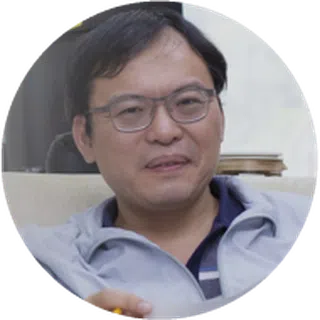
Politburo Standing Committee member Cai Qi appears to be Chinese President Xi Jinping’s right-hand man, but depending on whether trust or caution is higher in Xi’s calculations, Cai’s fate will be decided at the 21st Party Congress, says Taiwanese academic Wen-Hsuan Tsai.
4 Aug 2026
Politics

Xi Jinping will enter his fourth term as general secretary of the Chinese Communist Party (CCP) at the party’s 21st National Congress in 2027, but he will be faced with some challenging personnel problems. Many reports suggest that Cai Qi is the most influential official within Xi’s inner circle, as he is always seen accompanying Xi on his travels. This is certainly related to his current position as director of the CCP’s General Office, but it also reveals Cai’s standing in Xi’s eyes.
Furthermore, Cai holds multiple leadership positions — on top of his seat on the Politburo Standing Committee (PSC), Cai is first secretary of the CCP Secretariat, vice-chairman of the Central National Security Commission, and president of the Central Party School. He may be the most influential director of the General Office in the CCP’s history. However, according to protocol, it is Premier Li Qiang who is the country’s “number two”. Therefore, there are differing opinions regarding whether Xi is closer to Li or to Cai.
The real Cai Qi
Cai and Xi share a similar background, both having served as worker-peasant-soldier students (工农兵学员 gongnongbing xueyuan) during the Cultural Revolution. Xi likely met Cai for the first time when he was appointed deputy secretary of the Fujian Provincial CCP Committee in 1996, as Cai, then one of the deputy directors of the party committee office, was explicitly assigned to “serve Comrade Jinping”.
Early in his career, Cai had a reputation for personal warmth. For example, during a trip to Taiwan in July 2012, in his capacity as head of the Zhejiang Provincial Organisation Department, Cai visited his elderly uncle in Kaohsiung. He said he was in tears on parting from the old man — an example of his willingness to express his emotions. During that period, Cai made frequent use of Weibo, sometimes known as the “Chinese Twitter”, under the pseudonym “Uncle Cai”.

He used Weibo to interact with members of the public and even to resolve their issues, earning him a reputation as one of the most approachable Chinese officials. However, all of this changed after he was appointed to a central party position in 2014. He subsequently closed his Weibo account and adopted a stricter approach to social governance after becoming mayor of Beijing in 2016.
At the end of 2017, on instructions from Xi, Cai launched a crackdown on migrant workers, referring to them as a “low-end population” (低端人口 diduan renkou) and expelling them from the city. This shows how, in order to curry favour with Xi and rise through the ranks, Cai was prepared to abandon his comparatively humane way of governing and become just another ruthless enforcer of party policy within the CCP’s authoritarian system.
Being Xi Jinping’s ‘great secretary’
Cai’s “loyalty” has won him tangible rewards. In 2022, he was promoted to first secretary of the CCP Secretariat and in 2023, he became director of the General Office. In 2026, he became president of the Central Party School. Previous General Office directors have rarely held any concurrent positions. They are known as the “great secretary” (大秘 dami), and their primary task is to serve the top leader. Cai’s predecessors have always wielded considerable informal authority as they are responsible for organising logistics, drafting documents, convening meetings, arranging security and diary planning on behalf of the general secretary.
After the political turmoil of the Cultural Revolution, General Office directors no longer held concurrent posts, such as that of Politburo member, to avoid a “secretarial dictatorship”. However, Xi changed this rule after he came to power, and Li Zhanshu (2012-2017) and Ding Xuexiang (2017-2022) were both elected to the Politburo. The purpose of this change was to enable the “great secretary” to help Xi keep control of political affairs. However, before Cai, the only General Office director to hold a concurrent post on the PSC was Wang Dongxing, who was director during the Cultural Revolution.
Unparalleled oversight
In his Politburo role, Cai is heavily involved in decision making, while his main responsibility as first secretary of the CCP Secretariat is to oversee policy implementation. Historically, the CCP has often placed the “crown prince” in the Central Secretariat where they can hone their policy implementation skills. For example, Hu Jintao served in the Secretariat from 1992 until he became general secretary in 2002.
So, in this role, Cai is more than Xi’s “great secretary”; he is also spearheading policy implementation. Even Wang Dongxing, the “great secretary” under Mao, did not possess the power Cai currently enjoys. What is more, since his appointment in 2026 as president of the Central Party School, Cai has been charged with overseeing cadre training and thought control. So in terms of formal appointments, Cai holds an exceptional position in the history of the CCP.

Get the ThinkChina Weekly Newsletter
Insights on China, right in your mailbox. Sign up now.
By subscribing, I agree to SPH Media's Terms and Conditions and Privacy Policy.

The only other member of Xi’s faction who might be said to rival Cai is Premier Li Qiang. Li’s collaboration with Xi likely predates that of Cai, as it began in 2004, when Xi was in charge of Zhejiang province and the 43-year-old Li was promoted to the position of secretary-general of the Zhejiang Provincial Party Committee.
Emotions metrics tell the story
In an effort to judge the strength of Xi’s relationships with Cai and Li, I used AI and other techniques to measure the emotions expressed by the two Xi allies during their public encounters with the general secretary. My data source is official CCP news footage. We can see from the two images that, from 2023, Cai expressed significantly more “happiness” (pink) than Li during his encounters with Xi. This might indicate that Cai feels that Xi has a great deal of trust in him.


However, Cai’s biggest disadvantage in the battle to succeed Xi is his age; he will turn 71 in 2027, making it unlikely he will continue in his current positions. The fact that he is a loyal cadre who is past official retirement age may be why Xi dares to rely on him so heavily. If this logic holds true, Cai may find it difficult to keep his positions on the PSC and other important bodies at the CCP’s 21st National Congress, and he may instead be given a symbolic post, such as that of vice-president.
Trust or caution?
However, if Xi wants to break with convention and prioritise political stability, Cai might retain his important positions. After all, there is no mandatory retirement age for high-ranking Politburo members.
Another possible scenario is that Cai’s excessive power has aroused Xi’s caution. There are many similar examples of such a situation in the history of the CCP. Liu Shaoqi and Lin Biao under Mao, Hu Yaobang and Zhao Ziyang during Deng Xiaoping’s ascendancy — all of these officials were purged or even eliminated when the top leader thought they had too much power.
And Cai’s power may even exceed that of Liu, Lin, Hu and Zhao, which also raises the possibility that he occupies an unusually precarious position. The most reasonable development would be for Cai to step down from his important positions at the 21st National Congress. Xi may be using this former subordinate’s remaining energy to consolidate his own political position, but in 2027, Cai’s political career will likely come to an end.
Related: Xi’s top men: Is there a power struggle between Li Qiang and Cai Qi? | China’s 21st Party Congress set for major leadership overhaul
Popular This Month
Get the ThinkChina Weekly Newsletter
Insights on China, right in your mailbox. Sign up now.
By subscribing, I agree to SPH Media's Terms and Conditions and Privacy Policy.