George Yeo: APEC was built to unite the Pacific. Can it do so again?
APEC was founded to keep both sides of the Pacific connected, but growing geopolitical divisions threaten that vision. In a CGTN programme on APEC recorded at Renmin University of China, former Singapore foreign minister George Yeo argues that the upcoming Shenzhen summit could help restore the spirit of cooperation that brought the forum into being. This is an edited version of his speech.
14 Oct 2026
Politics
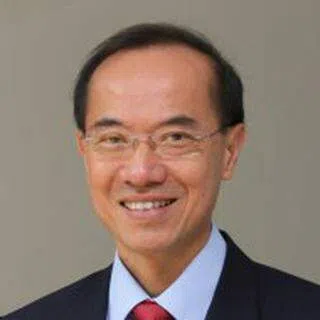

Good evening. I’m George Yeo. I served in the Singapore government for 23 years from 1988 to 2011, including as minister for foreign affairs and minister for trade and industry.
I first became involved with APEC when it was created in Canberra in 1989 as a ministerial meeting. I was there at the beginning and have watched APEC’s evolution. Over the years, China, the United States and the wider Pacific have changed dramatically.
Today, the world is becoming multipolar, and the risk of the Pacific dividing into competing blocs should be a serious concern. So I would like to take you back to why APEC was created in the first place and ask what role APEC can play in keeping the Pacific connected in the coming decades.
Bringing China into APEC
A key long-term strategic objective when APEC was formed was to keep both sides of the Pacific together in peace and cooperative development. The main agenda item then was how APEC’s membership should be gradually widened to include countries from all around the Pacific Ocean. A particularly important issue was the participation of the Chinese mainland, Hong Kong, and Taiwan, in a manner acceptable to all APEC members. At that time, this was the most sensitive issue surrounding APEC’s expansion. There was little prospect of meaningfully widening APEC’s membership without addressing the participation of the Chinese mainland, Hong Kong — then under British administration — and Taiwan.
The second ministerial meeting was held in Singapore in 1990. Finding a way to bring in “the three Chinas” was the most important subject of discussion. The US was particularly keen to bring in China. The US Secretary of State was Jim Baker; his deputy was Robert Zoellick, with whom I became a close friend, till today. In fact, we just had dinner together in Singapore last Sunday.

In January 1992, President George Bush Sr. and Chinese President Yang Shangkun visited Singapore a few days apart. I was Senior Minister Lee Kuan Yew’s notetaker for both meetings and saw how the Americans were keen to incorporate China into the global economy. Senior Minister Lee suggested to President Yang that China should join GATT (General Agreement on Tariffs and Trade), the precursor to the WTO, as quickly as possible, thereby avoiding the annual debate over MFN (Most Favoured Nation) for China in the US Congress.
Before the next ministerial meeting in Seoul in 1991, the US negotiated a formula with Beijing which made APEC a conference, not of countries, but of economies. Hong Kong’s and Taiwan’s subordinate status was reflected in their lower representation at APEC meetings, with one instead of two ministers. And this is the reason why no flags are flown at APEC meetings; no national anthems are played. When the US, as chair of APEC in 1993, elevated APEC into a leaders’ meeting in Seattle, it was called a meeting of economic leaders and not a summit. The agreement on Taiwan’s representation made clear that all member countries kept true to a One-China policy.
The role of the US and China
I recount this history because it is worth remembering that the United States played a critical role in supporting China’s participation in APEC and making what we have today possible. In recent years, US engagement with APEC has waned. This is not conducive to the future of cooperation across the Pacific. China’s hosting of the APEC Leaders’ Meeting in Shenzhen this November is an opportunity to strengthen dialogue and promote cooperation across the Pacific.
President Xi Jinping’s successful visit to Washington DC last month, following President Trump’s successful visit to Beijing a few months earlier in May, gives us reason to be cautiously optimistic. The warm manner in which each side played host to the other shows the importance both sides place on their bilateral relationship. It is the most important bilateral relationship in the world and affects every country.
In November last year, the White House issued a National Security Strategy document laying out a long-term policy to consolidate the US around its own hemisphere, from Greenland all the way down to South America. This is not an easy task, and even if it can be done, it will take a long time. President Trump’s rough way of treating America’s neighbours has made the implementation more difficult. There is, however, an organic logic to the goal of bringing a large contiguous region together which has three oceans, abundant natural resources including energy, and a relatively young population.

The National Security Strategy is likely to continue beyond President Trump. The US today is over-stretched. Current US debt is unsustainable. The interest payment on that debt alone exceeds the entire defence budget. Rolling that debt to the future in a rising interest rate environment will only worsen America’s fiscal situation. The status of the US Dollar will eventually be impacted. If nothing else, the National Security Strategy is needed to put the US economy on a sounder financial footing.

Get the ThinkChina Weekly Newsletter
Insights on China, right in your mailbox. Sign up now.
By subscribing, I agree to SPH Media's Terms and Conditions and Privacy Policy.
Two camps divided?
The danger, however, is that the Pacific will be split down the middle into two potentially hostile camps. This was the fear when APEC was established in 1989. This should be our fear today, which is why the coming Shenzhen meeting is so important.
On our side of the Pacific, the RCEP (Regional Comprehensive Economic Partnership) is progressing well as the world’s largest free trade area. It is organic because the member states are united by geography and history. We must never allow the RCEP to become a trade bloc in opposition to an American-led trade bloc across the Pacific. This would completely go against everything the WTO and APEC stand for.
Unfortunately, the WTO has been weakened by the US, which has been blocking the appointment of judges to WTO trade tribunals. Without tribunals, the WTO is ineffective. President Trump, in particular, prefers to bilateralise all trade arrangements.
APEC’s role in keeping the Pacific together requires leadership and creative ideas. Shenzhen is a good venue because the Pearl River Delta has been an important gateway to the Indian and Pacific Oceans for China ever since Qin Shihuang unified China over two thousand years ago. When China embarked on its policy of reform and opening up in 1978, Shenzhen and Zhuhai led the way because of their proximity to Hong Kong.
Towards unity, not division
In Washington DC, President Xi announced a programme to invite a hundred thousand young Americans to visit China over the next five years. This is an excellent initiative. We should consider gradually widening this program to cover all of APEC, with every member economy inviting young people from other parts of the Pacific to visit. In this way, we will help a younger generation understand the diversity of the Pacific, the importance of peace and the benefits of cooperation. A positive-sum view of Pacific development will usher in an era of peaceful growth benefiting the entire world.

In November this year, the world will see a new China through the lens of Shenzhen. China’s development benefits the world as much as world development benefits China. The crucial challenge is to convince the US that China’s development is good for the American people, that China is not a threat to America. As President Xi said in the White House, the Great Rejuvenation of the Chinese Nation and President Trump’s goal to Make America Great Again can and should be mutually reinforcing.
APEC was born at the end of the Cold War with a simple but important idea: the Pacific should not be divided. Economies on both sides of the ocean could remain different in their political systems and development paths, yet still trade, cooperate and learn from one another.
That idea is just as relevant today. The challenge before APEC is to prevent blocs from dividing the Pacific. This requires, above all, good people-to-people relations.
Shenzhen, therefore, offers more than a venue for an important meeting. It offers an opportunity to revive the original spirit of APEC and for all of us to envision an Asia-Pacific in which China, the United States and other economies in our region can grow together in peace.
For the younger generation, this is about creating an Asia-Pacific which is open to everyone and, in an age of AI, an Asia-Pacific which opens up exciting new possibilities for a better world.
Related: Shifting tides: Why global approval is swinging from US to China | APEC Summit: Can Beijing pull off a Trump-Xi-Putin meeting?
Popular This Month
Get the ThinkChina Weekly Newsletter
Insights on China, right in your mailbox. Sign up now.
By subscribing, I agree to SPH Media's Terms and Conditions and Privacy Policy.