Jensen Huang: Security risk or witch hunt?
An extramarital affair involving an alleged Chinese spy puts Nvidia’s founder Jensen Huang under intense political scrutiny, testing whether legitimate security fears risk becoming an ethnic loyalty test. Commentator Deng Yuwen looks into the matter.
10 Nov 2026
Politics
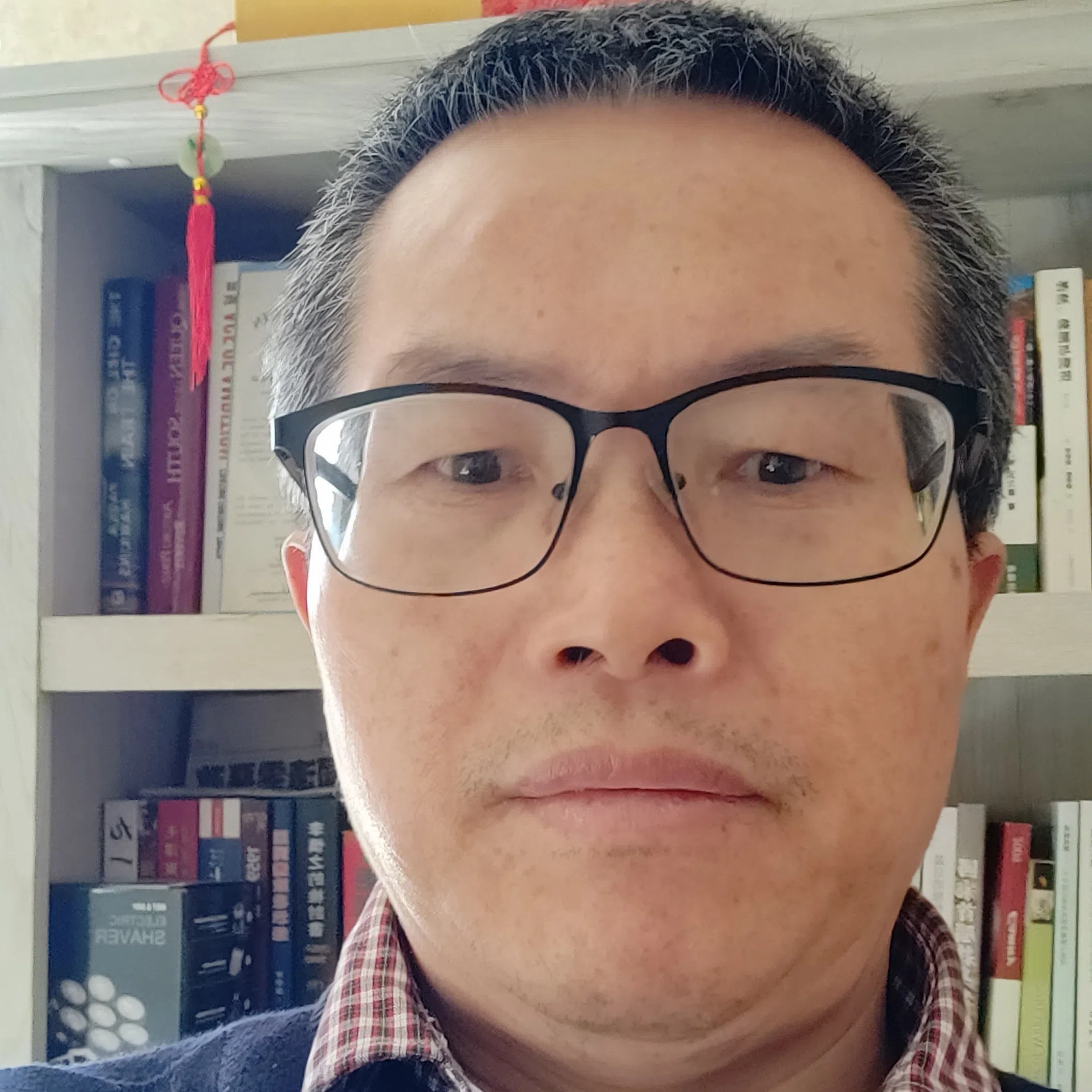

The scandal over Nvidia founder Jensen Huang’s extramarital affair is becoming a controversy with implications for American technology and politics. The New York Times has reported on his intimate relationship with Huang Le (Alice Huang), a businesswoman suspected of Chinese intelligence links. US intelligence agencies had long known about the relationship, and US Secretary of State Marco Rubio reportedly warned senior Trump officials in a classified memorandum. Huang has acknowledged the affair; Nvidia’s board has launched an independent investigation.
Is this legitimate national-security scrutiny, or a political witch hunt against a Chinese American entrepreneur? The evidence does not yet establish the latter. But the timing of the disclosures, the political interests involved and America’s history of investigating scientists of Chinese descent suggest a real risk. Even if Jensen Huang is cleared of leaking corporate secrets or being manipulated by Chinese intelligence, his relationship with Washington may be permanently altered.
Commercial realism, not espionage
First, whether Huang Le is a Chinese spy and whether Jensen Huang was influenced by Chinese intelligence are separate questions. US intelligence officials reportedly assessed that Huang Le had been recruited by a Chinese intelligence agency, but their evidence have not been made public, and Beijing denies the allegation. Even if she worked for Chinese intelligence, it does not prove she influenced his business decisions.
There is an intriguing contradiction. Jensen Huang has long urged Washington to let Nvidia sell advanced chips to China. If Huang Le’s mission was to get close to him and encourage looser export restrictions, Beijing should have welcomed the success of his lobbying. Yet US media report that roughly 600,000 Nvidia H200 chips remain in Hong Kong because China has not approved large-scale imports. Why work to secure Washington’s permission to sell chips, only to decline to buy them? The gap between the alleged mission and China’s actual policy demands an explanation.

This does not prove Huang Le is not a spy; an intelligence operation could have other objectives. But Jensen Huang’s pursuit of the Chinese market is readily explained by commercial interests. No espionage plot is needed. When business judgments and private relationships are combined to question someone’s political loyalty, the logic begins to resemble a witch hunt.
America has a recent precedent: the China Initiative, launched in 2018 during US President Donald Trump’s first term.
The programme targeted alleged Chinese economic espionage, technology theft and intellectual-property violations — genuine security concerns from Washington’s perspective. But investigations increasingly swept up Chinese American scientists at universities and research institutions. Questions about grant applications and disclosure of academic ties were handled within a national-security framework. Suspected misconduct that should have been assessed on its merits acquired political significance merely because researchers had connections to China.
Massachusetts Institute of Technology professor Gang Chen was one example. Prosecutors charged him with concealing research ties to China, but dropped all charges in January 2022, acknowledging they could not meet the burden of proof for a criminal case. His legal vindication could not erase the damage to his reputation, career and family.
A month later, the Biden Justice Department terminated the China Initiative. Matthew Olsen, assistant attorney general for national security, acknowledged that the programme had fuelled perceptions of bias and mistrust towards people of Chinese descent, and risked chilling American research. The department did not dismiss genuine Chinese intelligence threats. It recognised that national security cannot justify compromising standards of investigation and prosecution.

Nor did ending the initiative solve the underlying problem. A January report by the Government Accountability Office found that federal research-security reviews still risked discriminating against researchers of Asian descent, while agencies had not adequately assessed their safeguards. The institutional problems exposed by the initiative survived its name.
Loyalty becoming an identity test
Huang is very different from the scientists investigated then. He commands enormous legal, financial and political resources. Yet the underlying question remains: does a Chinese American’s connection to China make that person more vulnerable to suspicions of divided loyalty?
Born in Taiwan and raised in America, Huang built one of the country’s greatest technology success stories. Nvidia is now central to America’s advantage in artificial intelligence (AI). He should embody American innovation. Yet the more he emphasises China’s importance as a market and opposes excluding it from the US technology ecosystem, the more wary Washington’s China hawks become.
That wariness has policy grounds. Washington fears advanced chips could accelerate China’s AI and military capabilities. But policy disagreement is not evidence of disloyalty. An entrepreneur may see expanded sales as serving American interests, while a national-security official believes tighter restrictions serve them better. Both are strategic judgments. If ethnicity and private contact with a Chinese national become grounds for questioning the entrepreneur’s loyalty, legitimate scrutiny risks becoming an identity test.
The political timing is especially striking. The New York Times published its first report on 29 October, five days before the midterms, when a major Democratic victory was widely expected. After the vote came further disclosures about Huang’s relationship and the classified memorandum. Yet Trump had reportedly known of the intelligence since 2025, and Rubio had raised concerns in the spring. These were not new developments.

Get the ThinkChina Weekly Newsletter
Insights on China, right in your mailbox. Sign up now.
By subscribing, I agree to SPH Media's Terms and Conditions and Privacy Policy.

Why did information held for so long emerge so intensively just as political power was about to shift? The timing inevitably raises questions. Journalists may have needed time to verify their reporting; publication may simply reflect the investigation’s progress. There is no basis to conclude The New York Times coordinated with Democrats or intelligence officials. But the disclosures entered a dramatically changed political environment.
With Democrats retaking both chambers of Congress, Trump and his business allies will face tougher oversight beginning in January 2027. Huang is among the technology executives closest to Trump, enjoying direct access to the president and achieving some success on chip-export policy. The affair could thus become an opening to ask why Trump discounted intelligence warnings and backed looser export restrictions.
Pursuit of political ends
Opposition to Huang is not limited to Democrats. Three Republican committee chairs first demanded that he explain himself to Congress. On 9 November, House Democratic leader Hakeem Jeffries also called for further investigation and tighter chip-export restrictions. The pressure reflects overlapping interests involving national security, technology policy and presidential power, rather than a simple partisan divide.
That makes Huang’s predicament especially difficult. There does not need to be any coordinated conspiracy for different actors to exploit the same crisis. China hawks want tighter controls on Nvidia’s sales. Congressional opponents want to investigate Trump. Nvidia’s board must protect shareholders and ensure national-security compliance. These forces need not act together to narrow Huang’s freedom of action.
Another question follows: how much independence can the founder of a company so central to America’s AI strategy retain? Huang is Nvidia’s defining figure, but owns less than 4% of its shares and lacks entrenched supervoting rights. The board can oversee management or change the leadership. Policymakers, security agencies and institutional investors have growing reasons to scrutinise Nvidia’s decisions.

That does not mean they have joined forces to oust him. Yet the investigation could provide an opportunity to reshape corporate governance. Huang might remain CEO while facing tighter oversight of China-related operations, customer screening and export compliance. His strategic autonomy could shrink without an open contest for control.
Whether Huang is being subjected to a witch hunt should therefore not be judged solely by whether he keeps his job. The more revealing questions are whether investigators follow the evidence, whether commercial disagreement becomes a loyalty test, and whether unproven espionage allegations are used to pursue political ends outside ordinary procedures.
Cost to innovation
For Chinese American scientists and technology entrepreneurs, the implications are unsettling. One of the China Initiative’s worst consequences was to make ordinary international academic cooperation seem suspect. Researchers feared their Chinese background itself could count against them. If even Huang can become caught up in espionage allegations, others will naturally grow more cautious.
America has the right to protect its national security and investigate suspected foreign intelligence activity. But scrutiny must focus on specific conduct, not allow ethnicity, commercial ties and political views to reinforce one another until suspicion becomes a presumption of guilt. If that happens to Huang, a new witch-hunt mechanism may take hold without anyone formally reviving the China Initiative.
American technology has thrived in large part because the country attracts people of different national and cultural backgrounds and allows them to innovate and prosper. If national-security anxiety steadily erodes that openness, the cost will be borne not only by Huang or other Chinese American scientists, but by America’s own innovation system.
Huang’s infidelity is one matter; whether the US government should investigate possible Chinese espionage is another. If the two become a test of whether a Chinese American entrepreneur is sufficiently loyal to the US, the lesson will no longer concern one man’s private morality. It will be about how national security can quietly turn into political witch-hunting.
Popular This Month
Get the ThinkChina Weekly Newsletter
Insights on China, right in your mailbox. Sign up now.
By subscribing, I agree to SPH Media's Terms and Conditions and Privacy Policy.