Jensen Huang’s affair puts US-China AI chip rivalry on a knife-edge
Nvidia CEO Jensen Huang’s affair with a businesswoman tied to Chinese chip networks threatens to reshape Washington’s AI export rules and split the tech world. Lianhe Zaobao associate China news editor Sim Tze Wei examines what is at stake.
12 Nov 2026
Politics
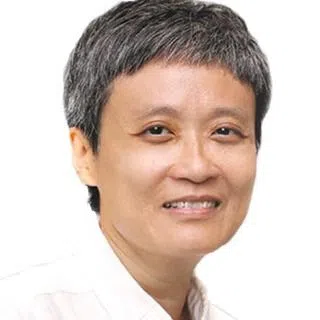

(Edited and refined by Bai Kelei, with the assistance of AI translation.)
“The first to suffer is the auntie selling guavas at Tonghua Night Market, or wherever it was. She thought Jensen Huang flew to Taiwan every time just for her. Only now does she know it was actually for a mainland Chinese female spy, Alice Huang.”
“Jensen Huang is already 63 and still going above and beyond to bring in clients for Nvidia. What excuse do you have for not working hard?”
Since Nvidia CEO Jensen Huang admitted to an affair, social media users have been churning out jokes and taunts.
The sharpest was this: “There’s no way it was just an affair. But admitting to only being unfaithful was the easiest way out.”
Successive revelations by Western media have given the “two Huangs” saga all the ingredients of a blockbuster: sexual intrigue, suspected espionage, covert business dealings, chip smuggling, geopolitics and state secrets. It could even rival a classic James Bond film. In hindsight, US President Donald Trump’s last-minute invitation for Jensen Huang to fly with him to Beijing in May had already set the stage for the controversy.

Did a suspected female spy get close to a tech titan, using their personal relationship to secure chips while sounding him out for information? Or was the tycoon merely playing along and entertaining a client to protect his company’s China market? Where did seduction end, commercial interest begin, and core national security come into play?
Tracing Alice Huang’s chip network
The man at the centre of the affair heads Nvidia, the global leader in computing power. The woman, Alice Huang, previously controlled and managed Singapore-based cloud computing provider Megaspeed. The escalation of a sex scandal into a major business and national security affair has much to do with the picture Western media have pieced together of her business network.
As a key Nvidia cloud partner in Southeast Asia, Megaspeed’s core business is buying graphics processing units (GPUs) and supplying computing power to third parties. The Financial Times reported that Alibaba was Megaspeed’s biggest customer. Through a Singapore subsidiary, Alibaba had extended loans to Megaspeed’s Malaysian subsidiary, Speedmatrix, with Speedmatrix’s entire business pledged as collateral.
Bloomberg’s analysis of customs records found that, from 2023 to November 2025, Megaspeed imported at least US$4.6 billion worth of Nvidia hardware, comprising more than 130,000 GPUs.
An investigation by US technology news outlet The Information found that the corporate network established by Alice Huang, her husband and her younger sister centred on cloud service provider Shanghai Century Litong. The company had secured Nvidia’s preferred cloud partner status, giving it priority access to chips. Citing people familiar with the matter, the report said Alice Huang used her relationships with Nvidia and its distributors to help coordinate supplies when orders were restricted. The transactions involved at least US$7.5 billion worth of Nvidia chips shipped to China — about 240,000 chips, including H100s, H200s and some A100s.

Although the companies involved have all issued statements denying wrongdoing and insisting they complied with regulations, a recent Reuters report on sanctioned entities indirectly renting or buying advanced chips through intermediaries has compounded the controversy. Northwestern Polytechnical University, one of China’s “Seven Sons of National Defence” and a US Entity List designee, bought two Nvidia H200 chips last month through Shaanxi Bosuan Network Technology for 874,700 RMB (US$131,100). Since the start of this year, it has also obtained advanced computing capacity powered by H200, A100 and A800 chips through multiple rental contracts.
From personal scandal to criminal risk

Get the ThinkChina Weekly Newsletter
Insights on China, right in your mailbox. Sign up now.
By subscribing, I agree to SPH Media's Terms and Conditions and Privacy Policy.
While the commercial links traced by Western media still await official verification, they have raised two key questions. Did Alice Huang and Megaspeed effectively circumvent US technology export controls on China through third-country purchases, data centre rentals or physical transhipment? Did Jensen Huang know, and did anyone within Nvidia help evade export controls, or were there material disclosure issues?
The authorities will determine whether this remains a matter of shortcomings in corporate compliance or escalates into serious criminal charges.
Jensen Huang’s crisis management strategy has been to keep the focus on the extramarital affair, which may minimise the damage. Infidelity damages personal integrity and reputation but is not, in itself, a criminal offence in the US. However, anyone found to have wilfully violated US export controls could face up to 20 years in prison upon conviction. If economic espionage or the disclosure of national defence information is established, the consequences would be even graver.
Closing Washington’s chip loopholes
If US regulatory authorities ultimately determine that the relationship between the two Huangs involved intelligence gathering or the circumvention of export controls, it could become a political turning point for the sweeping escalation of US efforts to restrict China’s access to AI chips. The US Department of Commerce’s Bureau of Industry and Security could close regulatory loopholes governing the rental of computing power overseas and impose stringent end-user tracking and traceability checks in Southeast Asia and elsewhere.
Jensen Huang has long lobbied Trump to ease restrictions on chip exports to China, arguing strongly that maintaining commercial supplies to China will help the US preserve the dominance of its technology ecosystem. Now embroiled in national security suspicions and a scandal over his personal conduct, Huang’s credibility has been badly damaged. His earlier arguments could come back to haunt him, leaving him with no influence over policy.

Three Republican House committee chairmen have already asked Jensen Huang to brief Congress behind closed doors on 18 November about his relationship with Alice Huang and Nvidia’s safeguards against infiltration by foreign intelligence agencies. Lawmakers are also concerned about the national security risks of China gaining access to sensitive US technology and information. Trump said the FBI was investigating the matter.
The 18 November briefing falls during the APEC summit in Shenzhen, where the Chinese and US leaders are expected to meet. With the Democratic Party having regained control of both the House and the Senate, the new Congress will take office next January. The Trump administration will then face greater congressional oversight and legislative pressure, potentially making it harder to retain flexibility in technology policy towards China.
Two parallel AI worlds?
This affair has grown beyond a personal crisis for Jensen Huang and its aftermath could expose further layers of business dealings. If the US tightens chip exports, will that force China to accelerate its own research and development to take its chip capabilities to the next level, as Huang predicted? Or will the US and its allies continue to widen the gap through their advantages in advanced chips, manufacturing equipment and the AI ecosystem? Once Chinese and American AI technologies take irreversibly divergent paths, will the global computing landscape split completely into two parallel systems?
From an extramarital affair to suspected espionage and alleged smuggling, and then to a geopolitical incident that could disrupt the global AI supply chain, the “two Huangs” scandal might just be a tantalising trailer for the drama to follow in the China-US competition.
This article was first published in Lianhe Zaobao as “一场可能冲击全球地缘政治的婚外情”.
Related: Why China isn’t rushing to buy Nvidia’s H200 AI chip | US and Chinese chipmakers tread different paths in AI gold rush
Popular This Month
Get the ThinkChina Weekly Newsletter
Insights on China, right in your mailbox. Sign up now.
By subscribing, I agree to SPH Media's Terms and Conditions and Privacy Policy.