From food to official scandals: Chinese we-media expose what state media doesn’t
Independent online investigators in China increasingly expose official misconduct and food safety scandals, areas where mainstream media falls short. Lianhe Zaobao correspondent Zhang Guanghui explores their rising influence, risks and motives.
26 Oct 2026
Society

(Edited and refined by Candice Chan, with the assistance of AI translation.)
Liu Yuan, who took office as mayor of Xinzhou in China’s Shanxi province in June, resigned in late September after just 88 days in the job, becoming one of China’s shortest-serving mayors. Reacting to Liu’s departure, a prominent Weibo influencer hailed it as “a remarkable achievement for China’s independent online media (or we-media)”.
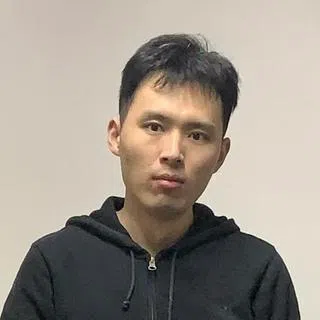
In early September, weeks before Liu’s resignation, an article accusing him of covering up a fatal traffic accident 20 years ago went viral on Chinese social media. The article alleged that Liu had driven an official vehicle against the flow of traffic, causing an accident that killed one person and injured six others, before paying to settle the matter and escape criminal prosecution. Its author was Liu Hu, a prominent independent journalist who has spent years exposing misconduct among local Chinese officials.
In February this year, Liu Hu and his associate Wu Yingjiao were detained after publishing an article critical of local officials in Sichuan province. Their arrests sparked public concern, and the pair were released on bail pending trial after two weeks in custody. Over 200 days later, police in Chengdu, Sichuan province, lifted the restrictions imposed on Liu Hu, citing “changes in the circumstances of the case”.
On 11 September, Zhou Ze, a prominent Chinese criminal defence lawyer representing Liu Hu, made public the police notice lifting the restrictions. Declaring that Liu Hu was now “completely free”, Zhou wrote on Weibo: “The criminal proceedings have ended. Liu Hu no longer needs to stand trial.”

In recent years, independent online journalists and commentators such as Liu Hu have garnered widespread attention with articles that hold public officials and institutions to account, exercising what is known as “supervision by public opinion”.
Officially, Beijing defines “supervision by public opinion” as an “important part of the socialist supervision system with Chinese characteristics”. The term traditionally refers to the role of state media “representing the people” in supervising government departments and public officials.
Yet, a growing number of scandals involving matters of public interest — from the recent “formaldehyde cabbage” controversy to the sexual molestation scandal involving a Hangzhou official at a drinking session — have come to light through the efforts of independent online media, and such revelations have stirred public outrage and forced the authorities to respond.
But as independent investigators increasingly take the lead in exposing wrongdoing, they also face difficult questions about the boundaries between commercial interests and the public good.
Is Liu Hu really ‘completely free’?
A former investigative journalist, Liu Hu first made a name for himself by publicly accusing several senior officials of wrongdoing under his real name. In recent years, many of the articles he has published independently online have directly challenged government agencies and officials across China.
On 29 January, Liu Hu and Wu Yingjiao published an article on a Sichuan county party secretary who once drove a professor to his death and subsequently pushed an investment firm towards bankruptcy. Three days later, on 1 February, Chengdu police crossed provincial borders to arrest both men and launched an investigation into suspected false accusations and illegal business operations.

When the pair were released on bail pending trial, Chengdu authorities issued a statement claiming that Liu and Wu’s article contained numerous inaccuracies. On 10 September, police lifted the bail restrictions imposed on Liu Hu.
Lin Feiran, a lawyer with King & Capital Law Firm in Beijing, told Lianhe Zaobao (LHZB) that lifting bail restrictions did not mean that the case had been formally closed. He described the claim that Liu Hu was “completely free” as “probably an optimistic assessment”.
“In theory, if the police uncover new facts or evidence during their investigation, they can still impose compulsory measures on the individuals concerned and refer the case to prosecutors for review and possible prosecution. Of course, in reality, it is quite possible that the case can no longer be taken any further.”
Paid articles, illegal operations
In an analysis published in February, Huang Yingsheng, a former judge with China’s Supreme People’s Court, argued that if Liu Hu had merely published articles scrutinising and criticising officials, a conviction for making false accusations would be highly unlikely without evidence that he had deliberately fabricated criminal allegations and maliciously reported them to the judicial authorities.
The charge of illegal business operations, meanwhile, has long been criticised by China’s legal community as a catch-all offence.
Independent media outlet The Aquarian (水瓶纪元) noted that the charge against Liu Hu had sent a chill through China’s independent online media community, exposing the elephant in the room: could accepting payment to publish articles constitute a crime?
The outlet noted that Liu Hu had made no secret of accepting payment for articles, which he regarded as a form of “private redress” or self-help — a means for individuals to seek justice outside official channels.
Huang argued that paid publishing by independent online media was essentially an exchange of value for intellectual labour and the dissemination of information, and did not meet the legal criteria for illegal business operations. He had predicted early on that Liu Hu was “highly unlikely to receive a custodial sentence”.
Lin pointed out that independent investigators have limited means of gathering evidence and much less room for error when verifying facts. Their scrutiny of public authorities and powerful vested interests also makes them particularly vulnerable to complaints and legal action, leaving them facing exceptionally high compliance costs.
He acknowledged that lapses in compliance could, in some cases, lead to convictions for illegal business operations, while several other offences could also be invoked in similar circumstances.
The risks are illustrated by the case of Chen Jieren, another prominent Chinese independent online commentator who had previously exposed wrongdoings by senior officials. In 2020, a court in Hunan sentenced him to 15 years in prison for “picking quarrels and provoking trouble, extortion, illegal business operations and bribery”.

Chen was named one of Hunan’s top ten legal figures of 2006. Overseas organisations viewed his prosecution as punishment for speaking out, while Chinese media published lengthy investigations purporting to expose his illegal activities.
Independent investigations in China have, in fact, long occupied a grey area.
There are numerous examples of independent investigators uncovering the truth, filling gaps in official oversight and speaking up for vulnerable groups, helping to secure justice and resolve grievances. Some have done so voluntarily, while others have accepted payment.
But there is also a darker side to the industry, with some operators exploiting damaging information or spreading false allegations to threaten their targets and extort money.
In July, the Chinese Communist Party Central Committee announced plans to deepen its crackdown on organised crime, identifying “public opinion extortion” as a new form of criminal activity requiring particular attention.
Get the ThinkChina Weekly Newsletter
Insights on China, right in your mailbox. Sign up now.
By subscribing, I agree to SPH Media's Terms and Conditions and Privacy Policy.
Chinese police said some criminals posed as independent online media operators, fabricating allegations to generate public pressure before using that pressure to demand money. “They claim to be exercising public opinion supervision but are actually trying to extort these targets.”
Authorities across China have recently announced the dismantling of several criminal gangs involved in such schemes.
Independent investigators making waves
Zhou Ze once described Liu Hu’s work as involving “enormous risks”.
Even while on bail pending trial, Liu Hu and Wu Yingjiao continued publishing investigations into local officials.
In July, they were the first to expose a case in Hebei province involving allegations that officials had seized shares in a privately run secondary school. The pair later cited “relevant parties” as saying that Chinese Premier Li Qiang had “issued instructions” on the matter.
Since August, independent investigators have also helped bring several major scandals to national attention, propelling them to the top of China’s social media trending lists and prompting official action.

In July, Yu Tingdong, deputy chief for Hangzhou’s Binjiang district in Zhejiang province, forcibly molested a woman during a drinking session. Rumours about the incident circulated online, but the local government remained silent.
It was only after an online article went viral in August that Hangzhou authorities finally broke their silence and issued an official statement.
The legal representative of Yi Dichan (壹地产, One Property), the independent online media account behind the widely circulated article, is also a co-founder of Shoulouchu (兽楼处), another independent media outlet best known for its 2018 exposé “The King of Vaccines” (《疫苗之王》).
That article sparked nationwide outrage over a vaccine falsification scandal in China. The company involved was subsequently shut down, and several senior officials were removed from their posts.
In August, another independent blogger, known online as Yulie Qige (渔猎齐哥), posted a video exposing cabbage buyers in Hebei province who were using formaldehyde solution to keep their produce fresh.

On the same day, the online account Youyou Luming (呦呦鹿鸣) published an article exposing years of poisoning involving formaldehyde-tainted cabbage, further fuelling public outrage.
The authorities soon acknowledged that the allegations were true and thanked netizens for their supervision.
Filling the gap
Like Liu Hu, the people behind Shoulouchu and Youyou Luming include former investigative journalists.
Rose Luqiu, an associate professor at Hong Kong Baptist University’s School of Communication, told LHZB, “Some journalists who have left the profession still retain their sense of moral duty and social responsibility, even when they turn to independent online publishing.”
Luqiu said it was a good thing that China’s independent online media were moving beyond gossip and lifestyle content to take a greater interest in issues affecting ordinary people.

“If bread and butter issues can also reach a wide audience, more people will be motivated to pursue them.”
She also pointed out that most independent online media outlets focus on gathering and compiling information, and their ability to identify issues and recognise their significance helps stories gain online traction quickly. However, “independent online media are not quite filling the gap in doing what investigative journalists should do, because they don’t have the capabilities and resources”.
Following the formaldehyde cabbage scandal, former Global Times editor-in-chief Hu Xijin praised what he called “diligent and conscientious online investigators” for doing what accredited journalists and public officials should have done, but had either neglected or seriously overlooked, sounding crucial warnings for Chinese society.
He added that those journalists and officials “should feel ashamed to face these investigators”.
Under Chinese regulations, anyone conducting news interviews must hold official press credentials, which are issued almost exclusively to journalists working for state media.
Luqiu said, “Hu Xijin should be asking himself: why can’t China’s officially accredited journalists do this work?”
In September, Yulie Qige again exposed questionable practices, this time involving bamboo shoots fumigated with sulphur in Guangdong province.
China’s state-run news website Guangming Online also posed a pointed question: “When a lone independent blogger can so easily lift the lid on such practices, what does that say about the regulatory authorities?”
This article was first published in Lianhe Zaobao as ““短命市长”辞职背后:自媒体监督揭官场社会乱象频掀波澜”.
Related: China’s underground market for anti-corruption leaks | When tech writes the story, do we still need the press?
Popular This Month
Get the ThinkChina Weekly Newsletter
Insights on China, right in your mailbox. Sign up now.
By subscribing, I agree to SPH Media's Terms and Conditions and Privacy Policy.