Evergrande’s Hui Ka Yan: From rags to empire to prison
The collapse of Evergrande and its chairman Hui Ka Yan, marks the end of the man-made property boom in China. Lianhe Zaobao’s China news editor Yang Danxu traces the rise and fall of China’s former richest man.
15 Apr 2026
Economy
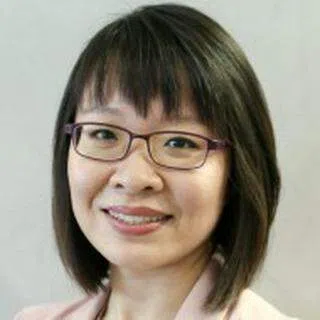

On 14 April, social media was again flooded with the name of Hui Ka Yan, China’s former richest man.
This week, the Shenzhen Intermediate People’s Court began hearing a series of cases involving property developer Evergrande Group, putting company chairman Hui, who was placed under mandatory measures in September 2023, back in the spotlight.
What Hui did
On 14 April, Chinese state media Xinhua released a brief report listing Hui’s alleged “eight sins”: illegally taking public deposits, fundraising fraud, unlawfully issuing loans, misuse of funds, fraudulently issuing securities, illegal disclosure of material information, embezzlement and corporate bribery. The report noted that after the prosecution and defence concluded their arguments, Hui delivered a final statement in court, where he pleaded guilty and expressed remorse. The court will announce its verdict at a later date.
The report did not disclose the amounts involved in the case concerning Evergrande and Hui. However, when the property tycoon was placed under mandatory measures in 2023, there were widespread reports that Evergrande’s massive debt hole had reached 2.4 trillion RMB (US$352 billion).
Over the past two years, authorities have gradually tightened their net around the series of Evergrande cases. In March last year, a work report by the Supreme People’s Procuratorate revealed that supervisory bodies in Guangdong, Beijing and elsewhere had investigated and prosecuted 42 individuals linked to the “Evergrande faction”. Chinese media analysis suggests the group may include Hui, his second son Peter Xu, Evergrande Financial Wealth Management general manager Du Liang, and Liu Yongzhuo, president of the company’s electric vehicle arm.

Some figures in the legal profession believe that, given the numerous charges Hui faces and the potentially enormous sums involved, the offence of fundraising fraud alone carries a maximum sentence of life imprisonment. If multiple offences are combined in sentencing, the 68-year-old Hui could spend the rest of his life behind bars.
Hui’s story
Hui’s life has been a story of dramatic highs and lows, almost legendary in character. Born into a poor rural family in Zhoukou, Henan, he lost his mother at a young age and worked as a farmer in his hometown after finishing high school. The year after China reinstated the college entrance examination following the Cultural Revolution, he gained admission to Wuhan Institute of Iron and Steel. After graduating, he was assigned to Wuyang Iron and Steel Company in Henan, where he quickly rose through the ranks to become a workshop director.
In 1992, during Deng Xiaoping’s Southern Tour, the 34-year-old Hui gave up the security of his “iron rice bowl” at a state-owned enterprise. With 20,000 RMB in savings and a resume of more than 30 pages, he headed south to Shenzhen to try his luck — each step thereafter riding the wave of China’s reform and opening up.
After arriving in Shenzhen, Hui first joined Zhongda (中达) as an employee. Two years later, he proposed expanding into Guangzhou’s property market. With a driver, cashier, sales staff and a general assistant, he went to Guangzhou and successfully secured a development project known as “Zhudao Garden” (珠岛花园), earning the company more than 200 million RMB.
In 1996, Hui decided to strike out on his own and founded what would later become Evergrande. Riding the wave of China’s rapid economic rise and the explosive growth of the property market, the company expanded quickly. Within just ten years, Evergrande had begun its nationwide expansion, soon establishing a presence in major core cities and bringing in international strategic investors.

Hui’s ambitions extended far beyond property development. From 2010, Evergrande diversified, gradually moving into property management, new energy vehicles, culture and tourism, sports, healthcare and wellness. Around 2015, the group systematically entered the financial sector, attracting large amounts of social capital by offering high returns. This also sowed the seeds for the risk-taking that would eventually lead to Hui’s downfall.
At that time, Hui was still at the height of his influence. He was elected a member of the Chinese People’s Political Consultative Conference in 2008, and later served two consecutive terms as a standing committee member. At the Two Sessions in March 2012, Hui was seen wearing an Hermes belt, becoming a focal point outside the Great Hall of the People. His moniker “Belt Xu” became an emblem of his then-flourishing success.

Get the ThinkChina Weekly Newsletter
Insights on China, right in your mailbox. Sign up now.
By subscribing, I agree to SPH Media's Terms and Conditions and Privacy Policy.
Although concerns over Evergrande’s excessively high debt ratio and the risks of its aggressive diversification never ceased, it was still widely regarded at the time as “everlasting and unshakable, growing ever stronger”. In 2017, Hui became China’s richest man with a fortune of 290 billion RMB.
Property bubble
Evergrande’s success was largely built on leverage, using a small amount of capital to control projects worth several times more. However, after China’s leadership introduced the principle that “houses are for living in, not for speculation” in 2016, and later drew the “three red lines” in 2020, the fundamental logic of the property sector was reshaped.
A wave of developers that built themselves on a “high debt, high leverage, high turnover” model saw their capital chains break. Evergrande, a textbook example of the “three highs” model, was mired in crisis. Compounded by the failure to repay billions of dollars of wealth management products, the once-celebrated industry leader found itself besieged on all fronts, and Hui was ultimately toppled from his pedestal amid the group’s debt turmoil.

Hui and Evergrande were very much products of a specific era. He possessed many traits typical of entrepreneurs: sharp insight, vision and courage. He recognised the trends of China’s urbanisation and the commodification of housing, and seized the opportunities presented by the country’s rapid economic growth during the reform and opening up period.
He was boldly ambitious, willing to break new ground, and relentless in effort and drive. Yet the other side of “wealth is sought in risk” was a disregard for risk, an extreme pursuit of profit, and even a slide into unscrupulous speculation and greed. In the end, he lost his way amid an ever-escalating gamble.
End of the myth
From a poor rural boy to a property tycoon and China’s richest man, and ultimately to a prisoner, Hui once built an empire from nothing and rose to extraordinary heights. Yet that myth has now collapsed, the splendour faded, leaving a huge mess of suppliers left unpaid, homebuyers who exhausted their life savings only to end up with unfinished properties, and investors who lost everything. The costs borne by these groups cannot be made whole by a single confession or his imprisonment.
The end of the myth of Hui Ka Yan and Evergrande is a sobering footnote to the shift of China’s property sector from rapid expansion to a return to rationality. Built on high leverage and rapid turnover, this crude growth model created immense wealth for a small number of people while also accumulating risks that society could no longer bear.
As the industry’s underlying logic has been reshaped, the long-standing narrative of China’s economy being heavily driven by real estate is gone with the wind.
This article was first published in Lianhe Zaobao as “许家印神话破灭”.
Related: [Big read] Colluding in deceit: Will PwC get a second chance in China after the Evergrande scandal? | High debts, big money: Can Evergrande continue its high life by living on the edge?
Popular This Month
Get the ThinkChina Weekly Newsletter
Insights on China, right in your mailbox. Sign up now.
By subscribing, I agree to SPH Media's Terms and Conditions and Privacy Policy.