[Photos] Witnessing history as a Taiwan reporter: Singapore in the 1980s and 1990s
How does a young Taiwanese reporter end up chasing history and love in Singapore? Historical photo collector Hsu Chung-mao takes a look back at the political engineering and leaders that shaped an era in Singapore, along with his personal ties to the country.
29 May 2026
History
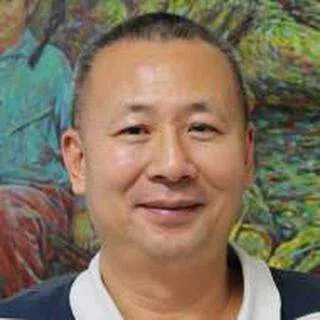

(All photos courtesy of Hsu Chung-mao.)
From about 1984 to 1997, my work as a young international news reporter often involved Singapore. This was the decade when Singapore’s first-generation leaders were preparing to pass the baton, and the second-generation leadership had just begun governing. During that period, the Soviet Union collapsed, the Cold War ended, and Singapore’s internal and external environment changed dramatically. I witnessed first-hand this critical period of historical transition.
From ‘bandit’ goods to a ‘red-light’ street
In 1981, I accompanied Taiwanese film director Lin Ching-jie to London for a film festival. During our transit in Singapore to apply for British visas, I stayed at the home of my elder sister’s Singaporean husband for two days.
At the time, Changi Airport Terminal 1 had just been completed and felt very grand. My brother-in-law’s flat was a first-generation HDB flat — much smaller and more crowded compared with today’s spacious layouts.
Back then, there were already many high-rise buildings in Singapore, but once you left the city centre in Orchard Road, the surroundings felt rather sparse. Near the department store Tangs, there were handicrafts from mainland China for sale. I found this fascinating because Taiwan had essentially rejected imports from mainland China for decades, calling them “bandit goods”; just possessing them could arouse political suspicion.
So, my first visit to Singapore not only showed me Singapore at that time, but I also indirectly had a sense of the real China. It was a fresh experience, one that would be difficult for Taiwanese people today to imagine. Also, almost every foreign visitor would be taken to see the transgender sex workers at Bugis Street, which was one of the attractions before the Singapore government cleaned it up.
In 1984, I began working as a reporter for the China Times in Taiwan, covering foreign affairs. At the end of that year, the Singapore Tourism Board invited foreign journalists to visit Singapore and encourage travel features about the country. Taiwan received four slots, and I represented the China Times. This was my first real experience travelling around Singapore.
At the time, the Sentosa monorail had just been completed, with some tourism facilities newly opened. The island’s tourist attractions and its original forests were still in relatively good balance. On the streets near Orchard Road, there were youths riding skateboards, obstructing pedestrian walkways, and newspapers commented that such behaviour was inappropriate.


I really began reporting from Singapore during my years as Southeast Asia correspondent from 1987 to 1990. In February 1986, the People Power Revolution broke out in the Philippines, with its demonstrations that involved millions and military coup. Ferdinand and Imelda Marcos fled, attempting but failed to fly into Singapore by helicopter, while Corazon Aquino, widow of the assassinated senator Benigno Aquino Jr, became president.
During the transition period, there were daily protests and demonstrations, and the situation was extremely turbulent, attracting frequent coverage from major international media outlets. I was posted to Manila as Southeast Asia correspondent, but the following year I moved to Singapore without informing my boss at the newspaper beforehand, because he certainly would not have agreed.
Following love and a new leadership
I moved to Singapore to be with my Penang-born girlfriend Maggie, who worked for Singapore Airlines and lived in Singapore. By the end of that year, we returned to Taiwan to get married. My boss, Mr Yu Chi-chung, was broad-minded; he tolerated reporters with strong personalities doing what they wanted, allowing them the fullest professional expression — and sometimes even pursuits that were not strictly professional.
So, from 1986 onwards, I saw what Singapore was really like. Prime Minister Lee Kuan Yew had already announced his intention for leadership succession in 1984, kicking off the political engineering for the handoff to the second-generation leaders.
After 32-year-old Lee Hsien Loong was elected to parliament in 1984, he was appointed minister of state for trade and industry and defence. In 1986, he became acting minister for trade and industry. In 1987, he became minister for trade and industry and second minister for defence.


At that time, there were weekly grassroots visits to engage with the public. My previous work experience in Taiwan was that, small as Taiwan is, politicians would be spending one or two hours travelling from one location to another by car. In Singapore, politicians’ grassroots visits were like moving from one street to another, about a 10-minute drive. That too was a new experience for me.
I remember once asking Lee Hsien Loong, “Is Singapore’s current style of governance the best?” — referring to the relatively strict governance. I told him I was a Taiwanese reporter and asked my question in Mandarin.
Instinctively, he replied in Mandarin, “Our country is small, so naturally it should be this way.”


Besides following ministers on grassroots visits, I closely followed the parliamentary debates broadcast on television, especially Prime Minister Lee Kuan Yew’s National Day and parliamentary speeches, which I listened to with great care. Lee Kuan Yew frequently used real examples from Singapore’s history, including experiences from his political career, to strengthen the rational basis of his policy arguments. I regarded this aspect as extremely important, because it was not merely news, but also explained how a country reached its present state.
Although I was reporting the news, understanding this aspect formed the foundation of news writing, because it provided the most important background knowledge.
Understanding Singapore’s soul
Later, I also bought various official government policy reports and studied them carefully. I went to the National Library to read old newspapers to deepen my understanding of Singapore’s history.
Over the next few years came the succession of the second-generation leader Goh Chok Tong, coinciding with the collapse of the Soviet Union and the end of the Cold War. The Malayan Communist Party (MCP), which had long operated along the Thai-Malaysian border, decided to lay down its arms. Newspapers carried extensive coverage about the MCP, especially the secret talks between MCP representative Fong Chong Pik and Lee Kuan Yew.
Lee repeatedly referred to this mysterious figure in his speeches as “The Plen” (short for plenipotentiary), and now the man had emerged publicly to tell his story. As a history buff, I was utterly fascinated by these reports. More importantly, through a deeper understanding of these historical events, I entered the soul of Singapore.
In 1987, I interviewed Malaysia’s founding father Tunku Abdul Rahman in Kuala Lumpur, revisiting the separation of Singapore and Malaysia, and discussing his views of Lee Kuan Yew, which gave me a more emotional understanding of the relationship between Singapore and Malaysia.


Also, within Singapore’s Chinese community at the time, terms such as “Chinese-educated students”, “English-educated students”, and “Nanyang University” all carried deeply complex cultural emotions. The period they referred to was not that distant and many of the people involved were still alive and far from old. Through my interactions with them I constantly felt the continuation of history.
In 1988, there was another important event: the International Varsity Debate Competition was held in Singapore, marking the first overseas contact between university students from both sides of the Taiwan Strait. Fudan University and National Taiwan University met in the final, with Fudan eventually winning the championship. Fudan’s faculty adviser was Wang Huning, later known as the “grey eminence” of the Chinese Communist Party, and currently the chairman of the Chinese People’s Political Consultative Conference.


Shortly after the debate competition, I made a trip to Fudan to visit them, and we became good friends. I wrote about this in ThinkChina. I returned to Fudan the year after the 1989 Tiananmen incident and met Professor Wang privately once again, having an emotional conversation about China’s future.
I have not yet written about this part, but I will organise my thoughts on it sometime. To put it simply, around the time of the Tiananmen incident, I had quite an experience, not only in terms of journalism, but also in a deeply personal sense.

Interviewing Singapore’s founding fathers
In 1991, Maggie and I moved back from Singapore to Taipei, where I became international correspondent and special assistant to the editor-in-chief of the China Times, enabling me to plan larger-scale news productions.
I started the newspaper’s “Country Special Edition” series, in which teams of reporters were sent to a country to conduct reporting across multiple fields, including history, politics, economics, culture and education. The first country I picked was Singapore. Arrangements went relatively smoothly, as I had established working ties with Singapore’s Ministry of Information and the Arts (MITA) during my previous stint there.
In 1992, we interviewed Lee Hsien Loong, George Yeo, and a few years later Teo Chee Hean — important second-generation leaders. Later, we interviewed one of Singapore’s founding fathers, the retired S. Rajaratnam, as well as former ambassador to the US Tommy Koh: famous figures whom I had previously only encountered through newspapers and television. Speaking with them in person gave me a better sense of them, and listening to them share their work experiences and their take on current affairs was invaluable.


I also produced a special edition featuring Singapore for the Taiwanese version of People magazine. With assistance from MITA, I once again brought a reporting team from that magazine to Singapore. This was my second interview with George Yeo, and I also interviewed Workers’ Party parliament member Low Thia Khiang, who had just been elected to parliament and was known as the “Teochew firebrand” (潮州怒汉).
My Singaporean writer friend Yeng Pway Ngon told me that after meeting Low privately, he was astonished that this Nanyang University graduate still retained such a strong Chinese-educated cultural temperament. Today, everyone would acknowledge that Low Thia Khiang represents an alternative model of Singaporean politics.


In 1993, my most important journalistic achievement was the interview with Lee Kuan Yew. As I had previously led a China Times reporting team to Singapore and had interviewed Lee Hsien Loong for a special country feature, we had established a relationship of trust with the Singapore government. So, the day before the high-level meeting between Association for Relations Across the Taiwan Straits (ARATS) chairman Wang Daohan and Straits Exchange Foundation (SEF) chairman Koo Chen-fu in Singapore, I applied to interview Lee Kuan Yew, since he had long maintained ties with both sides of the Strait and was very familiar with cross-strait affairs.
This first high-level meeting in Singapore immediately became a major international event, attracting over a thousand foreign journalists to Singapore. Fortunately, with the assistance of James Fu, Lee Kuan Yew’s press secretary at the time, Lee accepted our request. Together with China Times editor-in-chief Huang Chao-sung and a photographer, I travelled to Singapore to conduct the interview.

During the interview, Lee publicly expressed Singapore’s position on cross-strait relations on the eve of the Koo-Wang talks, and it became a classic piece. The press secretary first provided the initial transcript, which was then revised by Lee Kuan Yew before the final approved version was sent for me to translate into Chinese.
This was my greatest challenge, as it was highly politically sensitive material. The translation not only had to be accurate, but also had to reflect the sensitivities. In particular, because the content conveyed public political messages to the leaders of both Taiwan and mainland China, I had to accurately reflect the context of the remarks, which required a thorough understanding of the historical background.
One example was that Lee said Singapore’s position regarding the talks was “absolutely fair”, which I translated into Chinese as 不偏不倚 (impartial). The full interview went over 5,000 Chinese characters and included many details.
In 1997, we conducted a second interview with Lee Kuan Yew. During this period, I also published a Chinese-language collection of his speeches in Taiwan. I curated what I regarded as his most important speeches, mainly concerning history, politics, sovereignty and fundamental understandings of human rights. I proofread every word, refining the Chinese translations.
Later, I realised how deeply this process had influenced me. Unconsciously, I discovered that my own writing style had been shaped by Lee. He used plain language, practical examples, and emotionally infused narration to express important issues. To put it simply, every one of his articles had a target audience, and each article sought to touch people and influence their perspective.
This subconscious training enabled me to translate his 1997 interview transcript with far greater ease and to reflect the atmosphere of the era more accurately, and the style of writing has deeply influenced me, even today.
Related: [Photos] From poverty to prosperity: A century of social transformation in Singapore | [Photo story] Taiwanese historical photo collector: My ties to Singapore

Get the ThinkChina Weekly Newsletter
Insights on China, right in your mailbox. Sign up now.
By subscribing, I agree to SPH Media's Terms and Conditions and Privacy Policy.