Order amid chaos: China’s case as the world’s steady hand
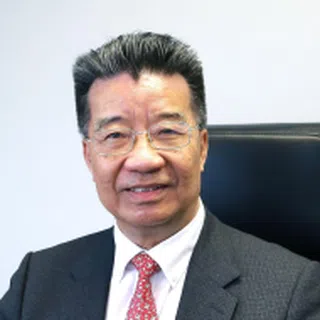
As war, protests and political strain batter the US, Russia and Europe, Hong Kong commentator Lew Mon-hung argues that Xi Jinping’s leadership has made China a stabilising force in a turbulent world.
2 Nov 2026
Politics

If one were to describe the global situation this year in one word, it would surely be “turmoil”.
The beginning of 2026 saw the continuation of the Russia-Ukraine war, with its accompanying bloodshed. On 4 January, Delta Force commandos air-dropped into Venezuela, captured President Maduro and his wife alive and took them to the US to be detained.
On 28 February, America and Israel raided Iran by air and sea to execute a decapitation operation, which was followed by the bombing of numerous Iranian targets; Iran, determined to not show weakness, not only launched multiple rounds of retaliatory strikes against the Persian Gulf states and US military bases in the region, but also closed the Strait of Hormuz. The conflict even spread to the Bab el-Mandeb Strait, the gateway to the Red Sea.
The worsening troubles in the Middle East led to a sharp rise in oil prices, as well as freight and insurance costs. Economies around the world consequently faced the severe threat of inflation and public discontent reached a boiling point.
In October, cities across France felt the anger of hundreds of thousands of protesters. Demonstrations escalated into widespread riots which tailspun into looting, vandalism and arson. Even now, other European nations are teetering on the edge of turmoil.
Turmoil batters major Western powers
The US itself is feeling the repercussions of global instability too. With the mid-term elections just days away, rising living costs, including higher diesel prices, coupled with the administration’s erratic stance and moral deficiency vis-à-vis the Russia-Ukraine war, are not helping President Trump. His approval ratings have plummeted to the lowest level since taking office.

Several former presidents across the bipartisan divide, including Clinton, Obama, Biden and George W. Bush, have launched scathing verbal and written attacks on his performance in domestic as well as foreign affairs. This leaves the Republican Party in a precarious position. Should it lose its majority in both the Senate and the House of Representatives following the mid-term elections, Trump will become a lame-duck president and things would become even more topsy-turvy for American politics moving forward.
As for Russia, another major power, its so-called “special military operation” against Ukraine has turned from the intended blitzkrieg into a war of attrition, in which the aggressor remains deeply mired. Consequently, Russia has not only suffered international isolation and sanctions, but its domestic situation has also been destabilised by the heavy war casualties and economic losses.
True value speaks for itself through comparison. As we survey the turbulent world of today, China is the only major power that remains steady in its boat, unfazed by the storm, so to speak. It is clear for all to see that China, in all its stability, has become the stabilising anchor for the stormy world.
In the Russia-Ukraine war, China is neither a party to the conflict nor a fanner of the flames, but has consistently called for reconciliation and talks. Amid the US-Israel-Iran conflict, normal friendly relations are maintained between China and Iran. Meanwhile, included in the eight-point consensus reached between China and the US during Xi Jinping’s September state visit is the following: “The two heads of state agreed that Iran should fulfil its commitment not to develop nuclear weapons, and that no country or institution should impose transit fees on international waterways.” This has garnered unanimous praise from the global community.

In dealing with the two major geopolitical hotspots, China has refrained from bloc confrontation, taking sides or biased mediation, but consistently advocates for peace and dialogue. It has thus become a universally recognised guardian of the international order that the UN Charter stands for, a defender of world peace and stability, and a great stabilising force in our turbulent world.
Domestic governance anchors China’s stability
Why is the Chinese side doing so uniquely well? It’s because of the steady leadership provided by Xi Jinping Thought on Socialism with Chinese Characteristics for a New Era. First, Xi Jinping made this landmark statement in November 2012: “The people’s wish for a good life is our goal.” While Marxism emphasised class struggle, the above assertion represented an important development of the ideology in keeping with the times. It laid the foundation for “a people-centred approach” to national governance, ensuring that China would proceed steadily and far along the path of “focusing on economic development”.
In November 2013, Xi Jinping put forth more ideas: “We must adhere to the ‘two unswervinglys’ in order to continue and improve our basic economic system. The Decision [of the Third Plenary Session of the 18th Central Committee of the Communist Party of China] proposes reform measures on multiple levels to encourage, support and guide the development of the non-public sector of the economy, and to stimulate its vigour and creativity.
On functional positioning, the Decision points out that both the public and non-public sectors are important components of the socialist market economy, and an important basis for China’s economic and social development. On the protection of property rights, the Decision points out that the property rights of both the public and non-public sectors are inviolable. On policy treatment, the Decision stresses equal rights, equal opportunities and identical rules, and a unified market access system.”

Get the ThinkChina Weekly Newsletter
Insights on China, right in your mailbox. Sign up now.
By subscribing, I agree to SPH Media's Terms and Conditions and Privacy Policy.
This series of measures represented a theoretical breakthrough for the Marxist theme of eliminating private ownership, constituting a theoretical innovation on the part of Xi Jinping Thought based on the actual practice of China’s contemporary reform and opening-up. This breakthrough invigorated China’s non-public sector and enterprises (being products of private ownership) from capitalist countries such as the US, Europe and Japan, who received reassurance regarding their entry into the Chinese market. This laid a solid foundation for China’s development into the world’s second-largest economy.

To end corruption within the bureaucracy, Xi emphasised the comprehensive implementation of law-based governance, while also advocating sustained, full and rigorous Party self-governance. Without exception, anyone implicated in corruption will face “zero tolerance” and be severely punished regardless of position, achievements or connections. This plays a decisive role in ensuring the integrity and probity of the ruling party, not to mention the security of the regime itself.
In recent years, as the world finds itself in a wave of technological revolution epitomised by artificial intelligence (AI), Xi has seized the opportunity to call for the “development of new-quality productive forces”. This has enabled China to achieve rapid development across various fields such as new energy vehicles, photovoltaics, wind power generation, lithium-ion batteries, and even AI, robotics, computing power, microchips and semiconductors. Productivity is elevated to new heights, greatly enhancing the country’s overall national strength.
It is precisely due to Xi’s strong leadership — as the core of the ruling party — on the fronts of politics, ideology, the economy, rule of law, science and technology that stability prevails within Chinese society.
Shared future guides global engagement
As the world’s second-largest economy and a permanent member of the UN Security Council, China bears a special responsibility for world peace and stability. Xi has broken free from the shackles of traditional thinking predicated on “world revolution” or triumphing over others, and put forward the momentous initiative of “building a community with a shared future for mankind”. The significance of this initiative, which is innovative and yet remains faithful to orthodoxy, is made clear by the fact of global diversity.
The world today comprises 197 countries and 36 dependent territories. Not only are the countries at different stages of development, they each have their own distinct history. Furthermore, among the 8 billion people on our planet, there are more than 2,000 ethnic groups and approximately 10,000 religious faiths and regional belief systems. It is therefore fundamentally impractical to adhere to a “holy war” mentality that pursues the submission of all to one (or the “victory” of one over others). Doing so would only bring endless strife on Earth.

Following the vision of “building a community with a shared future for mankind” entails a rethinking of the bilateral and multilateral relations between nations today, including China-US relations. These should accordingly proceed as a “race” in which all the runners strive to catch up with one another, rather than zero-sum competition. Xi’s conception best serves the common interests of all humanity and captures the greatest common denominator for fostering world peace and stability.
Cognisant that China-US relations are the world’s most important bilateral relationship, Xi is all for working together: “For China and the US to be partners and friends is not only an imperative revealed to us by history, but also a practical necessity.” “Both China and the United States stand to gain from cooperation and lose from confrontation.” It is against this backdrop that as many as four reciprocal visits by the leaders of both countries are planned (or have taken place) for 2026. Such a high frequency of summit diplomacy is unprecedented. It indicates that the constructive relationship of strategic stability between China and the US is gaining momentum.
In addition to consolidating its relations with the US, China firmly upholds the international system centred on the UN, as well as the international order based on international law. It is committed to multilateralism and strives to participate in global economic integration.
In summary, the core of Xi Jinping Thought is, domestically, to take the good life that the people wish for as the goal to strive towards; and, internationally, to build a community with a shared future for mankind. It embodies truths that hold true everywhere, and universal values for the present juncture of “great changes unseen in a century”. Under Xi’s leadership, China’s policies have been consistent, within expectations, responsible and credible over the long term, making the Asian powerhouse a key force in maintaining world peace and stability.
It is said that the success of a voyage on the ocean hinges on the helmsman. In the same way, a stable leadership core is of paramount importance to China’s modernisation and the great rejuvenation of the Chinese nation. Momentous decisions on exercising full and rigorous party self-governance have recently been made at the fifth plenary session of the 20th Central Committee of the Chinese Communist Party. The plenum also mapped out a long-term development blueprint that signifies the start of a new Long March for China’s modernisation. This further underscores the continuity and stability of China’s policies, and will surely make new contributions to resolving global turmoil and advancing world peace and stability.
Related: Will Xi’s corruption purges paralyse China’s bureaucracy? | US-China relations: No war, no peace, but a rivalry kept in check
Popular This Month
Get the ThinkChina Weekly Newsletter
Insights on China, right in your mailbox. Sign up now.
By subscribing, I agree to SPH Media's Terms and Conditions and Privacy Policy.