[Photos] Days by the sea: Remembering writer and revolutionary Chen Yingzhen
Rediscovered photographs from a 1987 trip to the Philippines bring back memories of Taiwanese literary giant Chen Yingzhen — his ideals and friendships, his unwavering convictions, and a rarely seen, carefree side of the famously serious writer. Historical photo collector Hsu Chung-mao goes back in time.
9 Oct 2026
History
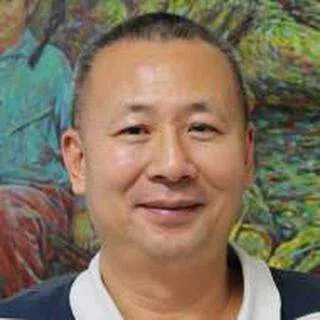

(Edited and refined by Candice Chan, with the assistance of AI translation. All photographs courtesy of Hsu Chung-mao.)
Chen Yingzhen (陳映真, 1937-2016) was a towering figure in Taiwanese literature. His nativist fiction traced the lives of idealistic young left-wing intellectuals in post-war Taiwan — their yearning for revolution, their commitment to it and, ultimately, their disillusionment.
Chen spent seven years in prison for his ideals. Yet even after his release, he retained a fierce independence, refusing to be tamed by the political and social environment around him. He gave voice to ordinary people by founding Renjian (《人間雜誌》), a photography and humanities magazine that profoundly influenced Taiwanese culture. He also established the China Unification Alliance and remained committed to cross-strait peace and what he saw as the future of the Chinese nation.
In 2006, Chen was invited to teach at Renmin University of China on the mainland, but later fell ill in Beijing. He was subsequently named an honorary vice-chairman of the Chinese Writers Association, reflecting the national recognition he had attained.
Chen died in Beijing in 2016. His classic literary works, and the example he set as a writer and intellectual, have left a lasting legacy in Taiwanese society.
I am much younger than Chen, and admired him enormously in my youth. To me, he was both a mentor and a friend.
Spontaneous friendship
In 1987, when I was the China Times correspondent in the Philippines, I invited Chen to visit so that he could gather material for his writing. I recently found some photographs I took during a trip to one of the outlying islands, and I am sharing them here, along with a few memories.
We took a bus to Batangas, then a big ferry to Puerto Galera on Mindoro, before transferring to a small boat bound for Sabang Beach, one of my favourite places. The scenery was amazing, with an azure sky and crystal-clear water where you could see all the way to the seabed. It was paradise on earth.

Chen had not expected to find himself at the seaside, much less come across such magnificent scenery. Of course, living in Taiwan, an island surrounded by the sea, it is easy enough to get to a beach. But this place was different. There was a languid, unhurried tropical air about it, with gentle breezes and coconut palms soaring towards the sky.
Chen devoted his life to social causes, spent seven years imprisoned on Green Island, and worked tirelessly throughout his life. He rarely had the chance to simply relax, which is why his smile is so radiant in this photograph of us on the beach, taken after a local had climbed a tree and picked a coconut for us to drink.


Another photograph shows Chen in a fishing village by the sea, dressed in what was very much his usual attire; many friends remember him looking exactly like this. Behind him stands a traditional Southeast Asian stilt house. This photograph is now a precious record of its time. This was the height of Chen’s creative career, when his reputation and influence were at their peak.
I was the one who first sought Chen out in 1984. I was then a young reporter at the China Times, which I had joined less than two years before. Like the literary-minded young people of that era, the name “Chen Yingzhen” was magical; it represented the passion of resistance, a sense of justice rooted in sympathy for ordinary people, and an irresistible literary talent. Naturally, I looked up to him with that same sense of reverence.


I was simply one among many young people with literary aspirations. While reporting in the Philippines, I witnessed the social tragedy created by the enormous gulf between rich and poor. After returning to Taipei, I wrote a short story about a young man who joins a protest march. As the long march wears on, he gradually becomes exhausted. Finally, overcome by fatigue, he leaves the procession at dusk.
I asked Chen for advice on my writing. He would never tell me how to write; he would simply tell me how something made him feel. He said: “What you wrote might well be true, but I really wish this young man could have fought to the very end.” Then he sighed.
A few days before Chinese New Year in 1985, I shut myself away at home and wrote a 20,000-character short story about the political and social turmoil triggered when a guerrilla force in South America seizes the national parliament. Of course, the fiction young people write is often a reflection of their inner selves.
Chen thought highly of the story. He said it was the first literary work he had read in Taiwan that portrayed social contradictions with such depth.
I did not pursue a literary career because it was simply impossible to make a living from writing alone. Yet, two years after writing that story, I travelled to Central America as a reporter and actually got to a guerrilla base. I was in the middle of a firefight, and witnessed for myself the brutal side of class warfare.
Chen and I never worked together. Sometimes we would go for quite a while without seeing each other, yet it always felt as though we had known and understood each other for years.
He was much older than I was. Although I have always remained young at heart, my willingness to put ideas into practice meant that I also acquired a worldly side and understood that getting things done sometimes required flexibility.
A revolutionary and idealist
In this respect, Chen’s revolutionary spirit was rooted in a certain innocence and purity. He was a revolutionary in thought, but not in action. The latter inevitably involves struggles for power and advantage, where one ultimately acquires something of the rough-and-tumble ways of the political underworld.
Chen, by contrast, remained every inch the gentleman intellectual. He was honest and proper in everything he did, and would never resort to manoeuvring or manipulation.
When he founded Renjian, he insisted on photography of the highest quality. Once circulation began to decline, he did not exploit his reputation to solicit money from all quarters, nor did he attach himself to organisations as an adviser so that others could finance his projects.
He was simply too much of a gentleman for that. When the money ran out, he closed the magazine, because if he owed anyone anything, he would be deeply troubled by it.
We shared a fascination with historical photographs. I once found a photograph of Chen from his days at Chenggong High School, taken when the May 24 incident of 1957 — where Taiwanese local Liu Ziran was shot and killed by an American military officer — had prompted him and his classmates to demonstrate outside the US embassy.
He smiled as he gazed at the photograph, and pointed to a classmate standing beside him. He told me that his classmate later went to Japan, became an advocate of Taiwan independence, and was imprisoned after returning to Taiwan.
These two Chenggong High School classmates had once stood together protesting what they saw as an American violation of human rights. In later years, each would be imprisoned for opposing political causes. Yet their friendship remained deep.
In the photograph of Chen and I on the island in the Philippines, I was not yet 30. There are many things in life that one only truly comes to understand with age.
Even so, there is one thing of which I am certain: Chen Yingzhen was a romantic revolutionary of ideas, an upright gentleman and a revolutionary who would never hurt anyone.
During our few days at Sabang Beach, Chen and I often ate at a wooden restaurant by the shore. It was the only relatively formal restaurant around, so there were some days when we ate both lunch and dinner there, and we had plenty of time to talk alone.
One evening remains particularly vivid in my memory.
That night, we talked for a long time, as I had questions that I hoped he might be able to answer. With none of the distractions of everyday life around us, he too opened up.
Outside, there was only darkness and the sound of waves breaking against the shore, while the dim yellow light fell across his face. Before long, our conversation became deeply personal, and his expression grew distant as he sank into memory and reflection.
He was a great writer, so naturally I asked him about the craft of writing. He explained many things, including how to construct characters, and techniques of description.
To tell the truth, I don’t remember much of all that. Once literary imagination is reduced to rules and formulas, it feels rather like trying to put clouds into a cage: their beauty, and all the mental images they inspire, somehow disappear.
Of course, in practice such techniques are necessary. A novel needs a rhythm that carries the story forward. A character’s emotional shifts need to make sense. And when a story gets long enough, a writer may even need to draw up charts just to prevent ridiculous contradictions from creeping into the plot.
But I truly don’t recall much of that discussion — even at school, I hated memorising formulas in mathematics, physics and chemistry. Yet when our conversation turned to the creative impulse itself, every word he spoke was etched in my mind.
I knew that characters in novels are often based on real people, and I asked Chen if the two people I had in mind were the prototypes for the characters in his novel Mountain Road《山路》. He merely smiled without answering, and I took that as my answer.
An exchange of ideas
The young Taiwanese who had embraced the idealism of left-wing revolution paid for it with their youth, only to face bewilderment and disillusionment when they later witnessed the degeneration of the Cultural Revolution.
And yet, that idealistic vision of life was like an intoxicating song, sung forever, always stirring the heart. Real-life suffering, hardship and displacement did not destroy idealism, but tempered it into an eternal poem.
The body may die and decay, but the spirit can become as mountains and seas, nourishing countless forms of life.
I was still young then and there was much I did not understand. “The Cultural Revolution was such an enormous disaster. Why did it attract so many young people?”
Chen replied calmly: “Think about it. That one party could have the courage to engage in such profound self-criticism, all for the good of the people: imagine the tremendous moral appeal.”
He also admitted that if he had been in mainland China at the time, he would probably have suffered terribly during the Cultural Revolution. Even so, his faith in China never diminished.
When our conversation turned to his old friend, US-based writer Daren Liu, Chen just smiled and said, “I never knew he studied plants so deeply.”
These two former ideological comrades subsequently followed different ideas, yet Chen was such a gentleman that he would never utter a word criticising an old friend. Liu once wrote an article indirectly criticising Chen, but Chen never publicly rebutted him, which showed how deeply he valued friendship. For Chen, attacking an old friend due to political differences would have amounted to an emotional betrayal; this was the exact opposite of the ruthlessness that is required of revolutionaries.
In his novel Mayfly Colony (《蜉蝣群落》), Liu expressed the futility and disillusionment of revolution, and started to criticise revolution itself. After this, he withdrew into seclusion, and his writing came to resemble rain falling on an empty mountain, imbued with the serenity and detachment of an ancient Buddha before a solitary lamp.
Chen also reflected on revolution. But once he had gathered his thoughts, he continued the fight by wielding his pen, where the beating of war drums was always heard.
Chen also mentioned a romantic relationship in his youth, immersing himself completely. As he spoke, his eyes receded into the past, and he fell silent for a moment — I did not press him further.
A visit to paradise on earth
In life, there may be a few conversations that we will always remember. Whether with parents, partners or friends, some things that are said will stay with us forever. For me, that conversation with Chen at a restaurant beside a beach on a Philippine island was one of them. Even today, when I close my eyes, I can still hear every word he said.
To travel among the islands, we used a small motorised boat known locally as a bangka, commonly called a “crab boat” in Chinese. This is one of the most common forms of coastal transport in the Philippines, with a long, narrow central hull, with wooden or bamboo outriggers extending from either side for balance, and a canopy overhead for shade.
Chen and I travelled in one of these boats along the coast. Through the crystal-clear sea, we could see coral and tropical fish below us, while ahead of us lay island after island, fringed with coconut palms.


I took a photograph of Chen aboard the crab boat, and wrote a short illustrated piece about the trip that was published in the literary supplement of the China Times. Soon after, Chen bumped into me and chuckled: “I look so fat, all my friends are laughing at me.” I could not help laughing too, when I saw how happy he was.
In fact, this was one of the most turbulent periods in Philippine history, where a constant pall hung over the political situation. The elusive guerrillas from the Communist Party of the Philippines were becoming increasingly active, even putting out news and generating considerable hype.
The military was unstable, with three or four failed coups in the space of a single year. A new constitution was being drawn up and put to a vote, and Manila saw demonstrations both for and against it almost every day.
President Ferdinand Marcos had fallen and the Aquino government had come to power after the bloodless People Power uprising. But military mutiny itself had become a model for political action: whenever people were dissatisfied, someone wanted to try it again. The transition in public loyalties was difficult and turbulent, involving clashes of ideas and political power — the situation never truly stabilised.
Yet the unrest on the streets was largely confined to Manila. Once you left the capital, there were peaceful islands and open seas. Surrounded by such magnificent nature, the spirit seemed to open up with the landscape.


We were very close over those few days. After that, we returned to our respective work and lives. Chen was busy all day with Renjian: holding editorial meetings, reviewing photographs, checking final artwork, supervising printing at the factory and worrying about circulation and sales.
I reported on Southeast Asia, travelling to Vietnam, Cambodia, Thailand and Indonesia. Later, I went to mainland China and eventually found myself caught up in the dark days of the Tiananmen incident.
Passing the baton
Chen and I did not see each other for many years, and it was not until I returned to Taiwan in 1991 that we began catching up over the occasional coffee.
After the late 1990s, Taiwan’s political and social environment changed dramatically. Localisation became mainstream, but it was not the left-wing localism represented by Chen, with its commitment to a vision of a people’s China. That historical tradition was almost severed in Taiwan. The ideas and sentiments Chen represented became increasingly marginalised, yet he remained the same scholarly idealist he had always been.
When the money ran out, the staff of Renjian dispersed and found other jobs, scattering into different corners of society while continuing to write and take photographs.
Even after the magazine folded, Chen continued to single-handedly organise exhibitions of historical photographs.
On the second floor of a building on Hengyang Road, he held a photographic exhibition featuring US imperialist aggression in Tibet. He took the materials to a computer company for proofs, wrote the captions, and even hung the photographs himself.
Before the exhibition opened, I visited his office — the former editorial office of Renjian, on the top floor of an apartment building. Freshly printed photographs lay everywhere across tables and chairs, left out to dry.
He was alone, yet not lonely, maintaining the composure and confidence of a lifelong dissenter with a smile on his face.
This was a former member of a left-wing reading group whom the Kuomintang (KMT) government had once imprisoned on Green Island for seven years in his youth. Yet as he watched the Taiwan independence movement grow stronger, he said anxiously: “I’m actually worried about the KMT now!”
He feared that the KMT would be unable to withstand the political momentum as localisation increasingly developed into support for Taiwan independence. He had not only reconciled with the KMT; they had, in effect, become part of the same national united front.
Chen’s good friend Huang Chun-ming continued writing fiction throughout his life, but Chen gradually produced less literary work. He devoted more of his attention to the cultural activities of the China Unification Alliance and to continuing his criticism of what he regarded as American and Japanese imperialism.
One day in 2006, Chen called me and asked me to come to his office. He pointed to a tall stack of screened printing films in a corner — the complete set of films used to produce every issue of Renjian, preserved from the days of plate-making and printing. He told me he wanted me to have them. He was going to mainland China, and wanted to dispose of some things and clear out the office completely.
“What am I supposed to do with them?” I asked.
“I trust you,” he said. “You decide.”
At the time, I did not really grasp the significance of what he was doing. Looking back today, however, these were the complete printing films of Renjian, a publication with an iconic place in Taiwan’s cultural history. They were museum-grade artefacts, the product of countless days and nights of work by Chen and his colleagues. And just like that, he entrusted them to me.
We had never even worked together, yet he gave them to me. This was no ordinary level of trust.
A few days later, I asked my colleagues to hire a crane to lower the printing films from the fifth floor, then we transported them to a warehouse we rented in Xindian. Having taken on his commission, I left the building. I stood downstairs and looked up at Chen on the top floor as we waved goodbye. He was smiling. That was the last time I ever saw him: Chen Yingzhen, smiling.
The end of an era
I do not know exactly what happened after he went to mainland China; only later did I learn that he had been invited by Renmin University to teach. He subsequently suffered two strokes and was bedridden for a long time. And because flying posed a health risk, he was never able to return to Taiwan.
Many friends who went to Beijing hoping to visit him were politely turned away. Only Mrs Chen and a personal assistant from Renjian Publishing were allowed into his hospital room. Whenever the assistant returned to Taiwan, he would update Chen’s friends on his condition. I met this assistant twice and asked if I could visit Chen, and how he was. The assistant shook his head and sighed without saying a word.
In November 2016, the bad news finally arrived from Beijing that Chen Yingzhen was gone.
On the one hand, it felt as though something long anticipated had finally happened. On the other hand, it still unleashed an enormous wave of grief within me. And not just me, but Taiwan’s entire cultural community felt the loss. Whether or not we agreed with Chen politically, we had all lived through the same era and faced the same difficulties, and understood one another’s circumstances.
Chen was so sincere and genuine that being with him felt like being caressed by a spring breeze — one could not help being deeply influenced by his integrity and strength of character. He reminded me of the protagonist of Romain Rolland’s celebrated novel Jean-Christophe: forever refusing to be tamed, facing himself and others with honesty.
Hearing that he was gone was truly painful.
As for the printing films from Renjian, by then they had been with me for ten years, and I had to think about where they should end up. I did not have the resources to undertake a large-scale reprinting, nor could I simply pass them on to someone else. So, I decided to donate them to Taiwan’s National Human Rights Museum, where the resources of a government institution could ensure that these precious cultural artefacts would be preserved permanently and become part of the public heritage.
A simple handover ceremony was held, and with that, I finally fulfilled the responsibility Chen had entrusted to me ten years earlier.
Another decade has gone by in the blink of an eye. As the lines from an old song go: “Wine is set out in the great hall; we sing sorrowfully before our cups. How long is a human life? It vanishes like the morning frost.”
I too have entered the final act of my own life. Of course, I hope to take my final bow with passion and warmth, standing proud as one who did not simply follow the crowd.
It was by chance that I recently found this batch of negatives from 40 years ago.
The Taiwan of today is entirely different from the Taiwan of the past. Chen’s generation of literary greats is gradually being forgotten by a new generation of young people, many of whom do not even know who he was, what he wrote or the influence he once had.
Yet, the path of history winds ever forward, and Chen Yingzhen’s immense presence in the history of Taiwanese literature cannot be obscured or ignored.
As I look at these photographs taken 40 years ago on a beach on a Philippine island, it feels as though I have travelled through time, returning to my younger self and to Chen in the prime of his life.
It was an era where there were no writing grants, no payment for manuscripts, and no pursuit of literary prizes; only writing down the poetry of the soul by a solitary lamp, leaving behind classic works of literature in the pages of a little magazine called Wenji (《文季》).
In that smiling face by the beach glimmers the quiet joy of immersing oneself in writing.
Postscript: a return to the ocean and islands
Between 1986 and 1987, when I was stationed in Manila, I brought Taiwanese colleagues and friends visiting the Philippines to Mindoro many times, including Maggie, my girlfriend at the time, whom I was preparing to marry.
We stayed in little wooden cottages. During the day, we would hire a boat to go snorkelling and visit the “Coral Garden”; at night, we would listen to the waves. It was a dreamscape of islands, ocean, coconut groves, wooden cottages, brilliantly coloured coral reefs and tropical fish.
When I brought Chen there and he saw it for himself, he could only marvel at how beautiful it was.
After I returned to Taiwan, married and had children, those days on the Philippine coast seemed to recede into the distant past. Over the next 30 years, I often dreamed of returning to that oceanic paradise of sweltering heat and swaying coconut palms. In those dreams, I would be sitting in a little boat out at sea. Once, the dream was particularly vivid and my heart overflowed with an extraordinary sense of happiness and fulfilment; paradise on earth could be nothing more than this.


In 2023, I finally fulfilled that wish. During Chinese New Year, I took my family to the Philippines, and one of the places we went to was Sabang Beach at Puerto Galera on Mindoro.
The place had changed beyond recognition. Modern hotels had sprung up everywhere and it had become a haven for diving enthusiasts. It was far more commercialised than before, but it remained as dreamlike as ever.
Although Sabang Beach no longer possesses the unspoilt natural beauty it once had, many of the beaches on the surrounding islands remain pristine and beautiful when explored by boat. The Coral Garden, too, remains breathtaking.
Bringing the next generation back to the dreamland of my youth was, in a sense, the fulfilment of another dream — a sweet convergence of memory, emotion, time and place.
Now, I have the photographs of Chen and me beside those of my family and me taken at the same place more than 30 years later — a visual juxtaposition of two moments in time.
Related: Taiwanese art historian: My Aquarian friend Hualing who embraced everyone [Part 2] | [Photos] My serendipitous bond with Japanese photographer Koichi Saito

Get the ThinkChina Weekly Newsletter
Insights on China, right in your mailbox. Sign up now.
By subscribing, I agree to SPH Media's Terms and Conditions and Privacy Policy.