Bilahari Kausikan: Uneasy and fragile China-US truce will not hold forever
Retired Singapore diplomat Bilahari Kausikan warns that the current China-US trade truce is fragile, the US-China summit has not brought substantive changes to the US’s Taiwan policy and the Iran war will not end well. Lianhe Zaobao China news correspondent Edwin Ong notes key points from a fireside chat at the Nomura Investment Forum Asia in Singapore.
4 Jun 2026
Politics
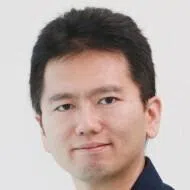

Retired Singapore diplomat Bilahari Kausikan assessed that the trade truce reached between China and the US following the meeting between Chinese President Xi Jinping and US President Donald Trump in Beijing in May is unstable and fragile. While it is expected to hold through the three upcoming Xi-Trump summits planned for the second half of this year, this state of affairs is unlikely to last indefinitely.
Fragile peace under shadow of strategic competition
At the Nomura Investment Forum Asia in Singapore this week, Kausikan was invited to speak at a fireside chat on 3 June titled “A Reversion to the Historical Norm: Great Power Competition and Proxy Conflict” with Nomura senior executive Corrinne Teo.
Assessing China-US relations after the Xi-Trump summit, Kausikan said both sides now recognise they are in a long-term strategic competition. The Beijing summit, along with subsequent meetings, are intended to stabilise this competition and make it less dangerous, though their success remains an open question.
He noted that the Chinese and US leaders are set to meet three more times before the end of the year. “This uneasy and very fragile truce will hold at least until these meetings are over. At least, I hope so. But I don’t think it will hold forever. There will be periods of high-intensity and low-intensity competition, but this is the new fundamental reality of that relationship recognised by both parties.”

After his China visit, Trump unusually stated in public that arms sales to Taiwan could be used as a bargaining chip in negotiations with Beijing, raising the transactional nature and uncertainty of the US’s Taiwan policy. However, Kausikan argued that the Xi-Trump summit had brought no substantive change to it. Under the Taiwan Relations Act, the US remains legally obliged to provide Taiwan with the means to defend itself. “This is not a mental choice. It’s a legal obligation,” he said.
Kausikan also noted that strategic ambiguity remains the norm in US-Taiwan relations, while former US president Joe Biden’s four statements on defending Taiwan were the exception. US presidents retain discretion over the timing and scope of arms sales to Taiwan, and Washington has previously reconfigured or delayed such sales for broader strategic reasons, including to stabilise relations with Beijing.
He said, “We do not know what was discussed on Taiwan [between Xi and Trump]. We only know that Taiwan was discussed. I’ll be very surprised if at that level they went into the nitty-gritty of particular weapon systems. I don’t think they did.”
Inevitability of another Middle East conflict
On how the US-Iran conflict will end, Kausikan said both sides are “far apart” on the two core issues of whether Iran should be allowed to have a nuclear weapon capability and whether it has sovereignty over the Straits of Hormuz. He said, “I think it’s not going to be a clean or neat ending… every war will end, this war will end — how or when, I am not sure — but there will be another war.”


Get the ThinkChina Weekly Newsletter
Insights on China, right in your mailbox. Sign up now.
By subscribing, I agree to SPH Media's Terms and Conditions and Privacy Policy.
Kausikan assessed that Iran believes that it needs a nuclear weapon capability to protect its territorial integrity, and has the knowledge to do it. “And how much you destroy its nuclear infrastructure, you cannot destroy the knowledge.” He believes that since Tehran will not give up on nuclear weapons, there will be another war in ten years or so.
Safeguarding Singapore’s autonomy
Kausikan was also asked about Singapore’s commitment to maintaining autonomy and flexibility while pursuing its economic interests. As a global trading hub, Singapore faces the challenge of being pulled in different directions and having to balance competing interests — while respecting sanctions imposed on countries such as Russia, Iran and North Korea, it must also remain vigilant against companies seeking to launder their reputations or rebrand themselves as international enterprises. In this context, how can Singapore safeguard its reputation?
Kausikan said that in principle and generally, Singapore only respects or complies with United Nations (UN) Security Council mandated sanctions, because that is a legal obligation of all UN members.
He added, “In general, we do not recognise national, unilaterally imposed sanctions outside the UN framework.” When it comes to US or European sanctions, Singapore tells its companies, financial organisations and banks to make their choices on their own commercial considerations.

On the Chinese authorities’ blocking in April of Meta’s acquisition of Manus — an artificial intelligence start-up that originated in China and later relocated to Singapore — Kausikan said that China might believe such a move was in its interests, but taking retroactive action like this does not create great confidence in China.
He said not all Chinese companies come to Singapore for sinister reasons. “Some come because they want to plug themselves into global networks and not confine themselves to China. Some come because of confidence issues on where China is heading, and some are not transparent about their reasons, and those, I think, if they break our laws, we have to deal with it.”
Kausikan noted, “So as long as we are clear and consistent, we can be firm in building up to pressures from all directions. Pressures could come from the US, China or Europe, but you have to be consistent. As long as we have that, we can manage it. I’m not saying it’s easy, but it is possible.”
This article was first published in Lianhe Zaobao as “比拉哈里:习特会后中美休战不稳定且脆弱”.
Related: [Video] Hegseth at Shangri-La Dialogue: Toning down US rhetoric | Why Chinese companies are eyeing SGX again
Popular This Month
Get the ThinkChina Weekly Newsletter
Insights on China, right in your mailbox. Sign up now.
By subscribing, I agree to SPH Media's Terms and Conditions and Privacy Policy.