Fudan targeted as universities become casualties of the tech war
Fudan University and Shanghai Jiao Tong University have been placed on a US national security list, while China has targeted a European university. The moves signal a new era in which academic research is increasingly treated as a security risk. Lianhe Zaobao associate China news editor Sim Tze Wei reports.
18 Aug 2026
Politics
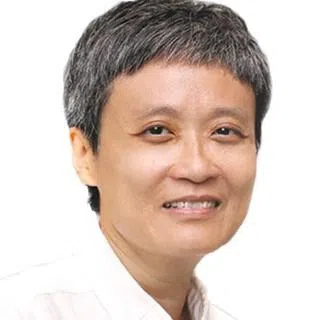

(Edited and refined by Grace Chong, with the assistance of AI translation.)
The US and China have recently, one after the other, placed foreign civilian universities on restriction lists, pushing academic institutions that have traditionally been less exposed to geopolitical tensions to the forefront of technological competition.
At the end of last month, the US Department of Defense for the first time placed two of China’s leading comprehensive universities, Fudan University and Shanghai Jiao Tong University, on a national security restriction list. A day later, China’s Ministry of Commerce likewise, for the first time, placed a civilian university in Europe — Wrocław University of Science and Technology in Poland — on its export control list.
Scholars interviewed say the moves reflect the growing incorporation of universities into national security and technological competition. The global research system is unlikely to split into two separate “scientific systems” in the short term, but the “chilling effect” of such measures could weaken cross-border cooperation and prompt more countries to reassess research security.
The US expands its university restrictions
On 23 July, the Pentagon, for the first time, placed Fudan University and Shanghai Jiao Tong University, neither of which has a military-industrial background, on the Section 1286 list, established under the 2019 National Defense Authorization Act, on the grounds that they could pose risks to US national security and scientific integrity.
Under the rules, researchers receiving funding from the US Department of Defense are, in principle, prohibited from engaging in relevant cooperation with institutions on the list and must disclose such affiliations. The US defence department said the measure was intended to prevent US government-funded research from being used for military or other strategic purposes.
In fact, the US has in recent years placed dozens of Chinese universities on various restriction or sanctions lists. Those targeted initially were mainly universities with military-industrial backgrounds, including the so-called “Seven Sons of National Defence”: Harbin Institute of Technology, Harbin Engineering University, Beihang University, Beijing Institute of Technology, Nanjing University of Aeronautics and Astronautics, Nanjing University of Science and Technology, and Northwestern Polytechnical University.

This time, the inclusion of Fudan University and Shanghai Jiao Tong University in the restrictions shows that the US increasingly regards China’s top universities as part of the country’s technological competition system, while worrying that their research could support the military-civil fusion strategy.
China follows suit
China has also begun adopting similar measures. On 24 July, the Chinese commerce ministry announced that 14 European Union (EU) entities would be placed on its dual-use items export control list. Alongside military-industrial and drone companies from countries such as Germany and France, the list includes Wrocław University of Science and Technology in Poland.
This marks the first time China has placed a foreign civilian science and technology university on an export control list alongside military-industrial companies.
The Ministry of Commerce did not explain why the university had been added to the list. However, according to a report by Chinese media outlet Guancha Syndicate (观察者网), Wrocław University of Science and Technology is involved in EU research and development on military drones and battlefield artificial intelligence (AI). It also works closely with military-industrial companies and plays an important role in materials science, photonics, semiconductors, cybersecurity and several EU defence fund projects.
Universities become a new focus of national security controls
Analysts say the emergence of universities as targets of regulatory controls reflects the increasingly blurred boundary between civilian and military technologies. Most dual-use technologies, including AI, quantum computing, semiconductors and biotechnology, originate in universities and research institutions.
As countries strengthen protections for critical technologies, universities are gradually becoming new targets of national security and export controls, rather than simply institutions for producing knowledge.

Bonnie Glaser, managing director of the Indo-Pacific programme at the German Marshall Fund of the United States, believes that bringing academic institutions under national security restrictions is likely to become “an enduring feature of the strategic competition among major powers rather than a temporary phenomenon”.
She told Lianhe Zaobao that three structural changes are driving the trend.
First, fields such as AI, quantum computing and semiconductors have both civilian and military applications, making universities important sources of innovation. Second, governments are paying increasing attention to technology transfers, research security and the leakage of critical technologies. Third, intensifying China-US strategic competition has expanded the scope of national security to include knowledge, data and advanced research.

Get the ThinkChina Weekly Newsletter
Insights on China, right in your mailbox. Sign up now.
By subscribing, I agree to SPH Media's Terms and Conditions and Privacy Policy.
The chilling effect may matter more than the rules
Dylan Loh, an associate professor of Public Policy and Global Affairs at Nanyang Technological University, believes that what deserves attention about restriction lists may not be the scope of their regulatory constraints, but the “chilling effect” created by the political environment.
Even when regulations do not explicitly prohibit cooperation, universities and researchers may voluntarily scale back collaboration with institutions in the countries concerned, fearing that it could affect government research funding, breach regulatory requirements or trigger political controversy.
“For example, even if a scholar is working in a non-sensitive field and is not involved in engineering or technology with dual-use applications, they may, out of safety, not want to have any relationship with a university on the list,” he said.
Loh points to changes in supply chains as an example. Supply chains once focused primarily on efficiency and cost. But as US-China competition intensified, they increasingly became a matter of national security, prompting countries to promote “friend-shoring” and restructure their supply chains. Higher education and research cooperation could now undergo a similar transformation. Universities may increasingly consider political risk, funding sources and national security when choosing research partners.

This does not necessarily mean research cooperation will hit a visible “wall”. Instead, increasingly invisible boundaries could emerge: researchers may reduce collaboration, universities may strengthen scrutiny, government research funding may come with more conditions, and sharing equipment, data and laboratory resources in sensitive fields may become more difficult.
Fragmented, but not divided
Denis Simon, a senior research fellow at the Quincy Institute, believes the global research system could undergo “selective fragmentation”, rather than rapidly splitting into two separate “scientific systems” led by the US and China.
Cooperation in sensitive fields such as advanced AI, quantum information science, certain semiconductor technologies, cryptography and hypersonics will face increasing restrictions. Fields such as mathematics, climate science, public health and astronomy, however, are likely to maintain stronger international links.
He said the US and China will remain the world’s two largest scientific ecosystems, but the EU, Japan, South Korea, Singapore, Australia, India and the Gulf states, among others, are unlikely to align exclusively with one side. Also, competition for top research talent worldwide is likely to intensify. When choosing where to work, researchers will consider not only salaries and research funding, but also visas, regulatory burdens and restrictions on international collaboration.
Academic ties face growing political pressure
Shen Dingli, a Shanghai-based scholar of international relations, believes academia can never be completely separated from politics, while scientific and technological research is closely tied to national defence and security. As a result, “this trend will continue”.
Asked whether university management would in future have to take greater account of national security considerations, he put it more bluntly: “It has already become routine.”
Loh likewise believes that as barriers to cross-border cooperation rise, universities’ longstanding role in “track-two diplomacy” could weaken. In the past, even when China-US relations were strained, scholars could maintain communication through joint research, academic conferences and personnel exchanges. Now, as political risks rise and academic exchanges between China and the US become increasingly cautious, such track-two exchanges may come under pressure.
However, Loh believes the impact will be felt mainly between China and the US. Academic exchanges among other countries, or between other countries and China or the US, may not face the same degree of disruption.
This article was first published in Lianhe Zaobao as “中美科技竞争外溢 大学被推向国安前线”.
Related: Is Washington driving global talent towards China? | [Video] Is China stopping its own citizens from leaving?
Popular This Month
Get the ThinkChina Weekly Newsletter
Insights on China, right in your mailbox. Sign up now.
By subscribing, I agree to SPH Media's Terms and Conditions and Privacy Policy.