The most destabilising factor with the whole of China united under Xi
Taiwanese academic Wen-Hsuan Tsai attributes the demolition of the Youth League faction after the 20th Party Congress to Xi's belief that the Communist Youth League should focus on grassroots youth work and unite Chinese youths under the party and the leader. With the whole of China's society united, what could be the most destabilising factor?
9 Nov 2022
Politics
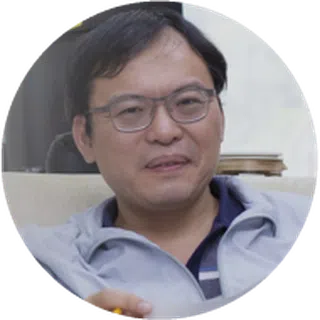

Beginning in the 1980s, cadres with experience in the Chinese Communist Youth League (CYL), known as the Youth League clique (团派 tuanpai), began to be recruited in large numbers for important political positions. Many prominent national leaders and provincial- and ministerial-level cadres had previously held leadership positions in CYL-related institutions, notably the CYL Central Committee Secretariat. Examples include Hu Jintao, Li Keqiang, and Li Yuanchao.
Two factors were involved here. First, tuanpai
However, after Xi Jinping came to power at the end of 2012, the influence of
Xi Jinping himself has no ties with the CYL or the tuanpai, and he does not particularly trust them. When he selects cadres for high-level positions, especially members of the Politburo, Xi emphasises their political loyalty. He has tended to give important responsibilities to cadres he has ties with, such as Li Qiang, Ding Xuexiang, and Cai Qi who have now all been made members of the 20th Politburo Standing Committee (PSC).

Xi Jinping regards the CYL as a relatively weak organisation and believes that its officials do not have the political qualities necessary to handle difficult issues, such as poverty alleviation, the promotion of investment, environmental protection, and maintaining social stability. Since Xi came to power, he has insisted that grassroots cadres must be selected on the basis of ability, and he does not believe that the CYL is a source of well-qualified cadres. Thus the political influence of the tuanpai has steeply declined at all levels of cadre recruitment.
Political wings clipped
In Xi Jinping's eyes, the CYL should concentrate on youth work, an aspect of united front work that he values highly. When Xi's predecessor Hu Jintao was in power, CYL cadres tended to neglect youth work, as they expected to be transferred to leading positions in the party and government.
In addition, the CYL has relatively few resources and little power, so it provides few opportunities for "generating income" (创收 chua
In 2016, Xi Jinping ruled that CYL cadres could no longer transfer directly to leadership positions in the party or government units, forcing them to remain in their league posts and concentrate on building a united front for youth. This is evidence of the importance that Xi attaches to controlling the younger generation. He hopes that mass organisations like the CYL will function in such a way as to maintain social stability.

Get the ThinkChina Weekly Newsletter
Insights on China, right in your mailbox. Sign up now.
By subscribing, I agree to SPH Media's Terms and Conditions and Privacy Policy.

At the CCP's 20th Party Congress last month, prominent
Since the expulsion of the tuanpai from the Politburo, Xi holds all the levers of power and obviously does not feel that he needs to share power with other factions. However, this is probably not good for China's political development. The lack of any checks or balances provided by opposing factions within the party could presage a return to the disastrous policies of the past, something similar to the Cultural Revolution or the Great Leap Forward.
The question of checks and balances
Having lost its political influence, the CYL will now have to concentrate on united front work directed at young people, and Xi Jinping clearly hopes that now they have been denied the opportunity to transfer to leadership positions in the party and government, CYL cadres will perform these tasks better.
Like the All-China Women's Federation, the All-China Federation of Industry and Commerce, and other government-led social groups, the CYL will have to devote itself to united front work, and the tuanpai will cease to have influence within Chinese officialdom, at least as long as Xi Jinping remains in office.
Before and during the 20th Party Congress, Xi was referred to as the "people's leader" (人民领袖 renmin lingxiu). If he remains in good health, Xi could stay in power for the next ten or twenty years, or even be the president for life. By filling the PSC with his allies, he has shown that he will not countenance any opposition and wants to have a free hand to fulfill his self-proclaimed mission of rejuvenating the Chinese nation.
However, the CCP's political system has now lost the checks and balances formerly provided by the existence of opposing factions within the leadership. This may inevitably lead to Xi Jinping having an exclusive hold on power, becoming overconfident and even corrupt. Over the next decade or more, Xi Jinping himself will likely be the most destabilising factor in China's political development.
Related: [Party and the man] Factions and fence-sitters in Xi Jinping's China | CCP removes political factions and corrupt officials ahead of 20th Party Congress | Death of China's factional politics | With a tight rein on power, does Xi have to follow his own rules in China?
Popular This Month
Get the ThinkChina Weekly Newsletter
Insights on China, right in your mailbox. Sign up now.
By subscribing, I agree to SPH Media's Terms and Conditions and Privacy Policy.